Category: Uncategorized

  • Mattilda Bernstein Sycamore searches Seattle for human connection

    Mattilda Bernstein Sycamore searches Seattle for human connection

    “One problem with gentrification is that it always gets worse,” writes Seattle author Mattilda Bernstein Sycamore in her new memoir, “The Freezer Door,” available Nov. 24. It’s a terse thesis statement for such an expansive, witty, perambulating book. In “The Freezer Door,” Sycamore wanders the streets of Seattle, searching for signs of humanity that have been obscured by the monolithic, glossy condominiums under construction on every corner.

    “I’ve spent so much time trying to find the places and spaces where I can interact without feeling broken,” Sycamore writes, “but this hasn’t worked.”

    A local literary dynamo who for the better part of the last decade could be found either in the audience or onstage at every Seattle-area literary event worth attending, Sycamore has become a nationally recognized thinker on LGBTQ+ issues — specifically concerning what it means to self-identify as queer in public spaces. As “gayborhoods” like Seattle’s Capitol Hill and the Mission in San Francisco become trendy hubs for wealthy young (and largely straight) tech workers, she laments the loss of the individuality and creativity of the earlier days of the LGBTQ+ movement — not to mention the intimacy.

    “I’m searching for connection,” Sycamore says over the phone from her Capitol Hill apartment. “The dream of the city for me is the place where you find everything and everyone that you never imagined. And that’s the dream that I’m still trying to live, even as the city has changed so much.”

    (Keep reading at the Seattle Times.)

  • This Children’s Book Author Bought Liberty Bay Book Company. Then Came the Pandemic.

    This Children’s Book Author Bought Liberty Bay Book Company. Then Came the Pandemic.

    Suzanne Selfors dedicated herself seriously to her writing in 2002. Three years later, her first book was published. For the next 15 years, Selfors wrote and published over 30 titles for young readers across a wide array of publishers.

    “I’m very happy to say it’s been a very successful children’s author career,” Selfors says over the phone. She’s published bestselling, licensed middle-grade books with DreamWorks and Mattel, and her “Wedgie & Gizmo” series, about a superhero corgi and a brilliant-but-devious guinea pig, has won awards from coast to coast.

    “I have to admit that about two years ago, I was starting to feel really burned out,” Selfors says. She had just published six books in a single year, and she was looking to scale back on writing for a while.

    “That’s about the time when Suzanne Droppert,” then the owner of Poulsbo mainstay Liberty Bay Books, “put this little idea in my head about eventually buying her bookstore.”

    (Keep reading at the Seattle Times.)

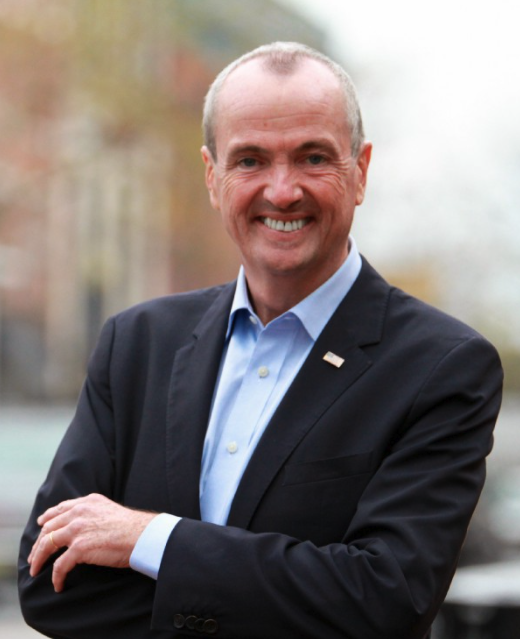
  • New Jersey Governor Phil Murphy Explains Why He Passed a Millionaire’s Tax

    New Jersey Governor Phil Murphy Explains Why He Passed a Millionaire’s Tax

    Coronavirus infection levels are climbing all around the country again. As more and more Americans stay home to avoid infection, those rising infection rates will likely bring with them another serious economic downturn, just like they did in the spring. The drop in consumer spending will harm the bottom line of small businesses, which will then lay off employees — further depressing consumer demand.

    Clearly, a new federal stimulus package is necessary to save the economy from collapsing — but with the Biden Administration not taking office until January 20, and with Senate leadership in doubt, it’s unlikely that we’ll be seeing a meaningful stimulus package from Washington DC anytime soon.

    This means that state governments are on their own in the fight to protect their economies from the impacts of COVID-19. But most states have suffered a decline in revenue as consumer spending has dropped in the pandemic, and so they’re confronting budget deficiencies at exactly the moment when they most need to invest in their own economies. We know that slashing budgets during a recession actually slows economic recoveries, so how can states increase revenue?

    For the answer to that question, look to New Jersey.

    This year, New Jersey Governor Phil Murphy and the state legislature agreed on a deal to raise the income tax by 2% on incomes over $1 million per year to address the budget crisis brought on by the pandemic. Not only will this tax help administer coronavirus relief to the communities and small businesses that need it most, but it will also help rebalance a regressive state tax code which puts a bigger tax burden on poorer households.

    In a recent episode of Pitchfork Economics, David Goldstein and Nick Hanauer interview Governor Murphy about his decision to tax the rich.

    (Keep reading at Business Insider.)

  • Robert Reich explains “the dangers of an economy that is too out of whack.”

    Robert Reich explains “the dangers of an economy that is too out of whack.”

    We talk a lot in this space about the three central tenets of trickle-down economics: wage suppression for workers, tax cuts for the wealthy, and deregulation for the powerful. We usually refer to these three tactics in terms of policy, like campaigns against minimum-wage laws and regulations lifted by presidential executive order. But the truth is that once you’ve passed enough trickle-down dogma into law, the whole structure of law and policy loses its meaning and the wealthy few become immune to the cause-and-effect that holds society together.

    Consider this: If you or I were to walk into a gas station, grab a six-pack of soda, and walk back out the front door without paying, the attendant would call the police and we would be charged for shoplifting. But when the reckless behavior of out-of-control financial institutions tanked the stock market and kicked off the Great Recession of 2008, nobody went to jail.

    Steal six dollars of merchandise, and you will face the consequences. Steal trillions of dollars in bailout money, and your bank will get a stern talking-to and a tiny fine.

    Earlier this summer, before the coronavirus resurgence derailed his reelection campaign strategy, President Trump tried to position himself as the law-and-order candidate. He took an especially strong stance against people protesting the murder of George Floyd in cities around the nation, even going so far as to tweet the abhorrent “ when the looting starts, the shooting starts.”

    In a bracing video, former Secretary of Labor Robert Reich responded with an argument to the contrary: despite all his talk of law and order, Trump isn’t interested in consequences for those who have been participating in the real looting which is destabilizing the country — specifically, the trickle-down looting of America’s middle class.

    Reich appears on a recent episode of Pitchfork Economics to elaborate on who the real looters are in America, and why for the wealthy few, our government’s mechanisms for enforcing laws against economic fraud are basically nonexistent…

    (Keep reading at Business Insider.)

  • Maximizing Shareholder Value Is Killing the Planet

    Maximizing Shareholder Value Is Killing the Planet

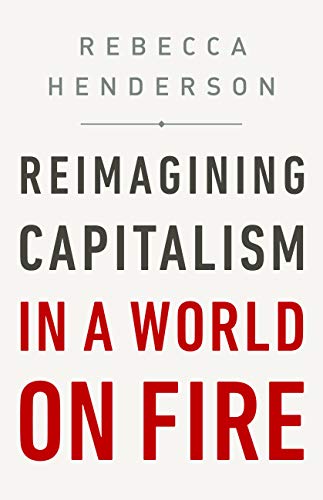
    Back when Harvard Business School professor Rebecca Henderson was pitching her latest book to publishers, she recalls, the conversation didn’t get much further than the book title before cynicism kicked in on the other side of the desk. In the latest episode of Pitchfork Economics, Henderson recalls sitting in a big New York City editor’s office and explaining that she wanted to write a book called “ Reimagining Capitalism in a World on Fire,” and that it was about how business could lead the way to save the world by creating a more sustainable future.

    Henderson laughs, “I’ll always remember: He’s sitting behind his desk, looking at me, raising an eyebrow. And he’s like, ‘Business saves the world, Rebecca? Do you read the papers?’”

    (Keep reading at Business Insider.)

  • The Economy Is the American Middle Class. It’s That Simple.

    The Economy Is the American Middle Class. It’s That Simple.

    If words are used too often, they start to lose their meaning. Try saying the phrase “deep discount” to yourself sixty times in a minute, for example, and it turns into a disjointed collection of consonants and syllables with no connection to any existing concept or experience. The technical term for this psychological experience is “semantic satiation,” and it was recently described in the sitcom Ted Lasso as the moment when “words become a sound.”

    One phrase that American politicians have nearly pushed to the point of semantic satiation is “the middle class.”

    It’s a phrase with a specific economic meaning, and it seems simple enough to define: divide the economy into thirds based on income, and the center third that’s neither at the top or the bottom is the middle class.

    But when politicians make their exhortations to the great American middle class, they’re typically trying to appeal to everyone — from minimum-wage workers in the service economy to McMansion-dwelling suburban families in the top 10%.

    Most recently, the huge tax cuts for the wealthy and corporations that Donald Trump and Speaker Paul Ryan pushed through in 2017 was wrongly pitched as a “middle class tax cut.” And all that elasticity applied to the term has done its work: Surveys have shown that nine out of ten Americans consider themselves to be middle class, which is of course mathematically impossible.

    In a recent episode of Pitchfork Economics, I interview New York Times tax and economics reporter Jim Tankersley about his new book “ The Riches of This Land: The Untold True Story of America’s Middle Class.” 

    (Keep reading at Business Insider.)

  • This Recession Is Worse for Women Than It Is for Men

    This Recession Is Worse for Women Than It Is for Men

    A recent episode of Pitchfork Economics features listener questions from around the world about a broad array of topics, from the motivation of trickle-downers to the effectiveness of divestment as a strategy. Hosts Nick Hanauer and David Goldstein recommend books to convert economic skeptics away from neoliberal economics, and they discuss the core fundamentals of their economic philosophy.

    One question in particular really drills down to the heart of what a more inclusive economic system should value. A listener named Stu from New Zealand writes in to ask, “What should the manifesto of the perfect political party look like? What are the absolute core principles that should be addressed?”

    “We say the economy is people,” Goldstein said.

    “We believe in that because economic progress is the product of a feedback loop between increasing amounts of innovation and increasing amounts of demand,” Hanauer said. That means “that the more people we deliberately, systematically, and intentionally include in our economy, the better it will work.”

    Goldstein added: “The more people you include in the economy, the faster and more prosperous it grows. I think that’s true about a functional democracy as well: The country is people .. .that should be our number-one concern: We want our people to do better — not our capital, or our businesses, or GDP, or any other metric you can think of.”

    “This is why I hate the word capitalism — because it implies that capital, or capitalists, are the heart of our economy,” Goldstein said. “It’s not. It’s people — people putting their knowledge and know-how to work, which is how we improve the lives of everybody.”

    Stu’s question, while about party platforms, helps to define what should be a clear litmus test for economic and democratic policy going forward: does this policy broadly benefit as many people as possible?

    This idea of putting people at the heart of the economy clearly identifies why the economic downturn that has accompanied the coronavirus pandemic is the worst economic catastrophe to hit the United States since the Great Depression: Because it has completely removed people from the economy.

    And those people are not being removed equally. In fact, very specific people are being targeted by these economic losses: CNBC reported in September that of the “nearly 1.1 million workers ages 20 and over” who are no longer looking for work after dropping out of the labor force in August and September, “865,000 of them were women, a number that is four times higher than the 216,000 men who also left the workforce.”

    (Keep reading at Business Insider.)

  • The healthcare debate has reached a ‘fever pitch’ in America

    Last week, in response to my column about the outsized power employers have over their workers, a Twitter user named Jim Drinkwine pointed out a glaring omission. To my comment that underpaid workers can’t simply quit and find a better job, Drinkwine added: “Don’t forget if they quit, they lose health coverage.”

    That’s absolutely correct. In fact, health insurance might be the most crucial leverage that American employers hold over their workers. As the only industrialized nation that does not offer some form of government health insurance for all its citizens, the United States places its workers in the uncomfortable position of depending on employers to provide healthcare.

    The failings of this system revealed themselves in gory detail earlier this year, as millions of workers were laid off from their employers at the beginning of a global pandemic — cutting them off from health insurance right when many needed it the most. And even the most basic protections provided by the Affordable Care Act are in danger of being wiped out this fall, as the Supreme Court is set to hear arguments against the popular program exactly one week after Election Day. 

    We’re all flesh and blood.

    When a nation’s health insurance is in doubt, virtually everything else is in question as well. If the Supreme Court strips away the Affordable Care Act’s protections for people with preexisting conditions, will the tens of millions of Americans with health issues be able to afford coverage? If workers are afraid to switch jobs for fear of losing coverage, will their wages decline as they lose the ability to negotiate in the marketplace?

    (Keep reading at Business Insider.)

  • Happy 50th birthday, Eagle Harbor Book Company!

    Happy 50th birthday, Eagle Harbor Book Company!

    Bainbridge Island has always been an affordable and easy escape for frazzled Seattleites who need a break from the annoyances of city life. Less than 10 bucks gets you aboard one of the frequent, relaxing half-hour ferry trips from downtown, and a 10-minute walk from the ferry terminal puts you in the heart of the town of Winslow, which is everything Seattle isn’t — quiet, calm and slow.

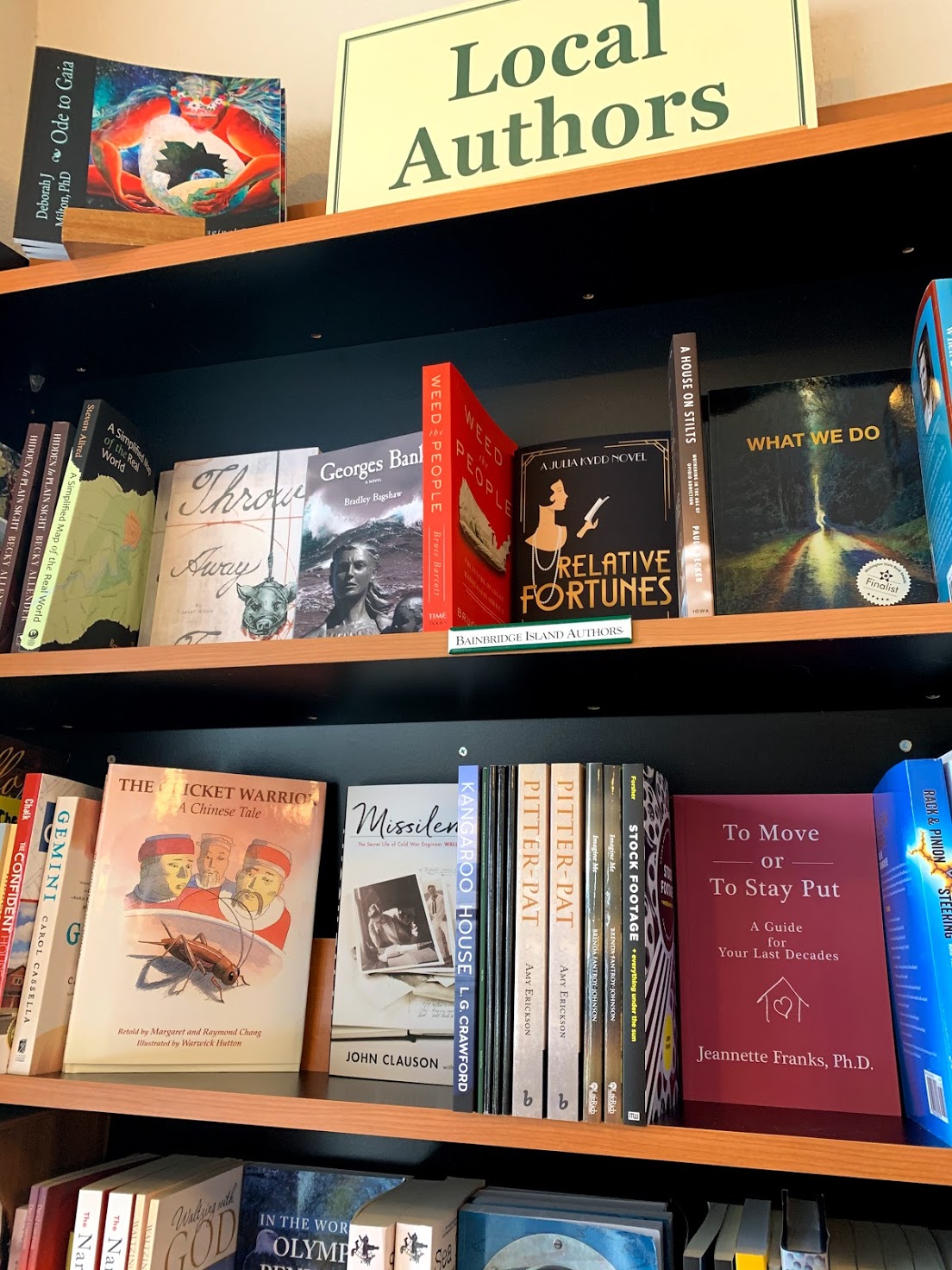
    Winslow feels custom-built for city dwellers who want to while the time away. The main drag is lined with restaurants, galleries and shops. And for Seattleites who make their way across Puget Sound in search of rejuvenation, no Bainbridge minivacation is complete without a leisurely stop by Eagle Harbor Book Company, Winslow’s preeminent bookshop. At over 4,000 square feet, the size of Eagle Harbor surprises first-time visitors: From the front door it looks like another cute little Winslow storefront, but take just a few steps in and the shelves seem to unfold vertiginously, further and further back.

    Most great independent bookstores do one thing really well, but Eagle Harbor plays double duty: It’s a quaint island bookstore, stocked with plenty of jigsaw puzzles and cheap, used cozy mysteries, and it’s also a community hub for one of Seattle’s most densely packed literary communities…

    (Keep reading in the Seattle Times.)

  • Your Boss Controls More Than Just Your Time

    Your Boss Controls More Than Just Your Time

    Economics as we know it has been around since the late 18th century, but the field still barely acknowledges the existence of power dynamics as a motivating force in the labor market.

    Trickle-downers who oppose raising the minimum wage, for instance, will often suggest that workers who want a higher wage should simply quit their jobs and find a new employer who’s willing to pay their desired rate.

    That might make sense in a simplified textbook object lesson, but it doesn’t work in the real world, where parents have to feed their children three times a day, and people who work at a manufacturing plant don’t have the funds to uproot their lives and move to another state when they want a raise.

    In a perfect economic system, employers would need workers just as much as workers needed their employers.

    In reality, workers are disposable and employers hold almost all of the power.

    (Keep reading at Business Insider.)