Category: Uncategorized

  • What i’ve been writing and reading: April 2022

    In the week since Elon Musk announced he was buying Twitter, he has already encouraged racist and misogynist bullying of Twitter employees, he’s publicly embraced alt-right sleazoids including the guy who inspired the “Pizza Gate” misinformation campaign, and he’s continually railed against the “woke” left (which apparently includes Netflix for some reason.)

    Now I’m not the brightest bulb on the Christmas tree, but I know that when a right-wing scumbag with a racist army buys a social network there’s no point in trying to change that system from the inside. Just within the last week, fascist Musk bootlickers have been emboldened, picking fights with trans people and people of color on Twitter and swarming their replies with abuse. It all reminds me of the days after Trump won the election in 2016, when the Nazis realized they didn’t have to hide anymore.

    So if Musk’s $44 billion offer goes through and he takes control of Twitter in six months as planned, I’m leaving Twitter, and I’m already throttling down my daily Twitter use to prepare for that moment. (Though it may not happen; if Tesla shares start to really tank, there’s a good chance Musk might have to back off. I hope the deal falls through, but I’m not holding my breath)

    I’ve been experimenting with my old Tumblr account and I’m enjoying myself over there. It’s a creative community that’s visual-forward but allows for long-form blogging. There are two big problems with Tumblr, though: First, there’s no news on the site to speak of, so I’ll need a new way to stay on top of breaking news, and second, there aren’t enough people on there to make my feed feel as lively as my Twitter feed does. I can’t do much about the first problem, but you can do something about the second: If you’re on Tumblr or you want to experiment with the network, be sure to say hi over there.

    If Musk does buy Twitter, that means I’m also going to have to do something with my newsletter. I currently use Revue, which is Twitter’s newsletter service. It is, quite honestly, very bad: The formatting is terrible and the back end is janky. I only chose Revue because it was integrated so tightly with Twitter. There’s no value to it otherwise. But the good news is that I can just move those email addresses over to another service and readers shouldn’t notice a thing when or if that happens.

    This opening note feels horribly self-indulgent and navel-gazey, but I think it’s important to explain where I’m coming from, in part because I was a huge proponent of Twitter right from the beginning. And yes, I realize that every social network is run by terrible rich people, but I draw a very clear line at people who happily attract mobs of Nazis to do their bidding online. I spent four years on Twitter being obsessed with one deranged rich guy with too much power and a base of foaming-at-the-mouth bigots. I won’t be fooled again.

    I’ve been Writing

    At the Seattle Times, I interviewed Neil Gaiman in advance of his reading at Benaroya Hall this Sunday night. It was a great conversation, and he was, as always, impossibly charming. (As a bonus, I’m including some outtakes from that conversation at the end of this email.)

    Also at the Times, I wrote about Open Books, Seattle’s lone poetry-only bookstore, and its recent move to a new storefront in Pioneer Square. Aside from the pure joy of a new bookstore opening in Seattle’s original Bookstore District, the thing that I love about the new Open Books space is the fact that it has two rooms—the Parlor and the Print Shop—that are intended to be community hubs for Seattle’s poetry community. It’s now a space where literary magazines can be formed, edited, and printed; writing groups can meet to discuss work that will appear in upcoming chapbooks; and authors can debut new books to adoring crowds—all at the same time.

    On my Tumblr, I wrote a little bit about why I, a huge Nicolas Cage fan, was disappointed by the new film The Unbearable Weight of Massive Talent. I do a little meditating about what I think the film gets wrong about Cage’s allure.

    And it was a big month over at Insider, where I wrote about a new wage tracker that shows exactly how little 66 of the world’s biggest, most iconic companies pay their workforce, why banning stock buybacks would raise wages for workers, why America’s shameful and racist mass incarceration problem is doing serious economic harm to the country, and why the minimum wage would be well over $20 per hour if worker pay had kept up with productivity.

    i’ve been reading

    So I finally read Jonathan Franzen’s latest novel, Crossroads, and I found it to be a compelling, if way too angsty, soap opera about a family that’s falling apart at the center of a church community in the 1970s. I can’t deny that it’s well-written, but every single character in this book was an awful person, and every single one of them made at least one choice in the narrative that just completely turned me off. In other words, it’s Franzen doing Franzen.

    Seattle cartoonist and comedian Brett Hamill’s latest comic book memoir, Sk8 Dad Summer, is a sweet, low-stakes collection of anecdotes about Hamill rekindling his interest in skateboarding, and a meditation about how the rebelliousness of his youth as a skater interacts with his relatively gentle adult life as the dad of a toddler. The comics in this book reminded me a little of the diary comics of James Kochalka and John Porcellino—a huge compliment, coming from someone who was obsessed with autobio comics in the 1990s—and the stories build on each other to form a lovable portrait of a man trying to do the best he can at honoring responsibilities he’s taken on, while still being true to himself.

    Gideon Defoe’s An Atlas of Extinct Countries is an encyclopedia of nations that fell apart, collapsed, or otherwise completely disappeared from the face of the planet. It’s an interesting premise for a non-fiction book, and Defoe (who wrote a few humorous novels about pirates a while back) is both a good researcher and a chatty tour guide. But if you do buy the book, I recommend not reading it straight through from beginning to end, as I did. The various extinctions all get a little same-y when you read them one after the other. This is a better book to flip through than swallow whole.

    And while we’re talking about humorous books that you probably shouldn’t rip through cover-to-cover, Ryan North’s How to Take Over the World: Practical Schemes and Scientific Solutions for the Aspiring Supervillain is a very funny book that applies real-world science to the plots and schemes of super-villains. Under the guise of describing how to build a secret lair and plot world domination, North explains the basics of earth sciences, computer programming, and climate change in easy-to-understand language. It’s hard to find the perfect mixture between entertaining and educational, but North pulls it off.

    Photo No-Nos: Meditations on What Not to Photograph is an anthology from Aperture that collects essays from world-famous photographers who explain the subjects that they refuse to include in their photographs. Of course, it’s light-hearted: if you took every single prohibited subject in the book seriously, you wouldn’t ever take another photograph in your life. But the subject is an interesting constraint, and you can learn a lot about art by studying what mistakes the great practitioners have made over the course of their careers. Great photography is as unknowable to me as magic—I know it when I see it but I have no idea what goes into it or why it works so well—and this book helped me think like a photographer for a while. In that respect it was a fascinating exercise.

    I’m a huge fan of Michel Faber—Under the Skin and especially The Book of Strange New Things are all-time great novels—and so I was thrilled to see that he published a novel for young readers. D (a Tale of Two Worlds) is an homage to Charles Dickens and a fantasy novel about what would happen if one day the letter “D” just suddenly disappeared from the world. It’s not my favorite Faber book by any stretch (and this is a very specific recommendation: If you want to read a good novel about letters mysteriously disappearing from everyday use, I’d recommend Mark Dunn’s Ella Minnow Pea before this one) but if you’re a fan of Faber’s analytic voice, whimsical creativity, and slightly aloof observational eye, you’ll find plenty to enjoy.

    I do love to read books about marriage, but I never really feel as though I recognize the marriage described in the book. That’s how it was for my experience with Heather Havrilesky’s Foreverland: On the Divine Tedium of Marriage. I didn’t at all agree with Havrilesky’s insistence that every married person hates their spouse on a regular basis, for instance. That concept is just alien to me. And at several points, the story feels like the author is pumping up the drama of some moments just for the sake of making the memoir more memorable—and a climactic epiphany that involves the Netflix show The Crown and the astrological signs of various British royalty left me absolutely cold. There are four or five good essays stashed inside Foreverland, but I can’t recommend it as a book with any particularly unique insights into marriage.

    I listened to Bob Odenkirk’s memoir Comedy Comedy Comedy Drama because Odenkirk reads it himself, and if you’re going to spend time with a celebrity memoir you might as well hear it in the celebrity’s own words. It’s a fun book, and I especially appreciated that Odenkirk didn’t try to hide the fact that he could be downright surly if he feels like someone is trying to mess with his art or screw him in business. He’s got a few axes to grind, and I’m here for it. But I was frankly shocked that Odenkirk didn’t include the near-fatal heart attack he suffered on the set of Better Call Saul last year in the book. Look, I get that publishing works on a very long schedule and I understand that the book was absolutely finished before the incident. But my God—it’s the 21st century: Surely you can rush to insert a chapter acknowledging how close the memoir was to being a posthumous release? Knowing what we know now, the book kind of fades out, and the heart attack is a giant looming shadow over the last couple chapters that’s never addressed.

    Wow—in retrospect, I read a lot of books by white dudes this month. I’ve got to broaden my scope for next month.

    That’s all for this month

    I figured I’d close with a couple of questions and answers that were cut for space in my Seattle Times interview with Neil Gaiman. (My questions are in bold, his responses are in normal type.)

    PC: Many years ago, I realized that the first Neil Gaiman book I read was not the Sandman or Black Orchid, but in fact was Don’t Panic, the companion book to Douglas Adam’s Hitchhiker’s Guide to the Galaxy. If time was no object, would there be any kind of art that you’d write a companion book for today? Any novels or comics that you’re moved by in the same way that Adam’s fiction spoke to you in the eighties?

    NG: That’s a really good question. I don’t think so. But having said that, I did love getting to do my book, The View From The Cheap Seats, which contains lots and lots and lots of essays, introductions, and encomia that actually allow me to talk about books that I love, about writers that I love, about works of fiction that I love, poems I love. And that to me was hugely important.

    You do seem to be a world-class reader. I wonder if maybe in another reality you wouldn’t be a literary critic? You’d probably also be a lot poorer.

    Well, I was a book reviewer when I started, and so that was where I began. But I’m professor in the arts at Bard College, and I love being a professor, it’s great. One reason why it’s great is because I get to work with young kids and show them what’s amazing to read, and why it’s fun to write, and all of that kind of stuff.

    I mentioned on Twitter that I was interviewing you and a Twitter follower named Carrie wanted to know if you have a favorite graveyard.

    I have a few favorite graveyards. I love Highgate Cemetery West. It’s amazing. I am very fond of Glasgow’s Necropolis. I love every graveyard I’ve ever been to in New Orleans. I don’t think I’ve ever done an official graveyard tour in New Orleans, but I’ve absolutely had friends in New Orleans take me around graveyards and talk. Actually, I did! I did one official graveyard tour. I remember because they filled me in on lots of interesting facts about how bodies were disposed of in New Orleans that I did not know.

    I love graveyards and I love wandering through them. I always find them peculiarly happy places. And I think even when I was a little kid, I’d be scared of graveyards, but I also found them very, very peaceful. There’s something very human about a graveyard—just the idea that people have lived their lives and finished them. That’s wonderful!

  • What I’ve been writing and reading: March 2022

    Roughly three-quarters of the population in Seattle seems to have entirely let their guard down when it comes to Covid. I’m in the quarter of the population that’s holding their breath and waiting to see if infection numbers spike, like they did the last two times we started to relax and gather in public.

    Even if things stay relatively calm, I’m still not in any kind of a hurry to attend conventions or big in-person readings or plays. That said, I do hope that I’ll be able to get into movie theaters for the occasional matinee on a somewhat regular basis sometime soon, because this year looks like it could be an exceptional one for movies: Between two of my favorite actors, Nic Cage and Pedro Pascal, sharing the screen in The Unbearable Weight of Massive Talent, the sci-fi weirdness of Everything Everywhere All at Once, the return of Jordan Peele in NOPE, the unabashed Brad Pitt-ery of Bullet Train, and the movie-screen chewiness of Baz Luhrmann’s Elvis, 2022 could be the most exciting year for non-franchise American filmmaking in at least a decade.

    Speaking of unique cinematic experiences, I watched one of the better non-franchise films of 2021 a couple weeks ago: A Romanian comedy called Bad Luck Banging: Or, Loony Porn. After a frankly pornographic (but not idealized) opening scene depicting a sex tape made by a middle-aged husband and wife, the film is broken cleanly into three parts: First, the woman in the sex tape, Emi, walks around Covid-era Bucharest as she realizes the tape has been leaked onto the internet and the underage students she teaches have seen it. The second part of the movie is a very funny non-narrative video glossary explaining the social mores and history of Romania. And the third part is basically a play in which Emi comes face-to-face with the disgusted parents of her students in an all-hands meeting. The parents then vote on whether she should be allowed to keep her teaching job.

    I really dug the movie for its wild blend of inventiveness, realism, and patience. Watching all the extras in the first and last third of the film tug on their masks to cover their noses as they try to obey Covid protocols felt strangely touching. And though Emi’s climactic encounter with outraged parents is stylized and openly political, it feels almost civilized compared to some of the videos we’ve seen filmed at American PTA meetings in the last couple of years. (Then it goes totally off the rails.) If you can tolerate graphic sex, this is the best weirdo movie of 2021 that almost no American has seen, and if you’re curious but don’t want to stress over the ethics of exploitation and sex on film,  a ridiculously censored version is available on Hulu.

    And since we’re talking about watching stuff, I have to chime in on the three dramas about internet startups that are streaming right now: Super Pumped, starring Joseph Gordon-Levitt as the founder of Uber, is way too enthralled with the macho dickishness of Travis Kalanick and startup culture to critique it in a meaningful way. It feels like an ad for toxic masculinity—like if Brett Ratner had written and directed The Wolf of Wall Street or Fight Club. WeCrashed, starring Anne Hathaway and Jared Leto about the making and undoing of WeWork, basically encapsulates the entire narrative in the first episode so there’s no reason to keep watching, and Hathaway’s confident acting doesn’t begin to make up for the amateurish forced “comedy” of Leto’s performance.

    The only one of these three shows worth watching, in my estimation, is The Dropout, the Amanda Seyfried-starring series about Elizabeth Holmes and Theranos. The key to it is Seyfriend’s remarkable performance as an awkward brilliant geek who wants more than anything in the world to be Steve Jobs. She’s heartbreaking and horrifying to watch—often both in the same scene. And it’s genuinely funny: There’s a throwaway line in the most recent episode when Holmes is showing a camera crew around the Theranos building and she says, with all sincerity, “This is our state-of-the-art lobby,” and I’ve never heard a more hilariously Silicon Valley thing in my entire life. You’d have to be either a sociopath or a comedian to come to the conclusion that liminal spaces are ripe for disruption—and The Dropout is canny enough to portray the sociopath in all her moral shame, while still giving us some room (and grace) to laugh over the ridiculousness of the situation. Of the three new startup shows on streaming services right now, it’s far and away the best.

    I’ve been writing

    At the Seattle Times, I wrote about Ballard’s Secret Garden Books, which is celebrating its 45th anniversary this year. Secret Garden began as a children’s-only bookstore—it hosted a reading with Madeleine L’Engle!—but now it’s a fine general-interest bookstore with an exceptionally strong children’s section. This is one of the pillars of Seattle’s bookselling community, and it was fun to do a deep dive into the shop’s long and storied history.

    For Insider, I wrote about how abortion bans undermine the economic power of women, forcing them to be reliant on the men in their lives and stripping them of autonomy. Women need to be able to control their own bodies before they can control their own destinies, so abortion bans are really battles over power—specifically, the power of women to participate in society.

    I also wrote about a great new book that takes on Davos, the annual gathering of the world’s richest people. It’s a star-studded event in which the wealthy elite all sit around and talk about ways that they can fix the world with their fabulous wealth. Weirdly, the topic of paying more in taxes never seems to come up. And speaking of rich people with too much money, does anyone really believe that CEOs work 350 times as hard as their lowest-paid employees?

    Finally, I wrote about the real cause of the rising inflation we’re all paying at grocery stores and gas stations: Corporate greed. I honestly can’t figure out why the Federal Reserve thinks that raising interest rates will do anything to lower prices when CEOs are openly bragging about jacking up prices in their quarterly earnings calls.

    I’ve been reading

    I very much enjoy the work of siblings Maria and Peter Hoey, who for years independently published their comics stories under the title Coin-Op Comics. Their latest book, a collection of linked short stories titled Animal Stories, was just published by Top Shelf last month, and it’s a significant step in the continuing evolution of their work. The fables in this book all have to do with humans encountering a mysterious animal (or multiple mysterious animals) and through that interaction coming face-to-face with the unknowableness of everything. The Hoeys’ comics combine the formal genius of Chris Ware with the literary aspirations of Dan Clowes, and this book is a magnificent meditation on religion, wonder, and the mystery behind every pair of nonhuman eyes.

    Last month, Christina Gilbreath of The Wise Owl Books and Music recommended A Psalm for the Wild Built to me in my Seattle Times column. She said the book “is just a big warm hug. I’ve actually recommended it to a couple of nurse friends of mine, and they come back and say ‘I didn’t know I needed this book.‘” It’s the first book in a series about a tea-making monk who meets a robot, and then they explore an alien world together, all the while discussing desire and other lofty concepts. Gilbreath is absolutely right—I needed to read this book, and I can’t wait to read more. (The second book in the series comes out this summer and I’m actually going to preorder it, which is a rarity for me.) What a wonderful, gentle little novella about friendship and conversation.

    The Writer’s Crusade, Tom Roston’s book-length exploration of the writing and publication of Kurt Vonnegut’s Slaughterhouse-Five, is an adoring fan letter to one of the greatest pieces of anti-war art produced in the 20th century. For fans of Vonnegut—even longtime readers like myself who haven’t reinvestigated his work in well over a decade—this serves as a good reminder of why Vonnegut mattered so much, and exactly how influential his greatest book was.

    Slate film critic Dana Stevens published Camera Man, a biography of Buster Keaton and basically through him the entire American film industry, just last month. I really dug it. It’s a thoughtful exploration of how many facets of American life are just the same today as they were a century ago—but Stevens also explores the important differences, too, and exactly how they changed. I like that she takes the time throughout the book to explore the creation and evolution of film criticism—it’s the kind of subject that probably doesn’t warrant its own mainstream book, but Stevens cares about it and so she skillfully wraps it up into the narrative she’s researching.

    Benjamin Percy’s The Ninth Metal is the first book in a series that’s kind of like Stephen King meets HP Lovecraft in the middle of a superhero comic book. It’s about an eerie metal with supernatural properties that falls to earth in Minnesota, creating a modern-day gold rush and giving super powers to a few people, seemingly at random. I had a lot of fun with it—it’s the kind of book I would have devoured as a teen and then immediately sought out every other book in the series immediately.

    The Ice Palace is a slender novel by Norwegian author Tarjei Vesaas that was translated into English by Elizabeth Rokkan . It was heartily recommended by Phinney Books’ owner Tom Nissley in my column a while back as one of his favorite books of the last few years, and you just can’t let a recommendation like that slip by. While the book didn’t quite make that kind of a dent in me, it did swallow me up and refused to let me go until I finished. It’s the story of a Norwegian girl who goes missing on a cold winter night, and what happens after she disappears. It plucked the same emotional strings as The Sweet Hereafter, and I was transfixed by the stillness in its prose—it’s a book that feels like winter, through and through.

    I really dug Friday: The First Day of Christmas, the first trade paperback collection of an ongoing series written by Ed Brubaker and drawn by Marcos Martin. It’s a supernatural mystery series about a one-time sidekick to a kid detective who comes home from college to find that the kid detective hasn’t grown up at all, but the world around them both has gotten a lot darker. I think it’s about time to realize that I’m officially an Ed Brubaker stan—his Kill or Be Killed and Reckless series of books are some of the best comics I’ve read during the pandemic, not to mention the noirish standalones Pulp and Bad Weekend—and Martin is simply one of the best comics artists alive. This first Friday collection is relatively slight, but I can’t imagine this particular team of creators letting me down in upcoming volumes.

    That’s all for this month

    I’ve been listening to Downlowd, a podcast history of Harry Knowles’s infamous nerd-movie-review site Ain’t It Cool News, and I’ve become a fan of the podcast. The problem is that it’s a serialized show, so you have to listen from the very beginning, and the beginning is pretty rough. Downlowd‘s creator, Joe Simon, is very upfront about the fact that he’s never made a podcast before, and his awkwardness really comes through in the first couple of episodes—particularly the first episode where in a fit of writerly ambition, he tries to compare Harry Knowles to Charles Foster Kane in an analogy that falls apart under the slightest investigation. Anyone who writes as a career has overshot our ambition on multiple occasions, but writers at least tend to edit out those mistakes before we hit “publish.” Simon doesn’t have that luxury—he’s building the airplane in real time as it takes off.

    But Simon and executive producer Kristina Bell are very open about their mistakes and missteps, often explaining them at length in special bonus episodes that are released between installments of the show. And I think each episode gets better as the show goes along—more insightful, better produced, less credulous. So if you’re interested in watching someone learn in broad daylight how to be a better reporter, this is an interesting, and fairly transparent, case study.

    And of course, as someone who visited AICN regularly and would regard its atrocious comment section and poorly written reviews like a rubbernecker at a car crash, I’m interested in the subject matter. Toxic internet fan culture in particular is something that I’m deeply interested in—I touched on the subject in my first full-length comic book, Planet of the Nerds—and Harry Knowles’s site is kind of the ur-text for toxic geek fandom. You don’t get the poisonous incel army that rages against any female Marvel superhero or nonwhite Star Wars character without AICN paving the way.

    But I don’t want Knowles to take up the spotlight any longer than he already has, so let me recommend a podcast that thoughtfully engages with culture from a perspective that isn’t that of an entitled white male. I’ve really grown to enjoy Criticism Is Dead, a weekly pop culture conversation podcast hosted by Jenny Zhang and Pelin Keskin-Liu. They usually discuss two big topics a week—a TV show, a movie, occasionally a book—along with a brief overview of the week’s hot topics, and they’re pretty much everything that AICN never was: smart, curious, and entertaining. I’d say I disagree with their critiques about 20 percent of the time, but I never regret hearing their opinions. AICN is undeniably a relic of the past, and I hope that Criticism Is Dead’s thoughtful and humane conversation represents the future of reviews.

  • What I’ve been reading and writing: February 2022

    As I’ve written multiple times (sorry) the collected edition of the comic I created with artist Fred Harper, Snelson: Comedy Is Dying, will be published on March 15th. I don’t have any celebratory Ides of March bookstore readings or events on the calendar to mark the publication for a couple of reasons:

    1. Virtual readings really bum me out. I’m not the most eloquent speaker in the world in the best situations, but I’m really bad on Zoom, where the slight lag throws me for a loop.
    2. With state mask restrictions ending and the nation seemingly under a mass delusion that pretending coronavirus is a thing of the past will somehow make coronavirus go away, I don’t feel comfortable doing an in-person reading.

    I hope that in coming months, I’ll be able to do something to celebrate the book’s release. I’m proud of it–I’m especially giddy over Fred’s work—and I’d like to get people together again. But I think another spike in cases is likely as regulations fade away and the weather—at least in this part of the country—won’t allow us to properly ventilate our indoor spaces with fresh air. I refuse to be the reason a bunch of people get sick, so please feel free to celebrate my book’s release in your own way, safely and responsibly.

    I’ve been writing

    I wrote about Seattle’s (current) newest bookstore, The Wise Owl Books & Music, for the Seattle Times. It’s a small space in the Tangletown neighborhood, and it was born from a mother’s secret wish. When Christina Gilbreath’s mother passed away a few years ago, she left behind about 40 boxes of used books that she was keeping to fulfill her long-held dream of opening a bookstore. Gilbreath hadn’t known about her mother’s dream, but it echoed her own dream of one day opening a record store, and so she decided to make both dreams come true with Wise Owl. I can’t wait to see what this bookstore becomes as the neighborhood begins to shape its stock and Gilbreath’s plans for expansion take root.

    Unions are more popular in America right now than they’ve been since the 1950s. But union membership is basically at an all-time low. President Biden, our most labor-friendly president since FDR, just made a big first step toward allowing federal workers to unionize, but I wrote in Insider that he can still do more to encourage the labor movement. Also: Did you know that employer-provided health care is a scam? It’s true, and it’s not just a scam for Americans—it’s a scam for employers, too.

    I also wrote about why corporate price increases have less to do with inflation and more to do with price-gouging. That piece was retweeted by Elizabeth Warren, which was pretty damn exciting for me, since she’s one of the few national politicians I actively admire:


    Friends, I actually made a little yipping noise when I saw this tweet.
    Friends, I actually made a little yipping noise when I saw this tweet.

    I’ve been reading

    Last summer, I read and enjoyed a new Stephen King novel for the first time in ages. That novel in question was Billy Summers. This month, I read the novel Stephen King published before that, a thin paperback original titled Later, and I enjoyed it even more than Billy Summers. This is a remarkable late-career turn from a writer who had become (with semi-recent titles like Under the Dome and Cell) a parody of himself. Later is a short and dirty crime thriller about a kid who can see ghosts, and it’s got everything you like about King—the creepy images that stick with you; the world-weary, working class characters; the plots that seem somehow feel realistic in their ridiculousness. If you can grit your teeth and tolerate King’s relentless and inexcusable tendency toward fat-phobia, which pops up in the last fifth of this book, I endorse Later.

    If you’re a fan of the excellent afterlife-themed comedy The Good Place, I highly recommend the audio version of Good Place creator Michael Schur’s new philosophical exploration How to Be Perfect. Virtually the entire cast ofThe Good Place make guest appearances on the recording, giving the book the feel of a pleasant afterword to the series. It’s a kind of crash course into what it means to be an ethical person, with pit stops at just about every major philosopher you’ll encounter in a Philosophy 101 course, and it’s a fun and funny way to while away time on a road trip. Schur’s book isn’t, well, perfect—for some reason, he conflates the Overton Window with the slippery slope argument, and he also bafflingly at one point says that nobody would question whether Jeff Bezos and other billionaires deserve their fortunes—but Schur is an earnest and curious narrator, and the book is full of little ethical thought experiments you can toss around with friends.

    Libba Bray’s YA novel Beauty Queens is a satire about the contestants in a Miss Teen USA-type pageant crash-landing on a desert island and then fighting for survival. It’s a little too long, but the book is riddled with over-the-top product placements for cosmetics in the form of footnotes to the survival narrative, and I laughed out loud at the satire a few times. I’m so glad that books like this are available to teenagers now from major publishers like Scholastic. When I was a kid, you basically jumped from Ramona Quimby to Breakfast of Champions, and now YA novels like Beauty Queens provide more of a bridge between those two extremes.

    Helene Tursten’s An Elderly Lady Must Not Be Crossed is not as wickedly entertaining as the first book in the series, An Elderly Lady Is Up to No Good,but I was so charmed by the first book that I’m just grateful to spend more time with the serial-killing elderly lady at the center of the story. It’s The Talented Mr. Ripley by way of The Golden Girls—what’s not to love?

    Seattle artist Steven B. Reddy’s self-published art and essay collection, Walks with Willa: A Love Story, is about Reddy adopting a dog in the early days of the pandemic and then falling in love with her as they go on long walks through a city shut down by Covid. Reddy’s illustrations of his dog Willa running around various Seattle trails and parks are positively delightful, and I love his full-color drawings of houses, too—Reddy’s perspectives are always a little bit cattywampus, and that makes his drawings fascinating to investigate. Seattleites, fans of long city walks, and dog lovers will find a lot to recognize and appreciate here. (Though as the owner of two greyhounds—one of whom is completely blind—I do take issue with Reddy’s eagerness to let Willa off-leash and to encourage other dog owners to do the same. Not every dog should be off-leash in public places, and speaking from experience off-leash dogs can pose a real danger to leashed dogs.)

    Helen Jukes’ memoir about her first year of beekeeping, A Honeybee Heart Has Five Openings, is an informative book about a subject I want to know more about. But I really came down with a bad case of this-could-have-been-an-article-itis while I was reading this thing—Jukes kept digressing into asides about her friends and her personal life and I just wanted to hear more about the damn bees. Perhaps this is unfair to Jukes, and I acknowledge that I definitely could have read a more scientifically focused book instead. But I like to think I’m always open to being seduced by a good memoir; this book didn’t fit that description for me.

    Craig Mazin, a host of the excellent Scriptnotes podcast, recommended Dennis Palumbo’s book Writing from the Inside Out: Transforming Your Psychological Blocks to Release the Writer Within as an actually useful how-to-write book. I’m kind of a sucker for that particular subgenre, so I picked it up. Palumbo is a former screenwriter who became a psychotherapist who specializes in treating screenwriters, and Inside is a collection of some of his observations. I was kind of bummed to discover that the book did absolutely nothing for me—I thought it was a somewhat trite collection of self-esteem-building exercises for writers. And as someone who doesn’t ever suffer from writer’s block, who doesn’t really feel envy for other writers’ accomplishments, and who doesn’t have problems hitting deadlines, the lessons didn’t really do anything for me. If you are a writer who experiences any of those common afflictions, though, this book might be just the ticket.

    That’s all for this month

    I’m writing this section on President’s Day—I tend to write these emails piecemeal, over the course of the month—and it occurs to me that President’s Day is an awful idea for a holiday. We’ve had plenty of mediocre-to-actively terrible presidents, and in the wake of the January 6th insurrection, a day that honors and celebrates presidents hits a little like a sour joke. A quick glance at my bookshelves will tell you that I love presidential history and trivia, but it’s clear now more than ever that the institution of the presidency simply does not deserve this kind of celebration.

    I have a few ideas for national holidays that would be good replacements:

    * American History Day: Every year, the president could issue a little proclamation calling on the nation to focus on a particular facet of American history—the Great Depression, say, or the War of 1812, or whatever—and maybe the media could use the president’s cue as a way to investigate and contextualize that historical moment in a big national history class.

    * Public Sector Workers’ Day: The hell with Millard Fillmore! I want a day where we go to a parade to honor our postal workers and teachers, and where every federal and state employee gets a little bonus check.

    * Volunteer Day: I know most people who get the day off would just take the damn day off no matter what you call it, but it’s still not a bad idea to celebrate civic sacrifice. People who give their time and skills to nonprofits are way more admirable than wealthy people who just dump cash in a glitzy show of philanthropy, so let’s honor them with an official day of service.

    These are all silly rough sketches, but I think any one of them would serve the nation better than a President’s Day. And I think the presidents we should honor most would agree with me that President’s Day is an inappropriate federal holiday. 

    Okay. That’s it. I hope you’re doing well,

    Paul

  • What I’ve been reading and writing: January 2022

    What I’ve been reading and writing: January 2022

    Back when I blogged multiple times a day for a living, I loved a good story about some crank trying to ban a book in her kid’s school library. The parent in question would always have some dumb quote that I could ridicule, I could talk about how great the book they were trying to ban is, and the author would likely have some well-written comment about the importance of freedom of speech that could cap the post off. Boom: Aggregation complete.

    It’s kind of an open secret that authors used to dream that someone would try to ban their book somewhere, because those attempts at censorship would always inspire a nice big bump in sales. Occasionally, depending on how much media attention a parent would get for their crusade, a backlist title would even wind up on the bestseller list after a few years of relative obscurity. Book-banning was kind of cute back then, a little literary cottage industry built on the backs of a few vocal idiots.

    It’s not cute anymore.

    This week, a Tennessee school board voted to ban the teaching of Art Spiegelman’s Maus. This follows an all-out push to ban the works of Black authors including Toni Morrison from curricula and school libraries around the country. Officials are working hard to ban LGBTQ-themed materials from school libraries and classrooms around the country—including in my home state of Washington.

    This current book-banning craze is entirely different from the kinds of bans I used to write about on a monthly basis. How, you may ask? For one thing, the calls are coming from inside the house. These aren’t some random oversensitive parents or lone wolf staffers calling for the books to be banned: They’re the school boards themselves. The Tennessee board in question voted unanimously, 10 to 0, to ban Maus. And if the school boards themselves aren’t behind the banning, then the parents are in highly organized groups who know how to play the media into believing that they represent a majority of parents in the area. This is a planned, rehearsed action, it’s spreading around the country, and it’s working.

    One wealthy evangelical Christian talking about how Kurt Vonnegut is a Satanist is a clown, a punchline to a bad joke. Entire school boards banning the teaching of slavery and the Holocaust in public schools is a white supremacist fascist movement. When you work to erase a nation’s history, you are engaging in fascist behavior. And here’s the thing about being a fascist—it doesn’t matter if your intentions are good, or if you have Black/Jewish/LGBTQ friends, or if you’re just concerned about your child feeling uncomfortable. If you behave like a Nazi, if you apologize for a Nazi, if you’re friends with a Nazi, you’re a Nazi. Full stop.

    I can’t lie and pretend that I’m feeling very hopeful about the future of this country. In the very best-case scenario, I believe we’re looking at a lot of bloodshed and struggle before this fever breaks. I don’t even want to type out the worst-case scenario here because I think it would still sound insane to the general public. But this is where my head is at right now.

    I’ve been writing

    I’m pretty happy with how my Seattle Times profile of Phinney Books came out, and it seems to have gotten a fair amount of attention. Phinney Books and its sister store Madison Books are, in my opinion, the best bookstores for browsing in Seattle right now, by which I mean I’m very likely to walk out of the store with a huge stack of small-press books that I didn’t even know existed before I walked in. A big part of that has to do with Phinney By Post, their amazing subscription program that delivers one little-known but beautifully written book to your mailbox every month.

    I also interviewed Booker Prizewinning author Bernardine Evaristo about her new memoir Manifesto for the Seattle Times, in time for her talk at Seattle Arts and Lectures. She’s a bold and original thinker, and I very much appreciated the way she allowed her book to reject the classic memoir narrative structure—it’s a writing manual, a gossipy essay about sex and identity, and a manifesto for changing the world, all under one cover.

    We all know the Federal Reserve has the power to make money—that meme from a while back about money-printer going brrrrrrr is pretty famous by now—but at Insider, I wrote about the way that the Fed distributes the money that it makes. Turns out, they just give it to Wall Street, which sucks! I offer a couple of ideas for better uses for all that money, including giving it to ordinary Americans.

    And I wrote about the shameful fact that the federal minimum wage is still stuck at $7.25 per hour, and why that matters even though much of the country has moved far beyond that embarrassingly low amount. But the thing is that $7.25 is not even technically America’s minimum wage: The lowest wage an employer can pay in America right now is $2.15 an hour, which is the tipped minimum wage. I wrote about tipping’s unbelievably racist roots and why we should abolish the tipped minimum wage.

    I’ve been reading

    My coworker Annie recommended a French thriller by Hervé Le Tellier just out in paperback called The Anomaly. She said she started reading it and couldn’t put the book down until she finished it, and damn if the same thing didn’t happen to me. I bought The Anomaly at Third Place Books at 9 am on a Saturday, walked home, and I finished the thing by 4 pm. If you’re in the mood for a great page-turner, I would recommend not even reading the back jacket copy of The Anomaly—just know that it’s a supernatural or sci-fi thriller about a big cast of international characters, and prepare to be surprised with how the story unfolds. It’s not perfect, but it’s pretty damn fun.

    Benjamin Lorr makes no secret that his book The Secret Life of Groceries owes a deep debt to Eric Schlosser’s great fast-food muckraking expose Fast Food Nation–Lorr adoringly name-checks Schlosser several times in the book. And while Groceries doesn’t quite do for grocery stores what Nation did for fast food restaurants, it is still a fascinating journey into the “dark miracle” of the modern American grocery store. There’s some disgusting food trivia in there, but that’s not even the most shocking part of the book—that would be the part where Lorr unveils the actual slavery that still takes place in the international fishing industry. Lorr is a gifted writer, but he does overwrite at times—a few passages felt a little too voice-y, like aspiring gonzo journalism written by an overeager J-school student.

    Empire of Pain is exactly as horrifying and maddening as my friend Davida promised it would be, but boy does Patrick Radden Keefe make his expose of the Sackler family’s many crimes against humanity a compulsively readable experience. The story tracks multiple generations of the pharmaceutical empire, and Keefe’s narration alternates between gossipy, heartbreaking, enraging, and informative. Even if you think you know the full story behind the opioid epidemic—say, you watched the excellent Dopesick miniseries on Hulu—you’ll still want to read this book to understand the full enraging story of how wealthy people literally get away with mass murder in America. I don’t know how anyone could read this book and come away with the idea that our economic system doesn’t require top-to-bottom reform.

    Tamara Shopsin’s Laserwriter II is apparently a big nostalgia trip of a novel for people who were into computers back in the 1990s. I was a late adopter—I didn’t own a laptop of my own until like 2002 and I wasn’t really online at all until 2001—but I still enjoyed the book, which is about aimless young people working at a computer repair shop in New York City. Even though I don’t know what the characters are talking about a good fifth of the time, the weird specificity around 1990s technology provides a compelling backdrop, and the book never feels like it wastes your attention.

    I’ve read a lot of Terry Pratchett, but I haven’t read all of Terry Pratchett. That means I occasionally have the lucky opportunity to read a Terry Pratchett Discworld book that is entirely new to me. This month, I read Making Money, a Pratchett novel set in his satirical fantasy realm that’s all about money and the economy. It’s not my favorite of his books, but he’s such an entertaining writer on the molecular level that just from a pure craft standpoint you can’t help but occasionally sit back in awe at a passage.

    Termination Shock, Neal Stephenson’s latest novel, is about climate collapse and it begins with a queen crashing a plane and meeting a man who kills wild boars for a living—which is to say it starts very strong. However, the book kind of lags for a big portion of the middle. I have to say that if you only have the time or the energy to read one climate-collapse-themed sci-fi novel, it should be Kim Stanley Robinson’s Ministry for the Future. Also, I can’t be the only person to recognize that Stephenson tends to write books featuring billionaires as leading characters these days. And while he doesn’t idolize the billionaires, he also doesn’t really come to terms with the fact that it’s impossible for someone to amass tens or hundreds of billions of dollars of wealth without deeply exploiting a whole lot of people. Stephenson is one of our best contemporary writers, but I really believe that unless he comes to terms with the economics of exploitation in his work, he’s in danger of becoming a kind of sci-fi court jester for the oligarchy.

    that’s all for this month

    Phew! This was an intense one. Maybe let’s close with a little bit of dog news, shall we?

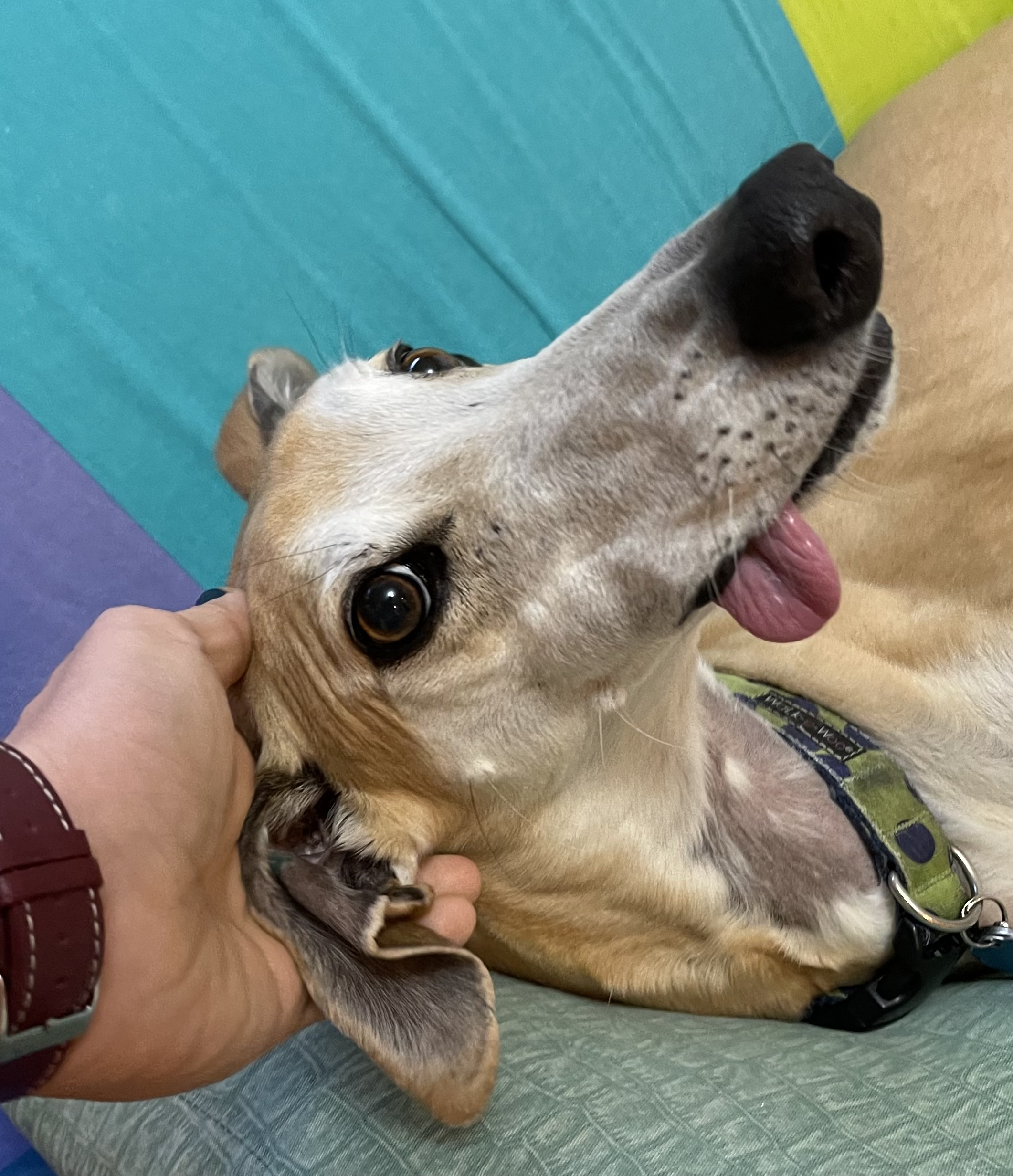
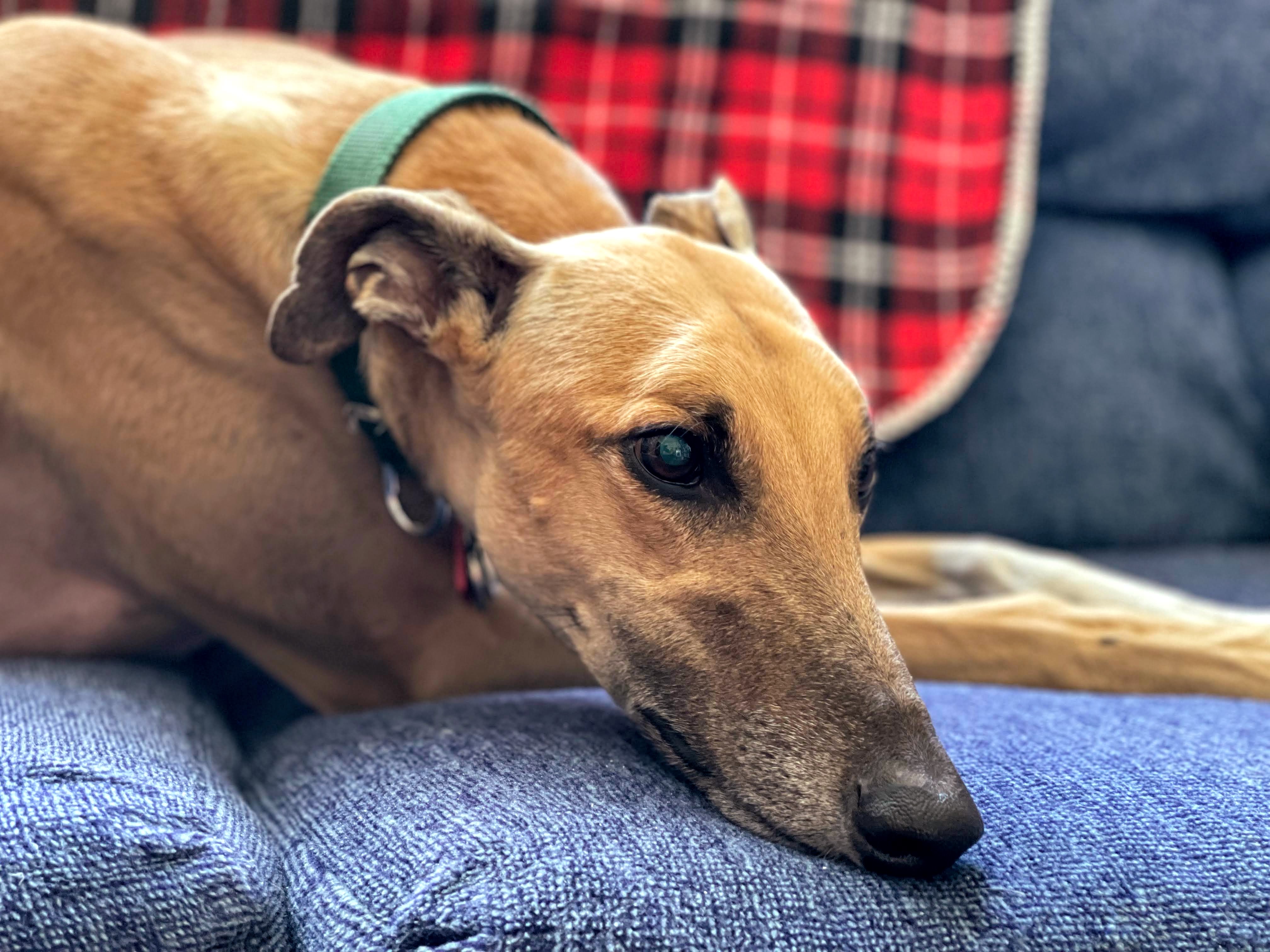
    January was a big month for our two greyhounds. At the beginning of the month, we marked one full year with Wallace, the blind rescue we picked up from Greyhound Pets Inc., and four full years with Oberon, the big princely fella we adopted from Royal Hounds. When we first adopted Wally, I wrote in this newsletter that he and Obie had the demeanor of “friendly coworkers.” Now, they are absolutely inseparable. Wally relies on Obie as his seeing-eye dog, and Obie’s ego really thrives on having a younger dog to follow him around.

    As Obie did during his first year with us, Wally has softened a lot—he’s learned that he can come up to us and ask for cuddles and comfort whenever he needs it, and that seems to have created an emotional stability in him that he didn’t have when we adopted him, basically, straight off the racing track. Their days are full of walks, snacks, naps, meals, and pets, with the occasional trip to the weekly greyhound run at the dog park in Steilacoom to keep them socialized and engaged with the world.

    If you’re in a position to adopt a dog, I really couldn’t recommend the experience enough. They’re expensive, and they take up a lot of your time, and they generally require the kind of stability that many people aren’t able to provide. But dog ownership has been one of the great and consistent joys of my life—learning how to adapt to these non-human mammals and communicate with them has opened my mind in a lot of very important ways. I don’t know how I would have gotten through the pandemic without them.

    Wally, it turns out, is not a big fan of snow.
    Did I just refer to Obie as “princely?” Hmmm. (Also, we got him a new collar shortly after this picture was taken because I hadn’t realized how grotty the old collar has become until I saw it in the picture.)

    I hope your month has gone well, and that you’re not in as dark a mental space as I am. There are lots of wonderful things in the world, and I hope your life is full of them.

  • What I’ve been reading and writing: December 2021

    The fifth and final issue of Snelson: Comedy Is Dying, the dark satire about cancel culture and comedy that I created with genius artist Fred Harper, came out last week. If you want Snelson on your bookshelf, you’re in luck—the fancy-pants collected edition, which will include five bonus short Snelson comics and some neat behind-the-scenes looks at Fred’s artistic process, will be published this March. You can pre-order it now from your local comic shop, from your local indie bookstore, or from Bookshop or Powell’s.

    I’m honored to report that David Sedaris wrote a blurb for the collected edition that is beyond generous. Here it is:

    “The best satire in America is between these covers. So dark, so rich, and so beautifully, eerily rendered.”

    Wow. And if that’s not enough sickening self-promotion for one email, I’m also absolutely thrilled to inform you that I was recently shortlisted for Best Comic Writer of 2021 by comics criticism site Broken Frontier. If you’re so inclined, the awards are a people’s choice kind of deal, and you can vote for them online through January 1st. Really, though, the honor is just in being nominated by Broken Frontier staff—you can find some of the best comics of the year on that list of nominees, and I’m proud to be included.

    I’ve Been Writing

    For Business Insider, I wrote about how large financial institutions prey upon their poorest customers to the tune of billions of dollars a year with overdraft fees. I also wrote about how the economic security that used to belong to the American middle class is now an indulgence that’s only enjoyed by the top 90th percentile of American wealth, and I explained why so-called “colorblind” economic theories which don’t take race into consideration are ultimately harmful for people of color.

    For the Seattle Times, I wrote about Uppercase Bookshop, a beautiful mostly used bookstore in Snohomish that a mother-daughter team runs out of a log cabin. And I also contributed two blurbs to the Times‘s roundup of favorite books of the year.

    I’ve been reading

    I really liked Dream Girl, Laura Lippman’s novel about an old novelist in decline. It’s a story told by a man—a cross between Phillip Roth and Jonathan Franzen—who isn’t willing to accept his flaws, even as his mistakes come back to haunt him. The first half of the book is a gorgeously constructed character study of a basically terrible (or terribly basic) man, and in the second half of the book a murder plot introduces itself and the book turns into a gleefully dirty little thriller.

    The premise of Everything and Less, Mark McGurl’s book-length essay about how Amazon has changed the content and structure of novels, is a brilliant one. Through novels including Fifty Shades of Grey and the comic erotica of Chuck Tingle, he makes a compelling case. Unfortunately, the book is rather aggressively academic, and McGurl crawls up his own argument to the point that it starts to feel like an obscure conspiracy theory. It’s a great topic for a long magazine article, but it’s annoying when stretched out into a whole book.

    This year, a new musical about the making of Jaws called Bruce will debut at the Seattle Rep. (The name of the play is taken from the name of the mechanical shark used in the making of the movie, which was itself named after Steven Spielberg’s lawyer.) I just read the book that the musical is based on, a quickie making-of narrative by Jaws screenwriter Carl Gottlieb called Jaws Log. It’s a fun document of the frustrations and triumphs of making the world’s first summer blockbuster on a limited budget, though it’s hardly a warts-and-all scorcher. If you like show business memoirs, this is a funny and well-told, though relatively scandal-free, example of the form.

    A few weeks after Stephen Sondheim died, my long-awaited library hold on the audio version of James Lapine’s Putting It Together: How Stephen Sondheim and I Created Sunday in the Park with George happened to come come through. Lapine was relatively unknown in the theater world when Sondheim partnered with him to make a musical about Georges Seurat’s famous painting. In the book, Lapine interviews Sondheim, original cast members including Mandy Patinkin, and others who had a hand in the production about their experiences during the musical’s rocky transition from workshop to Broadway. Like Jaws Log, it’s very reverential of the artwork in question’s success, but it’s similarly well-told—and it’s even more curious about the alchemy that created the production’s success. Jaws Log is the more fun book of the two, but Putting It Together is probably more useful for people looking for insight into the creative process.

    I’ve loved all of Jess Walter’s novels, so it’s not surprising that I loved his latest novel, The Cold Millions. But I was completely blown away by this book, which is about the fight over labor unions in Spokane in the early 20th century. It’s far and away Walter’s best book, and it has to be one of the best books I’ve read this year. It’s been out for a while now–just came out in paperback a couple months ago—but I’m glad I saved the book for a holiday season when I could really sit and take my time with it.

    Charles Baxter’s The Sun Collective is a novel about an anti-capitalist cult that tears apart a midwestern family. While it’s not the best thing Baxter’s ever written, I really enjoyed the book because it felt so very of-the-moment, dealing as it does with homelessness, class issues, liberal self-reflection, and the growing gap between the haves and have-nots in American cities.

    And if you’re looking for a good old-fashioned mystery series, the Reckless series of graphic novels by writer Ed Brubaker and artist Sean Phillips will scratch your itch. The series follows a half-assed private detective named Ethan Reckless as he navigates the seedy underbelly of 1980s Los Angeles. I binge-read the first three books in the series—Reckless, Friend of the Devil, and Destroy All Monsters, in that order—over the holiday break, and now I have to wait four or five months for the next book. This is the most exciting series in comics right now, for my money—both in terms of storytelling skill and the publication format. I think more comics are going to start to be published this way, in the form of bulkier hardcover releases once or twice a year rather than slender monthly stapled comics, and I’m glad Phillips and Brubaker are showing comics creators what they can do with the format.

    That’s all for this month

    Because it’s the end of the year and the end of the year is always about lists, I thought I’d share ten of the books, movies, and TV shows released in 2021 that moved me most. These aren’t ranked lists—I don’t believe in “best” or “favorite” works of art—but they are pieces of art that I enjoyed and which provoked feelings and thoughts that stayed with me throughout the year.

    Books

    (Note: If you’d like to learn more about any of these, I’ve written about all these books in previous issues of this newsletter.)

    • No One Is Talking About This by Patricia Lockwood
    • The Leak by Kate Reed Petty and Andrea Bell
    • Secret Seattle by Susanna Ryan
    • Project Hall Mary by Andy Weir
    • The Contrarian by Max Chafkin’
    • Touching This Leviathan by Peter Wayne Moe
    • Cheer Up! Love and Pompoms by Crystal Frasier, Val Wise, and Oscar O. Jupiter
    • We Run the Tides by Vendela Vida
    • The Seeds by Ann Nocenti and David Aja
    • We Hereby Refuse by various artists

    TV Shows

    • Reservation Dogs
    • The Great
    • Dopesick
    • Foundation
    • Ted Lasso
    • What We Do in the Shadows
    • Only Murders in the Building
    • Dickinson
    • Hacks
    • Pen15

    Movies

    • Don’t Look Up
    • The Power of the Dog
    • The French Dispatch
    • The Green Knight
    • C’mon C’mon
    • Passing
    • Finch
    • Dune
    • Shiva Baby
    • Bo Burnham: Inside

    Finally, with this email I’ve officially been doing this newsletter for one year. I want to thank you for reading and subscribing, and I especially want to thank everyone who takes the time to write back. I’ve really enjoyed creating a record of my writing, reading, and thoughts in this way—it’s a hell of a lot more intimate than a blog, and I’ve enjoyed experimenting with my writing voice to reflect that. I’m looking forward to year two, and I hope you are too.

    Wishing a very happy and healthy new year to you and yours!

  • What I’ve been reading and writing: November 2021

    What I’ve been reading and writing: November 2021

    Earlier this month, for the first time in almost two years, I double-masked up and went to one of the two big chain movie theaters in downtown Seattle. And I want to be positive about rejoining life after lockdowns, but it was an objectively terrible experience.Before the pandemic, I went to the movies a lot—roughly once a week or so. Since the last pre-pandemic movie I attended in March of 2020 (a screening of the excellent Portrait of a Lady on Fire) I had forgotten how much of the experience of going to a corporate movie theater just outright sucks.

    First, you get your backpack checked by an apathetic teenager, in case you’ve forgotten that mass shootings regularly happen in America. Then you sit through an infomercial preroll, six obnoxious advertisements for cell phone carriers, a Google ad, and Matt Damon shilling cryptocurrency with a monologue about how history hates losers.And then the blockbuster I attended just wasn’t worth my full attention for more than two hours—it was a dumb, predictable, boring experience that was practically designed to be half-watched by someone sitting on their couch, scrolling around on their phone.Now that I’ve fallen out of the habit of going to the movies, I can see that the act of going to a corporate movie theater is depressing.

    Happily, the big chains and blockbuster movies aren’t my only option. I’ll go out of my way to attend more thoughtful movies at independent movie houses from here on out—places like The Ark Lodge, The Beacon, Majestic Bay, and the Admiral Theater, which place the moviegoer over quarterly shareholder statements.

    But I wonder how many of these experiences I’m going to have in the months and years to come—a return to normal, only to realize how unpleasant normal really was. Think of all the mind-numbing waiting in line I didn’t do over the last couple of years—the security-theater screenings I didn’t have to go through, the queasy corporate sponsorship announcements I didn’t have to tolerate, the awkwardness of liminal spaces that I didn’t experience. How many returns to normalcy am I going to experience in the future, only to be let down by the banality of it all?I realize this may sound ungrateful. I have my health, and I’m very lucky to work for an employer who isn’t making my coworkers and I rush back into a workplace, so I’m the last person who should complain about any of this.

    But I also suspect that I’m not alone in feeling an emotional drag as The Great Letdown gets underway, and I wonder if anything positive can come from this crushing disappointment. Maybe going out in public doesn’t have to be a disappointing, invasive, uncomfortable experience? Can we build a better way to be a human in crowded public spaces?

    (Note: I wrote this introduction before Omicron Variant panic started spreading across social media over the long weekend. I’d like to remind you that the best thing you can do right now is keep wearing masks indoors, get your vaccinations and boosters, and do not panic. The smartest people in the field are gathering information and until they update us, the truth is that we know very little—but at least we know what we don’t know, which is a way better place to be than the uncertainty we felt in those first days of March of 2020.)

    Find me online

    In an episode of Pitchfork Economics earlier this month, my coworker Goldy and I interviewed superstar journalist Sam Quinones about his new book on the synthetic opioid crisis, The Least of Us. Quinones was among the first to sound the alarm on America’s opioid crisis (and to spotlight the Sackler family’s responsibility for the crisis) and his new book talks about why fentanyl will likely be even worse for America than opioids. It’s a striking piece of journalism from someone who clearly loves doing the work. (I also recommend the Hulu dramatized miniseries about Oxycontin, Dopesick, which is predictable but informative, and packed wall-to-wall with great acting, particularly from Michael Keaton as a small-town doctor and  Michael Stuhlbarg, who correctly plays Richard Sackler as a hissing vampiric supervillain.)

    I also wanted to call your attention to a piece on the website Comics XF in which two comics critics—Will Nevin and Cassie Tongue—engage in a dialogue about three issue of the comic I created with Fred Harper, Snelson: Comedy Is Dying. Tongue and Nevin don’t love everything about the book, but they thoughtfully engage with it and really drill down into what Fred and I are trying to say with it, which is really all that any writer can ask for. In fact, I’d go so far as to call this a dream come true—the kind of intelligent criticism that most writers never get at any point in their careers. I’m so grateful to Nevin and Tongue, and to Comics XF for their attention.

    I’ve been writing

    For Business Insider, I wrote about how friction-free mail-in voting transformed me from a pretty good voter into someone who votes in absolutely every single election. I also wrote a piece about how the tax code advantages white families and disadvantages Black families that turned my inbox into an orgy of racist whitesplaining for a weekend. 

    My most recent BI piece is an examination of the work of a Seattle expert in homelessness, Josephine Ensign, and her clear-eyed analysis of what American cities need to do to really end homelessness once and for all. 

    And for the Seattle Times, I profiled Chris Jarmick, the co-founder and owner of Kirkland independent bookstore BookTree, which is a great used and new bookshop that can brag about its amazing kids’ section and the great personalized advice for readers that Jarmick offers.

    I’ve been reading

    It’s probably fitting that my enjoyment of Lisa Halliday’s novel Asymmetrywas asymmetrical. The novel is broken into three sections, and the first, longest, story—a novella, really, about a young woman who enters into a relationship with a very old, celebrated novelist—is by far the most interesting segment. The second and third sections continue the story began in the first, but from different perspectives that don’t feel nearly as compelling as the story of the relationship. I’m glad I read the book, but I wonder if I might have enjoyed a standalone novella of the first story even more.

    Bewilderment, the latest novel from Richard Powers, is a sly and emotional work of science fiction that just pushes out a little bit on the edge of what is scientifically possible right now. About a father and son who are trying to learn how to be a family after a significant emotional loss, it’s an engrossing story, but I have mixed feelings about the very end of the book—no spoilers—and I’m curious if I’m the only reader who felt it ended too abruptly.

    I enjoyed two new books by great nonfiction writers this month—Fuzz, by Mary Roach, and On Animals by Susan Orlean. The former is a collection of essays grouped around the idea of what happens when animals break human laws, and the latter is a collection of short essays about animals. I don’t think these books count as major works for either Roach or Orlean—they’re pretty light—but sometimes you just want to read some beautiful, funny writing about animals.

    A Touch of Jen is a debut novel by Beth Morgan about a young couple that have an unnatural fixation on a minor Instagram influencer. They insinuate themselves into the influencer’s circle of friends, and then everything goes screwy. It’s an uneven but well-written exploration of what social media is doing to our fantasies, and our lives.

    The word “harrowing” gets used a lot to describe books, but Donald Antrim’s One Friday in April: A Story of Suicide and Survival is an undeniably harrowing book. It’s a first-person account of Antrim’s suicide attempt in 2006, and his long and rocky road back to sustainable mental health. It’s a slender book—I white-knuckled my way through the whole thing in a night—and it serves as an even-more-raw companion to William Styron’s excellent autobiographical exploration of depression, Darkness Visible. I wouldn’t recommend it to someone who is currently Going Through Some Things, emotionally, but it could serve as a resource for people who are currently living with people who are Going Through Some Things.

    Kristen Radtke’s Seek You is a collection of essays about modern American loneliness told in comic book form. I really like the way Radtke addresses non-fiction comics—for the most part, she draws one image per page to illustrate her point, allowing her to alternately illustrate some hard-to-visualize concepts in her prose and also enhance the emotional argument with illustrations, like a montage of pro-Trump yard signs in a section about what loneliness is doing to the American psyche. I hope dozens more cartoonists are working on books like this, because this style of pictorial essay should become a robust sub-segment of the American comics genre.

    Lauren Groff’s Matrix is a weird and wonderful novel about a nun who tries to make sense of a confusing and dangerous world by taking control of her nunnery and protecting her sisters through elaborate measures. Based on a true story from medieval times, Matrix is a bizarre, moving story of faith, devotion, and mortality.

    That’s all for this month

    As you may know, I go for long walks around the Seattle area, usually on Saturdays. Earlier this month, I found two enormous piles of peeled oranges in an office park in Renton that borders on the Black River Riparian Forest. This was a mystery that captured my interest: no peels were anywhere in sight, the oranges were otherwise unmolested, and the large piles were carefully constructed to the point that they were almost pyramids. 

    I’m glad I wasn’t the only one who thought these oranges were worthy of investigation. Garrett Kelly and Jeremy Puma of the delightful Seattle-based supernatural investigation site Liminal Earth went and checked out the pile of oranges and made a video documenting their weird adventures on that same site. 

    Do I believe in the supernatural? Absolutely not. But I acknowledge the weirdness of finding two big stacks of uneaten, meticulously peeled oranges on a random walk, and I invite any and all possible explanations for the weirdness because I go on long walks exactly for this kind of meandering, fanciful thinking. I’m glad Liminal Earth is there to join me when my wanderings get weird.

    And if you’re an urban walker, I highly recommend the trail that runs through the Riparian Forest, for what it’s worth—it’s gorgeous, it connects to a great trail that runs all the way south through Tukwilla down to Auburn, and it’s quiet. Don’t let potentially demonic piles of citrus fruit distract you from the beauty of nature.

    Finally, let me just confirm for the record that I got a booster shot with absolutely no aftereffects save a sore arm, and the process was quick and efficient and I highly recommend it.

    I hope your holidays are proceeding well and that you’re staying safe, not panicking, and getting boosted. As a gift for reading this far, please enjoy this gif of Obie and Wally, who are feeling a little skeptical about all this rain we’ve been having:

  • What I’ve been reading and writing: October 2021

    What I’ve been reading and writing: October 2021

    First, and most importantly: If you live in Washington, have you voted yet? If you’re not in Washington, is there an election happening on Tuesday where you are? Please vote. I guarantee you that the person you hate most in the world is voting in this election. Don’t let their voice count more than yours. And may I suggest using the Progressive Voters Guide to help you navigate your ballot? 

    Otherwise, it’s been—not gonna lie—an absolutely shit month. A lot of those reasons are personal and I don’t have anything of value to say about them here. But in general, the autumnal onset of darkness hit Seattle hard, and I’m acutely aware that there’s a lot of unnecessary pain and suffering in the world. 

    Way down on the problem scale, both our dogs had minor medical emergencies in the past month. Obie was stung by a bee and had a terrible reaction, and Wally had a disgusting butt condition that took a lot of attention and care to resolve.Both the dogs have come out the other end of their challenges swimmingly.

    And we’ve seen a few friends in the past few weeks who only met Wally back when we first adopted him in January, and they’re astonished by how far he’s come along. Wally was a loud, scared mess back in the early days—for good reason! He had to adjust to going blind and moving to a house for the first time in his life. Less than a year later, he’s a much calmer, intensely cuddly, very happy pup who seems satisfied with his new pack. Because I live with Wally, I missed that progression, and I’m happy to see it through the perspective of others. It’s always worth it when things are undeniably sucky to look back and see how far you’ve come with the people (and pets) who matter most to you.

    Find me online

    • Snelson artist Fred Harper and I did our first-ever podcast interview together on Comics for Fun and Profit. This was actually the first time Fred and I had ever spoken in person, after five Snelson short stories and five full issues of Snelson. He’s got an amazing radio voice and he has all kinds of great stories about breaking into comics by accident in the 1990s. 

    I’ve Been Writing

    For the Seattle Times, I interviewed David Sedaris about why not being able to read in front of huge audiences during the pandemic was absolute torture for him.:

    Well, I have a bottomless need for attention, and there’s not an amount that would fill the hole. When people say to me, ‘Oh my God, you’re going to, like, 70 cities. That must be awful.’ I only say, ‘No, it’s not, it’s actually great.’

    When I finish a tour, I’m just counting the days until the next one. I can’t wait to be in a hotel again.

    This interview was very close to being the first time the Seattle Times ever published the word “titties,” for whatever that’s worth, but a last-minute edit for space pushed a whole passage about orange Jell-O (and titties) out of the final cut.

    I also wrote about Outsider Comics and Geek Boutique, a fashion-forward comic shop that has been gloriously upending the white male comics-shop paradigm for the past five years in Fremont. You can find some great comics recommendations from Outsider owner Jill Taplin in this pice.

    For Business Insider I wrote about how the American social safety net successfully worked during the pandemic, and how we can reform it so that it works successfully all the time. I also wrote about why extractive big companies like Walmart and Amazon didn’t beat small businesses in the so-called free market of ideas, and how we can revive rural economies with investments in small businesses. And you already knew that rich people use philanthropy as a scam to avoid paying taxes, right?

    I’ve been reading


    Last month
    , I wrote about a character in The Very Nice Box who felt unrealistic to me: “The main character is emotionally wounded in the improbable way that only protagonists of novels are emotionally wounded—she never deviates from her perfectly attuned daily schedule, and nothing ever interferes with the little cocoon in which she’s hiding from her trauma, until the inciting incident of the book throws her years-long uninterrupted torpor into chaos.” At least one reader thought my comments meant that I believed trauma didn’t work like that in real life, and that’s a miscommunication—totally my fault.What I meant to say was that it felt like the protagonist’s particular trauma didn’t feel lived-in at all—that she and her complicated rituals seemed to pop into existence on the day the novel began.

    This month, I read Melissa Broder’s excellent novel Milk Fed, and it got everything right about trauma that The Very Nice Box got wrong. The protagonist’s disordered eating is very complicated and it dominates her life, but you can feel the years and years of pain and emotional torment that constructed it—it feels very real, and lived-in, and honest. Then she falls in love (or lust) with a woman who works the counter at a frozen yogurt shop, and everything goes sideways. Milk Fed surely isn’t for everyone—I feel like the bookseller ringing me up was subtly trying to warn me not to buy the book—but I loved its weird eroticism and sideways feeling of hope.

    Chana Porter’s The Seep is a novel about a different kind of alien invasion—one in which the aliens give humanity everything it’s ever wanted. After The Seep invade our bodies and minds, we can become anything, do anything, and live life however we want, in an eternal state of ecstasy. The book—and it’s a tiny little thing, really, more of an extended short story than a novel—focuses on a woman whose partner decides she wants to become a baby again and start life all over, which effectively is a spiritual form of divorce. I enjoyed this book, though I would have preferred a little more concrete detail and a little less Vandermeerian New Weird vagueness. (Vandermeer is great, but this book is focused on the particulars of a relationship and its aftermath, which feels jarringly at odds with the airy vagueness of the sci-fi.)

    I’ve read every novel Colson Whitehead has ever written, either on or before publication date. Not to be all lit-hipster, but I’ve been a fan of his since I cracked open an advance reader copy of The Intuitionist, and I love all his books—I was a champion of his second novel, John Henry Days, and I love Apex Hides the Hurt, which most consider to be the least of his works. I’m happy to say that Whitehead’s newest novel, Harlem Shuffle, is a funny crime novel and an excellent literary construction, a heist narrative set in 1960s Harlem with a roguish protagonist and a magnificent cast of characters. I’m very excited that Whitehead has announced he’s writing a second book about some of the same characters set ten years later. It will be his first sequel, and I’m really looking forward to revisiting this world. He writes a great bastard, and the shady world of Harlem Shuffle is, happily, filled with bastards.

    Dave Eggers’s latest novel, The Every, is a dystopian story about what happens when Google (or in this case The Circle, which is the thinly veiled Google-like company that figured in his previous satirical novel of the same name) buys Amazon. The book is a decidedly mixed cautionary tale about social media and over-reliance on technology, with some excellent observations about modern life nestled against some real groan-worthy cliches about the youth being too dang sensitive these days. I’m still glad I read the book, which is about a would-be corporate saboteur who wants to destroy The Every by pushing it into more and more invasive, sociopathic practices only to realize that the public loves her supposedly monstrous propositions. It’s very dark, a little too stuffy, and eagerly preaching to the choir. But at least it’s principled—even if it’s not successful in its arguments. 

    Ragnar Jónassen’s mystery Snowblind is a quick little thriller about an uninteresting young detective who moves to a fascinating remote Icelandic town, and has to solve a murder there. As a mystery, it’s pretty generic, but as a study of rural Icelandic life it’s enjoyable enough. In better genre news, I read Olivia Waite’s charming lesbian romance novel The Lady’s Guide to Celestial Mechanics, a soothing story about two willful women who fall in love in early 1800s England, when the field of astronomy is just beginning to resemble its modern form. The leads have great chemistry together, they experience just enough hardship on the path to romance to keep things interesting, and Waite clearly understands the period, even as she brings a welcome modern sense of social justice to the story.

    The Contrarian, Max Chafkin’s biography of Silicon Valley billionaire (and killer of Gawker) Peter Thiel, is a damning account of the life of one of PayPal and Facebook’s early investors. Thiel started out as one of the most aggressive libertarians in Silicon Valley, and he turned into one of Donald Trump’s most rabid supporters. The book is crammed full of hilarious anecdotes about some of the world’s richest people, who are widely mistaken for some of the smartest people in the world. (There’s an anecdote about Elon Musk struggling to understand why anyone would write a check for totals that they don’t have in their account that actually had me laughing out loud. The wealthy South African investor in a digital payments company never once took checking fraud into account in his business plan.)

    Chafkin does a decent job of keeping the camera squarely on Thiel, though I think he’s a little too forgiving of his subject. For instance, he reports on Thiel’s well-known hatred of colleges and his affinity for college dropouts, but he never recognizes the contradiction that Thiel only seems to be enamored with dropouts from Ivy League schools—meaning he still buys into the status that elite schools confer, even as he praises dropouts from those institutions. That shouldn’t be a surprise. Thiel has made a career out of disregarding norms and disrespecting institutions at the same time that he profits from those same norms and institutions. He hates government, but he makes billions from government contracts. I loathe him even more now than I did before reading the book—and I didn’t think that was possible.

    That’s All for this month

    When I was a teenager, all my stoner nerd friends were obsessed with the Dune series, and all my straight-edge nerd friends were obsessed with Isaac Asimov’s Foundation series. I must confess that I struggled with both series for a couple of reasons. For one thing, I find it very hard to get engrossed in stories that don’t take place on Earth—or at least that don’t have recognizable Earthlings as main characters. For another thing, I have a limited patience for world-building when it doesn’t figure directly into the plot of a story—I’m always more annoyed than impressed when an author writes ten thousand years of sociopolitical history as a backdrop to a fairly straightforward sci-fi novel.

    So is it heretical of me to admit that I greatly enjoyed both the new film adaptation of Dune and what I’ve seen of the new Foundation TV series? As a lifelong book guy, I perhaps should stick to the company line of “the movie is never anywhere near as good as the book,” and of course both adaptations sacrifice a great deal of the text in the translation process to live-action.

    But both of these intelligent, stylish adaptations successfully incorporate their world-building in service to the narrative, and that is exactly my style. We learn as much about the foreign worlds as we need to know, exactly when we need to know it. I’m sure the purists are complaining about all the sins of adaptation in forums across the internet, but to me it sure feels like a new golden age of science fiction in film and TV. I’m a sucker for stories about smart characters trying to navigate through moral dilemmas caused by enormous systemic failures, and both Dune and Foundation deliver exactly that. 

    I hope you’re adjusting to the autumnal darkness with at least a little more grace than I am. See you next month.

  • What I’ve been writing and reading: September 2021

    I want to call your attention to a letter that my friend Tim Lennon, director of LANGSTON, recently wrote to the Seattle City Council. Tim was responding to Seattle Mayor Jenny Durkan’s surprise appointment of a director to Seattle’s Office of Arts and Culture—read more about that at Publicola—but even if you don’t live in Seattle I think you should read this part:

    Seattle’s cultural sector was the first to shut down due to the pandemic and many of us have yet to even partially reopen or find work. The challenges of affordability, equitable access to resources, and the volatility of public and philanthropic support our sector was facing even before the pandemic made working in our industries increasingly tenuous. The last year and half of pandemic closures and cancellations only accelerated the impact of those trends. My fellow culture workers have put in impossibly long hours to find creative ways to keep our workers employed, to get our doors open again, to keep creating, and to keep meeting our communities’ cultural, spiritual and material needs. 

    The sad truth is that over the last two decades, even the most liberal American cities have failed to adequately support arts and culture. The arts is widely regarded by our local elected leaders as something people do in their spare time when they’re finished working at their real jobs, and I worry that as we emerge from the pandemic the arts will continue to be treated as a nonessential expense.

    But art is what makes cities work. It’s the musicians and artists and writers who define a place and give it value. When I was a teenager growing up in a small town in Maine, I didn’t dream of moving to Seattle because it’s where Microsoft is headquartered—I wanted to move here because I loved Nirvana and Fantagraphics Books and Jason Lutes’s amazing comic Jar of Fools. And it’s the art that’s kept me committed to this city, more than 20 years after moving here.

    Even before this pandemic, it was impossible for a beginning artist to afford to live in any of America’s biggest cities without a pre-existing financial cushion of some sort. In the next couple of years, we’re going to see some significant reprioritizing of values as cities and states recover from the pandemic. I worry that our leaders might prioritize boundless economic growth at the expense of cultural health. The fact that Mayor Durkan has proposed turning the appointed position of an arts director into a part-time job when it has always been a full-time position only justifies my concern.

    If elected leaders push organizations like LANGSTON (and Short Run, and Hugo House, and the Vera Project, and so on) to the margins, I’ll have to reconsider my commitment to Seattle. I want to live in a place that values arts as an essential part of daily life.

    find me online

    Holy cow—I’m doing two virtual events in October? I hope I don’t sprain anything.

    First up, comics journalist Dan Campos asked me to take part in a virtual panel on October 12th to discuss whether the current ongoing apocalypse will change the way we read and write about fictional apocalypses in the future. I’ve been thinking on this subject a lot, and I’m really excited to have this conversation. But I’m positively giddy that my current favorite comics writer, Mark Russell, is taking part in this panel. He’ll have plenty to talk about, considering that he’s currently publishing a great post-apocalyptic comic called Not All Robots that was written, I believe, during the pandemic.

    And second, I’m doing a neat virtual event produced by the good folks at Elliott Bay Book Company on  October 29th: I’ll be interviewing historian Timothy Snyder and artist Nora Krug​, who worked together to adapt Snyder’s essential little book On Tyranny into comic book form. If you went into a bookstore during the Trump presidency, you absolutely saw Snyder’s slender book on the shop’s bestseller list, and for good reason: Snyder has the rare ability to synthesize the current moment into the flow of history in a way that is neither hyperbolic nor boring. Krug’s adaptation of the book brings a new urgency to the text, and I can’t wait to talk to them about how it came to be and what the process of translation from prose to comic was like.

    I’ve been writing

    At the Seattle Times, I wrote about Joie des Livres, a beautiful little bookstore that popped up on the Washington coast a couple years ago and is rapidly growing into its role as the only new bookstore for many miles around. It’s in the middle of a weird expensive pre-fab urbanist beach town called Seabrook that didn’t exist at all 20 years ago. Seabrook used to kind of creep me out, but Joie des Livres makes it feel much more like a real place.

    And in my Business Insider column, I wrote about how the federal government might be able to regain the trust of its people, why cutting pandemic benefits too soon is a terrible idea, and why the snack food industry has gone through so many strikes recently. I also wrote about “Right-to-Work” laws, which sound like a positive thing but are in fact a way to lower worker pay and shrink bargaining power.

    I’ve been reading

    Because I’m apparently a masochist, I listened to the audiobook of I Alone Can Fix It, Carol Leonnig & Philip Rucker’s account of Donald Trump’s “Catastrophic Final Year” in office. To be clear: I’m not saying that everything is perfect now, but holy cow, I’m shocked that I had already started to forget exactly how frantic everything was when Trump was in office. I knew it was bad, but I forgot that pit-of-the-stomach churn that I used to feel every morning when I opened Twitter. It’s interesting, too, that General Mark Milley appears to be a major source for this book, given that Bob Woodward’s new book about the same period of time has a lot more information about what Milley was actually up to during this period. Fix It is almost certainly the story Milley wanted you to hear, but it’s certainly not the full story.

    Speaking of how frantic recent years have been, Hermione Hoby’s novel Virtue is set during the frantic last couple of years, and it’s a book that tries to cram all of America’s social conversations into a single narrative. The story follows a young man as he becomes a low-level editorial intern at a storied literary magazine in New York City, and the first third of the book effectively lampoons the self-importance of the magazine and its staff. But then the narrative takes him to a farmhouse where he becomes entangled in the married life of an older couple, and the story loses some steam. It’s unfortunate, too, that one major Black character in the story has to stand in for every major race-related issue of the past four years—she becomes our narrator’s lens into subjects ranging from protests to police violence to tokenism in the arts, and she carries so much weight that she loses any sense of autonomy by the time the book reaches its climax. Still, it’s an ambitious debut novel and I’m excited to see what Hoby does next.

    Michelle Zauner’s memoir Crying In H Mart is worthy of the accolades it’s received. Zauner, who records music as Japanese Breakfast, writes about her family—especially her mother—with tremendous sensitivity, and her complicated love for her mother’s Korean family is so specific that it feels universal. A relatively quiet and small story, but one that stuck with me.

    The Very Nice Box, by Laura Blackett and Eve Gleichman, is a novel about a woman who designs products for an IKEA-like company. It’s very mannered. The main character is emotionally wounded in the improbable way that only protagonists of novels are emotionally wounded—she never deviates from her perfectly attuned daily schedule, and nothing ever interferes with the little cocoon in which she’s hiding from her trauma, until the inciting incident of the book throws her years-long uninterrupted torpor into chaos. It feels less like a novel about real people and more like a pair of authors playing with stiff figures in a doll house. Regardless, I enjoyed the ideas, symbols, and themes of the book, even if I never emotionally identified with the characters.

    Billy Summers is the best novel that Stephen King has written in decades. That sounds like high praise, but please know that I’ve loathed all of Stephen King’s novels since, maybe, The Green Mile? (I haven’t read all of them, but boy was Under the Dome terrible.) It’s the story of a hit man who pretends to be a writer as a cover for his latest assassination, but he slowly falls in love with writing and so he gradually learns how to be human again. The book reads more like Elmore Leonard than Stephen King in parts, which I mean as a huge compliment. Readers should be warned that there are plenty of King-isms here: His trademark fatphobia is on full display, and he addresses the trauma of sexual assault with all the stunted empathy and understanding that a well-meaning Boomer man can muster. But I had a really good time with this book, and was shocked by how present King felt throughout, with none of the sloppiness that clogged up most of his recent books.

    Robert J. Sawyer is a Canadian sci-fi writer who writes about Big Ideas but doesn’t take them too seriously. I loved his book Calculating God, which is about aliens who show up on Earth one day demanding to talk to a paleontologist. Together, the aliens and our protagonist try to unwind a mystery that might uncover the true meaning of life. If you like old-school sci-fi that doesn’t get too wrapped up in making the high concept feel realistic, this might be for you—though you should be warned that the ending is super-rushed.

    I read Agatha Christie’s And Then There Were None for the first time, and it was a lot of fun—but my favorite part of the book was Christie’s introduction, which can be succinctly paraphrased as “This book was really hard to write, you guys, and I did a really great job with it.” Here it is:

    You do you, Agatha!

    That’s all for this month

    Like many of you, I’ve been watching a lot of TV. And TV is really good these days! I’ve enjoyed Nine Perfect Strangers and Ted Lasso and The White Lotusand all the same shows that everyone’s talking about. (Except I just can’t get into Succession, and I’ve tried a couple times; I’m unable to find the appeal of watching a bunch of terrible rich people behaving terribly.)

    But I was blown away recently by the FX comedy Reservation Dogs. It’s a half-hour comedy that’s actually funny, and it stars a cast of young Indigenous actors who have charisma to spare. (Seriously—any one of the four main leads could headline their own Marvel movie tomorrow if they had to.) It’s well-written, well-acted, and addictive as hell, with each episode advancing the story in important ways and no filler episodes to speak of. Each episode is stuffed with satire and a little bit of magic and gallons of heart.

    It’s also noteworthy that ReservationDogs is a show about people who are poor, who in fact have to worry about money all the time. All the shows I mentioned above, and I think the majority of shows on network television, are about people who never have to worry about how they’re going to pay rent, or where the next meal is coming from, or how they’re going to materially improve their lives. TV has always over-represented rich people, but it seems like poor people have all but vanished from TV over the course of my lifetime. it’s great to watch a show that takes place in the real world, where everything isn’t sterile and extravagantly bland for a change.

    The first season of Reservation Dogs is 10 episodes long and it’s all on Hulu now. I hope it runs for another six seasons, and that’s why I’m asking you to watch it, too.

  • What I’ve Been Writing and Reading: August, 2021

    What I’ve Been Writing and Reading: August, 2021

    I haven’t been posting on Twitter very much lately. Sometimes the news feels too terrible to comment on. Sometimes I feel like I have nothing original to say, or I’m just exhausted by the discourse. I’m also trying not to amplify bad takes, and some days all the takes are bad. 

    One thing I did tweet, though, was that I’ve been missing the freedom of blogging lately. The idea of a place online where a person or a select group of people can just publicly talk about everything on their minds—at length or in brief—is now so far in the past that it seems almost quaint.I don’t want to be nostalgic, because I honestly believe that nostalgia is a poison, but the return of Gawker has reminded me that blogging was once its own form of literary communication, and that form has all but gone extinct.

    I love the brevity of Twitter, and I enjoy the epistolic nature of newsletters more with each passing month. But the idea of a blog—of a handful of smart people sharing a strip of online real estate and having a never-ending conversation—was an actually new idea in the media world. And before we even really had a chance to investigate the possibilities of the form, it was murdered by the walling-off of the web. And that’s a shame.

    Find me online

    I was honored to be the subject of comics journalist Katie Liggera’s first interview. She’s got a boundless enthusiasm for comics and is at the beginning of what I hope will be a long career. The interview, which was published at Comic Book Yeti, is a wide-ranging and fun discussion about the comic that Fred Harper and I created, Snelson: Comedy Is Dying.

    I also did an interview with Comics Multiverse where we talked about my lifelong love of comics, which Marvel and DC characters I’d like to write, and much more. The second issue of Snelson: Comedy Is Dying is coming out at the beginning of September and this issue is the thesis statement for the whole series, a deep dive into the fallacious idea of cancel culture. Fred also drew a panel in this issue that took my breath away when I saw it for the first time:

    It’s the shadows on the wall that get me.

    I’ve been writing

    For the Seattle Times, I interviewed the amazing Susanna Ryan, who is maybe better known as the Instagram cartoonist known as Seattle Walk Report. Earlier this month, she published her second book of Seattle-centric cartoons, Secret Seattle. If you live in the area, you really should read this book. Ryan has a gift for finding all kinds of historical items of note around the city, researching the history behind those items, and then relaying that information to readers in funny, economical comics. So the book is packed with anecdotes about the century-old coal chutes, hidden cemeteries, and fascinating tiny pieces of the city that you likely walk past without even noticing.

     I also broke some news in my monthly Seattle Times bookstore profile column: The Edmonds Bookshop, which next year marks 50 years in operation, is changing ownership. Mary Kay Sneeringer, who has owned the store for 20 years, is passing the baton to Michelle Bear, the shop’s assistant manager. Sneeringer shared some really interesting, touching anecdotes about her time as the store’s owner, and it’s exciting to see a mainstay of downtown Edmonds prepare to enter a new generation of ownership.

    In my Business Insider column this month, I wrote about a remarkable interview with Redfin’s CEO, in which he talks about the problem with housing inequality and why we can only get out of this urban housing crisis by taxing the hell out of the super-rich. I also wrote about why filing taxes in America is such a mess, why a Frito Lay worker strike in Kansas managed to capture America’s attention, and why America’s $7.25 federal minimum wage is a national embarrassment (and also why you could make a very credible case for a $24 minimum wage.)

    I’ve been reading

    I went to the beach for a week and read an entire shelf’s worth of books, so you are warned: This section is going to be unnaturally long this month.First of all: I had never read Finnish cartoonist Tove Jansson’s novel The Summer Book before, and oh my God I’m so glad I finally did. I sat down in the sun on a sunny afternoon and started reading this book, about a grumpy young girl and her grumpy old grandmother spending the summer on an island, and I didn’t stand up again until I’d read the whole thing through. Summer, for me, is always a mix of sadness and joy. I can’t fully enjoy a beautiful summer day because I’m always painfully aware of the fact that the beauty is transitory, and soon it will be rainy and cold and the trees will be bare. (I absolutely love autumn, but I also absolutely hate the approach of autumn at the end of summer, when the weather gets unpredictable and surly and the days get noticeably shorter with each passing week.) I’ve never read a book that captures that summer melancholy so completely, and so beautifully. I already know that I’m going to read this book over and over again—probably once a summer—and I’ve already pushed it into peoples’ hands and mailed copies to friends. (And I make sure to hand it over with the warning that you shouldn’t read the introduction first. Read it at the end. It gives too much away.) If summer’s excess and abundance and beauty ever makes you feel a little bit sad and overwhelmed, this book will make you feel understood. It’s pure melancholic magic.

    I listened to the audiobook of Saturday Night Live performer Cecily Strong’s memoir This Will All Be Over Soon expecting a collection of funny essays, in the mold of memoirs by Tina Fey and Mindy Kaling. And that would have been great! Even in the exceptionally strong cast the show enjoys right now, Strong is probably my favorite current SNL performer. She really commits to her bits, and she brings intelligent little touches to her characters that aren’t, strictly speaking, necessary, but which make them feel more lived-in and deliberate. Instead of a funny collection of essays, though, Over is a memoir about Strong’s experiences during the pandemic, and about the death of a beloved young cousin who was diagnosed with brain cancer. There’s nothing particularly novel or groundbreaking about Strong’s story or observations. Instead, it’s the diary of an intelligent and earnest midwestern woman who is scared and sad and uncertain about her future, and it completely won me over with its honesty and Strong’s courageous ability to repeatedly admit that she doesn’t have all the answers.

    I’d heard that Facebook executives were quitting in advance of the publication of An Ugly Truth, which reports on the inner workings of Facebook, particularly over the last few tumultuous years. And Sheera Frenkel and Cecelia Kang do bring a lot of journalistic firepower to the book, getting inside of secret leadership meetings and revealing both Mark Zuckerberg’s complete inability to understand the harm he’s doing to the world and his total disgust at the world for not being suitably grateful for the gift of Facebook that he’s given to us. But it doesn’t feel revelatory at all, and there’s nothing damning about it that you didn’t already know: Facebook is terrible, and it’s bad for humanity, and it’s led by selfish, arrogant idiots. If you need your biases confirmed, this will do that, but it doesn’t contain the smoking gun that will finally convince Congress to do their duty and protect the American people from Zuckerberg’s rampaging monster.

    Rachel Yoder’s Nightbitch, a novel about a mother of a toddler who believes she’s turning into a dog, is a funny and sometimes disgusting book about the horrors and joys of being a mammal. The book gets better and better as the unnamed narrator’s delusions grow more and more outrageous, and it builds to a climax that, while not entirely satisfying, at least rings true. I very much enjoyed the audiobook, which is read by Cassandra Campbell. 

    I had a good time with three thrillers on my vacation:

    • Jean Hanff Korelitz’s The Plot, about a writing teacher who steals a novel idea from one of his students only to become an international sensation, is built on a lie of a premise: The idea that there’s a book concept so compelling, so foolproof, that anyone could craft a successful novel out of it. If you’re willing to suspend your belief and accept that little impossibility as true, the book is a very fun little yarn. If you’re someone who actually writes books, it will probably feel like particularly unrealistic sci-fi. 
    • Ragnar Jónasson’s The Mist opens with an old Icelandic couple settling in on their remote farm at the beginning of a brutal winter that will see them completely isolated from the rest of the world. Then there’s a knock on the door. It’s a mean little twisty story that will appeal to people, like me, who have an outsider’s fascination with Iceland and her people.
    • If you haven’t seen In a Lonely Place, the Humphrey Bogart movie adapted from Dorothy B. Hughes’s amazing noir novel, I can’t recommend it enough. It’s a genuinely dark story that really lets Bogart explore his most antisocial impulses. I just read The Expendable Man, Hughes’s thriller about a Black man on a road trip who makes the mistake of picking up a young white woman hitchhiking by the side of the road in the early 1960s. When she eventually turns up dead, our protagonist is immediately labeled the prime suspect by a racist criminal justice system. I can’t believe this book hasn’t been turned into a movie, because it reads like a sleek film noir directed by a virtuouso. You barely read this book; instead, you watch it unfold.

    An advance copy of Atticus Lish’s upcoming novel The War for Gloria reminded me of some of John Irving’s more successful early novels. It’s a big book about a young man, his dying mother Gloria, and the absent father who decides to brashly re-enter their lives. The father in this book is one of the great horrific literary fuckups, a know-it-all who is petty and small in frustratingly imaginative ways. I think the book could stand to be 75 pages shorter—I feel that about most books, these days, honestly—but I always had a hard time finding a good place to stop because Lish kept drawing me back in.

    Harold Schechter and Eric Powell’s nonfiction comic “Did You Hear What Eddie Gein Done?” is a biography of serial killer Ed Gein—the basis for both Psycho and the Texas Chainsaw Massacre—and as far as true crime comics go, it’s very compelling, well-researched, and elegantly structured. But I do take issue with the way Powell depicts Gein’s horrendous crimes—I think he illustrates too much of Gein’s butchery of human bodies, where it would have been more powerful—and probably responsible—to leave some of the gore to the reader’s imagination. At one point in particular, the frank goriness of the illustrations drag the book over into sensationalism, which feels like a waste of Powell and Schechter’s formidable talents. 

    On the other end of the comics spectrum, Cheer Up!: Love and Pompoms is an absolutely adorable high school romance comic about a trans girl and a misanthropic young lesbian who bond—and fall in love—after joining the high school cheer team. Crystal Frasier, Val Wise, and Oscar O. Jupiter juggle a fairly large cast with an extensive history between them, and the reader never feels lost, preached to, or bored. And if you’re exhausted with romance stories in which one character has to become unlikable in order for the plot to progress, you’ll be happy to know that both of these leads are lovable all the way through. Charming as hell!

    I must not have been in the mood for non-fiction because three books failed to work on me at all this month. 

    • Emily Anthes’s The Great Indoors, billed as an exploration of “The Surprising Science of How Buildings Shape Our Behavior, Health, and Happiness” doesn’t manage to live up to its promise. Instead, it’s a disjointed collection of essays about microbes, prisons, offices, and schools. Anthes is a good science writer, but the structure of this one failed to come together. It’s frustrating when a book’s premise is far more interesting than its execution, but in this case it honestly feels more like a marketing failure than an authorial one.
    • As a dog lover, I expected to fall in love with J.R. Ackerley’s classic memoir My Dog Tulip, but instead I was left cold by the author’s endless accounts of failed attempts at dog breeding. 
    • And the biggest disappointment for me was George Saunders’s A Swim in a Pond in the Rain, which is supposed to be a “master class” on writing paired with seven Russian short stories. I of course love a Gogol and a Tolstoy—but I expected more from Saunders, who doesn’t do much more in his analysis than stand in awe of the Russians, and point to the stories and say “ain’t that somethin’!” The book is adapted from Saunders’s writing classes, and I’m sad to report that I think I would hate his lectures. It’s rare that I’m bored by a how-to-write book, but Saunders’s limp analysis managed to exhaust me as a reader and leave me feeling much the way my worst college classes left me—bewildered and frustrated by the waste of my time and money.

    That’s all for this month

    Obie has the white nose. Wally has the dark nose.

    Some of you have asked for an update about my rescue greyhounds, and I am thrilled to comply. My wife and I adopted Oberon (Obie) three years ago, and we adopted Wallace (Wally) in January of this year when the good people at Greyhound Pets Incorporated announced that they had a dog who was losing his sight and who needed to be placed in a home with a confident older dog before he went completely blind. 

    Back in February, I wrote that “I wouldn’t say that Obie and Wally are good buddies yet—they’re more like amiable coworkers.” I’m happy to report that eight months in, their relationship has grown a lot stronger. Wally and Obie have bonded now, to the point that they each get a little stressed out if they’re separated for more than a few minutes. But the amazing thing to watch is how they look after each other. Perhaps because he’s nearly completely blind now, Wally barks a lot for a greyhound, and he can whip himself into a bit of a negative feedback loop, barking and whining and pacing if he hears a dog barking in the distance. When Wally gets really anxious, though, Obie basically acts like an idiot—prancing, leaping, running in circles—in an effort to get Wally to forget about whatever he’s fixating on and play with him. Most of the time this technique works, and Wally gets distracted running around with Obie and forgets about whatever set him off in the first place.

    This is an act of empathy that I don’t think Obie was necessarily capable of before we got Wally. He was kind of a spoiled little prince for the first two years that we had him. But now he’s aware of another dog’s emotional state, and he moves to comfort that dog when he’s particularly distressed. That’s a pretty complex set of actions, and it indicates a deeper emotional life than I ever previously attributed to dogs. In short, I remain completely enthralled by these two fellows, and I can’t recommend dog ownership enough—the pandemic would have been a lot darker, had I not had these two handsome and elegant fart-machines to occupy my attention.

    Thanks for reading! I hope you’re well.

  • What I’ve Been Writing and Reading: July 2021

    What I’ve Been Writing and Reading: July 2021

    Here’s how fast feelings about the pandemic have changed in my peer group over the past month: About a month ago, I rented a karaoke room for the evening of July 31st. I figured a room for 15 people, max, would be enough, and I was looking forward to singing karaoke for three uninterrupted hours with my vaccinated friends again. I love karaoke, but it is the single most pandemic-unfriendly activity that I enjoy, and so it has been entirely off the table for a year and a half.

    Then, I reached out to friends. Many were enthusiastic but some were nervous about the idea of karaoke-ing again—particularly the friends with children who were below vaccination age. A dinner party I was invited to was abruptly canceled over similar fears. All totally understandable. I decided to change my reservation to a smaller party—I figured a room with a minimum of five and a maximum of nine would do it. 

    Then, King County’s health officer announced that everyone, vaccinated or unvaccinated, should wear masks indoors. (Frustratingly, it’s just a recommendation and not a mandate. If we’ve learned one thing over the last 18 months, it should be that policies need to have consequences, or else the majority of people will ignore them.) One of the two couples I had invited (also understandably) dropped out over fears of breakthrough cases and the delta variant. I decided to withdraw the invitation from the other couple because I felt like my invitation to a night of revelry was instead placing them in a complex moral quandary between the limits of friendship and public health.

    Please don’t think that I’m complaining about the fact that a karaoke night got canceled—I am healthy, my friends are healthy, we’ll see each other again in safe outdoor settings over the next few months, and I am so grateful for all that. I know that millions of people have suffered in ways that I can’t even fathom over the last 18 months.

    But I do think it’s remarkable that in four weeks, we’ve basically lost the progress that we had been making for the most of this year, largely because people have refused to get vaccinated and certain businesses (Fox News and Facebook) have decided that it’s more important to make a ton of money off anti-vaxx fears than it is to responsibly reopen society. I’m most furious at Fox and Facebook, of course, but I’m also angry at everyone who thinks they know more than the public health and medical workers who have sacrificed so much to carry us to this point. It is beyond disgraceful that a sizable chunk of society simply refuses to stand up and stroll five steps across the finish line. 

    Instead, here we are—back at the beginning again.

    Find me online

    I recorded an interview with the good folks at the WMQ&A podcast about my comic, Snelson: Comedy Is Dying. We talked a lot about stand-up, and the myth of cancellation, and how awesome comics are. It was a super-fun conversation—although for some reason I was feeling super-energetic and talking at 1.5 speed through the whole discussion.

    Also, the gang at AHOY Comics and I put together a Spotify playlist for Snelson: Comedy Is Dying. There are plenty of songs on this list that were produced both before and after the 1990s, but somehow this playlist is the single most ‘90’s thing I think I’ve ever heard.

    I’ve Been writing

    In the Seattle Times, I profiled Magnolia’s Bookstore, which is a remarkable neighborhood bookstore. The books on the shelves change with the times, but Magnolia’s Bookstore thrives largely by staying the same dependable neighborhood hub it’s always been.

    And in my Business Insider column I wrote about a new report from global management consulting group McKinsey that proves why economic inclusion is great for growth, and why the internet isn’t a zero-sum game. In other words, those white dudes who are positively terrified that their lunch will be eaten by women and by people of color are all hot and bothered over exactly nothing.

    Last year, Kroger closed a few grocery stores in Seattle and Long Beach rather than pay employees $4 extra an hour in “Hero Pay,” even though they just announced that they’re giving a billion dollars in cash back to shareholders, with no strings attached. I wrote about why this short-term obsession with buybacks is making American business weaker, dumber, and more inclined to fail—and why investing in workers and customers is the right economic move.

    One of the Biden Administration’s most powerful and tools in the war on climate crisis is…fiscal policy? It’s true, and here’s why.

    I’ve been reading

    For no particular reason, it’s been a big month for me and coming-of-age novels. I started the month with Heaven, Mieko Kawakami’s critically acclaimed novel about a teenager who is brutally bullied by his classmates. This one is critically acclaimed from just about every corner of the bookish internet, but it didn’t work for me—the portrayal of the bullying felt too passive for me, and it just felt like cruelty for cruelty’s sake. Likewise, French author Victor Jestin’s new novel Heatwave, about a teenager at a family summer camp who is the only witness to a fellow teenager’s suicide, felt too invested in making the main character an unlikeable sociopath. Maybe if you’re into Bret Easton Ellis, this might work for you, but I think I’m long since over that bratty nihilist phase. Every main character doesn’t have to be likable, but both these nihilistic dives into how shitty it is to be a teenager really felt like torture porn to me.

    One new-ish coming-of-age novel I can recommend, though, is Vendela Vida’s We Run the Tides, a story of a teenage girl who is alienated from her friends when she decides not to corroborate their fabricated story of a sex predator who harassed them on the street. I have no idea if it’s fashionable to like Vida’s fiction right now, but I’ve always been a fan: She is the author of many short, gorgeously written novels that hinge on a woman’s single moral choice, and she delicately explores those choices from every possible angle.

    How had I never heard of Joanna Russ’s The Female Man before? The sci-fi novel is about four multidimensional versions of the same woman—one of whom, like the author, is named Joanna—who crash into each others’ lives. One is a strong feminist, another is a shy woman from an alternate earth looking to get (traditionally) married, another is from a sci-fi world where men and women are at literal war. The novel is a little shaggy—a good editor could have cut maybe 75 pages out of the book and given it a good narrative push—but it’s not really about getting from point A to point B, in any case. It’s an exploration of all the different roles women assume, and how those roles overlap in surprising ways. Weird, experimental, and surprising.

    The Female Man was a good antidote to the audio version of Thunderball that I listened to earlier this month. The beginning of the book, when James Bond is sent to a health club because all the booze and cigarettes have ruined his health, is pretty funny. But there’s also a huge chunk of the book devoted to a thinly disguised rant about why women are biologically unsuited to drive cars, told in a such a chummy way that you can practically imagine Fleming picturing the reader laughing and nodding along with him. I revisit Fleming’s books every decade or so, and I cringe my way through them a little more every time—not a new or unique observation, but the diminishing returns are very real.

    I wrote a little bit about Seattle author Peter Wayne Moe’s Touching This Leviathan in my Seattle Times column, but I’d like to double-down on that recommendation here. It’s a book-length essay about the unknowable-ness of whales, and it pulls together sources including Moby Dick, scientific papers, the Bible, and much more to make its case. I haven’t read many books specifically written on the topic of how little we know about something, but Moe does great work here on what would very likely be a fool’s errand in most other writers’ hands. If whales interest you even a little bit, I guarantee you there are three or four images in this book that will stay with you.

    I picked up Léo & Colas Grasset’s non-fiction comic Dirty Biology: The X-Rated Story of the Science of Sex on a whim one day at Phoenix Comics, and I’m so glad I did. I like well-composed non-fiction comics a lot—particularly ones that focus on science, which is a weak spot in my education. This one is a beautifully illustrated and actually funny book about sex and sexual reproduction, from one-celled organisms to insects to fish to mammals. One thing I love about the book is that the narrator—a simplistically drawn outline of a human—is a total (nongendered) perv who is always kind of getting off on the subject matter. That allows the authors to make all the requisite sex jokes through an adorable and non-threatening mouthpiece. If you’re into explanatory comics, this is a great example of the form.

    And the star reading experience for the month was Children of Time, a novel by Adrian Tchaikovsky. I loved Neal Stephenson’s Seveneves, which was a sci-fi novel about the cascading consequences of our actions, played out across thousands of years, but it left a lot of people cold. I think Children of Time does much of the same work that Seveneves did, only more efficiently and thoughtfully—and it’s a lot more fun to read, too. If you’re interested in sci-fi about space travel, evolution, non-human intelligence, and what it feels like to come face-to-face with the consequences of your actions, you’ll probably enjoy this book. I just learned that Tchaikovsky has already published a sequel, but I’m honestly not interested in reading it. I think this book said what it needed to say, and I’m very happy to leave it as a stand-alone experience.

    That’s all for this month

    In honor of The Karaoke Night That Never Was™, I’m closing this email with a list of my ten favorite songs to sing at karaoke, and a list of the ten songs I can’t wait to sing at karaoke for the first time when all this is over.

    Please note that these lists, and the numbering thereof, are subject to change at any moment, depending on my mood. Also please note that many—most?—of these songs are way beyond my vocal capacity as a singer, but that’s kind of the point of karaoke for me: It’s more about feeling than skill.

    My Top Ten Favorite Karaoke Songs

    1. “Conquest,” The White Stripes
    2. “Ballroom Blitz,” The Sweet
    3. “Sucker,” Jonas Brothers
    4. “Mr. Brightside,” The Killers
    5. “Runaway,” Kanye West
    6. “Starships,” Nicki Minaj
    7. “End of the Road,” Boyz II Men
    8. “Grace Kelly,” MIKA
    9. “Patches,” Clarence Carter
    10. “Shake It Off,” Taylor Swift

    Ten Karaoke Songs I Can’t Wait to Try When This Godforsaken Pandemic Is Finally Over, If In Fact That Day Ever Comes

    1. “Blinding Lights,” The Weeknd
    2. “Megatron,” Nicki Minaj
    3. “Land of 1000 Dances” Wilson Pickett
    4. “How You Like Me Now,” The Heavy
    5. “Way Less Sad,” AJR
    6. “Starlight,” Muse
    7. “Brutal” or “Good 4 U,” Olivia Rodrigo
    8. “Piragua,” Lin Manuel Miranda, from In the Heights
    9. “Vienna,” Billy Joel
    10. “Under the Table,” Fiona Apple

    If you have karaoke lists or suggestions of your own, I’d love to hear them—you can just reply to this email and let me know.

    Until we sing together again,

    Paul