Category: Uncategorized

  • Robert Reich explains “the dangers of an economy that is too out of whack.”

    Robert Reich explains “the dangers of an economy that is too out of whack.”

    We talk a lot in this space about the three central tenets of trickle-down economics: wage suppression for workers, tax cuts for the wealthy, and deregulation for the powerful. We usually refer to these three tactics in terms of policy, like campaigns against minimum-wage laws and regulations lifted by presidential executive order. But the truth is that once you’ve passed enough trickle-down dogma into law, the whole structure of law and policy loses its meaning and the wealthy few become immune to the cause-and-effect that holds society together.

    Consider this: If you or I were to walk into a gas station, grab a six-pack of soda, and walk back out the front door without paying, the attendant would call the police and we would be charged for shoplifting. But when the reckless behavior of out-of-control financial institutions tanked the stock market and kicked off the Great Recession of 2008, nobody went to jail.

    Steal six dollars of merchandise, and you will face the consequences. Steal trillions of dollars in bailout money, and your bank will get a stern talking-to and a tiny fine.

    Earlier this summer, before the coronavirus resurgence derailed his reelection campaign strategy, President Trump tried to position himself as the law-and-order candidate. He took an especially strong stance against people protesting the murder of George Floyd in cities around the nation, even going so far as to tweet the abhorrent “ when the looting starts, the shooting starts.”

    In a bracing video, former Secretary of Labor Robert Reich responded with an argument to the contrary: despite all his talk of law and order, Trump isn’t interested in consequences for those who have been participating in the real looting which is destabilizing the country — specifically, the trickle-down looting of America’s middle class.

    Reich appears on a recent episode of Pitchfork Economics to elaborate on who the real looters are in America, and why for the wealthy few, our government’s mechanisms for enforcing laws against economic fraud are basically nonexistent…

    (Keep reading at Business Insider.)

  • Maximizing Shareholder Value Is Killing the Planet

    Maximizing Shareholder Value Is Killing the Planet

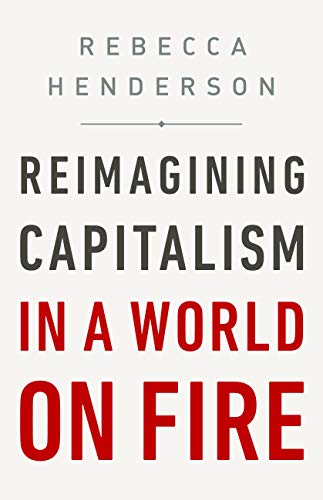
    Back when Harvard Business School professor Rebecca Henderson was pitching her latest book to publishers, she recalls, the conversation didn’t get much further than the book title before cynicism kicked in on the other side of the desk. In the latest episode of Pitchfork Economics, Henderson recalls sitting in a big New York City editor’s office and explaining that she wanted to write a book called “ Reimagining Capitalism in a World on Fire,” and that it was about how business could lead the way to save the world by creating a more sustainable future.

    Henderson laughs, “I’ll always remember: He’s sitting behind his desk, looking at me, raising an eyebrow. And he’s like, ‘Business saves the world, Rebecca? Do you read the papers?’”

    (Keep reading at Business Insider.)

  • The Economy Is the American Middle Class. It’s That Simple.

    The Economy Is the American Middle Class. It’s That Simple.

    If words are used too often, they start to lose their meaning. Try saying the phrase “deep discount” to yourself sixty times in a minute, for example, and it turns into a disjointed collection of consonants and syllables with no connection to any existing concept or experience. The technical term for this psychological experience is “semantic satiation,” and it was recently described in the sitcom Ted Lasso as the moment when “words become a sound.”

    One phrase that American politicians have nearly pushed to the point of semantic satiation is “the middle class.”

    It’s a phrase with a specific economic meaning, and it seems simple enough to define: divide the economy into thirds based on income, and the center third that’s neither at the top or the bottom is the middle class.

    But when politicians make their exhortations to the great American middle class, they’re typically trying to appeal to everyone — from minimum-wage workers in the service economy to McMansion-dwelling suburban families in the top 10%.

    Most recently, the huge tax cuts for the wealthy and corporations that Donald Trump and Speaker Paul Ryan pushed through in 2017 was wrongly pitched as a “middle class tax cut.” And all that elasticity applied to the term has done its work: Surveys have shown that nine out of ten Americans consider themselves to be middle class, which is of course mathematically impossible.

    In a recent episode of Pitchfork Economics, I interview New York Times tax and economics reporter Jim Tankersley about his new book “ The Riches of This Land: The Untold True Story of America’s Middle Class.” 

    (Keep reading at Business Insider.)

  • This Recession Is Worse for Women Than It Is for Men

    This Recession Is Worse for Women Than It Is for Men

    A recent episode of Pitchfork Economics features listener questions from around the world about a broad array of topics, from the motivation of trickle-downers to the effectiveness of divestment as a strategy. Hosts Nick Hanauer and David Goldstein recommend books to convert economic skeptics away from neoliberal economics, and they discuss the core fundamentals of their economic philosophy.

    One question in particular really drills down to the heart of what a more inclusive economic system should value. A listener named Stu from New Zealand writes in to ask, “What should the manifesto of the perfect political party look like? What are the absolute core principles that should be addressed?”

    “We say the economy is people,” Goldstein said.

    “We believe in that because economic progress is the product of a feedback loop between increasing amounts of innovation and increasing amounts of demand,” Hanauer said. That means “that the more people we deliberately, systematically, and intentionally include in our economy, the better it will work.”

    Goldstein added: “The more people you include in the economy, the faster and more prosperous it grows. I think that’s true about a functional democracy as well: The country is people .. .that should be our number-one concern: We want our people to do better — not our capital, or our businesses, or GDP, or any other metric you can think of.”

    “This is why I hate the word capitalism — because it implies that capital, or capitalists, are the heart of our economy,” Goldstein said. “It’s not. It’s people — people putting their knowledge and know-how to work, which is how we improve the lives of everybody.”

    Stu’s question, while about party platforms, helps to define what should be a clear litmus test for economic and democratic policy going forward: does this policy broadly benefit as many people as possible?

    This idea of putting people at the heart of the economy clearly identifies why the economic downturn that has accompanied the coronavirus pandemic is the worst economic catastrophe to hit the United States since the Great Depression: Because it has completely removed people from the economy.

    And those people are not being removed equally. In fact, very specific people are being targeted by these economic losses: CNBC reported in September that of the “nearly 1.1 million workers ages 20 and over” who are no longer looking for work after dropping out of the labor force in August and September, “865,000 of them were women, a number that is four times higher than the 216,000 men who also left the workforce.”

    (Keep reading at Business Insider.)

  • The healthcare debate has reached a ‘fever pitch’ in America

    Last week, in response to my column about the outsized power employers have over their workers, a Twitter user named Jim Drinkwine pointed out a glaring omission. To my comment that underpaid workers can’t simply quit and find a better job, Drinkwine added: “Don’t forget if they quit, they lose health coverage.”

    That’s absolutely correct. In fact, health insurance might be the most crucial leverage that American employers hold over their workers. As the only industrialized nation that does not offer some form of government health insurance for all its citizens, the United States places its workers in the uncomfortable position of depending on employers to provide healthcare.

    The failings of this system revealed themselves in gory detail earlier this year, as millions of workers were laid off from their employers at the beginning of a global pandemic — cutting them off from health insurance right when many needed it the most. And even the most basic protections provided by the Affordable Care Act are in danger of being wiped out this fall, as the Supreme Court is set to hear arguments against the popular program exactly one week after Election Day. 

    We’re all flesh and blood.

    When a nation’s health insurance is in doubt, virtually everything else is in question as well. If the Supreme Court strips away the Affordable Care Act’s protections for people with preexisting conditions, will the tens of millions of Americans with health issues be able to afford coverage? If workers are afraid to switch jobs for fear of losing coverage, will their wages decline as they lose the ability to negotiate in the marketplace?

    (Keep reading at Business Insider.)

  • Happy 50th birthday, Eagle Harbor Book Company!

    Happy 50th birthday, Eagle Harbor Book Company!

    Bainbridge Island has always been an affordable and easy escape for frazzled Seattleites who need a break from the annoyances of city life. Less than 10 bucks gets you aboard one of the frequent, relaxing half-hour ferry trips from downtown, and a 10-minute walk from the ferry terminal puts you in the heart of the town of Winslow, which is everything Seattle isn’t — quiet, calm and slow.

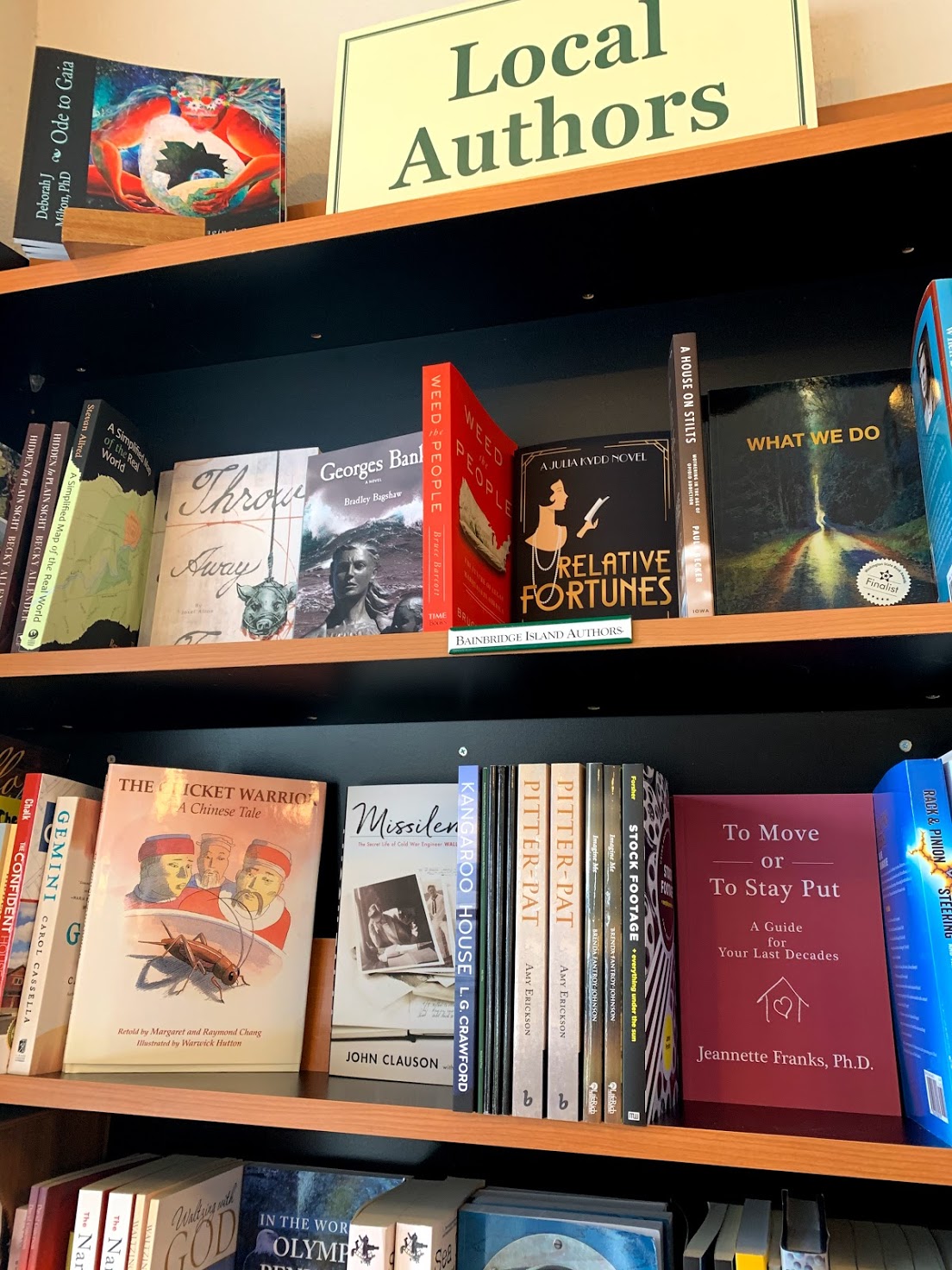
    Winslow feels custom-built for city dwellers who want to while the time away. The main drag is lined with restaurants, galleries and shops. And for Seattleites who make their way across Puget Sound in search of rejuvenation, no Bainbridge minivacation is complete without a leisurely stop by Eagle Harbor Book Company, Winslow’s preeminent bookshop. At over 4,000 square feet, the size of Eagle Harbor surprises first-time visitors: From the front door it looks like another cute little Winslow storefront, but take just a few steps in and the shelves seem to unfold vertiginously, further and further back.

    Most great independent bookstores do one thing really well, but Eagle Harbor plays double duty: It’s a quaint island bookstore, stocked with plenty of jigsaw puzzles and cheap, used cozy mysteries, and it’s also a community hub for one of Seattle’s most densely packed literary communities…

    (Keep reading in the Seattle Times.)

  • Your Boss Controls More Than Just Your Time

    Your Boss Controls More Than Just Your Time

    Economics as we know it has been around since the late 18th century, but the field still barely acknowledges the existence of power dynamics as a motivating force in the labor market.

    Trickle-downers who oppose raising the minimum wage, for instance, will often suggest that workers who want a higher wage should simply quit their jobs and find a new employer who’s willing to pay their desired rate.

    That might make sense in a simplified textbook object lesson, but it doesn’t work in the real world, where parents have to feed their children three times a day, and people who work at a manufacturing plant don’t have the funds to uproot their lives and move to another state when they want a raise.

    In a perfect economic system, employers would need workers just as much as workers needed their employers.

    In reality, workers are disposable and employers hold almost all of the power.

    (Keep reading at Business Insider.)

  • If It Feels Like You’re Working Longer for Less Money, It’s Because You Are.

    If It Feels Like You’re Working Longer for Less Money, It’s Because You Are.

    In a Pew poll conducted last fall, 61% of all respondents agreed that there was too much income inequality in America these days. Virtually everyone can feel that the difference between the wealthiest Americans and the poorest is growing out of control, but we don’t understand how big that gap is, or how fast it’s expanding, or how many Americans are losing money because of it.

    That’s why a new report from the nonpartisan Rand Corp. is so important. Rand’s researchers analyzed American incomes between 1975 and 2018 to determine who is earning less money, who’s earning more money, and where the money has gone. The results are jaw-dropping.

    The true cost of income inequality: $2.5 trillion every year. Each year, $2.5 trillion — yes, trillion with a “T” — has been redistributed from the bottom 90% of Americans to the wealthiest 1 % of all Americans.

    That’s roughly $50 trillion—again, with a “T”—that used to go to middle-class and working-class Americans that has instead been rerouted to the pockets of the top 1%…

    (Keep reading at Business Insider.)

  • What I read on my summer vacation (2020 edition)

    What I read on my summer vacation (2020 edition)

    Summer 2020 was the opposite of what we’ve been told a summer should be: it wasn’t carefree, it wasn’t fun, it wasn’t restful or rejuvenating or rehabilitating. From the pandemic to the clamoring hoards of aggrieved white supremacists in our streets to the wildfire smoke that’s clotting the air over the Northwest as I write this, the summer was in fact uncomfortable and grim.

    But at several points in the summer, I tried my best to shut down the world and attempt to be just another mammal relaxing in warm weather by a body of water. And I actually got a fair amount of reading done in those times! What follows isn’t a list of every book I’ve read this summer, but it is a list of the books that I finished (and mostly enjoyed) while trying to enjoy that fabled joy of Summer Reading which has captivated magazine editors since the dawn of time. 

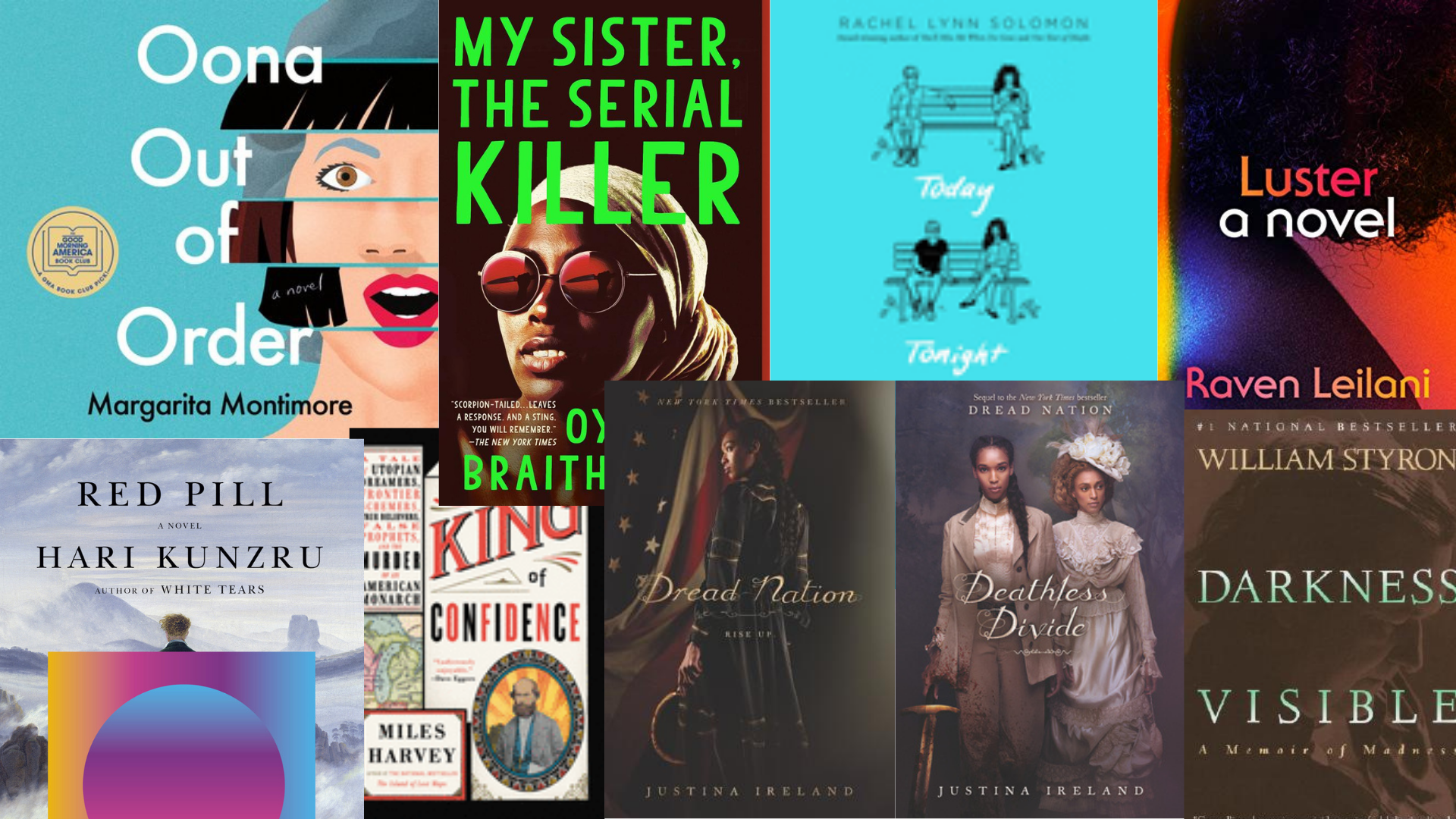
    I started my vacation with Today Tonight Tomorrow, a charming YA romantic comedy written by Seattle author Rachel Lynn Solomon, which follows two high school seniors as they race around Seattle in a scavenger hunt. Solomon has a lot of fun with the opposites-attract framework, forcing two overachievers into what might be the most charming romantic mortal combat you’ll read all year.

    The mainstream success of Oyinkan Braithwaite’s My Sister, the Serial Killer is kind of breathtaking to behold. Just fifteen years ago, this dark comedy narrated by the jealous sister of a glamorous sociopath would likely have been buried deep in the backlist of a college press somewhere. But now it’s a huge hit, and a very worthy one. The story, which moves at a pace that could put some readers in a neck brace, is told in a sparkling voice that never shies away from the darker side of things. Patricia Highsmith would blush with envy.

    Is it weird to call a pair of YA alternate history horror novels the most timely books I’ve read this year? The all-stars of my vacation reading were Dread Nation and Deathless Divide, the breakout alternate history duology from Justina Ireland. Set in a United States in which zombies walked the earth in the wake of the battle of Gettysburg, these two novels really stand out for their world-building and their character work. If you’re exhausted by zombies—and God knows, I went into the pandemic expecting to not read a single zombie novel, yet alone two—this story is still very much worth your time, with a complex understanding of race in America and a cracking good sense of dramatic timing.

    Miles Harvey’s The King of Confidence seemed like a smart follow-up to Ireland’s duology. It’s non-fiction, but it’s set in an American wilderness not too very long after the Civil War. I enjoyed learning about James Strang, the Mormon con man with a utopian messiah complex at the heart of this book, but Confidence’s pacing is its greatest obstacle. Even at less than 400 pages all told, I kept wishing the story would lose about 100 pages and gain a more propulsive sense of narration. Strang’s story is tremendously resonant with the moment—can anyone else think of any big-talking American con men who’ve swindled their way into leadership of an out-of-control cult?—but in the end, the story got into its own way a few too many times.

    Luster, a debut novel by Raven Leilani, begins with a barrage of scathing scenes set in the high-minded publishing industry, revealing the racism (and sheer intellectual laziness) that’s still at root in the biggest presses in the world. Our protagonist, a twentysomething Black woman named Edie, is so used to playing the dumb games that white people put her through that she’s basically sleepwalking. When she stumbles into the open marriage of an affluent white suburban couple, though, Edie finds an opportunity to take action—particularly when the couple’s adopted daughter, a Black girl named Akila, begins to take notice of her. I liked the first half of Luster, with its elaborate performative cynicism,  a lot more than the second half, but it’s beautifully written throughout, and Leilani is such a confident storyteller that I have no doubt she’s on the way to a successful career as a novelist. I’ll be there for her second book, and her third and fourth and…

    Audio books either completely work for me or they don’t. And weirdly, I can’t seem to predict which ones will hit my subconscious in just the right way—there’s no one genre, narrator, or even length of an audiobook that is guaranteed to appeal to me. So I was surprised by how taken I was with the Libro.fm edition of Margarita Montimore’s novel Oona Out of Order. Brittany Pressley’s narration has something to do with it, I’m sure: Pressley puts in just enough acting to push the book off of the page and into the realm of drama, without distracting from Montimore’s prose. The premise here is elaborate and also catchy: On New Year’s Eve 1982, a young woman named Oona Lockhart is just about to turn 19 years old. Instead, she wakes up in an older version of her body on New Year’s Day in the far-flung 21st century. Oona is told that she’s living every year of her life out of order, that on every New Year’s Day she awakens, seemingly, at random, in a younger or older year of her life. The book follows Oona’s first few years in this state, bouncing around from the future to the past and back again. If Oona sounds vaguely like The Time-Traveler’s Wife, that’s probably not entirely misleading, though I found it to be not as deeply considered, and with the twists more telegraphed in advance. But it’s a fun book with passion for its characters, and it’s very well-told.

    Hari Kunzru’s new novel The Red Pill, about a do-goodnik liberal artist who begins to flirt with nihilistic right-wing memelord culture, is likely to strike up a huge debate on all the usual virtual literary watering holes. But I don’t think the book is especially controversial, or intended to be a bomb thrown at polite society. It feels to me like Kunzru is curious about the failings of 21st-century liberalism, and he’s seriously investigating how so many of our mediocre-est thinkers have fallen into the Trumpian nationalist honey pot. This isn’t some dumb Amis flamethrower of a novel, or a disingenuous Houellebecqian anti-life treatise disguised as a novel. It’s a work of genuine curiosity, and an attempt to get behind the eyes of some of the worst people in the world today.

    To someone who was unaware it was published in 1990, William Styron’s self-described  “Memoir of Madness,” Darkness Visible, might read like a fairly banal account of what it’s like to be deeply depressed. But those of us who were alive in 1990—I was just starting high school, and just starting to wrestle with some new melancholic tendencies at the time—will understand how remarkable Styron’s account must have been at the time. Styron is taking great steps in this book to communicate with a whole new vocabulary that had previously existed only in the hands of psychiatric professionals, and at the time he must have been putting his career on the line by admitting to feelings that in larger literary culture were widely interpreted as weakness. Hell, some of the more lame-brained macho posers I come across on social media could learn a lot from spending time with Darkness Visible. I bet many of them would, if given the opportunity, see themselves in its pages.

    Now comes the fall. I don’t think I’ll have as much time for novels this autumn, with the presidential election consuming ever-larger portions of my brain until November—and God knows what will happen after that. I look at this stack of books on my floor and I already feel nostalgic for those times when I was able to shut off my phone and get lost in a book—experience the pleasure of reading for reading’s sake. Who knows when I’ll get that chance again?

    See you next summer, maybe.
  • Democrats Abandoned Farmers, Not the Other Way Around.

    Democrats Abandoned Farmers, Not the Other Way Around.

    After John Kerry’s failed presidential run in 2004, Democrats didn’t just double down on cities — they basically behaved as though building and maintaining power in cities was the only strategy going forward.

    The Urban Archipelago theory argued that American cities were strongholds of progressive thought, and rural America had become an underpopulated conservative wasteland. The future, therefore, would be written in the city and those policies would emanate outward to other parts of the country.

    Plenty of great policies erupted from the Urban Archipelago strategy: marriage equality, the $15 minimum wage, enhanced worker protections. The 2008 and 2012 electoral maps, which saw Obama winning handily even in traditionally purple states, seemed to indicate that Democratic cities could light the way for American politics. The few Democrats who won high-profile offices in rural states, like Montana Senator Jon Tester, were basically treated as weird anomalies.

    But all at once in 2016, the weaknesses in the Urban Archipelago theory became obvious. Donald Trump won the presidency while losing the popular vote by an overwhelming margin, the Republican Senate maintained a stranglehold on the legislative process, and Trump and the Senate began packing courts with conservative judges.

    The partisan divide between rural America and urban America has never been wider, even though rural America has never needed progressive economics more.

    America’s farmlands and small towns have for decades been plagued by a host of interrelated crises…

    (Keep reading at Business Insider.)