Blog

  • What I’ve Been Reading and Writing: March 2021

    What I’ve Been Reading and Writing: March 2021

    I don’t mention it often, but one of my weirdest (and most fulfilling) gigs is that I sit on the nominating board for the Prowda Literary Champion Awards. It’s a pretty cushy position: Every January, I get together with the nominating board to discuss people and organizations that have done exceptional work benefitting Seattle’s literary community over the past year. We talk, bargain, and debate over snacks until we come away with two winners. I’ve done this three times, and this year’s was the easiest selection process yet. As our friends at Seattle Arts and Lectures just announced, the 2021 Prowda Literary Champion Awards went to Ijeoma Oluo and Jack Straw Cultural Center. Oluo has spent much of her energy during the pandemic directing funds to local artists of color, whose primary sources of income largely fell away with the first lockdowns last March. And over the span of decades, Jack Straw founder Joan Rabinowitz has built an institution that helps Seattle writers learn how to better communicate their work in spoken mediums. These are two remarkable women who have given so much to Seattle, and in so doing they’ve encouraged all of us to be better. I hope you’ll read more about this year’s winners. They make me so proud to be a part of this community.

    fIND ME ONLINE

    I haven’t been doing many personal appearances lately. That cold streak ends this Saturday, March 27th, when you can catch me as part of an AHOY Comics panel at WonderCon, which is happening virtually over the weekend. The panel begins at 1 pm EST, and I’ll be appearing with a number of AHOY greats including Tom Peyer, Stuart Moore, artist Liana Kangas, Seattle writer Eric Palicki, and Mark Russell, who is one of my favorite comics writers working today. We will all be discussing our upcoming AHOY titles, and you’ll get a tiny little peek at a comic I have coming out later this year. For more information, SyFy previewed the event here.

    I’ve Been Writing

    I’ve published two pieces in the Seattle Times this month. The first is an interview with Iraqi-American Mortada Gzar marking the publication of his new memoir about moving to Seattle on the day of the 2016 election:

    While many high-profile immigration memoirs of the past few decades — Frank McCourt’s bestselling “Angela’s Ashes,” for example — end with the author arriving in America, presenting the U.S. as both the climax of the narrative and the solution to the narrator’s problems, “I’m in Seattle” begins with Gzar arriving at Seatle-Tacoma International Airport. The narrative continues forward, with him finding his way in Seattle, and his youth in Iraq is relayed in flashbacks as Gzar navigates his new city.

    “When entering into a new country, old memories are attacking you all the time,” Gzar says. 

    And the second is a profile of the wonderful Fremont cookbook store, The Book Larder, which is celebrating its tenth anniversary this fall. Please be advised: There are tons of amazing cookbook recommendations in this one:

    Book Larder events are not your typical literary reading. “We always make a little bite of food from the book for people to try,” [Book Larder owner Lara] Hamilton says, “and because the setting is intimate and we have so much support from journalists and bloggers and different people in the local food community who are willing to come in and do interviews for us, we’ve had some really great conversations.”

    My day-job writing has been wonkier than usual, but I’ve been pretty satisfied with the way I’ve communicated some complex economic and financial ideas in what I hope is plain English. I’ve written about why stimulus opponents’ threats of hyperinflation are hugely overrated, how a new agency might help bridge the gap between private enterprise and government investment, and what Silicon Valley Representative Ro Khanna thinks of the whole GameStonk mess.

    I also wrote a very thorough debunking of the biggest arguments against taxing capital gains profits from the sale of stocks and bonds. If you don’t know, Washington state is getting veeeeery close to taxing some of the exorbitant Wall Street profits of the 8000 wealthiest people in the state and putting that money toward pandemic relief for the people who need it most. This is literally unprecedented in Washington history, and it’s exciting stuff.

    I’ve Been reading

    The recommendation section is a little shorter than usual this month—partly because I’ve found it hard to read with the late-stage pandemic of it all, but partly because I’m reading a book I’m going to be writing about next month and I’m also doing a ton of reading for research on a secret comics project that’s just getting underway.

    I’m not usually a fan of comics that feature only one panel per page—part of the reason I like comics is the way the panels fall into each other, creating a different way of perceiving time than in any other medium. But the one-panel-per-page rhythm works really well for Erin Williams’s memoir-in-comics, Commute. It’s framed as a story of Williams commuting to and from work—taking the train, walking in the city, walking home—but it’s really a meditation about the way she’s treated by men in public spaces, and an accounting of the abuse men have committed in her life. Told mostly in sharp black and white, but with occasional bright bursts of color, Commute is a bracing account of being a woman in a world where men still believe they can take possession of women’s bodies at any time. I’d recommend this one particularly for men: the simple one-panel-per-page staccato rhythm helps put the reader directly into Williams’s perspective. It’s a challenging book, but very worthwhile.

    Much has been written about Abraham Riesman’s biography True Believer: The Rise and Fall of Stan Lee, with most of the discourse being centered around how much of the Marvel Universe was created by Lee and how much was created by the artists. It’s a frustrating discussion because we’ll never truly have an objective answer. Even under the best conditions, comics collaboration is messy, and there’s no way to parse out the percentages in a truly fair manner. (Speaking for myself as a comics writer, I find it’s best to overcorrect in favor of giving more credit to the artists, since a comic without an artist is definitionally not a comic. I might spend two hours writing a page, but the artist is likely to spend at least four times that—at least—bringing the page into the world. Honoring that outsized contribution is quite literally the least a writer can do, in my opinion.) But for me the most interesting, heartbreaking part of the story is the complete and total hellscape that was the last few years of Lee’s life, in which he was surrounded by grifters who milked him for easy money as he shrank in size and mental acuity. While reading this book, I watched the Netflix film I Care a Lot, a dark comedy which stars the brilliant Rosamund Pike as a con artist sucking the money out of retirement funds and dumping old people in horrible conditions. Taken together, these two narratives are a reminder that our country treats our elders terribly, and I worry that things will only get worse the more America’s population continues to age.

    In last month’s newsletter, I wrote about Patricia Lockwood’s exceptional novel about being Extremely Online, No One Is Talking About This. This month, I read Lauren Oyler’s novel Fake Accounts, which is about a young woman who discovers her boyfriend has an unhealthy secret life online. And while I hate it when men compare two unrelated women artists, these two novels are so close in subject matter and perspective that I feel the comparison is welcome—Lockwood and Oyler have even remarked on the similarity themselves and done online readings together. While Lockwood’s book is a high-level observation of the structural way that the internet has changed our brains and behaviors, Oyler’s book is more about the content we shove inside the structure of the internet—writing that is meant to go viral, social media posts that are first created to appeal to algorithms rather than human beings. Fake Accounts is a more traditional novel than Lockwood’s, but it’s also a hell of a page-turner. Even though it’s a relatively plot-free literary novel, I was pasted to this book; I couldn’t wait to find out what happens.

    That’s it for this month

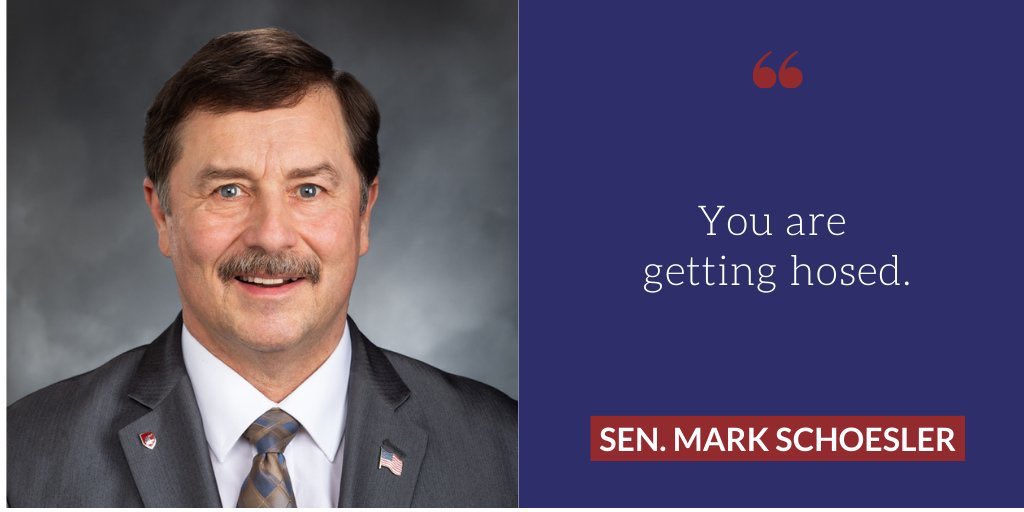
    In closing, I’d like to send my thoughts and prayers to Washington State Senator Mark Schoesler. The state Republican party likely thought they were boosting Sen. Schoesler’s profile by tweeting out a quote-meme from one of his typically boring-but-folksy anti-tax speeches. Instead, they accidentally created this amazing, beautiful piece of art that I will always treasure:

    Feel free to share Mark in any way you deem appropriate.

    More next month. Take care of yourself until then.

  • What I’ve Been Reading and Writing: February 2021

    What I’ve Been Reading and Writing: February 2021

    Those of you who followed me when I was active on Instagram know that I have a 7-year-old rescue greyhound named Oberon (Obie) who has delighted me for three years now. At the beginning of this year, we added a second greyhound to our home. Wallace (Wally) is fresh off the racetrack in Florida, which means he has had to learn about things like windows, and TVs, and stairs for the first time. Wally is also rapidly and inexorably losing his sight, and so the good folks at Greyhound Pets Incorporated wanted to place him in a home with a confident older greyhound to show him the ropes before he went completely blind. He and Obie got along the first time they met, so we agreed to foster Wally, and then two weeks later we officially adopted him.

    I wouldn’t say that Obie and Wally are good buddies yet—they’re more like amiable coworkers. They still get along very well, but they often just live their days on parallel tracks.  But multiple times every day, they check in which each other—bumping shoulders while they’re out in the yard, sniffing each other when they walk into a new room. Watching those simple physical gestures of affection between the two dogs has reminded me how closed-off to the world I’ve been during the pandemic, and how eager I am to check in with my friends.

    Honestly, and knowing that I’m speaking from an immense place of privilege, the first year of working from home wasn’t too emotionally difficult for me. I like to be alone, and I never get bored. But I’ve hit—as it’s come to be called online lately—The Wall, and I can’t wait to sniff other humans again. For now, though, it’s me and two good boys hanging around a quiet house all day. I don’t know what I’d do without their company.

    I’ve Been Writing

    In the Seattle Times this month, I wrote about LEMS Cultural Center and Bookstore for Life Enrichment, a new incarnation of Seattle’s longest-running Black-owned bookshop. The store is in its early stages of rebuilding, but I have high hopes that it will come out of the pandemic as a cultural hub for the city.

    For Business Insider, I wrote about the policies that Democrats should support if they want to win rural voters again and why tax increases have historically been proven to be the best deterrent to oligarchy in America. And one of the more immediately useful pieces I’ve written lately is a FAQ compiling the most commonly used arguments against the minimum wage and explaining why they’re completely bogus, using the latest minimum-wage studies as proof. Next time someone tells you that robots will take the jobs of workers if you raise the minimum wage, just consult my FAQ and show them the data.

    And just yesterday, Business Insider ran a piece I wrote about Kroger’s decision to close two QFC grocery stores in Seattle as a response to the city council’s adoption of $4-per-hour hero pay for grocery workers. When you really look at the numbers, it’s clear that Kroger isn’t closing those stores because the wages were too much to pay—they’re trying to intimidate other cities that might be considering raising the wages of their workers.

    I’ve Been Reading

    Patricia Lockwood’s novel No One Is Talking About This is getting praised everywhere online, and it’s obvious why: I’ve never read a novel that so aptly describes the banal horror of being addicted to the social media world inside your phone. The first half of the book is a gorgeously written account of being Extremely Online, and the second half of the book is a gorgeously written account of a family tragedy. I wasn’t sure Lockwood would successfully merge the two halves into a coherent whole, but she eventually intertwines them both into a single barbed-wire narrative. If you have a Twitter or Reddit account, you’ll probably love this novel exactly as much as you hate being seen by it. (If Facebook is your primary drug of choice, you might not quite get it.)

    My interest was piqued when I saw that Keegan-Michael Key was going to play the title character of Stephen Mack Jones’s mystery novel August Snow in a new TV series. Key strikes me as an underrated actor, and a drama series seems like an interesting choice for him. And when I saw Nancy Pearl rave about August Snow, I decided to give the book a try. If writing about cities is your bag, you’ll probably love August Snow. The title character returns to Detroit after a while away, and his long and complicated relationship with the city immediately comes rushing back. But as Snow walks around Detroit eating good deli food and brushing up against testy cops who are none too happy to see him, you’ll likely grow a deeper respect for both the man and the city that he begrudgingly loves. The ending of the book got a little too paramilitary for my tastes—is every detective novel required to include a certain amount of macho gun worship?—but I really, desperately wanted to visit Detroit after reading August Snow, and so I think that means it’s an effective book.

    Matthew Hongoltz-Hetling’s A Libertarian Walks Into a Bear: The Utopian Plot to Liberate an American Town (And Some Bears) is custom-made for me, being about a bunch of idiot libertarians and the single weirdest state in the union—New Hampshire. So I enjoyed the account of libertarians trying to build a utopia and failing miserably, but I can’t help but believe the narrative would be stronger as a long magazine article. 

    Korean author Un-Su Kim’s novel The Plotters feels kind of like if Haruki Murakami did a cover song of a John LeCarre novel. It’s about a clan of assassins and their deep spiritual discontent, and it feels like a bunch of characters from a fun, pulpy literary novel somehow spilled into the literary fiction aisle and experienced loneliness for the very first time.

    As a kid reading superhero comics in the 1980s, I was drawn to Ann Nocenti’s run on Daredevil. Frank Miller’s Daredevil run felt too mean, too forcefully cruel. But Nocenti’s Daredevil was, like me, a kid who grew up Catholic who didn’t really know what he believed. He was always questing for himself, and he was always getting the crap beaten out of him—one time, he even got clobbered by a demon-possessed vacuum cleaner. Nocenti was one of the best superhero comics writers of the 80s, and then she disappeared for a long while. I’m glad she came back to write a weird little conspiracy comic book called The Seeds, and I’m even happier that she partnered with David Aja, who is one of my favorite comics artists. Aja in this book is working in black-and-white with an eerie green highlight, which makes the spare beauty of his lines feel even more holy. It’s a kind of X-Files by way of Twin Peaks kind of thing, and it’s a gorgeous, questing kind of book—easily the best comic I read last month.

    Thats All for This Month

    I feel a bit more lively than I did last month. Spring feels like it’s just about to start teasing us with the prospect of better days, and after a couple months of hermitage I’m starting to see friends (from a safe social distance) again. And I did a 30-mile loop around the bottom third of Lake Washington yesterday—renewing my long-distance walk schedule is probably the single best thing I can do for my mental health . Writing-wise, I’m putting the finishing touches on one long-in-the-works comic project, and I’m just starting to think about a new comics project. I enjoy this period of possibility—putting together the rules for a fictional world in my head, to see what is and isn’t possible.

    I hope you’re spending more times these days thinking about what is possible. If you’re stuck in what’s-not-possible-ville right now, please know that you’re not alone. Consider this a shoulder bump from me to you.

  • What I’ve Been Writing, Reading, and Watching: January, 2021

    What I’ve Been Writing, Reading, and Watching: January, 2021

    I’ve Been Writing

    For the Seattle Times, I wrote about all the weird things your subconscious brain does when you walk into a bookstore for the first time, and why Seattle’s newest bookstore, Oh Hello Again, is designed to throw your subconscious brain for a loop:

    The philosophy for Oh Hello Again’s unique categorization was inspired, appropriately enough, by a pair of books. Ferguson was so enthralled by the thesis of Ella Berthoud and Susan Elderkin’s “The Novel Cure” and “The Story Cure” that she decided to build a whole shop around their concept of “bibliotherapy,” which posits that reading the right novel at the right time can help to console and guide people through moments of great emotional turbulence.

    In my economics column at Business Insider this month, I’ve written about how the Trump administration failed to combat the coronavirus recession, the myth of deregulation, a bold idea to restart the American economy, and why President Biden has the opportunity to be a transformational economic figure

    And on Twitter, I wrote a little thread about deplatforming and the proper use of social mediaHere it is, slightly expanded and adapted for the shift from Twitter to a newsletter:

    When they permanently banned Donald Trump after the siege on Congress, Twitter proved without a doubt that deplatforming works. Trump immediately devolved from the most powerful man in the world to a mumbling, bitter ghost. Losing Twitter was a greater loss of power for Trump than losing the presidency; it instantly made him irrelevant. That’s why I was so disappointed to see that, after a few days of celebration over Trump being banhammered into nothingness, so many smart people on Twitter immediately returned to old bad habits—sharing misinformation and retweeting provocative bad actors in an attempt to dunk on them. Twitter is quantifiably better without Trump and his Q minions. So let’s not create a new version of them by continuing to amplify the worst people in the world.

    We could all—and I include myself in this criticism—stand to do less retweet wisecracking on irrelevant bozos. Twitter isn’t your late-night talk show, and the world doesn’t need a hundred million fifth-rate Jay Lenos. If you really have to share your epic dunk, use a screengrab instead of a RT.And if you’re sharing a tweet or media clip that contains lies or misinformation, your tweet should offer truthful context that disproves what you’re sharing. Otherwise, you’re just doing their work for them.

    And lastly, be liberal with the mute and block buttons. You don’t owe anyone your attention. If you see someone act in a trolly way to someone else, or unapologetically making an untrue statement, you can block them. It’s okay. If you only use Twitter to make fun of assholes and get into fights, you’re probably not contributing anything useful to the conversation, and you’d probably feel better if you just logged off.

    I can already hear the responses: “But, but, but, you just want to make your Twitter feed into an echo chamber!” Listen: if your feed is an echo chamber, that’s your fault. Go out and find smart people who don’t hold your worldview and follow them. If they eventually turn out to be jerks, you can block/mute them, too.

    I’m hopeful about the future of Twitter. I think there’s an opportunity here to make something nice. But we need to remember a few key points: Not every opinion is worth sharing. Not every conversation is worth having. Most internet fights are a waste of time. Life is short. Most importantly, as we’ve proven in the last few weeks, if you don’t give your attention to the worst people in the world, they’ll lose their power. (This isn’t the same as saying ‘don’t feed the trolls,’ by the way: online abuse is real abuse. I don’t want to minimize the experiences of so many people who have had nightmarish experiences of bullying. That’s very different from, say, Marco Rubio’s trash hot take.)

    I’ve Been Reading

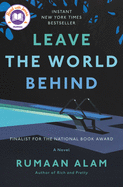
    • Probably the best novel I’ve read in the last few months is Rumaan Alam’s Leave the World Behind, a novel about a family that rents a vacation house far away from their home in New York City, only to find that the world seems to have ended. They’re detached from the world by traditional means of communication, and the glimpses they catch of the apocalypse are truly horrifying. But it’s not a horror novel, or a thriller. It’s just a novel about a family in a remarkable moment. Alam’s writing is a touch bro-y in the beginning—one early sex scene felt a tad Updike-y—but it’s remarkable that an essentially plotless book can feel so much like a page-turner.
    • Enter the Aardvark, by Jessica Anthony, is a dirty little thrill of a political novel. It’s about a self-hating Republican congressperson who receives a stuffed aardvark in the mail which eventually causes his downfall, but the book is much more ambitious than that—it begins with the Big Bang and the main story runs in parallel with a historical account of colonization in the name of science. This is not for everyone; it’s a dark, nasty book. But if you like a shitty main character who sets himself up for a fall, this might be your thing.
    • I listened to The Good Neighbor, Maxwell King’s biography of Fred “Mr.” Rogers, on audiobook, and it was just the kind of good-hearted read that I needed at the end of a year that felt like a parade celebrating the world’s most terrible people. And if the subject matter isn’t soothing enough for you, the book is read by LeVar Burton! It’s enough to remind you that there are good things in the world.
    • Reading Larry Marder’s weird alternative comic Beanworld (which is collected in two omnibus editions from Dark Horse Comics) is not always fun. Sometimes it’s work. Beanworld is a high-concept exploration of the kinds of ideas that comics can transmit to readers: it’s set in a universe where sentient beans eat, reproduce, create art, and socialize as members of one big ecosystem. Every time something changes or becomes more complex, there are rippled effects throughout the system. While Marder insists that Beanworld isn’t a metaphor for anything in particular, the environmental message seems too loud to ignore. And as the ecosystem gets more and more complex, by adding new twists to the procurement of food through the creation of technologies for instance, it becomes clear that Beanworld is a language of its own. I didn’t enjoy every single page of the book, but the journey is well worth it as an exploration of the limits of comics, storytelling, and understanding how the universe works.

    I’ve Been Watching

    • I’m a little confused by all the reviews of Promising Young Woman that hate the movie because it’s not a hyper-violent revenge drama. While I suppose the movie might be marketed that way—I don’t watch trailers anymore, which is a decision that has greatly enhanced my enjoyment of movies—there’s nothing in the text of the movie that insists you should expect a, say, Kill Bill vibe. It’s a sad movie about a broken person, and I think it’s a remarkably well-told version of that story.
    • I don’t exactly know how I missed it for so long, but Pen15 is by far the funniest show I’ve seen since lockdown. I only wish there were more seasons to enjoy right now.
    • One Night in Miami is a triumphant movie: A conversation movie that feels vibrant and exciting, a multi-perspective story that gives equal time and respect to all four lead characters, a portrayal of Muhammad Ali that captures the humanity in the center of all the bluster. I love this movie, and—weirdly—I’m not at all sad that I didn’t get to see it in a movie theater. I think the susurrations of a movie-theater audience would have detracted from the dialogue and performances.

    It’s the part of winter that feels like spring should be around the corner, but—at least here in Seattle—there’s at least two more months of brutal darkness and cold and wet ahead. This is going to be a tough one, I think. Hold on until your knuckles go white—there’s something better ahead; we just have to keep our heads down until then.

  • The Seattle Independent Bookstore Gift Basket

    The Seattle Independent Bookstore Gift Basket

    Independent booksellers put a trusted human filter between you and the overwhelming flood of books that are published every week. After just a brief conversation, they can help you find the perfect novel to suit your mood, track down the perfect gift for that hard-to-buy-for relative, and introduce you to a writer who will literally change the way you understand the world.

    But 2020 has been an impossibly difficult year for bookstores precisely because that human connection has been difficult to forge. Coronavirus has kept us in our homes and away from the indoor spaces that invite us to spend long stretches of time browsing. This all amounts to one true statement: If you want Seattle’s world-class community of independent bookstores to still be as vital as it is now on the other end of the pandemic, you’d better give them your business this Christmas season.

    To help you support your local bookstore while remaining COVID-safe, I asked five bookstores that have been featured in the Neighborhood Reads column over the last year to recommend a favorite book that they’re guaranteed to have in stock this holiday season. When all combined into one impressive stack — nearly 8 pounds of book, all told — they make up a Seattle Independent Bookstore Gift Basket, the perfect gift for every local bibliophile on your holiday shopping lists. These books are guaranteed to provoke and inspire and comfort — and buying them from Seattle-area independent bookstores helps to ensure that you’ll experience many years of inspiration, provocation and comfort to come.

    (Keep reading at the Seattle Times.)

  • “Every couple months there would be another round of layoffs.”

    “Every couple months there would be another round of layoffs.”

    When the coronavirus pandemic started spreading across the country in the spring, nearly a quarter of all young workers — defined as ages 16 to 24 — lost their jobs, according to the Economic Policy Institute. One in four young people just starting out in the workforce had their futures put on hold indefinitely. And they’re not alone: Axios in October reported that the “true unemployment rate” for Americans of all ages is over 26%.

    To put a human face on those numbers, the latest episode of Pitchfork Economics features an interview with a young woman who went right from the University of Washington to a career at online travel firm Expedia, which is a major Seattle employer. Under anonymity, she shared her story.

    As coronavirus spread across the country, “bookings started dropping,”  she says, and Expedia’s revenue quickly followed. Her coworkers became “nervous” as they saw what the pandemic was doing to their business model. “Every couple months there would be another round of layoffs,” she said. “I went through probably four or five before I was finally in one of the rounds this summer.”

    When she got the pink slip in August, she says she felt “this weird mix of shock and the opposite of shock.”

    “It just dawns on you that you knew it was coming. This was a few months ago and I’m almost still in shock,” she admitted.

    (Keep reading at Business Insider.)

  • Mattilda Bernstein Sycamore searches Seattle for human connection

    Mattilda Bernstein Sycamore searches Seattle for human connection

    “One problem with gentrification is that it always gets worse,” writes Seattle author Mattilda Bernstein Sycamore in her new memoir, “The Freezer Door,” available Nov. 24. It’s a terse thesis statement for such an expansive, witty, perambulating book. In “The Freezer Door,” Sycamore wanders the streets of Seattle, searching for signs of humanity that have been obscured by the monolithic, glossy condominiums under construction on every corner.

    “I’ve spent so much time trying to find the places and spaces where I can interact without feeling broken,” Sycamore writes, “but this hasn’t worked.”

    A local literary dynamo who for the better part of the last decade could be found either in the audience or onstage at every Seattle-area literary event worth attending, Sycamore has become a nationally recognized thinker on LGBTQ+ issues — specifically concerning what it means to self-identify as queer in public spaces. As “gayborhoods” like Seattle’s Capitol Hill and the Mission in San Francisco become trendy hubs for wealthy young (and largely straight) tech workers, she laments the loss of the individuality and creativity of the earlier days of the LGBTQ+ movement — not to mention the intimacy.

    “I’m searching for connection,” Sycamore says over the phone from her Capitol Hill apartment. “The dream of the city for me is the place where you find everything and everyone that you never imagined. And that’s the dream that I’m still trying to live, even as the city has changed so much.”

    (Keep reading at the Seattle Times.)

  • This Children’s Book Author Bought Liberty Bay Book Company. Then Came the Pandemic.

    This Children’s Book Author Bought Liberty Bay Book Company. Then Came the Pandemic.

    Suzanne Selfors dedicated herself seriously to her writing in 2002. Three years later, her first book was published. For the next 15 years, Selfors wrote and published over 30 titles for young readers across a wide array of publishers.

    “I’m very happy to say it’s been a very successful children’s author career,” Selfors says over the phone. She’s published bestselling, licensed middle-grade books with DreamWorks and Mattel, and her “Wedgie & Gizmo” series, about a superhero corgi and a brilliant-but-devious guinea pig, has won awards from coast to coast.

    “I have to admit that about two years ago, I was starting to feel really burned out,” Selfors says. She had just published six books in a single year, and she was looking to scale back on writing for a while.

    “That’s about the time when Suzanne Droppert,” then the owner of Poulsbo mainstay Liberty Bay Books, “put this little idea in my head about eventually buying her bookstore.”

    (Keep reading at the Seattle Times.)

  • New Jersey Governor Phil Murphy Explains Why He Passed a Millionaire’s Tax

    New Jersey Governor Phil Murphy Explains Why He Passed a Millionaire’s Tax

    Coronavirus infection levels are climbing all around the country again. As more and more Americans stay home to avoid infection, those rising infection rates will likely bring with them another serious economic downturn, just like they did in the spring. The drop in consumer spending will harm the bottom line of small businesses, which will then lay off employees — further depressing consumer demand.

    Clearly, a new federal stimulus package is necessary to save the economy from collapsing — but with the Biden Administration not taking office until January 20, and with Senate leadership in doubt, it’s unlikely that we’ll be seeing a meaningful stimulus package from Washington DC anytime soon.

    This means that state governments are on their own in the fight to protect their economies from the impacts of COVID-19. But most states have suffered a decline in revenue as consumer spending has dropped in the pandemic, and so they’re confronting budget deficiencies at exactly the moment when they most need to invest in their own economies. We know that slashing budgets during a recession actually slows economic recoveries, so how can states increase revenue?

    For the answer to that question, look to New Jersey.

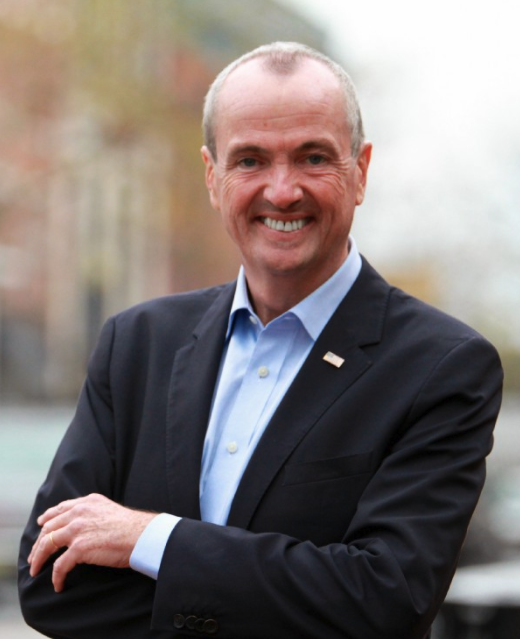
    This year, New Jersey Governor Phil Murphy and the state legislature agreed on a deal to raise the income tax by 2% on incomes over $1 million per year to address the budget crisis brought on by the pandemic. Not only will this tax help administer coronavirus relief to the communities and small businesses that need it most, but it will also help rebalance a regressive state tax code which puts a bigger tax burden on poorer households.

    In a recent episode of Pitchfork Economics, David Goldstein and Nick Hanauer interview Governor Murphy about his decision to tax the rich.

    (Keep reading at Business Insider.)

  • Robert Reich explains “the dangers of an economy that is too out of whack.”

    Robert Reich explains “the dangers of an economy that is too out of whack.”

    We talk a lot in this space about the three central tenets of trickle-down economics: wage suppression for workers, tax cuts for the wealthy, and deregulation for the powerful. We usually refer to these three tactics in terms of policy, like campaigns against minimum-wage laws and regulations lifted by presidential executive order. But the truth is that once you’ve passed enough trickle-down dogma into law, the whole structure of law and policy loses its meaning and the wealthy few become immune to the cause-and-effect that holds society together.

    Consider this: If you or I were to walk into a gas station, grab a six-pack of soda, and walk back out the front door without paying, the attendant would call the police and we would be charged for shoplifting. But when the reckless behavior of out-of-control financial institutions tanked the stock market and kicked off the Great Recession of 2008, nobody went to jail.

    Steal six dollars of merchandise, and you will face the consequences. Steal trillions of dollars in bailout money, and your bank will get a stern talking-to and a tiny fine.

    Earlier this summer, before the coronavirus resurgence derailed his reelection campaign strategy, President Trump tried to position himself as the law-and-order candidate. He took an especially strong stance against people protesting the murder of George Floyd in cities around the nation, even going so far as to tweet the abhorrent “ when the looting starts, the shooting starts.”

    In a bracing video, former Secretary of Labor Robert Reich responded with an argument to the contrary: despite all his talk of law and order, Trump isn’t interested in consequences for those who have been participating in the real looting which is destabilizing the country — specifically, the trickle-down looting of America’s middle class.

    Reich appears on a recent episode of Pitchfork Economics to elaborate on who the real looters are in America, and why for the wealthy few, our government’s mechanisms for enforcing laws against economic fraud are basically nonexistent…

    (Keep reading at Business Insider.)

  • Maximizing Shareholder Value Is Killing the Planet

    Maximizing Shareholder Value Is Killing the Planet

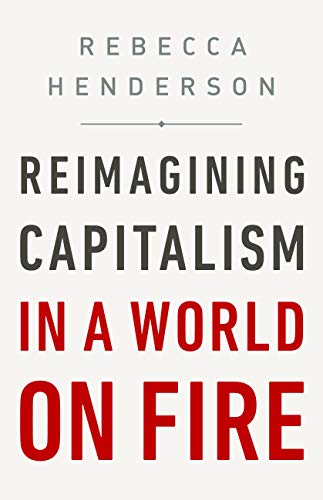
    Back when Harvard Business School professor Rebecca Henderson was pitching her latest book to publishers, she recalls, the conversation didn’t get much further than the book title before cynicism kicked in on the other side of the desk. In the latest episode of Pitchfork Economics, Henderson recalls sitting in a big New York City editor’s office and explaining that she wanted to write a book called “ Reimagining Capitalism in a World on Fire,” and that it was about how business could lead the way to save the world by creating a more sustainable future.

    Henderson laughs, “I’ll always remember: He’s sitting behind his desk, looking at me, raising an eyebrow. And he’s like, ‘Business saves the world, Rebecca? Do you read the papers?’”

    (Keep reading at Business Insider.)