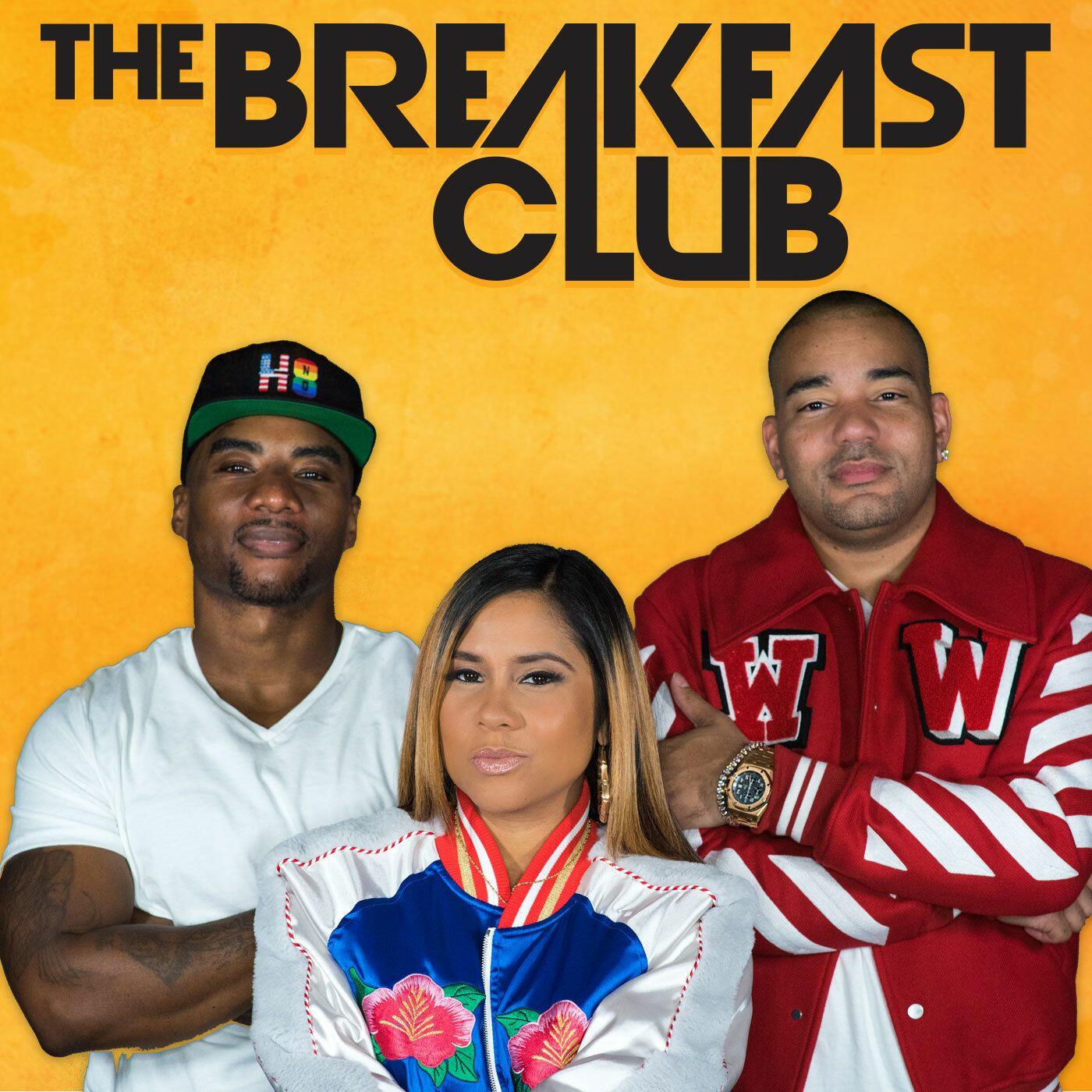
“I don’t buy into the notion of white privilege,” Limbaugh said. After a second of stunned silence, Breakfast Club co-host Charlamagne tha God told Limbaugh he was “being delusional.”
In response, Limbaugh doubled down, calling white privilege “a liberal, political construct … designed to intimidate and get people to shut up and admit they’re guilty of doing things they haven’t done.” Limbaugh then offered instances in his own life when he felt unjustly targeted with bad behavior — being fired, having his car keyed — as evidence that he was a victim and not a perpetrator of discrimination.
Many conservatives buy into the same fantasy that Limbaugh pushed in his Breakfast Club conversation: they don’t understand and refuse to consider that societies are made up of dozens of invisible systems that protect and support some citizens at the expense of others. When your ideology centers itself around personal responsibility, issues like racism, sexism, and economic inequality simply disappear. It’s a blissfully simple life philosophy: bad things that happen to you are your own fault, while good things that happen to me are achieved through hard work and clean living.
Of course, it’s simply not true. It’s incredibly easy to prove the existence of white privilege: look no further than the impact of coronavirus on Americans and you’ll see a clear delineation between white and Black Americans — one that favors the former at the expense of the latter…
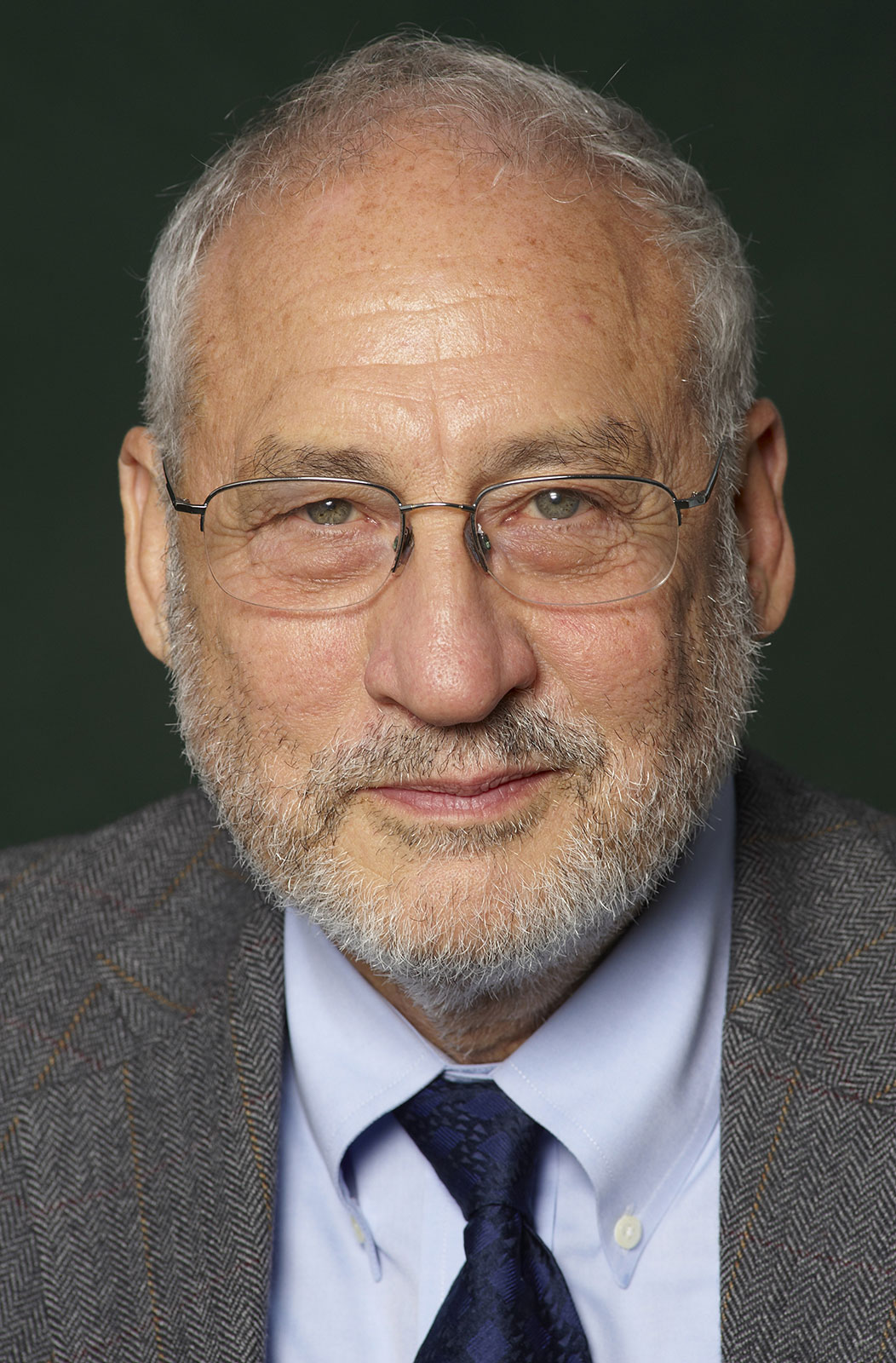
There’s no feeling quite like the stomach-clenching dread that hits when you hear a Nobel laureate in economics label the coronavirus recession as “a textbook example of showing that markets don’t work.”
The concept of markets — defined simply as the system that allows buyers and sellers to interact — is a cornerstone of mainstream American economic thought. Free markets are supposedly the most efficient way to determine everything from your salary to the cost of a loaf of bread to the most efficient way to deliver supplies in the midst of a pandemic. “Let the market decide” has become a rallying cry for Republicans and neoliberal Democrats as a refutation of government’s role in everything from healthcare to package delivery.
In the latest episode of Pitchfork Economics, Joseph Stiglitz — the aforementioned Nobel laureate who also serves as chief economist at the Roosevelt Institute — questions the role of markets in essential services like public health and recovery from a recession. He identifies our unshakable belief in markets as one of the biggest stumbling blocks in America’s lackluster response to coronavirus…
Bookish people, the stereotype goes, are introverts who prefer to stay home. So you’d think the recent social distancing measures would be a bibliophile’s dream: An excuse to read alone for weeks on end.
That’s not the case for Queen Anne Book Company bookseller Tegan Tigani, who has been working from home since March 25. During a typical shift at the bookstore, Tigani would talk books with customers all day long. Pivoting to online retailing was not in her life plan, but she’s spent most of April and May processing online orders and taking phone calls from the many die-hard QABC customers who are sticking with their neighborhood shop.
The complicated logistics of shipping books to customers is stressful. “You’ve got to be super-careful and super-focused. If you screw the order up,” Tigani tells me, “people aren’t going to get their books. And you don’t want to be one more disappointment in their lives” in the middle of a pandemic…
(Keep reading the article, including three excellent book recommendations from Seattle-area book workers, at the Seattle Times.)
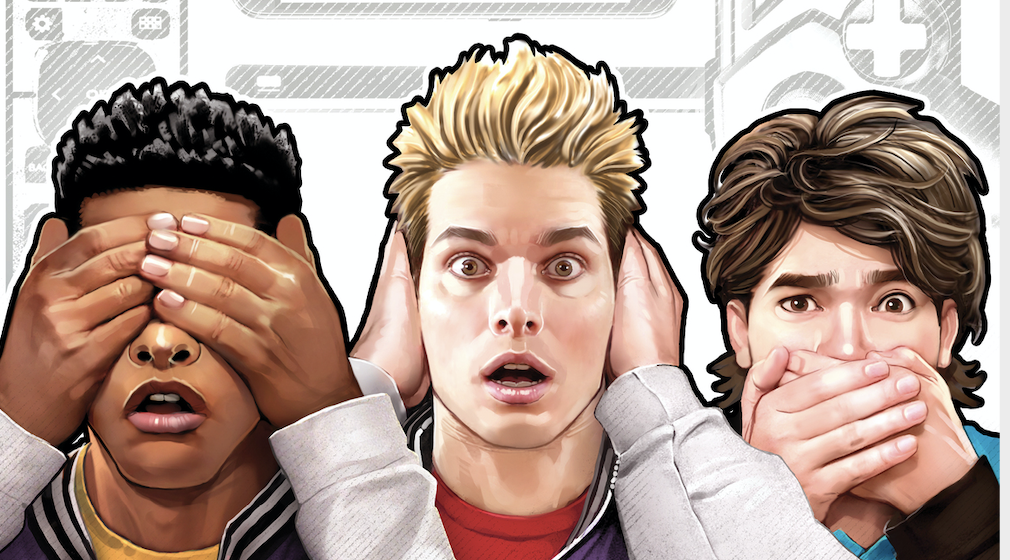
About a year ago, AHOY Comics published the first issue of my first-ever comic book miniseries, PLANET OF THE NERDS. AHOY Editor-in-Chief “Torrid” Tom Peyer’s decades of experience saved me from a boatload of first-timer mistakes, but I also learned a few lessons over the course of writing NERDS that I’d like to share with you.
You may ask, “who the hell is this guy, who has written exactly ONE five-issue miniseries, to tell ME how to write comics?”
I respond by kissing you gently on the forehead and whispering: “Shhhhhh. Just this once, in the middle of a literal plague, let me fulfill my lifelong dream of hijacking a comic publisher’s newsletter, okay?” Okay. Here goes.
1. Give each character a secret, and never reveal it. In order to really get into each character’s head, I made up something about that character that only I would ever know: a shameful experience, an allergy, maybe a surprising opinion about a piece of pop culture. Sharing a secret with a fictional character is a great way to help you care about that character, no matter how villainous they are.
2. Write for the rush. For comics writers, there’s no drug greater than the high of opening an email containing a freshly drawn page. I’d have to sit down when I got a new email from my partner on NERDS, Alan Robinson, because his artwork would literally make me swoon. So I started writing pages with that moment in mind: give Alan the raw material he needs to draw a dynamic page that makes me faint from joy when I see it for the first time. That goal helped create a more artist-friendly, visual book.
3. Make a playlist and stick to it—no matter how much your ears bleed. When writing NERDS, I compiled a playlist of songs that were in heavy rotation in 1988, when the story begins: “Don’t Worry Be Happy,” “Hazy Shade of Winter,” “Bad Medicine.” I listened to it every time I wrote. Eventually, I got sick of the songs. Then, my body started to reject them like a bad heart transplant. Finally, John “Cougar” Mellencamp stalked me, Freddy Kreuger-like, in my dreams. But I stuck with the playlist, and it was essential to keeping me in the world of the book.
Every writer has to find the process that works best for them, but these three tips improved my process. Did they produce a good comic? You can find out by buying PLANET OF THE NERDS from a comic shop or independent bookstore near you! And be sure to join me next time, when I’ll share three tips on how to awkwardly market your comic in the last paragraph of a writing craft listicle. (Number two will blow your mind!)
The word “austerity” hasn’t taken hold in popular discussion here in America the way it has in the United Kingdom. So let’s define it before we go any further: in the latest episode of the “Pitchfork Economics” podcast, Mike Konczal, a director at the Roosevelt Institute, says austerity is the movement by government leaders “towards retrenchment, towards spending less, and putting less demand in the economy for goods and services when the economy is not near full employment.”
In other words, austerity simply means slashing government budgets just at the moment when government spending is most needed. Proponents commonly describe their reasoning in simple, straightforward terms like “tightening our belts” or “running government like a business,” and it’s sold to the people as a necessary measure in times of crisis.
Sorry to put this image in your eyeholes.
The problem, Konczal explained, is that an austerity mindset of cutting government programs, investments, and offices is “counterproductive” when a recession hits because it smothers consumer demand at a time when the economy is already hurting, which “makes the situation worse” and prolongs the downturn. Plenty of studies bear out Konczal’s argument. Recessions last longer and recoveries are slower to take effect when leaders slash government budgets. Recoveries are more successful, inclusive, and sturdy when government invests in the economy during an economic downturn.
So why, in the middle of this pandemic, is Senate Majority Leader Mitch McConnell warning that “we need to be as cautious as we can be” when considering additional stimulus measures? Is he really that concerned about balancing the budget?
Over at theSeattle Review of Books, co-founder Martin McClellan and I just announced that the site is going on indefinite hiatus. This was by no means an easy decision. I’m carrying a deep sense of sadness piled on top of all this other coronavirus weirdness, and I feel in many ways even more unrooted than I did when I left The Stranger five or so years ago.
There are a number of factors behind the decision, which are enumerated in the post, but my personal decision boiled down to this: I’ve been blogging on a daily basis for almost fifteen years. My writing for the Seattle Review of Books always happened at night, after I’d finished with my day job at Civic Ventures. I usually would write the next day’s posts after making dinner, from 7 to midnight or one am, before getting back up at 6 in the morning to walk the dog and get ready for my day. It was a 30-hour-a-week job on top of my 40-hour-a-week-job. But let me say here that the work wasn’t really the problem. I like to work, and I like to be prolific.
I am, quite frankly, sick of hearing myself talk.
The daily blogging pace has introduced a certain formulaic sensibility to my writing, and when a writing project feels more like filling out Mad Libs than writing, it’s probably time to move on. I didn’t feel I was properly engaging with the books I was reviewing, and I would have loved to flesh out my weekly interviews more. I wasn’t serving Seattle’s literary community to the best of my ability anymore.
I’d like to take a little bit more time with my writing: Explore different rhythms in my process, take my time with a story, do multiple interviews, explore an author’s whole body of work before engaging with it in a review. I also want to read differently. For the last fifteen or so years, I haven’t felt like I could take a month to really deeply explore a dense or difficult book, because the churn of daily publication required me to read, drop a take, and move on to the next book. I’m already reading more than I have at any point since my bookselling days at Elliott Bay Book Company, and that’s a genuine joy. I hope that joy will represent itself in my writing soon, too.
I’ll still be writing at my day job at Civic Ventures, and my monthly Seattle Times bookstore spotlight column will continue for as long as they’ll have me. I hope to pursue some other freelance opportunities, too. (Though it remains to be seen if there will be any freelance outlets available after the pandemic has had its way with the media.) And I’ll be blogging here, but not daily. I’ll also be linking to my freelance work on this blog, so you’ll be able to follow me across all platforms, if you’d like. But I expect that I’ll be posting original stuff here pretty often, because I process the world through my writing—and there is a lot to process out there right now.
One last self-indulgent note to end this agglomeration of self-indulgent notes: Today marks the 20th anniversary of my arrival in Seattle. I’ve now lived in Seattle longer than anywhere else I’ve lived in my entire life, and it still feels like a love affair to me. I know that Seattle has plenty of problems, but I have never felt so connected to a place than I do here. I love the land and the people and the weather and, most especially, the literary community—from the bookstores to the libraries, from the writers to the readers.
I am in my home, and I have hundreds of books I’m dying to read, and I’m still excited every day to wake up and be a writer. All told, I’m impossibly lucky. And today, especially, I’m deeply grateful for all the opportunities I’ve enjoyed and all the people who have joined me on this journey. Thank you. I look forward to what’s next.
Treasury Secretary Steven Mnuchin on Sunday told Fox News’ Chris Wallace that the American economy would “bounce back” from the coronavirus shutdown by this summer. “As businesses begin to open,” Mnuchin promised, the “demand side of the economy” will “rebound.”
Mnuchin was reiterating President Donald Trump’s line on the economy — the idea that when social distancing ends, the economy will miraculously renew itself to pre-virus levels. “We’re going to rebuild” the economy, Trump promised reporters last week, “and we’re going to rebuild it better, and it’s going to go faster than people think.”
Trump and Mnuchin aren’t the only ones predicting a strong recovery. Ross Walker, the chief UK economist at NatWest Markets, envisioned a V-shaped recovery. Carsten Brzeski, the chief economist at ING Research, believes the recovery will be more U-shaped, with a slight trough at the bottom before the economy bounces back to normal. At the end of March, Goldman Sachs economists predicted what CNBC’s Jeff Cox characterized as “the fastest recovery in history.” (Goldman has since tempered its rosiest expectations for the rest of the year, but its economists are still predicting an “unprecedented” recovery.)
But the longer this crisis goes on, the less likely a V- or U-shaped recovery becomes…
How many people want to walk into something like this right now?
Seattle is one of America’s nerdiest cities — home to cartoonists, the publishers of Dungeons & Dragons, and a whole slew of video game developers. It’s also a city that profits greatly from the business of nerd culture, particularly through a full, year-round slate of large conventions in the downtown retail core ranging from Emerald City Comicon in March to the anime-focused Sakura-con in April to the September gaming convention Pax West.
These aren’t just hobbies or weekend pursuits — they’re big business. Pax West, in particular, is the biggest annual convention in Washington state, driving $35 million through the local economy over one weekend in 2015.
Seattle was also America’s first coronavirus hotspot, and slowly we’ve seen these annual pillars of the local nerd culture collapse, one after the other. After a number of exhibitors, cartoonists, and attendees canceled their appearances, Emerald City Comicon pulled the plug on the convention right before it was supposed to begin. Then, as officials rolled out social distancing orders, the other conventions started to fall: Sakura-Con canceled, as did the popular sci-fi convention Norwescon.
Last week, though, Pax organizers refused to join the parade of shuttered conventions. They tweeted that, “as of right now we still plan on welcoming everyone home to PAX West on Labor Day weekend (September 4th – 7th) in 2020!”
The response from Pax’s typically rabid fanbase was decidedly chilly….
It’s a tiny storefront — just 500 square feet — but Wallingford bookstore Open Books has always been an especially inviting space. Its owner, Billie Swift, has watched people fall in love with the shop again and again.
“We are across the street from a physical therapy center,” Swift explains, and patients who are early for their appointments often wander into the shop. Swift says that she’s used to seeing the customers panic when they walk several feet inside and start browsing, only to realize that Open Books is a poetry bookstore — in fact, one of only two or three poetry-only bookshops in the country.
At first, “they’re terrified,” Swift laughs. But it doesn’t take very long for Swift or one of Open Books’ other two booksellers to strike up a conversation and make recommendations. They guide customers to the back of the shop, toward “what I believe to be the perfect reading chair,” Swift says. “We have a little table by it, and we love nothing more than sitting someone down and piling up a stack of books next to them.”
Swift says those accidental Open Books customers quickly learn that “their love of books in general means that they are perfectly at home in a poetry bookstore.”
But like every other bookstore in Washington in the time of social distancing, Open Books has been closed to the reading public for about a month…