Author: Paul Constant

  • What I’ve been reading and writing: October 2021

    What I’ve been reading and writing: October 2021

    First, and most importantly: If you live in Washington, have you voted yet? If you’re not in Washington, is there an election happening on Tuesday where you are? Please vote. I guarantee you that the person you hate most in the world is voting in this election. Don’t let their voice count more than yours. And may I suggest using the Progressive Voters Guide to help you navigate your ballot? 

    Otherwise, it’s been—not gonna lie—an absolutely shit month. A lot of those reasons are personal and I don’t have anything of value to say about them here. But in general, the autumnal onset of darkness hit Seattle hard, and I’m acutely aware that there’s a lot of unnecessary pain and suffering in the world. 

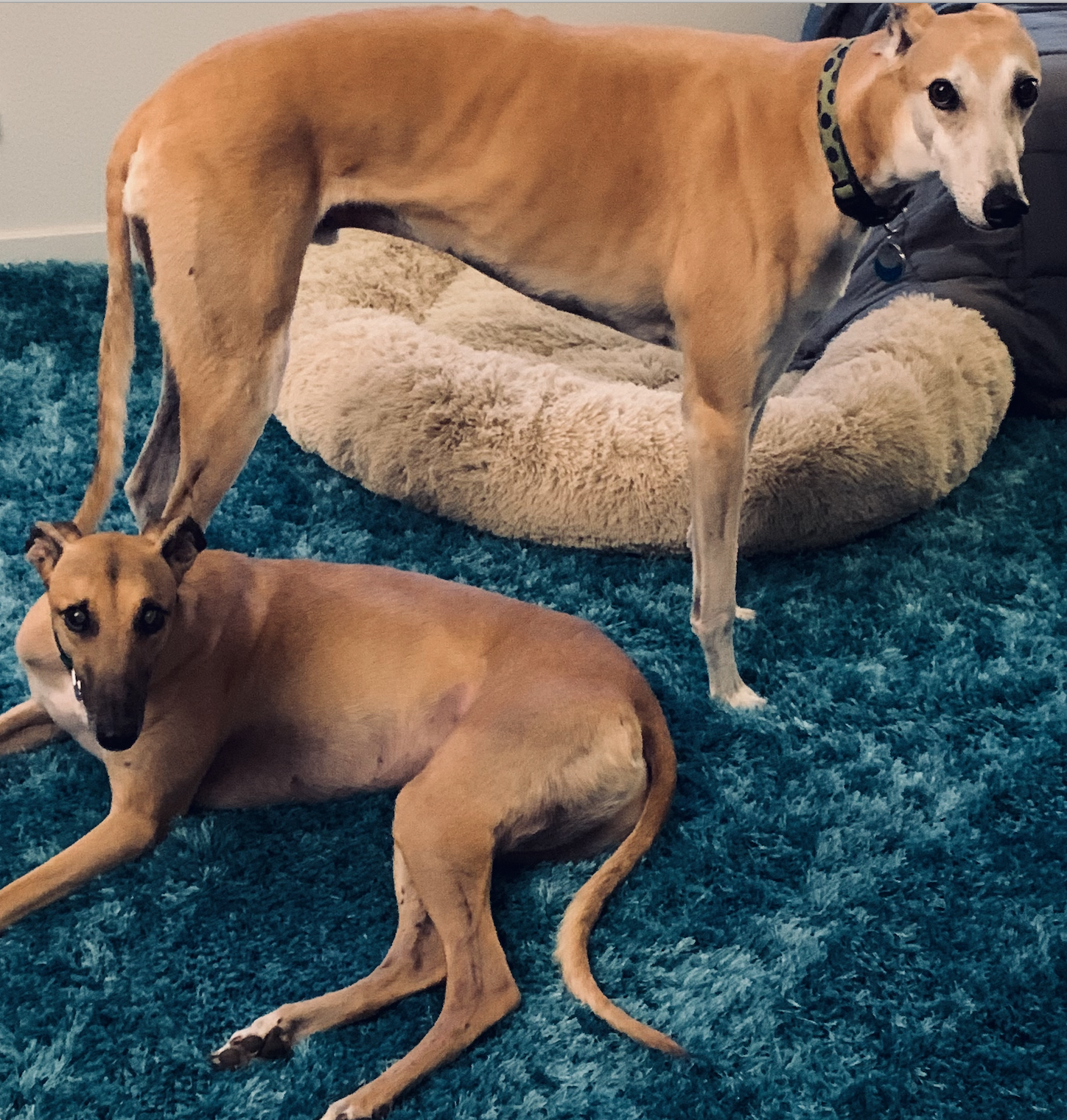
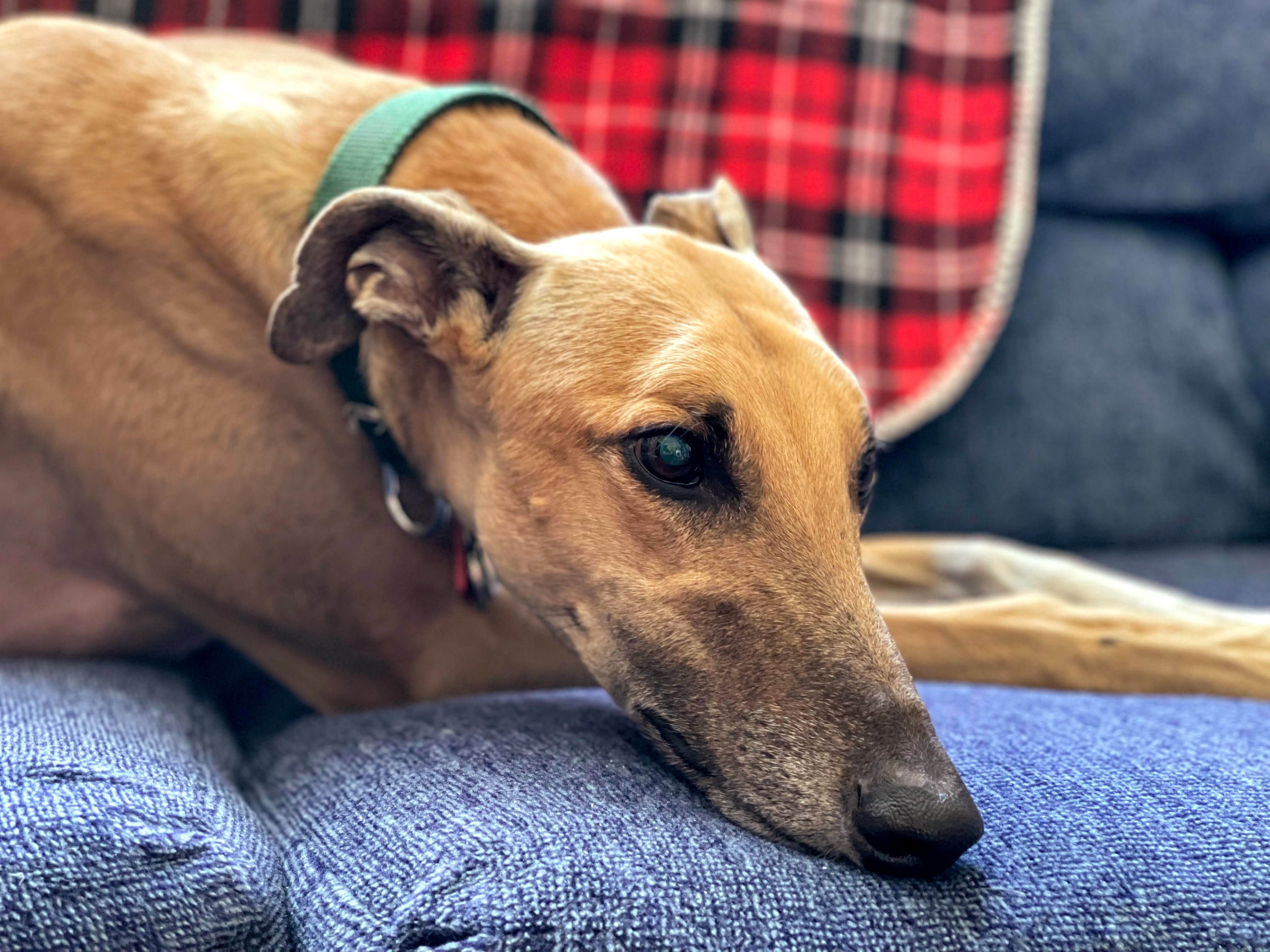
    Way down on the problem scale, both our dogs had minor medical emergencies in the past month. Obie was stung by a bee and had a terrible reaction, and Wally had a disgusting butt condition that took a lot of attention and care to resolve.Both the dogs have come out the other end of their challenges swimmingly.

    And we’ve seen a few friends in the past few weeks who only met Wally back when we first adopted him in January, and they’re astonished by how far he’s come along. Wally was a loud, scared mess back in the early days—for good reason! He had to adjust to going blind and moving to a house for the first time in his life. Less than a year later, he’s a much calmer, intensely cuddly, very happy pup who seems satisfied with his new pack. Because I live with Wally, I missed that progression, and I’m happy to see it through the perspective of others. It’s always worth it when things are undeniably sucky to look back and see how far you’ve come with the people (and pets) who matter most to you.

    Find me online

    • Snelson artist Fred Harper and I did our first-ever podcast interview together on Comics for Fun and Profit. This was actually the first time Fred and I had ever spoken in person, after five Snelson short stories and five full issues of Snelson. He’s got an amazing radio voice and he has all kinds of great stories about breaking into comics by accident in the 1990s. 

    I’ve Been Writing

    For the Seattle Times, I interviewed David Sedaris about why not being able to read in front of huge audiences during the pandemic was absolute torture for him.:

    Well, I have a bottomless need for attention, and there’s not an amount that would fill the hole. When people say to me, ‘Oh my God, you’re going to, like, 70 cities. That must be awful.’ I only say, ‘No, it’s not, it’s actually great.’

    When I finish a tour, I’m just counting the days until the next one. I can’t wait to be in a hotel again.

    This interview was very close to being the first time the Seattle Times ever published the word “titties,” for whatever that’s worth, but a last-minute edit for space pushed a whole passage about orange Jell-O (and titties) out of the final cut.

    I also wrote about Outsider Comics and Geek Boutique, a fashion-forward comic shop that has been gloriously upending the white male comics-shop paradigm for the past five years in Fremont. You can find some great comics recommendations from Outsider owner Jill Taplin in this pice.

    For Business Insider I wrote about how the American social safety net successfully worked during the pandemic, and how we can reform it so that it works successfully all the time. I also wrote about why extractive big companies like Walmart and Amazon didn’t beat small businesses in the so-called free market of ideas, and how we can revive rural economies with investments in small businesses. And you already knew that rich people use philanthropy as a scam to avoid paying taxes, right?

    I’ve been reading


    Last month
    , I wrote about a character in The Very Nice Box who felt unrealistic to me: “The main character is emotionally wounded in the improbable way that only protagonists of novels are emotionally wounded—she never deviates from her perfectly attuned daily schedule, and nothing ever interferes with the little cocoon in which she’s hiding from her trauma, until the inciting incident of the book throws her years-long uninterrupted torpor into chaos.” At least one reader thought my comments meant that I believed trauma didn’t work like that in real life, and that’s a miscommunication—totally my fault.What I meant to say was that it felt like the protagonist’s particular trauma didn’t feel lived-in at all—that she and her complicated rituals seemed to pop into existence on the day the novel began.

    This month, I read Melissa Broder’s excellent novel Milk Fed, and it got everything right about trauma that The Very Nice Box got wrong. The protagonist’s disordered eating is very complicated and it dominates her life, but you can feel the years and years of pain and emotional torment that constructed it—it feels very real, and lived-in, and honest. Then she falls in love (or lust) with a woman who works the counter at a frozen yogurt shop, and everything goes sideways. Milk Fed surely isn’t for everyone—I feel like the bookseller ringing me up was subtly trying to warn me not to buy the book—but I loved its weird eroticism and sideways feeling of hope.

    Chana Porter’s The Seep is a novel about a different kind of alien invasion—one in which the aliens give humanity everything it’s ever wanted. After The Seep invade our bodies and minds, we can become anything, do anything, and live life however we want, in an eternal state of ecstasy. The book—and it’s a tiny little thing, really, more of an extended short story than a novel—focuses on a woman whose partner decides she wants to become a baby again and start life all over, which effectively is a spiritual form of divorce. I enjoyed this book, though I would have preferred a little more concrete detail and a little less Vandermeerian New Weird vagueness. (Vandermeer is great, but this book is focused on the particulars of a relationship and its aftermath, which feels jarringly at odds with the airy vagueness of the sci-fi.)

    I’ve read every novel Colson Whitehead has ever written, either on or before publication date. Not to be all lit-hipster, but I’ve been a fan of his since I cracked open an advance reader copy of The Intuitionist, and I love all his books—I was a champion of his second novel, John Henry Days, and I love Apex Hides the Hurt, which most consider to be the least of his works. I’m happy to say that Whitehead’s newest novel, Harlem Shuffle, is a funny crime novel and an excellent literary construction, a heist narrative set in 1960s Harlem with a roguish protagonist and a magnificent cast of characters. I’m very excited that Whitehead has announced he’s writing a second book about some of the same characters set ten years later. It will be his first sequel, and I’m really looking forward to revisiting this world. He writes a great bastard, and the shady world of Harlem Shuffle is, happily, filled with bastards.

    Dave Eggers’s latest novel, The Every, is a dystopian story about what happens when Google (or in this case The Circle, which is the thinly veiled Google-like company that figured in his previous satirical novel of the same name) buys Amazon. The book is a decidedly mixed cautionary tale about social media and over-reliance on technology, with some excellent observations about modern life nestled against some real groan-worthy cliches about the youth being too dang sensitive these days. I’m still glad I read the book, which is about a would-be corporate saboteur who wants to destroy The Every by pushing it into more and more invasive, sociopathic practices only to realize that the public loves her supposedly monstrous propositions. It’s very dark, a little too stuffy, and eagerly preaching to the choir. But at least it’s principled—even if it’s not successful in its arguments. 

    Ragnar Jónassen’s mystery Snowblind is a quick little thriller about an uninteresting young detective who moves to a fascinating remote Icelandic town, and has to solve a murder there. As a mystery, it’s pretty generic, but as a study of rural Icelandic life it’s enjoyable enough. In better genre news, I read Olivia Waite’s charming lesbian romance novel The Lady’s Guide to Celestial Mechanics, a soothing story about two willful women who fall in love in early 1800s England, when the field of astronomy is just beginning to resemble its modern form. The leads have great chemistry together, they experience just enough hardship on the path to romance to keep things interesting, and Waite clearly understands the period, even as she brings a welcome modern sense of social justice to the story.

    The Contrarian, Max Chafkin’s biography of Silicon Valley billionaire (and killer of Gawker) Peter Thiel, is a damning account of the life of one of PayPal and Facebook’s early investors. Thiel started out as one of the most aggressive libertarians in Silicon Valley, and he turned into one of Donald Trump’s most rabid supporters. The book is crammed full of hilarious anecdotes about some of the world’s richest people, who are widely mistaken for some of the smartest people in the world. (There’s an anecdote about Elon Musk struggling to understand why anyone would write a check for totals that they don’t have in their account that actually had me laughing out loud. The wealthy South African investor in a digital payments company never once took checking fraud into account in his business plan.)

    Chafkin does a decent job of keeping the camera squarely on Thiel, though I think he’s a little too forgiving of his subject. For instance, he reports on Thiel’s well-known hatred of colleges and his affinity for college dropouts, but he never recognizes the contradiction that Thiel only seems to be enamored with dropouts from Ivy League schools—meaning he still buys into the status that elite schools confer, even as he praises dropouts from those institutions. That shouldn’t be a surprise. Thiel has made a career out of disregarding norms and disrespecting institutions at the same time that he profits from those same norms and institutions. He hates government, but he makes billions from government contracts. I loathe him even more now than I did before reading the book—and I didn’t think that was possible.

    That’s All for this month

    When I was a teenager, all my stoner nerd friends were obsessed with the Dune series, and all my straight-edge nerd friends were obsessed with Isaac Asimov’s Foundation series. I must confess that I struggled with both series for a couple of reasons. For one thing, I find it very hard to get engrossed in stories that don’t take place on Earth—or at least that don’t have recognizable Earthlings as main characters. For another thing, I have a limited patience for world-building when it doesn’t figure directly into the plot of a story—I’m always more annoyed than impressed when an author writes ten thousand years of sociopolitical history as a backdrop to a fairly straightforward sci-fi novel.

    So is it heretical of me to admit that I greatly enjoyed both the new film adaptation of Dune and what I’ve seen of the new Foundation TV series? As a lifelong book guy, I perhaps should stick to the company line of “the movie is never anywhere near as good as the book,” and of course both adaptations sacrifice a great deal of the text in the translation process to live-action.

    But both of these intelligent, stylish adaptations successfully incorporate their world-building in service to the narrative, and that is exactly my style. We learn as much about the foreign worlds as we need to know, exactly when we need to know it. I’m sure the purists are complaining about all the sins of adaptation in forums across the internet, but to me it sure feels like a new golden age of science fiction in film and TV. I’m a sucker for stories about smart characters trying to navigate through moral dilemmas caused by enormous systemic failures, and both Dune and Foundation deliver exactly that. 

    I hope you’re adjusting to the autumnal darkness with at least a little more grace than I am. See you next month.


  • What I’ve been writing and reading: September 2021

    I want to call your attention to a letter that my friend Tim Lennon, director of LANGSTON, recently wrote to the Seattle City Council. Tim was responding to Seattle Mayor Jenny Durkan’s surprise appointment of a director to Seattle’s Office of Arts and Culture—read more about that at Publicola—but even if you don’t live in Seattle I think you should read this part:

    Seattle’s cultural sector was the first to shut down due to the pandemic and many of us have yet to even partially reopen or find work. The challenges of affordability, equitable access to resources, and the volatility of public and philanthropic support our sector was facing even before the pandemic made working in our industries increasingly tenuous. The last year and half of pandemic closures and cancellations only accelerated the impact of those trends. My fellow culture workers have put in impossibly long hours to find creative ways to keep our workers employed, to get our doors open again, to keep creating, and to keep meeting our communities’ cultural, spiritual and material needs. 

    The sad truth is that over the last two decades, even the most liberal American cities have failed to adequately support arts and culture. The arts is widely regarded by our local elected leaders as something people do in their spare time when they’re finished working at their real jobs, and I worry that as we emerge from the pandemic the arts will continue to be treated as a nonessential expense.

    But art is what makes cities work. It’s the musicians and artists and writers who define a place and give it value. When I was a teenager growing up in a small town in Maine, I didn’t dream of moving to Seattle because it’s where Microsoft is headquartered—I wanted to move here because I loved Nirvana and Fantagraphics Books and Jason Lutes’s amazing comic Jar of Fools. And it’s the art that’s kept me committed to this city, more than 20 years after moving here.

    Even before this pandemic, it was impossible for a beginning artist to afford to live in any of America’s biggest cities without a pre-existing financial cushion of some sort. In the next couple of years, we’re going to see some significant reprioritizing of values as cities and states recover from the pandemic. I worry that our leaders might prioritize boundless economic growth at the expense of cultural health. The fact that Mayor Durkan has proposed turning the appointed position of an arts director into a part-time job when it has always been a full-time position only justifies my concern.

    If elected leaders push organizations like LANGSTON (and Short Run, and Hugo House, and the Vera Project, and so on) to the margins, I’ll have to reconsider my commitment to Seattle. I want to live in a place that values arts as an essential part of daily life.

    find me online

    Holy cow—I’m doing two virtual events in October? I hope I don’t sprain anything.

    First up, comics journalist Dan Campos asked me to take part in a virtual panel on October 12th to discuss whether the current ongoing apocalypse will change the way we read and write about fictional apocalypses in the future. I’ve been thinking on this subject a lot, and I’m really excited to have this conversation. But I’m positively giddy that my current favorite comics writer, Mark Russell, is taking part in this panel. He’ll have plenty to talk about, considering that he’s currently publishing a great post-apocalyptic comic called Not All Robots that was written, I believe, during the pandemic.

    And second, I’m doing a neat virtual event produced by the good folks at Elliott Bay Book Company on  October 29th: I’ll be interviewing historian Timothy Snyder and artist Nora Krug​, who worked together to adapt Snyder’s essential little book On Tyranny into comic book form. If you went into a bookstore during the Trump presidency, you absolutely saw Snyder’s slender book on the shop’s bestseller list, and for good reason: Snyder has the rare ability to synthesize the current moment into the flow of history in a way that is neither hyperbolic nor boring. Krug’s adaptation of the book brings a new urgency to the text, and I can’t wait to talk to them about how it came to be and what the process of translation from prose to comic was like.

    I’ve been writing

    At the Seattle Times, I wrote about Joie des Livres, a beautiful little bookstore that popped up on the Washington coast a couple years ago and is rapidly growing into its role as the only new bookstore for many miles around. It’s in the middle of a weird expensive pre-fab urbanist beach town called Seabrook that didn’t exist at all 20 years ago. Seabrook used to kind of creep me out, but Joie des Livres makes it feel much more like a real place.

    And in my Business Insider column, I wrote about how the federal government might be able to regain the trust of its people, why cutting pandemic benefits too soon is a terrible idea, and why the snack food industry has gone through so many strikes recently. I also wrote about “Right-to-Work” laws, which sound like a positive thing but are in fact a way to lower worker pay and shrink bargaining power.

    I’ve been reading

    Because I’m apparently a masochist, I listened to the audiobook of I Alone Can Fix It, Carol Leonnig & Philip Rucker’s account of Donald Trump’s “Catastrophic Final Year” in office. To be clear: I’m not saying that everything is perfect now, but holy cow, I’m shocked that I had already started to forget exactly how frantic everything was when Trump was in office. I knew it was bad, but I forgot that pit-of-the-stomach churn that I used to feel every morning when I opened Twitter. It’s interesting, too, that General Mark Milley appears to be a major source for this book, given that Bob Woodward’s new book about the same period of time has a lot more information about what Milley was actually up to during this period. Fix It is almost certainly the story Milley wanted you to hear, but it’s certainly not the full story.

    Speaking of how frantic recent years have been, Hermione Hoby’s novel Virtue is set during the frantic last couple of years, and it’s a book that tries to cram all of America’s social conversations into a single narrative. The story follows a young man as he becomes a low-level editorial intern at a storied literary magazine in New York City, and the first third of the book effectively lampoons the self-importance of the magazine and its staff. But then the narrative takes him to a farmhouse where he becomes entangled in the married life of an older couple, and the story loses some steam. It’s unfortunate, too, that one major Black character in the story has to stand in for every major race-related issue of the past four years—she becomes our narrator’s lens into subjects ranging from protests to police violence to tokenism in the arts, and she carries so much weight that she loses any sense of autonomy by the time the book reaches its climax. Still, it’s an ambitious debut novel and I’m excited to see what Hoby does next.

    Michelle Zauner’s memoir Crying In H Mart is worthy of the accolades it’s received. Zauner, who records music as Japanese Breakfast, writes about her family—especially her mother—with tremendous sensitivity, and her complicated love for her mother’s Korean family is so specific that it feels universal. A relatively quiet and small story, but one that stuck with me.

    The Very Nice Box, by Laura Blackett and Eve Gleichman, is a novel about a woman who designs products for an IKEA-like company. It’s very mannered. The main character is emotionally wounded in the improbable way that only protagonists of novels are emotionally wounded—she never deviates from her perfectly attuned daily schedule, and nothing ever interferes with the little cocoon in which she’s hiding from her trauma, until the inciting incident of the book throws her years-long uninterrupted torpor into chaos. It feels less like a novel about real people and more like a pair of authors playing with stiff figures in a doll house. Regardless, I enjoyed the ideas, symbols, and themes of the book, even if I never emotionally identified with the characters.

    Billy Summers is the best novel that Stephen King has written in decades. That sounds like high praise, but please know that I’ve loathed all of Stephen King’s novels since, maybe, The Green Mile? (I haven’t read all of them, but boy was Under the Dome terrible.) It’s the story of a hit man who pretends to be a writer as a cover for his latest assassination, but he slowly falls in love with writing and so he gradually learns how to be human again. The book reads more like Elmore Leonard than Stephen King in parts, which I mean as a huge compliment. Readers should be warned that there are plenty of King-isms here: His trademark fatphobia is on full display, and he addresses the trauma of sexual assault with all the stunted empathy and understanding that a well-meaning Boomer man can muster. But I had a really good time with this book, and was shocked by how present King felt throughout, with none of the sloppiness that clogged up most of his recent books.

    Robert J. Sawyer is a Canadian sci-fi writer who writes about Big Ideas but doesn’t take them too seriously. I loved his book Calculating God, which is about aliens who show up on Earth one day demanding to talk to a paleontologist. Together, the aliens and our protagonist try to unwind a mystery that might uncover the true meaning of life. If you like old-school sci-fi that doesn’t get too wrapped up in making the high concept feel realistic, this might be for you—though you should be warned that the ending is super-rushed.

    I read Agatha Christie’s And Then There Were None for the first time, and it was a lot of fun—but my favorite part of the book was Christie’s introduction, which can be succinctly paraphrased as “This book was really hard to write, you guys, and I did a really great job with it.” Here it is:

    You do you, Agatha!

    That’s all for this month

    Like many of you, I’ve been watching a lot of TV. And TV is really good these days! I’ve enjoyed Nine Perfect Strangers and Ted Lasso and The White Lotusand all the same shows that everyone’s talking about. (Except I just can’t get into Succession, and I’ve tried a couple times; I’m unable to find the appeal of watching a bunch of terrible rich people behaving terribly.)

    But I was blown away recently by the FX comedy Reservation Dogs. It’s a half-hour comedy that’s actually funny, and it stars a cast of young Indigenous actors who have charisma to spare. (Seriously—any one of the four main leads could headline their own Marvel movie tomorrow if they had to.) It’s well-written, well-acted, and addictive as hell, with each episode advancing the story in important ways and no filler episodes to speak of. Each episode is stuffed with satire and a little bit of magic and gallons of heart.

    It’s also noteworthy that ReservationDogs is a show about people who are poor, who in fact have to worry about money all the time. All the shows I mentioned above, and I think the majority of shows on network television, are about people who never have to worry about how they’re going to pay rent, or where the next meal is coming from, or how they’re going to materially improve their lives. TV has always over-represented rich people, but it seems like poor people have all but vanished from TV over the course of my lifetime. it’s great to watch a show that takes place in the real world, where everything isn’t sterile and extravagantly bland for a change.

    The first season of Reservation Dogs is 10 episodes long and it’s all on Hulu now. I hope it runs for another six seasons, and that’s why I’m asking you to watch it, too.

  • What I’ve Been Writing and Reading: August, 2021

    What I’ve Been Writing and Reading: August, 2021

    I haven’t been posting on Twitter very much lately. Sometimes the news feels too terrible to comment on. Sometimes I feel like I have nothing original to say, or I’m just exhausted by the discourse. I’m also trying not to amplify bad takes, and some days all the takes are bad. 

    One thing I did tweet, though, was that I’ve been missing the freedom of blogging lately. The idea of a place online where a person or a select group of people can just publicly talk about everything on their minds—at length or in brief—is now so far in the past that it seems almost quaint.I don’t want to be nostalgic, because I honestly believe that nostalgia is a poison, but the return of Gawker has reminded me that blogging was once its own form of literary communication, and that form has all but gone extinct.

    I love the brevity of Twitter, and I enjoy the epistolic nature of newsletters more with each passing month. But the idea of a blog—of a handful of smart people sharing a strip of online real estate and having a never-ending conversation—was an actually new idea in the media world. And before we even really had a chance to investigate the possibilities of the form, it was murdered by the walling-off of the web. And that’s a shame.

    Find me online

    I was honored to be the subject of comics journalist Katie Liggera’s first interview. She’s got a boundless enthusiasm for comics and is at the beginning of what I hope will be a long career. The interview, which was published at Comic Book Yeti, is a wide-ranging and fun discussion about the comic that Fred Harper and I created, Snelson: Comedy Is Dying.

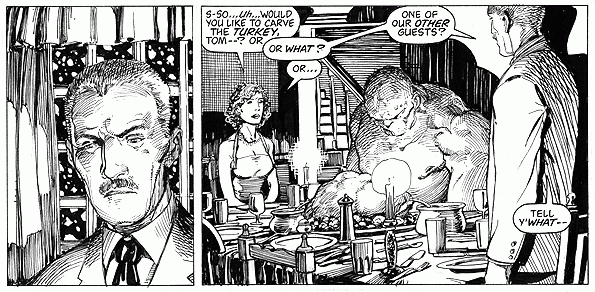
    I also did an interview with Comics Multiverse where we talked about my lifelong love of comics, which Marvel and DC characters I’d like to write, and much more. The second issue of Snelson: Comedy Is Dying is coming out at the beginning of September and this issue is the thesis statement for the whole series, a deep dive into the fallacious idea of cancel culture. Fred also drew a panel in this issue that took my breath away when I saw it for the first time:

    It’s the shadows on the wall that get me.

    I’ve been writing

    For the Seattle Times, I interviewed the amazing Susanna Ryan, who is maybe better known as the Instagram cartoonist known as Seattle Walk Report. Earlier this month, she published her second book of Seattle-centric cartoons, Secret Seattle. If you live in the area, you really should read this book. Ryan has a gift for finding all kinds of historical items of note around the city, researching the history behind those items, and then relaying that information to readers in funny, economical comics. So the book is packed with anecdotes about the century-old coal chutes, hidden cemeteries, and fascinating tiny pieces of the city that you likely walk past without even noticing.

     I also broke some news in my monthly Seattle Times bookstore profile column: The Edmonds Bookshop, which next year marks 50 years in operation, is changing ownership. Mary Kay Sneeringer, who has owned the store for 20 years, is passing the baton to Michelle Bear, the shop’s assistant manager. Sneeringer shared some really interesting, touching anecdotes about her time as the store’s owner, and it’s exciting to see a mainstay of downtown Edmonds prepare to enter a new generation of ownership.

    In my Business Insider column this month, I wrote about a remarkable interview with Redfin’s CEO, in which he talks about the problem with housing inequality and why we can only get out of this urban housing crisis by taxing the hell out of the super-rich. I also wrote about why filing taxes in America is such a mess, why a Frito Lay worker strike in Kansas managed to capture America’s attention, and why America’s $7.25 federal minimum wage is a national embarrassment (and also why you could make a very credible case for a $24 minimum wage.)

    I’ve been reading

    I went to the beach for a week and read an entire shelf’s worth of books, so you are warned: This section is going to be unnaturally long this month.First of all: I had never read Finnish cartoonist Tove Jansson’s novel The Summer Book before, and oh my God I’m so glad I finally did. I sat down in the sun on a sunny afternoon and started reading this book, about a grumpy young girl and her grumpy old grandmother spending the summer on an island, and I didn’t stand up again until I’d read the whole thing through. Summer, for me, is always a mix of sadness and joy. I can’t fully enjoy a beautiful summer day because I’m always painfully aware of the fact that the beauty is transitory, and soon it will be rainy and cold and the trees will be bare. (I absolutely love autumn, but I also absolutely hate the approach of autumn at the end of summer, when the weather gets unpredictable and surly and the days get noticeably shorter with each passing week.) I’ve never read a book that captures that summer melancholy so completely, and so beautifully. I already know that I’m going to read this book over and over again—probably once a summer—and I’ve already pushed it into peoples’ hands and mailed copies to friends. (And I make sure to hand it over with the warning that you shouldn’t read the introduction first. Read it at the end. It gives too much away.) If summer’s excess and abundance and beauty ever makes you feel a little bit sad and overwhelmed, this book will make you feel understood. It’s pure melancholic magic.

    I listened to the audiobook of Saturday Night Live performer Cecily Strong’s memoir This Will All Be Over Soon expecting a collection of funny essays, in the mold of memoirs by Tina Fey and Mindy Kaling. And that would have been great! Even in the exceptionally strong cast the show enjoys right now, Strong is probably my favorite current SNL performer. She really commits to her bits, and she brings intelligent little touches to her characters that aren’t, strictly speaking, necessary, but which make them feel more lived-in and deliberate. Instead of a funny collection of essays, though, Over is a memoir about Strong’s experiences during the pandemic, and about the death of a beloved young cousin who was diagnosed with brain cancer. There’s nothing particularly novel or groundbreaking about Strong’s story or observations. Instead, it’s the diary of an intelligent and earnest midwestern woman who is scared and sad and uncertain about her future, and it completely won me over with its honesty and Strong’s courageous ability to repeatedly admit that she doesn’t have all the answers.

    I’d heard that Facebook executives were quitting in advance of the publication of An Ugly Truth, which reports on the inner workings of Facebook, particularly over the last few tumultuous years. And Sheera Frenkel and Cecelia Kang do bring a lot of journalistic firepower to the book, getting inside of secret leadership meetings and revealing both Mark Zuckerberg’s complete inability to understand the harm he’s doing to the world and his total disgust at the world for not being suitably grateful for the gift of Facebook that he’s given to us. But it doesn’t feel revelatory at all, and there’s nothing damning about it that you didn’t already know: Facebook is terrible, and it’s bad for humanity, and it’s led by selfish, arrogant idiots. If you need your biases confirmed, this will do that, but it doesn’t contain the smoking gun that will finally convince Congress to do their duty and protect the American people from Zuckerberg’s rampaging monster.

    Rachel Yoder’s Nightbitch, a novel about a mother of a toddler who believes she’s turning into a dog, is a funny and sometimes disgusting book about the horrors and joys of being a mammal. The book gets better and better as the unnamed narrator’s delusions grow more and more outrageous, and it builds to a climax that, while not entirely satisfying, at least rings true. I very much enjoyed the audiobook, which is read by Cassandra Campbell. 

    I had a good time with three thrillers on my vacation:

    • Jean Hanff Korelitz’s The Plot, about a writing teacher who steals a novel idea from one of his students only to become an international sensation, is built on a lie of a premise: The idea that there’s a book concept so compelling, so foolproof, that anyone could craft a successful novel out of it. If you’re willing to suspend your belief and accept that little impossibility as true, the book is a very fun little yarn. If you’re someone who actually writes books, it will probably feel like particularly unrealistic sci-fi. 
    • Ragnar Jónasson’s The Mist opens with an old Icelandic couple settling in on their remote farm at the beginning of a brutal winter that will see them completely isolated from the rest of the world. Then there’s a knock on the door. It’s a mean little twisty story that will appeal to people, like me, who have an outsider’s fascination with Iceland and her people.
    • If you haven’t seen In a Lonely Place, the Humphrey Bogart movie adapted from Dorothy B. Hughes’s amazing noir novel, I can’t recommend it enough. It’s a genuinely dark story that really lets Bogart explore his most antisocial impulses. I just read The Expendable Man, Hughes’s thriller about a Black man on a road trip who makes the mistake of picking up a young white woman hitchhiking by the side of the road in the early 1960s. When she eventually turns up dead, our protagonist is immediately labeled the prime suspect by a racist criminal justice system. I can’t believe this book hasn’t been turned into a movie, because it reads like a sleek film noir directed by a virtuouso. You barely read this book; instead, you watch it unfold.

    An advance copy of Atticus Lish’s upcoming novel The War for Gloria reminded me of some of John Irving’s more successful early novels. It’s a big book about a young man, his dying mother Gloria, and the absent father who decides to brashly re-enter their lives. The father in this book is one of the great horrific literary fuckups, a know-it-all who is petty and small in frustratingly imaginative ways. I think the book could stand to be 75 pages shorter—I feel that about most books, these days, honestly—but I always had a hard time finding a good place to stop because Lish kept drawing me back in.

    Harold Schechter and Eric Powell’s nonfiction comic “Did You Hear What Eddie Gein Done?” is a biography of serial killer Ed Gein—the basis for both Psycho and the Texas Chainsaw Massacre—and as far as true crime comics go, it’s very compelling, well-researched, and elegantly structured. But I do take issue with the way Powell depicts Gein’s horrendous crimes—I think he illustrates too much of Gein’s butchery of human bodies, where it would have been more powerful—and probably responsible—to leave some of the gore to the reader’s imagination. At one point in particular, the frank goriness of the illustrations drag the book over into sensationalism, which feels like a waste of Powell and Schechter’s formidable talents. 

    On the other end of the comics spectrum, Cheer Up!: Love and Pompoms is an absolutely adorable high school romance comic about a trans girl and a misanthropic young lesbian who bond—and fall in love—after joining the high school cheer team. Crystal Frasier, Val Wise, and Oscar O. Jupiter juggle a fairly large cast with an extensive history between them, and the reader never feels lost, preached to, or bored. And if you’re exhausted with romance stories in which one character has to become unlikable in order for the plot to progress, you’ll be happy to know that both of these leads are lovable all the way through. Charming as hell!

    I must not have been in the mood for non-fiction because three books failed to work on me at all this month. 

    • Emily Anthes’s The Great Indoors, billed as an exploration of “The Surprising Science of How Buildings Shape Our Behavior, Health, and Happiness” doesn’t manage to live up to its promise. Instead, it’s a disjointed collection of essays about microbes, prisons, offices, and schools. Anthes is a good science writer, but the structure of this one failed to come together. It’s frustrating when a book’s premise is far more interesting than its execution, but in this case it honestly feels more like a marketing failure than an authorial one.
    • As a dog lover, I expected to fall in love with J.R. Ackerley’s classic memoir My Dog Tulip, but instead I was left cold by the author’s endless accounts of failed attempts at dog breeding. 
    • And the biggest disappointment for me was George Saunders’s A Swim in a Pond in the Rain, which is supposed to be a “master class” on writing paired with seven Russian short stories. I of course love a Gogol and a Tolstoy—but I expected more from Saunders, who doesn’t do much more in his analysis than stand in awe of the Russians, and point to the stories and say “ain’t that somethin’!” The book is adapted from Saunders’s writing classes, and I’m sad to report that I think I would hate his lectures. It’s rare that I’m bored by a how-to-write book, but Saunders’s limp analysis managed to exhaust me as a reader and leave me feeling much the way my worst college classes left me—bewildered and frustrated by the waste of my time and money.

    That’s all for this month

    Obie has the white nose. Wally has the dark nose.

    Some of you have asked for an update about my rescue greyhounds, and I am thrilled to comply. My wife and I adopted Oberon (Obie) three years ago, and we adopted Wallace (Wally) in January of this year when the good people at Greyhound Pets Incorporated announced that they had a dog who was losing his sight and who needed to be placed in a home with a confident older dog before he went completely blind. 

    Back in February, I wrote that “I wouldn’t say that Obie and Wally are good buddies yet—they’re more like amiable coworkers.” I’m happy to report that eight months in, their relationship has grown a lot stronger. Wally and Obie have bonded now, to the point that they each get a little stressed out if they’re separated for more than a few minutes. But the amazing thing to watch is how they look after each other. Perhaps because he’s nearly completely blind now, Wally barks a lot for a greyhound, and he can whip himself into a bit of a negative feedback loop, barking and whining and pacing if he hears a dog barking in the distance. When Wally gets really anxious, though, Obie basically acts like an idiot—prancing, leaping, running in circles—in an effort to get Wally to forget about whatever he’s fixating on and play with him. Most of the time this technique works, and Wally gets distracted running around with Obie and forgets about whatever set him off in the first place.

    This is an act of empathy that I don’t think Obie was necessarily capable of before we got Wally. He was kind of a spoiled little prince for the first two years that we had him. But now he’s aware of another dog’s emotional state, and he moves to comfort that dog when he’s particularly distressed. That’s a pretty complex set of actions, and it indicates a deeper emotional life than I ever previously attributed to dogs. In short, I remain completely enthralled by these two fellows, and I can’t recommend dog ownership enough—the pandemic would have been a lot darker, had I not had these two handsome and elegant fart-machines to occupy my attention.

    Thanks for reading! I hope you’re well.

  • What I’ve Been Writing and Reading: July 2021

    What I’ve Been Writing and Reading: July 2021

    Here’s how fast feelings about the pandemic have changed in my peer group over the past month: About a month ago, I rented a karaoke room for the evening of July 31st. I figured a room for 15 people, max, would be enough, and I was looking forward to singing karaoke for three uninterrupted hours with my vaccinated friends again. I love karaoke, but it is the single most pandemic-unfriendly activity that I enjoy, and so it has been entirely off the table for a year and a half.

    Then, I reached out to friends. Many were enthusiastic but some were nervous about the idea of karaoke-ing again—particularly the friends with children who were below vaccination age. A dinner party I was invited to was abruptly canceled over similar fears. All totally understandable. I decided to change my reservation to a smaller party—I figured a room with a minimum of five and a maximum of nine would do it. 

    Then, King County’s health officer announced that everyone, vaccinated or unvaccinated, should wear masks indoors. (Frustratingly, it’s just a recommendation and not a mandate. If we’ve learned one thing over the last 18 months, it should be that policies need to have consequences, or else the majority of people will ignore them.) One of the two couples I had invited (also understandably) dropped out over fears of breakthrough cases and the delta variant. I decided to withdraw the invitation from the other couple because I felt like my invitation to a night of revelry was instead placing them in a complex moral quandary between the limits of friendship and public health.

    Please don’t think that I’m complaining about the fact that a karaoke night got canceled—I am healthy, my friends are healthy, we’ll see each other again in safe outdoor settings over the next few months, and I am so grateful for all that. I know that millions of people have suffered in ways that I can’t even fathom over the last 18 months.

    But I do think it’s remarkable that in four weeks, we’ve basically lost the progress that we had been making for the most of this year, largely because people have refused to get vaccinated and certain businesses (Fox News and Facebook) have decided that it’s more important to make a ton of money off anti-vaxx fears than it is to responsibly reopen society. I’m most furious at Fox and Facebook, of course, but I’m also angry at everyone who thinks they know more than the public health and medical workers who have sacrificed so much to carry us to this point. It is beyond disgraceful that a sizable chunk of society simply refuses to stand up and stroll five steps across the finish line. 

    Instead, here we are—back at the beginning again.

    Find me online

    I recorded an interview with the good folks at the WMQ&A podcast about my comic, Snelson: Comedy Is Dying. We talked a lot about stand-up, and the myth of cancellation, and how awesome comics are. It was a super-fun conversation—although for some reason I was feeling super-energetic and talking at 1.5 speed through the whole discussion.

    Also, the gang at AHOY Comics and I put together a Spotify playlist for Snelson: Comedy Is Dying. There are plenty of songs on this list that were produced both before and after the 1990s, but somehow this playlist is the single most ‘90’s thing I think I’ve ever heard.

    I’ve Been writing

    In the Seattle Times, I profiled Magnolia’s Bookstore, which is a remarkable neighborhood bookstore. The books on the shelves change with the times, but Magnolia’s Bookstore thrives largely by staying the same dependable neighborhood hub it’s always been.

    And in my Business Insider column I wrote about a new report from global management consulting group McKinsey that proves why economic inclusion is great for growth, and why the internet isn’t a zero-sum game. In other words, those white dudes who are positively terrified that their lunch will be eaten by women and by people of color are all hot and bothered over exactly nothing.

    Last year, Kroger closed a few grocery stores in Seattle and Long Beach rather than pay employees $4 extra an hour in “Hero Pay,” even though they just announced that they’re giving a billion dollars in cash back to shareholders, with no strings attached. I wrote about why this short-term obsession with buybacks is making American business weaker, dumber, and more inclined to fail—and why investing in workers and customers is the right economic move.

    One of the Biden Administration’s most powerful and tools in the war on climate crisis is…fiscal policy? It’s true, and here’s why.

    I’ve been reading

    For no particular reason, it’s been a big month for me and coming-of-age novels. I started the month with Heaven, Mieko Kawakami’s critically acclaimed novel about a teenager who is brutally bullied by his classmates. This one is critically acclaimed from just about every corner of the bookish internet, but it didn’t work for me—the portrayal of the bullying felt too passive for me, and it just felt like cruelty for cruelty’s sake. Likewise, French author Victor Jestin’s new novel Heatwave, about a teenager at a family summer camp who is the only witness to a fellow teenager’s suicide, felt too invested in making the main character an unlikeable sociopath. Maybe if you’re into Bret Easton Ellis, this might work for you, but I think I’m long since over that bratty nihilist phase. Every main character doesn’t have to be likable, but both these nihilistic dives into how shitty it is to be a teenager really felt like torture porn to me.

    One new-ish coming-of-age novel I can recommend, though, is Vendela Vida’s We Run the Tides, a story of a teenage girl who is alienated from her friends when she decides not to corroborate their fabricated story of a sex predator who harassed them on the street. I have no idea if it’s fashionable to like Vida’s fiction right now, but I’ve always been a fan: She is the author of many short, gorgeously written novels that hinge on a woman’s single moral choice, and she delicately explores those choices from every possible angle.

    How had I never heard of Joanna Russ’s The Female Man before? The sci-fi novel is about four multidimensional versions of the same woman—one of whom, like the author, is named Joanna—who crash into each others’ lives. One is a strong feminist, another is a shy woman from an alternate earth looking to get (traditionally) married, another is from a sci-fi world where men and women are at literal war. The novel is a little shaggy—a good editor could have cut maybe 75 pages out of the book and given it a good narrative push—but it’s not really about getting from point A to point B, in any case. It’s an exploration of all the different roles women assume, and how those roles overlap in surprising ways. Weird, experimental, and surprising.

    The Female Man was a good antidote to the audio version of Thunderball that I listened to earlier this month. The beginning of the book, when James Bond is sent to a health club because all the booze and cigarettes have ruined his health, is pretty funny. But there’s also a huge chunk of the book devoted to a thinly disguised rant about why women are biologically unsuited to drive cars, told in a such a chummy way that you can practically imagine Fleming picturing the reader laughing and nodding along with him. I revisit Fleming’s books every decade or so, and I cringe my way through them a little more every time—not a new or unique observation, but the diminishing returns are very real.

    I wrote a little bit about Seattle author Peter Wayne Moe’s Touching This Leviathan in my Seattle Times column, but I’d like to double-down on that recommendation here. It’s a book-length essay about the unknowable-ness of whales, and it pulls together sources including Moby Dick, scientific papers, the Bible, and much more to make its case. I haven’t read many books specifically written on the topic of how little we know about something, but Moe does great work here on what would very likely be a fool’s errand in most other writers’ hands. If whales interest you even a little bit, I guarantee you there are three or four images in this book that will stay with you.

    I picked up Léo & Colas Grasset’s non-fiction comic Dirty Biology: The X-Rated Story of the Science of Sex on a whim one day at Phoenix Comics, and I’m so glad I did. I like well-composed non-fiction comics a lot—particularly ones that focus on science, which is a weak spot in my education. This one is a beautifully illustrated and actually funny book about sex and sexual reproduction, from one-celled organisms to insects to fish to mammals. One thing I love about the book is that the narrator—a simplistically drawn outline of a human—is a total (nongendered) perv who is always kind of getting off on the subject matter. That allows the authors to make all the requisite sex jokes through an adorable and non-threatening mouthpiece. If you’re into explanatory comics, this is a great example of the form.

    And the star reading experience for the month was Children of Time, a novel by Adrian Tchaikovsky. I loved Neal Stephenson’s Seveneves, which was a sci-fi novel about the cascading consequences of our actions, played out across thousands of years, but it left a lot of people cold. I think Children of Time does much of the same work that Seveneves did, only more efficiently and thoughtfully—and it’s a lot more fun to read, too. If you’re interested in sci-fi about space travel, evolution, non-human intelligence, and what it feels like to come face-to-face with the consequences of your actions, you’ll probably enjoy this book. I just learned that Tchaikovsky has already published a sequel, but I’m honestly not interested in reading it. I think this book said what it needed to say, and I’m very happy to leave it as a stand-alone experience.

    That’s all for this month

    In honor of The Karaoke Night That Never Was™, I’m closing this email with a list of my ten favorite songs to sing at karaoke, and a list of the ten songs I can’t wait to sing at karaoke for the first time when all this is over.

    Please note that these lists, and the numbering thereof, are subject to change at any moment, depending on my mood. Also please note that many—most?—of these songs are way beyond my vocal capacity as a singer, but that’s kind of the point of karaoke for me: It’s more about feeling than skill.

    My Top Ten Favorite Karaoke Songs

    1. “Conquest,” The White Stripes
    2. “Ballroom Blitz,” The Sweet
    3. “Sucker,” Jonas Brothers
    4. “Mr. Brightside,” The Killers
    5. “Runaway,” Kanye West
    6. “Starships,” Nicki Minaj
    7. “End of the Road,” Boyz II Men
    8. “Grace Kelly,” MIKA
    9. “Patches,” Clarence Carter
    10. “Shake It Off,” Taylor Swift

    Ten Karaoke Songs I Can’t Wait to Try When This Godforsaken Pandemic Is Finally Over, If In Fact That Day Ever Comes

    1. “Blinding Lights,” The Weeknd
    2. “Megatron,” Nicki Minaj
    3. “Land of 1000 Dances” Wilson Pickett
    4. “How You Like Me Now,” The Heavy
    5. “Way Less Sad,” AJR
    6. “Starlight,” Muse
    7. “Brutal” or “Good 4 U,” Olivia Rodrigo
    8. “Piragua,” Lin Manuel Miranda, from In the Heights
    9. “Vienna,” Billy Joel
    10. “Under the Table,” Fiona Apple

    If you have karaoke lists or suggestions of your own, I’d love to hear them—you can just reply to this email and let me know.

    Until we sing together again,

    Paul

  • What I’ve Been Writing and Reading: June 2021

    What I’ve Been Writing and Reading: June 2021

    I’ve been doing a lot of interviews for my comic Snelson: Comedy Is Dying this month. (You can read the first few pages of the book in a special preview over at Newsarama/GamesRadar.) I know some authors hate doing interviews, but I really like doing them. First of all, as I mentioned last month, I love talking about the amazing work all my co-creators have done on the book. And second of all, I enjoy talking to journalists, who are all responding to my work in different ways.

    First, I did a print interview with Barbra Dillon of Fanbase Press that’s a great overview of the project, my teammates on the book, and what it’s all about. I also talked a little bit about why I think I’m the right person to tell this story, and whether this story is worth telling, which is something that I think about a lot.

    The Comic Crusaders podcast was a lot of fun to do! The host, Al Mega, is a bundle of energy and it’s really fun to try to keep up with him. It felt like a drivetime radio interview, with rapid-fire banter and some talk about comedy and cancel culture. Al and I don’t necessarily agree about whether comedy is dying—he seems more of a believer that cancel culture is harming comedy—but I enjoyed trying to find common ground with him, and I think we succeeded.

    As a daily reader and fan of comics news website The Beat, getting interviewed there kind of gives me the same butterflies that I’d get by being interviewed on the NBC Nightly News. This print interview with great comics journalist Joe Grunenwald is a very thorough one, and I especially appreciated that he asked me point blank about whether I think that “cancel culture” really exists. (Spoiler alert: I don’t. Read the interview for particulars.)

    I talked with Martin Sexton at Geek Vibes Nation about why I write so much, and in so many different styles and genres and subjects. He had a lot of questions about all the different writing I do—politics, arts writing, economics, comics—and it was a pleasure to share what I think my broad interests have taught me about writing.

    And comics journalist juggernaut Olly MacNamee at Comicon.com asked me a lot of questions about the plot, characters, and direction of the series, so if you’re looking for a preview of what’s coming in future issues of the book, this is the one for you.

    I have to say, I honestly don’t know why so many authors whine about doing media tours. People want to talk to you about a thing you helped create! They want to share the thing with their audiences! They took the time to engage with your work and personalize their questions just for you! It’s possible that one day I’ll change my mind and forget to be grateful for all this, but I kind of doubt it.

    I’ve been writing

    For Crosscut, I wrote aboutWe Hereby Refuse, a fantastic new comic book documenting Japanese American resistance to the internment. It’s a Seattle joint, through-and-through—published by Chin Music Press in the heart of the Pike Place Market; researched, written, illustrated, and designed by Northwest artists; inspired by the Wing Luke Museum. And it does something really interesting I’ve never seen done before in a non-fiction comic—it pairs two artists who couldn’t be more different. One of them is a realistic cartoonist, and the other is a splashy expressionistic artist who highlights emotions over historical accuracy. You’d think the two styles would clash, but they work beautifully in this book.

    In my Seattle Times column this month, I profiled Arundel Books, a new and used bookseller that opened across the street from the Seattle Art Museum in the 1990s and has been slowly moving down 1st Ave ever since. They just reopened in a positively gorgeous new space in Pioneer Square, on the same block that used to be home for the Elliott Bay Book Company. It’s good to see that Seattle’s OG literary district still has fight left in it.

    Chipotle released a statement that because its restaurant workers were getting a raise, they would have to increase menu prices by 4 percent. A number of outlets, including the New York Times, republished those claims without any investigation. I wrote for Insider about Chipotle’s curious reluctance to mention that it gave its CEO a $24 million bonus last year, and that it’s handing over $150 million to shareholders with no strings attached right now. Weird how those two huge price tags don’t get the blame for higher menu prices, isn’t it?

    Also at Insider, I wrote about the Danish millionaire who wants to raise awareness about taxing the rich and how a recent study concluded that the average American worker should be making $10 more per hour than they do right now. (That’s $400 a week! More than $22K per year!)

    I’ve been reading

    I listened to a couple of interesting nonfiction books on audio this month. The first, Say Nothing, was recommended by a reader of this very email newsletter. It’s a brilliant investigation by a New Yorker writer into the abduction of a mother in Northern Ireland in the 1970s. That crime becomes a lens into the Troubles, and the toll they took on the Irish people not so very long ago. This book was narrated by a man with the loveliest Irish accent, which definitely helped transport me to Ireland and helped me get into the rhythms of the story. The other book I listened to this month, How Iceland Changed the World, is similarly narrated by a man with a pleasant Icelandic accent, and that helped get me enjoy this gentle overview of Iceland’s long history and how it has interacted with the outside world. Iceland is a truly charming country that is way ahead of the United States on a number of issues including income inequality, gender equality, and quality of life. I enjoyed this zippy exploration of its history and culture.

    Alison Bechdel’s The Secret to Superhuman Strength isn’t a four-quadrant hit of a graphic novel like Fun Home was, and that’s okay—I think most cartoonists only get one of those wildly relatable bestselling books in their lifetime, if they’re lucky. But I tore through this memoir, which tracks Bechdel’s many efforts to stay physically fit as she traverses the long arc of her life. She stumbles into fitness fads and becomes weirdly obsessed with certain health rituals, as we all do, even as she picks up some truly unhealthy habits along the way. I especially liked how Bechdel portrays herself in this book as a somewhat prickly, somewhat aloof figure—I came away from it liking her less as a person, which I think was perhaps her intent.

    A couple of non-fiction titles didn’t do it for me this month. I had high hopes for Michael Lewis’s The Premonition—I expected The Big Short, but for the coronavirus pandemic. Instead, it felt like a bunch of profiles of public health workers smushed together, with not enough narrative compulsion to drive me forward in a meaningful way. There’s some good material here, but I’d rather have read these pieces in magazines last year. And Caitlin Doughty’s Smoke Gets In Your Eyes, about her work at a crematorium, is interesting enough, but it is largely a compliation of writing that Doughty has already done elsewhere, and it feels mechanically stitched together in the way that all nonfiction books compiled from blogs feels. I understand that books pay better, and they provide a little permanence, but I wish more authors would just accept that they’re good at short-form work and stick with that, rather than trying to squeeze everything into a cohesive narrative.

    And because I’m being a little grumpy in this section today, I’ll close with a summer reading rave: I absolutely loved Andy Weir’s Project Hail Mary. In fact, I loved it even more than I loved his debut novel, The Martian, and I really enjoyed The Martian. And yes, this book’s premise sounds like a Martian retread: An astronaut wakes up from a medically induced coma on a spaceship with two dead crew mates and a case of amnesia. Can he figure out what his mission was, accomplish his goals, and make it back home safely? Weir takes a big, bold turn in this book, advancing way beyond The Martian‘s this-could-basically-be-nonfiction realism and stepping into Star Trek territory, and it pays off tremendously well. I’ll call this my favorite sci-fi book of the year so far, and declare it the book you should definitely take with you on summer vacation. It’s fun, smart, fast, and bold. I honestly don’t know what else you need in a beach book.

    This year’s Longest Walk

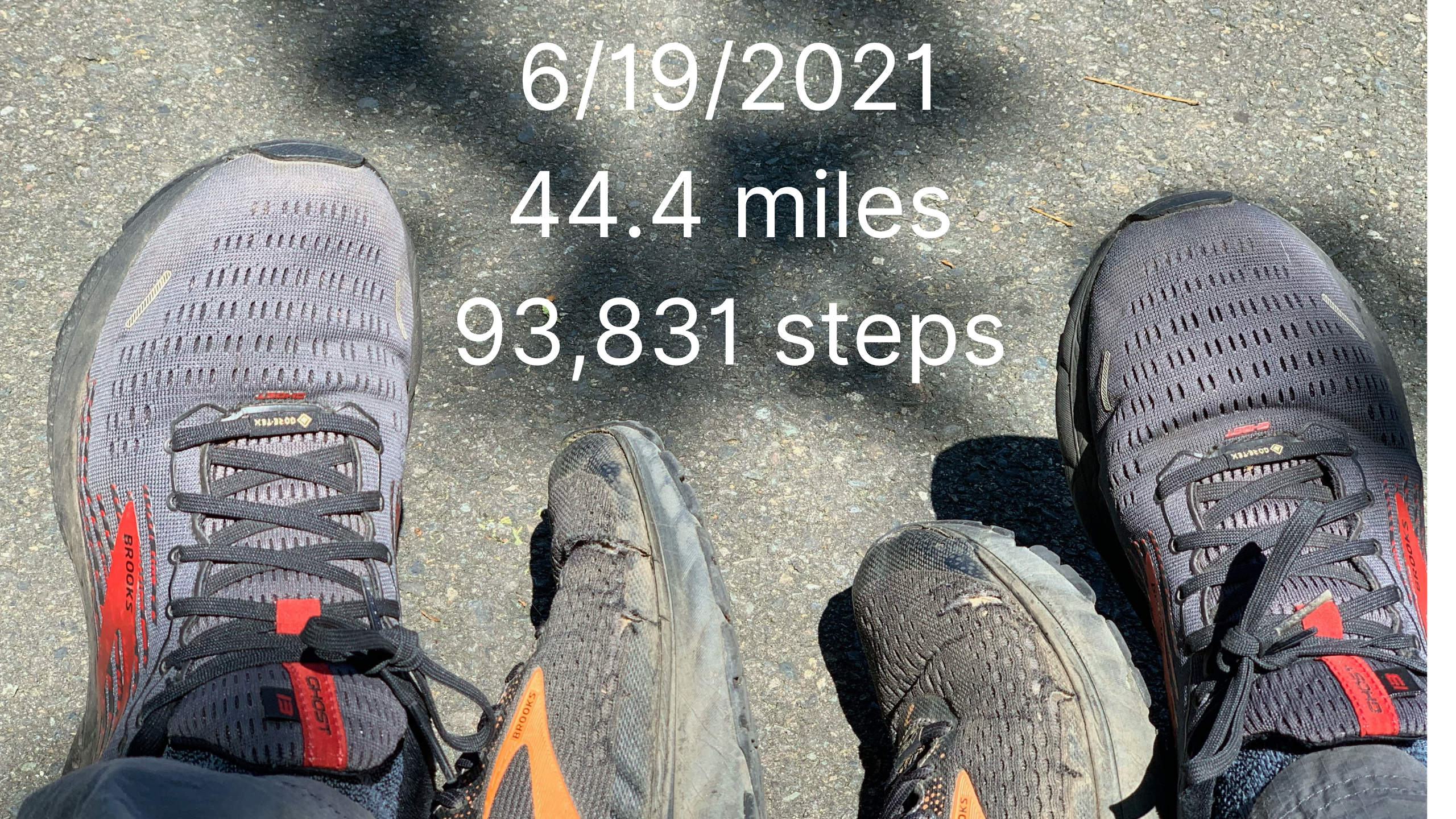
    Every year, right around the summer solstice, I pick a day to walk as much as I possibly can walk in a single day. This year’s Longest Walk day was Saturday, June 19th. I left my house in south Seattle at 4 am, walked up and across the 520 Bridge, walked down through Bellevue, over to Factoria, up and over to Newcastle, down to Renton, over to Tukwila, back up to Georgetown, and then home. Here’s a rough map of my route, which begins and ends at the Link station nearest to my house:

    I got home around 7:30 pm. According to my pedometer it wound up being 93,831 steps, or 44.4 miles. I’ve walked more than that on one of my long walks before—I’ve closely circumnavigated all of Lake Washington in a single day on two separate occasions, which works out to about 52 miles. So it’s not record-breaking, but it felt like enough for me this year.

    Now the next question is always: “Uh, why did you do that?”

    And the answer is, I’m not sure. I really like walking long distances. I walk 12 to 20 miles every Saturday, and I like what it does to my brain. I do a lot of writing in my head on these walks, and I tend to work out problems as I go. But on these very long walks—like, over marathon length—at a certain point, I just stop thinking: I become a pair of feet, and a pair of arms swinging in the breeze. I think some people refer to it as the destruction of the ego.

    I’m not a sports guy, I’m not particularly well coordinated, and I loathe running. This is one of the only ways I can test my endurance and really feel like an animal with a body that can accomplish amazing things.

    Then people usually ask if I have any advice for people who’d like to try endurance walking, and I do! The best advice I’ve ever gotten for long walks like this is to bring an extra pair of shoes and socks, and change them when you hit roughly the halfway point. It’s a great way to avoid blisters, and it’s a much-needed burst of energy at just the right point of the walk.

    In fact, I used this walk as a kind of Viking funeral for my trusty old pair of waterproof Brooks hiking sneakers, which I threw away in Newcastle. Then I put on my new pair of waterproof Brooks hiking sneakers and finished out the rest of the walk with very happy feet—no blisters, hurt toenails, or anything like that.

    One last piece of advice: If you do decide to give a long walk a try, please don’t feel bad if you get tired and have to hop on public transit; another great thing about walking is that it’s non-competitive. You can just walk until it’s not fun for you anymore, and then you can stop.

    That’s all for this month

    Speaking of stopping, I feel like I’ve really run off at the mouth on this one. I hope you’re all vaccinated and getting ready to do a few normal summer things—but remember not to overdo it, too. Let’s all agree to do, like, 35 percent less than we did before the pandemic, okay? 

    Okay.

    —Paul

  • What I’ve Been Writing and Reading: May 2021

    What I’ve Been Writing and Reading: May 2021

    To be totally honest, I hate promoting my own writing. Sometimes I literally cringe when I hit the retweet button on a tweet promoting a piece of mine. I’ve always had a hard time reconciling my love of writing with my discomfort with the idea of having been read. Don’t get me wrong—I’m incredibly grateful to be lucky enough to have readers, and I feel great satisfaction when I hear from someone who really thoughtfully engages with my work.

    But there are plenty of awkward experiences, too. One time I was waiting in line for a movie and the guy standing next to me, who had no idea who I was—because why should he—read a movie review blurb that I wrote for a local paper out loud to his girlfriend. Hearing all the flaws in my writing echoed back to me in a stranger’s voice was the most uncomfortable minute-and-a-half of my life.

    The best thing about writing for comics is that it’s collaborative. I have never in my life taken a drug that is as powerful, fast-acting, and fun as the dopamine rush I feel when I see a new page of art based on a script that I wrote. And that act of collaboration also means that I’m not just promoting my writing when I talk about my work—I get to promote the amazing work of my collaborators, which I am genuinely, unabashedly enthusiastic about.

    The other day on social media, someone wrote in a very nice post that they were excited to read Snelson: Comedy Is Dying, the comic I wrote for AHOY Comics, when it’s published in August. And this person was wonderful for doing this, and I am absolutely not mad at them for this or trying to call them out, but they referred to it as “Paul Constant’s Snelson: Comedy Is Dying.” And that just couldn’t be further from the truth.

    There are so many hands on this book. I wrote the script, but Fred Harper is the one who had to draw every panel on every page in his impossibly beautiful style. Fred blew life into the characters—made them real people. He added an uncountable number of jokes and details to the story. It’s impossible to quantify authorship, but trust me when I say the artist is doing the heavy lifting on this book. And Lee Loughridge‘s colors bring dimensions to the art—adding an increased sense of reality (or fantasy or nausea) to every scene. Rob Steen’s lettering effortlessly guides the reader’s eye around the page. (Great comics lettering is an invisible art. When it’s bad, you can barely notice anything else. When it’s brilliant—as Rob’s is—you barely notice it.) And editor Tom Peyer and publisher Hart Seely and the rest of the team at AHOY helped guide and shape the story, and supported all of us as we did our thing.

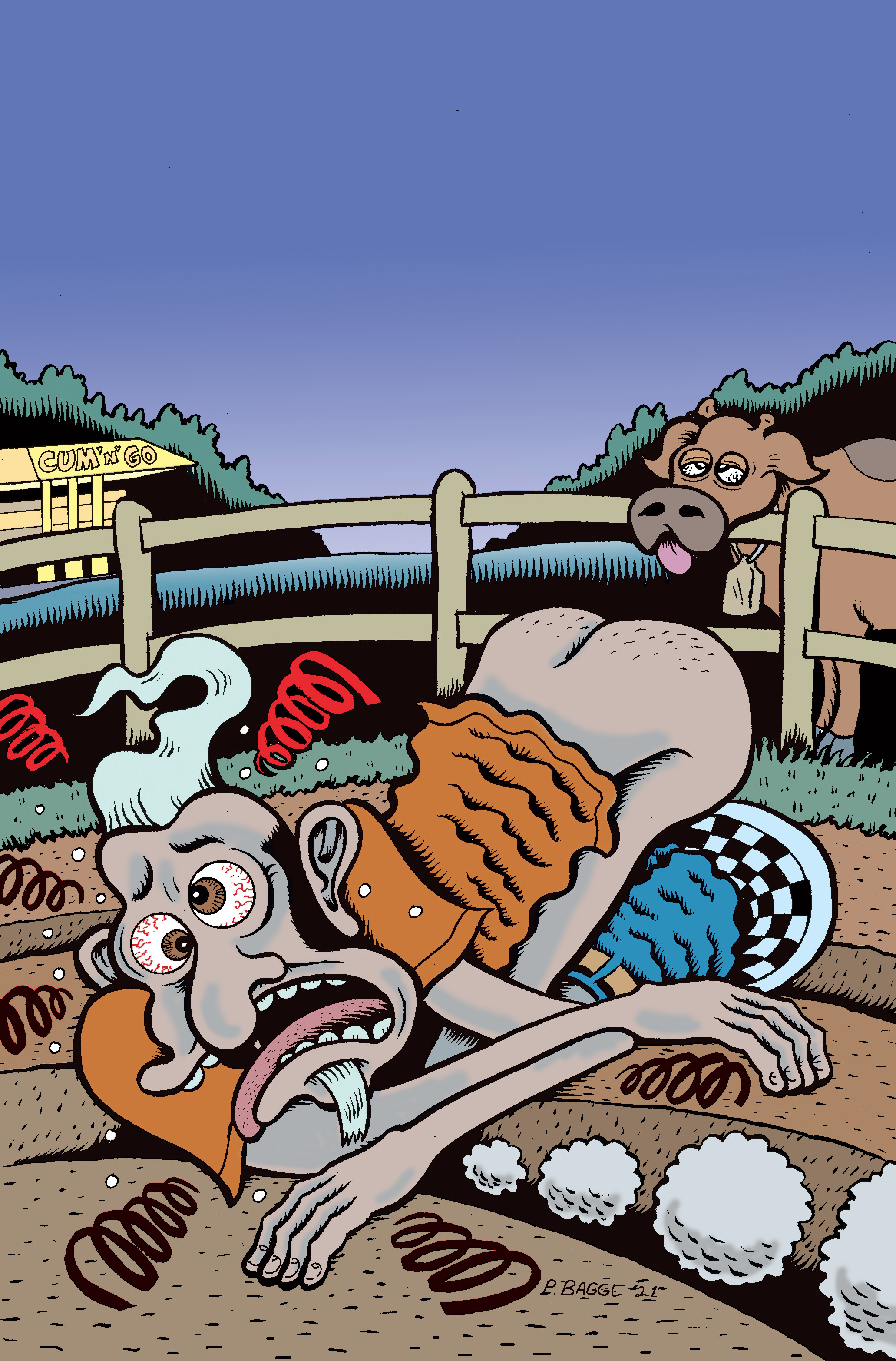
    So believe me when I say that I am enthusiastic about sharing the code you need to order Snelson‘s first issue from your local comics shop. It comes out in the first week of August, but for various distributional reasons you have to preorder the comic in the next couple weeks if you want a copy. If you’d prefer the same comic with a special cover drawn by Seattle area comics legend Peter Bagge, use this code instead. Team work makes the dream work!

    I’ve been writing

    With all that said, there’s no easy way to segue into an overview of what I’ve been writing this month.

    For Crosscut, I wrote about one of my favorite Seattle institutions, the Short Run Comix & Arts Festival. The 10th annual Short Run has been delayed twice now due to the pandemic, so I thought I’d check in with Short Run cofounder Kelly Froh and Board Chair Mita Mahato to find out how they’ve dealt with the delays and to see what they have planned instead of the 2021 festival. They’ve got a ton going on: a permanent Short Run gallery space in Georgetown, video profiles of local cartoonists, and no less than three books, including a ten-year retrospective of the festival and “a newsprint catalog showcasing comics, zines and handmade books created by Washington makers since Jan. 1, 2020. The goal, Froh says, is to make the catalog look like the Scholastic book order forms many kids adored in elementary school.” I don’t know about you, but I was sold right there.

    This month in Insider, I wrote about what happens when businesses make the very political decision to become apolitical (using Ben & Jerry’s and Basecamp as two opposing examples,) the “mother of all economic booms,” what it might look like if the federal government directed the economy toward solutions and not just growth for growth’s sake, and why it’s lunacy for businesses to force janitors and baristas to sign noncompete agreements.

    My bookstore profile column at the Seattle Times heads to Burien this month, where I visit Three Trees Books—possibly the smallest bookstore in the region. Bigger isn’t always better when it comes to bookstores, and Three Trees’ owners have put a lot of thought into what they’re doing with the space, from the free lending library on the shop’s front porch to the deeply personal self-help section. Their little corner of Burien—just fifteen minutes’ walk from the excellent restaurants and bakeries of Old Burien—feels a million miles away from Seattle, and it’s well worth a day trip.

    I’ve been reading

    An Elderly Lady Is Up to No Good is a tiny collection of short stories by Swedish author Helene Tursten about an 88-year-old woman named Maud who becomes a serial killer. The author’s light approach to Maud’s very specific killing spree — she only targets rude young people who underestimate their elders — gives the book a surprising Wodehouse-writes-The-Talented-Mr.-Ripley kind of vibe. It’s a fun, dark, amusing trifle of a book.

    I listened to Lucky: How Joe Biden Barely Won the Presidency, by Jonathan Allen and Amie Parnes because I finally felt enough distance from the 2020 election to reinvestigate it. And this is a pretty good quickie blow-by-blow account of what happened, with lots of good insider gossip. (I lost a bit of respect for Barack Obama, for instance, when I found out he was originally in the tank for Beto, and I was shocked and appalled to find out how close both Hillary Clinton and John Kerry came to jumping in the 2020 Democratic primary.) It doesn’t feel like a full accounting of the whole race—the Georgia Senate runoffs and, uh, that whole insurrection thing are both barely mentioned, due to deadline issues—but it serves as a bracing reminder of how desperate everything felt last year, and how far we’ve come since then. I’m not saying we should be complacent now, and I’m not saying that the Biden presidency is perfect, but we came really close to basically just flushing the whole American experiment down the toilet last year.

    The owners of Three Trees Books explained in my Times column that they were big supporters of an Oregon writer named Brian Doyle for very personal reasons—Doyle, who passed away a few years ago, is the uncle of Three Trees co-founder Tim Miller. I picked up a couple of Doyle’s books during my visit, and I just read The Wet Engine, which is a book-length lyric essay about the science and poetry of the heart. Doyle was inspired to write the book after his son was born with a valve missing from his heart, and it’s really a loving, awestruck tribute to the heart surgeon who saved his son. Doyle writes prose with the heart of a poet, and his sentences are giddy perambulations that take you on a wild ride and drop you off in a place that you never expected to see. He was a fabulous talent, and I’m so excited that I now get to dig deeper into his body of work.

    It’s no secret that Barry Windsor-Smith’s new tome Monsters got its start decades ago as a Hulk comic for Marvel. I remember reading about this book as a superhero fanboy back in the 1980s, and at the time, an investigation of The Hulk as a product of childhood abuse felt like as potent and Seriously Adult a reimagining of the character as Frank Miller’s take on Batman. I couldn’t wait to read the damn thing.

    Welp!

    Some 30 years later, I’ve finally read the damn thing, although the Hulk serial numbers have been stripped off the book and Seattle’s own Fantagraphics has published it in a gorgeous, hefty edition. And for what it’s worth, this book would have knocked my socks off if I read it back in the 1980s or 1990s. Smith’s artwork, with its paranoid curlycue lines and elegantly appointed figure work, is just as beautiful as I remembered it to be—moreso, in fact, thanks to Fantagraphics’ deluxe black-and-white treatment. The story, though, does feel pretty old-fashioned. I don’t know if I can recommend this to a new or aspiring comics fan who’s just dipping into the medium, but for an old-timer like me who’s followed this project since the days when it was nothing more than a rumor and a dream, it’s a must-read. It’s not often that one of the old masters of the medium gets a chance to see their work published in a beautiful edition like this, with no expense spared and no compromises made. As a piece of comics history, it’s unparalleled.

    That’s it for this month

    I’m pleased to report that this post is being published two weeks to the day after my second Moderna shot, which means that I am now fully vaccinated. In the interest of transparency, that 36 hours following the shot was pretty rough. The aches and pains kicked in about 11 hours after the morning jab and persisted, in the form of a fever and persistent body aches, for a full day.

    But after I got a good night’s sleep, I awoke feeling entirely better. It reminded me of those amazing, superhuman childhood times when a cold or flu passes overnight and leaves you feeling one hundred percent recovered. In my adulthood, I’ve found that colds tend to linger and then gradually fade away, so the wall between illness and wellness is blurred. Waking two days after my Moderna shot completely whole and hearty felt like nothing short of a miracle.

    I hope you have some miracles of your own in the next month. Thanks for reading.

  • What I’ve Been Reading and Writing: April 2021

    What I’ve Been Reading and Writing: April 2021

    I’m very excited to announce that the first issue of my second full-length comic book, Snelson: Comedy Is Dying, will be published by AHOY Comics this August. It’s a satirical comic book about a stand-up comedian named Melville Snelson who almost hit it big in the 1990s, but has been sinking into irrelevance—and bitterness—ever since. Snelson does what a lot of washed-up white dudes do: He blames his failures on cancel culture, and the kids these days, and everything but himself.

    As I wrote in the announcement: “If you’ve ever stared in slack-jawed fascination at the shameless grifters who love to whine about being silenced by cancel culture in books, on podcasts, and on YouTube, you’ll absolutely love to hate Melville Snelson.”

    Writing this book was a super-weird experience for me, because it just hoovered up all of my obsessions and interests and concerns and incorporated them into the story. It’s all in there, from that shitty Seattle Is Dying propaganda special that KOMO put out, to the bizarre self-victimization of Bari Weiss and Josh Hawley, to my evolving thoughts about commenters and online culture. I’m very proud of this book. If you spend a lot of time online, I think you’ll find something that might make you laugh, and you’ll also hopefully see something you recognize in a surprising new light.

    And even if you hate my writing, let me tell you something: The artist on this book, Fred Harper, is unbelievable. Fred’s work is hyper-real. If he didn’t carry a bone-deep realism in all his work, I’d say he’s an expert caricaturist, but it’s more than that. His artwork is just true. He gets at the heart of a person with just a few lines, and his eye for details—the crappy all-night NYC diners, the weird fashions that young media employees wear, the devastation and beauty you can find on every street in New York City—is something special.

    As I said, the first issue of Snelson: Comedy Is Dying will be out in comics shops starting in August, and new issues will drop every month thereafter, for a total of five issues. If you want a copy, please contact your local comics shop now and tell them you want them to reserve you a copy. The first issue also features a variant cover by Seattle cartooning god Peter Bagge—if you want that cover, let your comics shop owner know. If you have any questions for me about this book and how to get a copy, please send me an email: thisispaulconstant [at] gmail [dot] com.

    Find me online

    I’m thrilled to announce that at 6 pm on Tuesday, May 4th, I’ll be interviewing Professor Robert Reich as part of the online Crosscut Fest. Reich is one of the best economic communicators in the world, and we’re going to be discussing Bidenomics as a possible response to the trickle-down Reaganomics that has had a death-grip on American politics for the last forty years. This one is going to be a barn-burner of a political discussion, and I’m honored to take part.

    I’ve been writing

    For the Seattle Times, I wrote about Brick & Mortar Books, the independent bookstore in Redmond that has grown remarkably from its modest beginnings four years ago:

    To put it charitably, Brick & Mortar did not quite look ready for the public on opening day. 

    For one, the space was too large for the limited number of books they had in stock. “We didn’t get a bank loan when we first opened so the store was sparse,” [co-owner Dan] Ullom admits. “The review I most remember from the early days is something like, ‘They look more like an art installation of a bookstore than a bookstore.’”

    If your only experience with Brick & Mortar was a visit on opening weekend four years ago, a return visit today could well knock you off your feet in surprise. The shelves have filled with books, and expanded to fit the space, and they’re lined with numerous passionate recommendations from the shop’s staff of six booksellers. One pillar of the store is adorned with autographs and illustrations from the dozens of authors who have done readings at Brick & Mortar over the years — roughly one reading per week, in non-COVID-19 times, along with a healthy slate of book clubs. It looks, in short, like a really well-stocked, general interest neighborhood bookstore — a shop that any community would be proud to claim.

    At Insider, I wrote a fun column imagining what would happen if the coronavirus pandemic spread to Ayn Rand’s fictional libertarian paradise, Galt’s Gulch. (Spoiler alert: A lot of libertarians would die.) I also explored how the pandemic’s unemployment numbers disprove an old conservative talking-point about safety net programs, the signs that America has tipped over into “negative freedom” for workers, and the differences between a Universal Basic Income and an increased minimum wage.

    And also in the Times this week, I wrote a profile of Seattle cartoonist Shary Flenniken, whose raunchy comic “Trots and Bonnie” was beloved by underground cartoonists and comedians alike. It’s just been collected in a beautiful edition by the New York Review of Comics, and the new book will hopefully inspire a reinvestigation of Flenniken’s amazing work:

    “Trots and Bonnie” ran in National Lampoon for 18 years, and the strip’s juxtaposition of elegant old-fashioned cartooning skill and filthy ultramodern comedy attracted a rabid fan base of cartooning aficionados. Bonnie and her faithful pup represent Flenniken’s raging id, let loose in retrospect on the manicured lawns of Magnolia.

    I’ve been reading

    We Wish You Luck is a novel narrated by group of students at a low-residency writing program at a Bennington-like college, written by Caroline Zancan, whose bio says she graduated from a low-residency writing program at Bennington College. And while Luck never quite crawls out from under The Secret History’s shadow, and while it wraps up way too cleanly for my tastes, I still read the hell out of this book—I whipped through it, but not because of the plot. I was positively bathing in Zancan’s gorgeous prose and the incisive and raw way she describes people and places and daily happenings. You can just tell reading Luck that Zancan has a truly great book in her; until then, this will do.

    I’ve had great luck finding satisfying done-in-one sci-fi paperback novels lately. This Is How You Lose the Time War, by Amal El-Mohtar and Max Gladstone, is a high-concept time travel war story, told in deliriously over-the-top love letters. This one got a lot of attention when it was published a couple years back, so you probably don’t need to hear about it from me. But one that completely flew under the radar was Zed by Joanna Kavenna, a good-old fashioned sci-fi read that evokes Philip K. Dick and Pynchon’s early work. Set in the near future, it’s about using behavioral algorithms in policing, AI predictions of human activity, and tech-powered panopticons, so it couldn’t be any more current. If you’re looking for a brilliantly conceived stand-alone sci-fi thriller with a good sense of humor and a clever sense of storytelling, this is the one for you.

    I was in the mood for a cheesy, fun mystery, and One By One, by Ruth Ware, fit the bill nicely. It’s a riff on And Then There Were None, featuring a group of unlikeable tech mogul-types trapped in a remote ski lodge. One by one, they start dying, and suspicions run high. You know the drill. It’s fun while you read it and then it leaves a little sore spot on your brain for a day afterward, while you tease apart all the problems with the story—pure junk food, is what I mean. Nothing wrong with junk food, to be clear, but you should know what you’re getting into before you eat the whole box of chocolate truffles.

    Amy Falls Down, by Jincy Willett, was first published almost a decade ago. I found a remaindered copy on one of the front tables at Elliott Bay like three years back, and I finally read it this week and really enjoyed its sly comedy and big heart. It’s about a writer who hit the big time exactly once and then settled into a comfortably obscure late middle age. But one day as she waits in her back yard for a local reporter to come give a softball where-are-they-now interview, she falls down and bashes her head on a bird bath. In the throes of a concussion, she gives an unhinged interview that makes her a literary phenomenon again. I loved Willett’s story collection Jenny and the Jaws of Life, and I think her novel Winner of the National Book Award was unfairly ignored. But Amy Falls Down is by far my favorite of hers—a sweet, cleverly written, generous story about an older woman who finally learns how to be comfortable with herself.

    Seattle writer Brian McDonald and Portland artist Les McClaine teamed up for Old Souls, a graphic novel (in the most appropriate sense of the phrase: a hardcover comic with a beginning, middle, and end) about a man who gets sucked into a seedy underground society devoted to investigating past lives. The world of this book is entirely immersive; all these characters feel like they existed before and will continue to exist after the book has been read. McDonald knows when to back off and let McClaine tell the story with atmospheric wordless passages. I do have to ding the book for one notable scene: As the main character begins his descent into the world of reincarnation exploration, his wife immediately loses her mind, throwing a cliché of a fit and demanding that he remember his responsibilities as a husband and father. I wish McDonald had given her a bit more room to demonstrate some supportiveness before pushing her into the role of the joykilling wife. Every time I encounter the angry wife character in fiction—and it happens a lot—I wish the writers would give readers the grace of demonstrating why this couple married in the first place. I’m not saying every fictional spouse needs to go along with every single bad idea every protagonist comes across, but presumably they’re at least a little bought into the hero of the story, and they should do more than simply serve as a plot obstruction. But that’s just one scene, and the book is otherwise excellent and worth your time—especially for fans of fiction about the unknown.

    I was entirely charmed by The Leak, a YA comic by Kate Reed Petty and Andrew Bell about a teenage girl who has to learn how to be a journalist. We follow Ruth as she tries to blow the lid off a local polluter, requiring her to learn the rules of responsible journalism along the way. It’s a compelling story, a journalism how-to, and a gripping defense of good local reporting. I can see young readers setting The Leak down and immediately picking up a local newspaper to learn more about their neighborhood. It’s an inspiring and educational story, illustrated by Bell in a pleasant style that blends cartoony animation-style art with pixelated video game graphics.

    That’s It for this month

    Oberon on the left, Wallace on the right.

    Some of you have been asking for an update on my dogs, and I couldn’t be more pleased to oblige.

    As I mentioned in February, we adopted a second greyhound named Wally at the beginning of this year. Wally is a 2-and-a-half year-old male, just off the track in Florida, and we were told the agency wanted to place him before he completely lost his sight due to a genetic condition that’s pretty common in male dogs. They estimated that Wally had about 20 percent of his vision when we brought him home. The decline has been pretty rapid ever since; I think now he can only tell the difference between bright light and dark.

    Thankfully, the condition doesn’t affect Wally’s health in general; he’s an active and curious pup, and he gets along well. He’s a little more vocal than other greyhounds I’ve met, and he has anxiety when meeting new people, but he’s calmed down a lot after the three-month mark, which is when most adoption agencies say dogs begin to understand that they’re in their home.

    I’m happy to report that Wally and our first greyhound, Obie, are getting along really well. I’d go so far now as to call them buddies. They look for each other when they enter a new room, they take turns sharing the couches, and they’ve finally learned how to romp in the back yard together.

    If Obie’s acclimation provides useful guideposts, I expect the next six months or so will bring a little bit of drama as Wally begins to get a little too comfortable and starts testing limits. But Obie, at seven years old, has been pretty good about keeping Wally in line—growling when he gets too rambunctious or aggressive, walking up and leaning against him when he gets scared. This incredible social connection has been thrilling to observe, and it is again reminding me that I really ought to become a vegetarian. Anyone who doubts if animals have interior lives and emotional intelligence needs to work from home with a pair of dogs for a few months.

    I get the second shot next month and will be fully vaccinated by May 31st. I couldn’t be more excited. I hope you’re getting vaxxed-up, too. Maybe I’ll see you out in the world this summer.

  • What I’ve Been Reading and Writing: March 2021

    What I’ve Been Reading and Writing: March 2021

    I don’t mention it often, but one of my weirdest (and most fulfilling) gigs is that I sit on the nominating board for the Prowda Literary Champion Awards. It’s a pretty cushy position: Every January, I get together with the nominating board to discuss people and organizations that have done exceptional work benefitting Seattle’s literary community over the past year. We talk, bargain, and debate over snacks until we come away with two winners. I’ve done this three times, and this year’s was the easiest selection process yet. As our friends at Seattle Arts and Lectures just announced, the 2021 Prowda Literary Champion Awards went to Ijeoma Oluo and Jack Straw Cultural Center. Oluo has spent much of her energy during the pandemic directing funds to local artists of color, whose primary sources of income largely fell away with the first lockdowns last March. And over the span of decades, Jack Straw founder Joan Rabinowitz has built an institution that helps Seattle writers learn how to better communicate their work in spoken mediums. These are two remarkable women who have given so much to Seattle, and in so doing they’ve encouraged all of us to be better. I hope you’ll read more about this year’s winners. They make me so proud to be a part of this community.

    fIND ME ONLINE

    I haven’t been doing many personal appearances lately. That cold streak ends this Saturday, March 27th, when you can catch me as part of an AHOY Comics panel at WonderCon, which is happening virtually over the weekend. The panel begins at 1 pm EST, and I’ll be appearing with a number of AHOY greats including Tom Peyer, Stuart Moore, artist Liana Kangas, Seattle writer Eric Palicki, and Mark Russell, who is one of my favorite comics writers working today. We will all be discussing our upcoming AHOY titles, and you’ll get a tiny little peek at a comic I have coming out later this year. For more information, SyFy previewed the event here.

    I’ve Been Writing

    I’ve published two pieces in the Seattle Times this month. The first is an interview with Iraqi-American Mortada Gzar marking the publication of his new memoir about moving to Seattle on the day of the 2016 election:

    While many high-profile immigration memoirs of the past few decades — Frank McCourt’s bestselling “Angela’s Ashes,” for example — end with the author arriving in America, presenting the U.S. as both the climax of the narrative and the solution to the narrator’s problems, “I’m in Seattle” begins with Gzar arriving at Seatle-Tacoma International Airport. The narrative continues forward, with him finding his way in Seattle, and his youth in Iraq is relayed in flashbacks as Gzar navigates his new city.

    “When entering into a new country, old memories are attacking you all the time,” Gzar says. 

    And the second is a profile of the wonderful Fremont cookbook store, The Book Larder, which is celebrating its tenth anniversary this fall. Please be advised: There are tons of amazing cookbook recommendations in this one:

    Book Larder events are not your typical literary reading. “We always make a little bite of food from the book for people to try,” [Book Larder owner Lara] Hamilton says, “and because the setting is intimate and we have so much support from journalists and bloggers and different people in the local food community who are willing to come in and do interviews for us, we’ve had some really great conversations.”

    My day-job writing has been wonkier than usual, but I’ve been pretty satisfied with the way I’ve communicated some complex economic and financial ideas in what I hope is plain English. I’ve written about why stimulus opponents’ threats of hyperinflation are hugely overrated, how a new agency might help bridge the gap between private enterprise and government investment, and what Silicon Valley Representative Ro Khanna thinks of the whole GameStonk mess.

    I also wrote a very thorough debunking of the biggest arguments against taxing capital gains profits from the sale of stocks and bonds. If you don’t know, Washington state is getting veeeeery close to taxing some of the exorbitant Wall Street profits of the 8000 wealthiest people in the state and putting that money toward pandemic relief for the people who need it most. This is literally unprecedented in Washington history, and it’s exciting stuff.

    I’ve Been reading

    The recommendation section is a little shorter than usual this month—partly because I’ve found it hard to read with the late-stage pandemic of it all, but partly because I’m reading a book I’m going to be writing about next month and I’m also doing a ton of reading for research on a secret comics project that’s just getting underway.

    I’m not usually a fan of comics that feature only one panel per page—part of the reason I like comics is the way the panels fall into each other, creating a different way of perceiving time than in any other medium. But the one-panel-per-page rhythm works really well for Erin Williams’s memoir-in-comics, Commute. It’s framed as a story of Williams commuting to and from work—taking the train, walking in the city, walking home—but it’s really a meditation about the way she’s treated by men in public spaces, and an accounting of the abuse men have committed in her life. Told mostly in sharp black and white, but with occasional bright bursts of color, Commute is a bracing account of being a woman in a world where men still believe they can take possession of women’s bodies at any time. I’d recommend this one particularly for men: the simple one-panel-per-page staccato rhythm helps put the reader directly into Williams’s perspective. It’s a challenging book, but very worthwhile.

    Much has been written about Abraham Riesman’s biography True Believer: The Rise and Fall of Stan Lee, with most of the discourse being centered around how much of the Marvel Universe was created by Lee and how much was created by the artists. It’s a frustrating discussion because we’ll never truly have an objective answer. Even under the best conditions, comics collaboration is messy, and there’s no way to parse out the percentages in a truly fair manner. (Speaking for myself as a comics writer, I find it’s best to overcorrect in favor of giving more credit to the artists, since a comic without an artist is definitionally not a comic. I might spend two hours writing a page, but the artist is likely to spend at least four times that—at least—bringing the page into the world. Honoring that outsized contribution is quite literally the least a writer can do, in my opinion.) But for me the most interesting, heartbreaking part of the story is the complete and total hellscape that was the last few years of Lee’s life, in which he was surrounded by grifters who milked him for easy money as he shrank in size and mental acuity. While reading this book, I watched the Netflix film I Care a Lot, a dark comedy which stars the brilliant Rosamund Pike as a con artist sucking the money out of retirement funds and dumping old people in horrible conditions. Taken together, these two narratives are a reminder that our country treats our elders terribly, and I worry that things will only get worse the more America’s population continues to age.

    In last month’s newsletter, I wrote about Patricia Lockwood’s exceptional novel about being Extremely Online, No One Is Talking About This. This month, I read Lauren Oyler’s novel Fake Accounts, which is about a young woman who discovers her boyfriend has an unhealthy secret life online. And while I hate it when men compare two unrelated women artists, these two novels are so close in subject matter and perspective that I feel the comparison is welcome—Lockwood and Oyler have even remarked on the similarity themselves and done online readings together. While Lockwood’s book is a high-level observation of the structural way that the internet has changed our brains and behaviors, Oyler’s book is more about the content we shove inside the structure of the internet—writing that is meant to go viral, social media posts that are first created to appeal to algorithms rather than human beings. Fake Accounts is a more traditional novel than Lockwood’s, but it’s also a hell of a page-turner. Even though it’s a relatively plot-free literary novel, I was pasted to this book; I couldn’t wait to find out what happens.

    That’s it for this month

    In closing, I’d like to send my thoughts and prayers to Washington State Senator Mark Schoesler. The state Republican party likely thought they were boosting Sen. Schoesler’s profile by tweeting out a quote-meme from one of his typically boring-but-folksy anti-tax speeches. Instead, they accidentally created this amazing, beautiful piece of art that I will always treasure:

    Feel free to share Mark in any way you deem appropriate.

    More next month. Take care of yourself until then.

  • What I’ve Been Reading and Writing: February 2021

    What I’ve Been Reading and Writing: February 2021

    Those of you who followed me when I was active on Instagram know that I have a 7-year-old rescue greyhound named Oberon (Obie) who has delighted me for three years now. At the beginning of this year, we added a second greyhound to our home. Wallace (Wally) is fresh off the racetrack in Florida, which means he has had to learn about things like windows, and TVs, and stairs for the first time. Wally is also rapidly and inexorably losing his sight, and so the good folks at Greyhound Pets Incorporated wanted to place him in a home with a confident older greyhound to show him the ropes before he went completely blind. He and Obie got along the first time they met, so we agreed to foster Wally, and then two weeks later we officially adopted him.

    I wouldn’t say that Obie and Wally are good buddies yet—they’re more like amiable coworkers. They still get along very well, but they often just live their days on parallel tracks.  But multiple times every day, they check in which each other—bumping shoulders while they’re out in the yard, sniffing each other when they walk into a new room. Watching those simple physical gestures of affection between the two dogs has reminded me how closed-off to the world I’ve been during the pandemic, and how eager I am to check in with my friends.

    Honestly, and knowing that I’m speaking from an immense place of privilege, the first year of working from home wasn’t too emotionally difficult for me. I like to be alone, and I never get bored. But I’ve hit—as it’s come to be called online lately—The Wall, and I can’t wait to sniff other humans again. For now, though, it’s me and two good boys hanging around a quiet house all day. I don’t know what I’d do without their company.

    I’ve Been Writing

    In the Seattle Times this month, I wrote about LEMS Cultural Center and Bookstore for Life Enrichment, a new incarnation of Seattle’s longest-running Black-owned bookshop. The store is in its early stages of rebuilding, but I have high hopes that it will come out of the pandemic as a cultural hub for the city.

    For Business Insider, I wrote about the policies that Democrats should support if they want to win rural voters again and why tax increases have historically been proven to be the best deterrent to oligarchy in America. And one of the more immediately useful pieces I’ve written lately is a FAQ compiling the most commonly used arguments against the minimum wage and explaining why they’re completely bogus, using the latest minimum-wage studies as proof. Next time someone tells you that robots will take the jobs of workers if you raise the minimum wage, just consult my FAQ and show them the data.

    And just yesterday, Business Insider ran a piece I wrote about Kroger’s decision to close two QFC grocery stores in Seattle as a response to the city council’s adoption of $4-per-hour hero pay for grocery workers. When you really look at the numbers, it’s clear that Kroger isn’t closing those stores because the wages were too much to pay—they’re trying to intimidate other cities that might be considering raising the wages of their workers.

    I’ve Been Reading

    Patricia Lockwood’s novel No One Is Talking About This is getting praised everywhere online, and it’s obvious why: I’ve never read a novel that so aptly describes the banal horror of being addicted to the social media world inside your phone. The first half of the book is a gorgeously written account of being Extremely Online, and the second half of the book is a gorgeously written account of a family tragedy. I wasn’t sure Lockwood would successfully merge the two halves into a coherent whole, but she eventually intertwines them both into a single barbed-wire narrative. If you have a Twitter or Reddit account, you’ll probably love this novel exactly as much as you hate being seen by it. (If Facebook is your primary drug of choice, you might not quite get it.)

    My interest was piqued when I saw that Keegan-Michael Key was going to play the title character of Stephen Mack Jones’s mystery novel August Snow in a new TV series. Key strikes me as an underrated actor, and a drama series seems like an interesting choice for him. And when I saw Nancy Pearl rave about August Snow, I decided to give the book a try. If writing about cities is your bag, you’ll probably love August Snow. The title character returns to Detroit after a while away, and his long and complicated relationship with the city immediately comes rushing back. But as Snow walks around Detroit eating good deli food and brushing up against testy cops who are none too happy to see him, you’ll likely grow a deeper respect for both the man and the city that he begrudgingly loves. The ending of the book got a little too paramilitary for my tastes—is every detective novel required to include a certain amount of macho gun worship?—but I really, desperately wanted to visit Detroit after reading August Snow, and so I think that means it’s an effective book.

    Matthew Hongoltz-Hetling’s A Libertarian Walks Into a Bear: The Utopian Plot to Liberate an American Town (And Some Bears) is custom-made for me, being about a bunch of idiot libertarians and the single weirdest state in the union—New Hampshire. So I enjoyed the account of libertarians trying to build a utopia and failing miserably, but I can’t help but believe the narrative would be stronger as a long magazine article. 

    Korean author Un-Su Kim’s novel The Plotters feels kind of like if Haruki Murakami did a cover song of a John LeCarre novel. It’s about a clan of assassins and their deep spiritual discontent, and it feels like a bunch of characters from a fun, pulpy literary novel somehow spilled into the literary fiction aisle and experienced loneliness for the very first time.

    As a kid reading superhero comics in the 1980s, I was drawn to Ann Nocenti’s run on Daredevil. Frank Miller’s Daredevil run felt too mean, too forcefully cruel. But Nocenti’s Daredevil was, like me, a kid who grew up Catholic who didn’t really know what he believed. He was always questing for himself, and he was always getting the crap beaten out of him—one time, he even got clobbered by a demon-possessed vacuum cleaner. Nocenti was one of the best superhero comics writers of the 80s, and then she disappeared for a long while. I’m glad she came back to write a weird little conspiracy comic book called The Seeds, and I’m even happier that she partnered with David Aja, who is one of my favorite comics artists. Aja in this book is working in black-and-white with an eerie green highlight, which makes the spare beauty of his lines feel even more holy. It’s a kind of X-Files by way of Twin Peaks kind of thing, and it’s a gorgeous, questing kind of book—easily the best comic I read last month.

    Thats All for This Month

    I feel a bit more lively than I did last month. Spring feels like it’s just about to start teasing us with the prospect of better days, and after a couple months of hermitage I’m starting to see friends (from a safe social distance) again. And I did a 30-mile loop around the bottom third of Lake Washington yesterday—renewing my long-distance walk schedule is probably the single best thing I can do for my mental health . Writing-wise, I’m putting the finishing touches on one long-in-the-works comic project, and I’m just starting to think about a new comics project. I enjoy this period of possibility—putting together the rules for a fictional world in my head, to see what is and isn’t possible.

    I hope you’re spending more times these days thinking about what is possible. If you’re stuck in what’s-not-possible-ville right now, please know that you’re not alone. Consider this a shoulder bump from me to you.

  • What I’ve Been Writing, Reading, and Watching: January, 2021

    What I’ve Been Writing, Reading, and Watching: January, 2021

    I’ve Been Writing

    For the Seattle Times, I wrote about all the weird things your subconscious brain does when you walk into a bookstore for the first time, and why Seattle’s newest bookstore, Oh Hello Again, is designed to throw your subconscious brain for a loop:

    The philosophy for Oh Hello Again’s unique categorization was inspired, appropriately enough, by a pair of books. Ferguson was so enthralled by the thesis of Ella Berthoud and Susan Elderkin’s “The Novel Cure” and “The Story Cure” that she decided to build a whole shop around their concept of “bibliotherapy,” which posits that reading the right novel at the right time can help to console and guide people through moments of great emotional turbulence.

    In my economics column at Business Insider this month, I’ve written about how the Trump administration failed to combat the coronavirus recession, the myth of deregulation, a bold idea to restart the American economy, and why President Biden has the opportunity to be a transformational economic figure. 

    And on Twitter, I wrote a little thread about deplatforming and the proper use of social media. Here it is, slightly expanded and adapted for the shift from Twitter to a newsletter:

    When they permanently banned Donald Trump after the siege on Congress, Twitter proved without a doubt that deplatforming works. Trump immediately devolved from the most powerful man in the world to a mumbling, bitter ghost. Losing Twitter was a greater loss of power for Trump than losing the presidency; it instantly made him irrelevant. That’s why I was so disappointed to see that, after a few days of celebration over Trump being banhammered into nothingness, so many smart people on Twitter immediately returned to old bad habits—sharing misinformation and retweeting provocative bad actors in an attempt to dunk on them. Twitter is quantifiably better without Trump and his Q minions. So let’s not create a new version of them by continuing to amplify the worst people in the world.

    We could all—and I include myself in this criticism—stand to do less retweet wisecracking on irrelevant bozos. Twitter isn’t your late-night talk show, and the world doesn’t need a hundred million fifth-rate Jay Lenos. If you really have to share your epic dunk, use a screengrab instead of a RT.And if you’re sharing a tweet or media clip that contains lies or misinformation, your tweet should offer truthful context that disproves what you’re sharing. Otherwise, you’re just doing their work for them.

    And lastly, be liberal with the mute and block buttons. You don’t owe anyone your attention. If you see someone act in a trolly way to someone else, or unapologetically making an untrue statement, you can block them. It’s okay. If you only use Twitter to make fun of assholes and get into fights, you’re probably not contributing anything useful to the conversation, and you’d probably feel better if you just logged off.

    I can already hear the responses: “But, but, but, you just want to make your Twitter feed into an echo chamber!” Listen: if your feed is an echo chamber, that’s your fault. Go out and find smart people who don’t hold your worldview and follow them. If they eventually turn out to be jerks, you can block/mute them, too.

    I’m hopeful about the future of Twitter. I think there’s an opportunity here to make something nice. But we need to remember a few key points: Not every opinion is worth sharing. Not every conversation is worth having. Most internet fights are a waste of time. Life is short. Most importantly, as we’ve proven in the last few weeks, if you don’t give your attention to the worst people in the world, they’ll lose their power. (This isn’t the same as saying ‘don’t feed the trolls,’ by the way: online abuse is real abuse. I don’t want to minimize the experiences of so many people who have had nightmarish experiences of bullying. That’s very different from, say, Marco Rubio’s trash hot take.)

    I’ve Been Reading

    • Probably the best novel I’ve read in the last few months is Rumaan Alam’s Leave the World Behind, a novel about a family that rents a vacation house far away from their home in New York City, only to find that the world seems to have ended. They’re detached from the world by traditional means of communication, and the glimpses they catch of the apocalypse are truly horrifying. But it’s not a horror novel, or a thriller. It’s just a novel about a family in a remarkable moment. Alam’s writing is a touch bro-y in the beginning—one early sex scene felt a tad Updike-y—but it’s remarkable that an essentially plotless book can feel so much like a page-turner.
    • Enter the Aardvark, by Jessica Anthony, is a dirty little thrill of a political novel. It’s about a self-hating Republican congressperson who receives a stuffed aardvark in the mail which eventually causes his downfall, but the book is much more ambitious than that—it begins with the Big Bang and the main story runs in parallel with a historical account of colonization in the name of science. This is not for everyone; it’s a dark, nasty book. But if you like a shitty main character who sets himself up for a fall, this might be your thing.
    • I listened to The Good Neighbor, Maxwell King’s biography of Fred “Mr.” Rogers, on audiobook, and it was just the kind of good-hearted read that I needed at the end of a year that felt like a parade celebrating the world’s most terrible people. And if the subject matter isn’t soothing enough for you, the book is read by LeVar Burton! It’s enough to remind you that there are good things in the world.
    • Reading Larry Marder’s weird alternative comic Beanworld (which is collected in two omnibus editions from Dark Horse Comics) is not always fun. Sometimes it’s work. Beanworld is a high-concept exploration of the kinds of ideas that comics can transmit to readers: it’s set in a universe where sentient beans eat, reproduce, create art, and socialize as members of one big ecosystem. Every time something changes or becomes more complex, there are rippled effects throughout the system. While Marder insists that Beanworld isn’t a metaphor for anything in particular, the environmental message seems too loud to ignore. And as the ecosystem gets more and more complex, by adding new twists to the procurement of food through the creation of technologies for instance, it becomes clear that Beanworld is a language of its own. I didn’t enjoy every single page of the book, but the journey is well worth it as an exploration of the limits of comics, storytelling, and understanding how the universe works.

    I’ve Been Watching

    • I’m a little confused by all the reviews of Promising Young Woman that hate the movie because it’s not a hyper-violent revenge drama. While I suppose the movie might be marketed that way—I don’t watch trailers anymore, which is a decision that has greatly enhanced my enjoyment of movies—there’s nothing in the text of the movie that insists you should expect a, say, Kill Bill vibe. It’s a sad movie about a broken person, and I think it’s a remarkably well-told version of that story.
    • I don’t exactly know how I missed it for so long, but Pen15 is by far the funniest show I’ve seen since lockdown. I only wish there were more seasons to enjoy right now.
    • One Night in Miami is a triumphant movie: A conversation movie that feels vibrant and exciting, a multi-perspective story that gives equal time and respect to all four lead characters, a portrayal of Muhammad Ali that captures the humanity in the center of all the bluster. I love this movie, and—weirdly—I’m not at all sad that I didn’t get to see it in a movie theater. I think the susurrations of a movie-theater audience would have detracted from the dialogue and performances.

    It’s the part of winter that feels like spring should be around the corner, but—at least here in Seattle—there’s at least two more months of brutal darkness and cold and wet ahead. This is going to be a tough one, I think. Hold on until your knuckles go white—there’s something better ahead; we just have to keep our heads down until then.