Author: Paul Constant

  • Happy 50th birthday, Eagle Harbor Book Company!

    Happy 50th birthday, Eagle Harbor Book Company!

    Bainbridge Island has always been an affordable and easy escape for frazzled Seattleites who need a break from the annoyances of city life. Less than 10 bucks gets you aboard one of the frequent, relaxing half-hour ferry trips from downtown, and a 10-minute walk from the ferry terminal puts you in the heart of the town of Winslow, which is everything Seattle isn’t — quiet, calm and slow.

    Winslow feels custom-built for city dwellers who want to while the time away. The main drag is lined with restaurants, galleries and shops. And for Seattleites who make their way across Puget Sound in search of rejuvenation, no Bainbridge minivacation is complete without a leisurely stop by Eagle Harbor Book Company, Winslow’s preeminent bookshop. At over 4,000 square feet, the size of Eagle Harbor surprises first-time visitors: From the front door it looks like another cute little Winslow storefront, but take just a few steps in and the shelves seem to unfold vertiginously, further and further back.

    Most great independent bookstores do one thing really well, but Eagle Harbor plays double duty: It’s a quaint island bookstore, stocked with plenty of jigsaw puzzles and cheap, used cozy mysteries, and it’s also a community hub for one of Seattle’s most densely packed literary communities…

    (Keep reading in the Seattle Times.)

  • Your Boss Controls More Than Just Your Time

    Your Boss Controls More Than Just Your Time

    Economics as we know it has been around since the late 18th century, but the field still barely acknowledges the existence of power dynamics as a motivating force in the labor market.

    Trickle-downers who oppose raising the minimum wage, for instance, will often suggest that workers who want a higher wage should simply quit their jobs and find a new employer who’s willing to pay their desired rate.

    That might make sense in a simplified textbook object lesson, but it doesn’t work in the real world, where parents have to feed their children three times a day, and people who work at a manufacturing plant don’t have the funds to uproot their lives and move to another state when they want a raise.

    In a perfect economic system, employers would need workers just as much as workers needed their employers.

    In reality, workers are disposable and employers hold almost all of the power.

    (Keep reading at Business Insider.)

  • If It Feels Like You’re Working Longer for Less Money, It’s Because You Are.

    If It Feels Like You’re Working Longer for Less Money, It’s Because You Are.

    In a Pew poll conducted last fall, 61% of all respondents agreed that there was too much income inequality in America these days. Virtually everyone can feel that the difference between the wealthiest Americans and the poorest is growing out of control, but we don’t understand how big that gap is, or how fast it’s expanding, or how many Americans are losing money because of it.

    That’s why a new report from the nonpartisan Rand Corp. is so important. Rand’s researchers analyzed American incomes between 1975 and 2018 to determine who is earning less money, who’s earning more money, and where the money has gone. The results are jaw-dropping.

    The true cost of income inequality: $2.5 trillion every year. Each year, $2.5 trillion — yes, trillion with a “T” — has been redistributed from the bottom 90% of Americans to the wealthiest 1 % of all Americans.

    That’s roughly $50 trillion—again, with a “T”—that used to go to middle-class and working-class Americans that has instead been rerouted to the pockets of the top 1%…

    (Keep reading at Business Insider.)

  • What I read on my summer vacation (2020 edition)

    What I read on my summer vacation (2020 edition)

    Summer 2020 was the opposite of what we’ve been told a summer should be: it wasn’t carefree, it wasn’t fun, it wasn’t restful or rejuvenating or rehabilitating. From the pandemic to the clamoring hoards of aggrieved white supremacists in our streets to the wildfire smoke that’s clotting the air over the Northwest as I write this, the summer was in fact uncomfortable and grim.

    But at several points in the summer, I tried my best to shut down the world and attempt to be just another mammal relaxing in warm weather by a body of water. And I actually got a fair amount of reading done in those times! What follows isn’t a list of every book I’ve read this summer, but it is a list of the books that I finished (and mostly enjoyed) while trying to enjoy that fabled joy of Summer Reading which has captivated magazine editors since the dawn of time. 

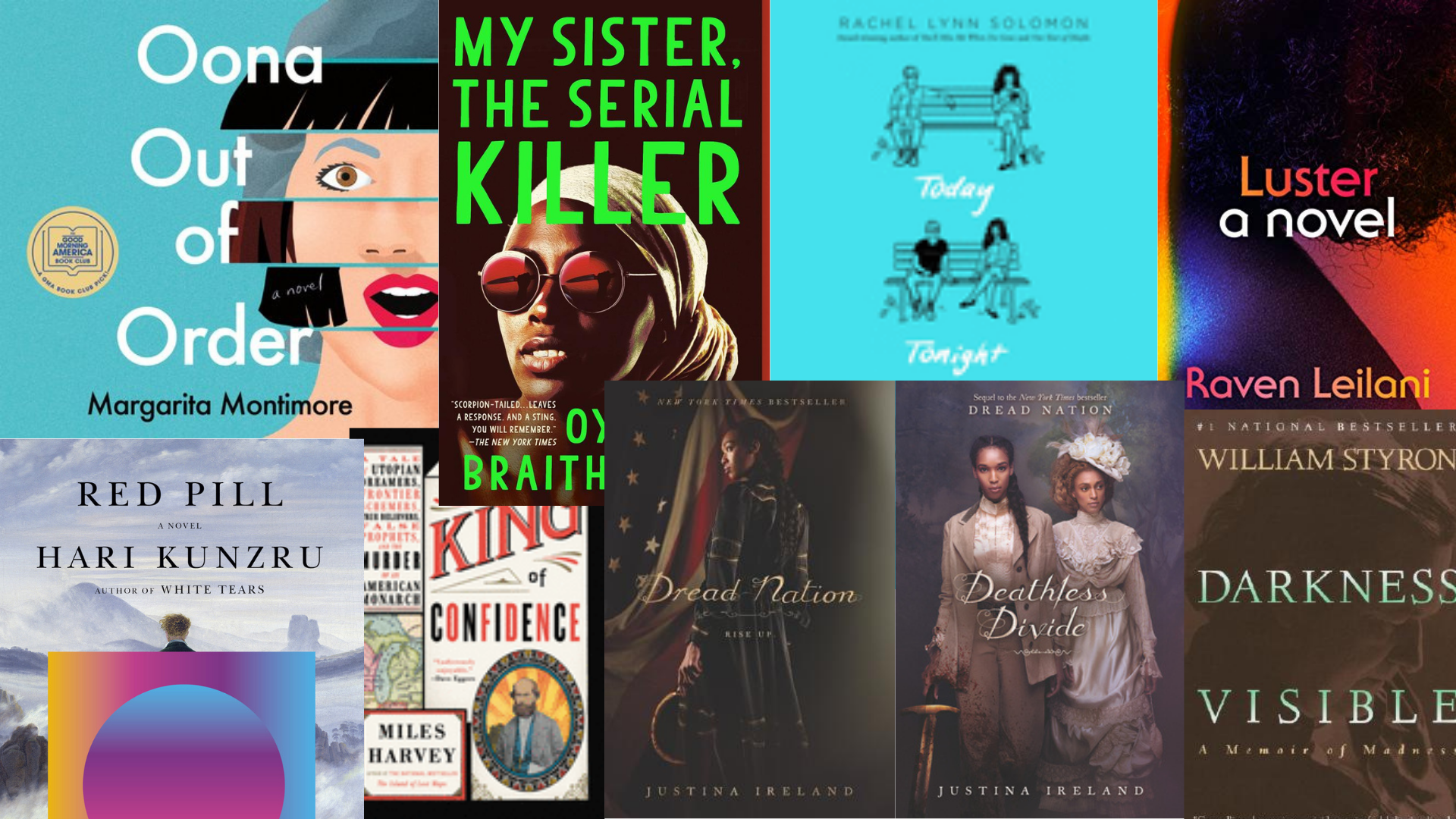
    I started my vacation with Today Tonight Tomorrow, a charming YA romantic comedy written by Seattle author Rachel Lynn Solomon, which follows two high school seniors as they race around Seattle in a scavenger hunt. Solomon has a lot of fun with the opposites-attract framework, forcing two overachievers into what might be the most charming romantic mortal combat you’ll read all year.

    The mainstream success of Oyinkan Braithwaite’s My Sister, the Serial Killer is kind of breathtaking to behold. Just fifteen years ago, this dark comedy narrated by the jealous sister of a glamorous sociopath would likely have been buried deep in the backlist of a college press somewhere. But now it’s a huge hit, and a very worthy one. The story, which moves at a pace that could put some readers in a neck brace, is told in a sparkling voice that never shies away from the darker side of things. Patricia Highsmith would blush with envy.

    Is it weird to call a pair of YA alternate history horror novels the most timely books I’ve read this year? The all-stars of my vacation reading were Dread Nation and Deathless Divide, the breakout alternate history duology from Justina Ireland. Set in a United States in which zombies walked the earth in the wake of the battle of Gettysburg, these two novels really stand out for their world-building and their character work. If you’re exhausted by zombies—and God knows, I went into the pandemic expecting to not read a single zombie novel, yet alone two—this story is still very much worth your time, with a complex understanding of race in America and a cracking good sense of dramatic timing.

    Miles Harvey’s The King of Confidence seemed like a smart follow-up to Ireland’s duology. It’s non-fiction, but it’s set in an American wilderness not too very long after the Civil War. I enjoyed learning about James Strang, the Mormon con man with a utopian messiah complex at the heart of this book, but Confidence’s pacing is its greatest obstacle. Even at less than 400 pages all told, I kept wishing the story would lose about 100 pages and gain a more propulsive sense of narration. Strang’s story is tremendously resonant with the moment—can anyone else think of any big-talking American con men who’ve swindled their way into leadership of an out-of-control cult?—but in the end, the story got into its own way a few too many times.

    Luster, a debut novel by Raven Leilani, begins with a barrage of scathing scenes set in the high-minded publishing industry, revealing the racism (and sheer intellectual laziness) that’s still at root in the biggest presses in the world. Our protagonist, a twentysomething Black woman named Edie, is so used to playing the dumb games that white people put her through that she’s basically sleepwalking. When she stumbles into the open marriage of an affluent white suburban couple, though, Edie finds an opportunity to take action—particularly when the couple’s adopted daughter, a Black girl named Akila, begins to take notice of her. I liked the first half of Luster, with its elaborate performative cynicism,  a lot more than the second half, but it’s beautifully written throughout, and Leilani is such a confident storyteller that I have no doubt she’s on the way to a successful career as a novelist. I’ll be there for her second book, and her third and fourth and…

    Audio books either completely work for me or they don’t. And weirdly, I can’t seem to predict which ones will hit my subconscious in just the right way—there’s no one genre, narrator, or even length of an audiobook that is guaranteed to appeal to me. So I was surprised by how taken I was with the Libro.fm edition of Margarita Montimore’s novel Oona Out of Order. Brittany Pressley’s narration has something to do with it, I’m sure: Pressley puts in just enough acting to push the book off of the page and into the realm of drama, without distracting from Montimore’s prose. The premise here is elaborate and also catchy: On New Year’s Eve 1982, a young woman named Oona Lockhart is just about to turn 19 years old. Instead, she wakes up in an older version of her body on New Year’s Day in the far-flung 21st century. Oona is told that she’s living every year of her life out of order, that on every New Year’s Day she awakens, seemingly, at random, in a younger or older year of her life. The book follows Oona’s first few years in this state, bouncing around from the future to the past and back again. If Oona sounds vaguely like The Time-Traveler’s Wife, that’s probably not entirely misleading, though I found it to be not as deeply considered, and with the twists more telegraphed in advance. But it’s a fun book with passion for its characters, and it’s very well-told.

    Hari Kunzru’s new novel The Red Pill, about a do-goodnik liberal artist who begins to flirt with nihilistic right-wing memelord culture, is likely to strike up a huge debate on all the usual virtual literary watering holes. But I don’t think the book is especially controversial, or intended to be a bomb thrown at polite society. It feels to me like Kunzru is curious about the failings of 21st-century liberalism, and he’s seriously investigating how so many of our mediocre-est thinkers have fallen into the Trumpian nationalist honey pot. This isn’t some dumb Amis flamethrower of a novel, or a disingenuous Houellebecqian anti-life treatise disguised as a novel. It’s a work of genuine curiosity, and an attempt to get behind the eyes of some of the worst people in the world today.

    To someone who was unaware it was published in 1990, William Styron’s self-described  “Memoir of Madness,” Darkness Visible, might read like a fairly banal account of what it’s like to be deeply depressed. But those of us who were alive in 1990—I was just starting high school, and just starting to wrestle with some new melancholic tendencies at the time—will understand how remarkable Styron’s account must have been at the time. Styron is taking great steps in this book to communicate with a whole new vocabulary that had previously existed only in the hands of psychiatric professionals, and at the time he must have been putting his career on the line by admitting to feelings that in larger literary culture were widely interpreted as weakness. Hell, some of the more lame-brained macho posers I come across on social media could learn a lot from spending time with Darkness Visible. I bet many of them would, if given the opportunity, see themselves in its pages.

    Now comes the fall. I don’t think I’ll have as much time for novels this autumn, with the presidential election consuming ever-larger portions of my brain until November—and God knows what will happen after that. I look at this stack of books on my floor and I already feel nostalgic for those times when I was able to shut off my phone and get lost in a book—experience the pleasure of reading for reading’s sake. Who knows when I’ll get that chance again?

    See you next summer, maybe.
  • Democrats Abandoned Farmers, Not the Other Way Around.

    Democrats Abandoned Farmers, Not the Other Way Around.

    After John Kerry’s failed presidential run in 2004, Democrats didn’t just double down on cities — they basically behaved as though building and maintaining power in cities was the only strategy going forward.

    The Urban Archipelago theory argued that American cities were strongholds of progressive thought, and rural America had become an underpopulated conservative wasteland. The future, therefore, would be written in the city and those policies would emanate outward to other parts of the country.

    Plenty of great policies erupted from the Urban Archipelago strategy: marriage equality, the $15 minimum wage, enhanced worker protections. The 2008 and 2012 electoral maps, which saw Obama winning handily even in traditionally purple states, seemed to indicate that Democratic cities could light the way for American politics. The few Democrats who won high-profile offices in rural states, like Montana Senator Jon Tester, were basically treated as weird anomalies.

    But all at once in 2016, the weaknesses in the Urban Archipelago theory became obvious. Donald Trump won the presidency while losing the popular vote by an overwhelming margin, the Republican Senate maintained a stranglehold on the legislative process, and Trump and the Senate began packing courts with conservative judges.

    The partisan divide between rural America and urban America has never been wider, even though rural America has never needed progressive economics more.

    America’s farmlands and small towns have for decades been plagued by a host of interrelated crises…

    (Keep reading at Business Insider.)

  • John Maynard Keynes fought authoritarianism with economics

    John Maynard Keynes fought authoritarianism with economics

    We’ve all seen the mind-boggling charts demonstrating how income inequality has expanded to unprecedented levels in America since the late 1970s. We know that this ever-growing divide between the wealthiest one percent of all Americans and the rest of us was the result of a systemic trickle-down economic framework of tax cuts and deregulation promoted by conservative groups. (If you need a refresher, I wrote about the origins of that conspiracy earlier this summer.) So we know what happened to ruin the American economy, and we know who committed the heist, and why they did it.

    But the funny thing is, not many progressives really understand much about the economic system that was in place for most of the 20th century. We know that up until the late 1970s, an ever-growing number of Americans were included in the economy — though of course racism and sexism held too many of our neighbors back from fully participating.

    We know that tax rates for the wealthiest Americans were high in post-war America, and that investments in our infrastructure were at unprecedented levels for most of the last century. But the mechanics of that American prosperity — the philosophy behind why the economy worked as well as it did — have been largely forgotten.

    In the latest episode of Pitchfork Economics, David Goldstein credits economist John Maynard Keynes as “without a doubt, the most influential economist of the first three quarters of the 20th century. It was his ideas that guided the policies of the New Deal and essentially defined American liberalism,” Goldstein said. 

    In the episode, Goldstein interviews Zach Carter, the author of a new bestselling book titled “The Price of Peace: Money, Democracy, and the Life of John Maynard Keynes.” Carter wrote the book to help demystify and add nuance to Keynes’s life and work.

    While most Econ 101 classes simply, and truthfully, identify Keynes as “the economist who argued that governments should spend money during recessions to help pull the economy out of the doldrums and get employment moving again,” Carter said, much of the nuance and understanding of Keynes’s story has been forgotten as the neoliberal trickle-down crowd has taken hold. 

    Keynesianism, Carter argues, was “more a way of looking at the world than a specific set of policies or policy tools.” Keynes “was a social thinker, a philosopher, and a statesman whose intellectual project was concerned with the great problems of his day. And those problems in particular were World War II and the rise of authoritarianism all over the world of the 1920s and 1930s.”

    At a time when authoritarianism and nationalism is on the rise again, Carter’s framing of Keynes as someone who sought to use economics to “prevent war and heal societies that have been torn apart or put under strain” seems more timely than ever…

    (Keep reading at Business Insider.)

  • In an economic crisis, Seattle gets a new chain of indie bookstores

    In an economic crisis, Seattle gets a new chain of indie bookstores

    At the end of May, Ada’s Technical Books co-founder Danielle Hulton made a remarkable announcement: Ada’s would be taking over operations of local minichain Fuel Coffee. By any metric, buying three neighborhood coffee shops in the middle of a global pandemic and economic collapse is a bold move. Even more surprising, though, was Hulton’s announcement that the three Fuel locations will also become small indie bookstores, with each eventually carrying roughly 1,000 nonfiction, fiction and children’s titles.

    Fuel Coffee seems like a wise investment no matter what the business climate. Owner/founder Dani Cone expanded Fuel from one location in 2005 to three beloved neighborhood hangout spots in Wallingford, Montlake and Capitol Hill. (Cone is keeping 10% of her stake in Fuel.) But conventional wisdom would argue that opening three small neighborhood independent bookshops in Seattle in the year 2020 is, to put it gently, a little bit of a risk.

    Luckily, Hulton has never paid much attention to conventional wisdom.

    When she and her husband David founded Ada’s 10 years ago, she had no bookstore experience, but coming in fresh proved to be a strength. While many new bookstores flounder around for a few years before honing their stock and discovering their audience, Ada’s almost immediately found its own rhythm as a scientifically focused bookshop, cafe and STEM community hub. Three years after it opened, the store expanded from a tiny annex at the end of Broadway to a lushly renovated house on 15th Avenue East, where it has thrived ever since.

    “Ada’s is what I want to exist in the world, and I’ve gotten lucky that other people want it too,” Hulton explained on the phone in a recent interview with The Seattle Times.

    With Ada’s firmly established, Hulton had been looking to expand into new businesses. When Cone asked if Hulton and her husband would be interested in buying Fuel back in January, they were enthusiastic about the opportunity. One statewide lockdown and two massive quarterly plunges in GDP later, Hulton found herself in charge of four independent bookstore/coffee shops and a staff of 20 bookseller/baristas…

    (Keep reading at the Seattle Times.)

  • Zadie Smith Cancels the Apocalypse

    Zadie Smith Cancels the Apocalypse

    Is it sacrilege to admit that I prefer Zadie Smith’s essays to her fiction? If you asked me to identify Smith’s most admirable qualities, the clear and precise thinking of her non-fiction work would be at the top of the list.

    Given her trademark thoughtfulness, it shouldn’t have surprised me that Intimations, the short book of essays that Smith wrote and published in the first four months of the pandemic, is light on apocalyptic sentiment. I’m so used to recognizing the end of the world every time I open a news or opinion website that I expected Smith to join in on the doomsaying.

    Thankfully, there’s very little end-of-the-world-ism in Intimations. Instead, Smith does what she does best, reflecting on the smallest details of the world remade by coronavirus: the way people interact, the noises that have disappeared, the language that people use. The closest Smith gets to End Times squalor is an essay hinging on President Trump’s March statement that “I wish we could have our old life back.”

    Instead of blood and thunder, we get nuance and delight. Smith compares our willingness to keep working through the early days of the lockdown “like pugs who have been lifted out of a body of water, our little limbs keep pumping on.”

    Smith compares the thought of carrying on small talk in the middle of all this to a meme of Mel Gibson talking normally to a hyper-gory Jim Caviezel in full costume for the bloodiest moment of The Passion of the Christ. She wonders how “all that prior abundance fit[s] into this new habitat.” She doesn’t make grand proclamations for the human race, just notices how we settle in the dust of this weird new world.

    Intimations isn’t a heavy lift or a shocker. Most of its essays will likely be repurposed and absorbed into future editions of Smith’s essay collections. But for right now, it’s a visit from a friend a time when you most need it—a calming acknowledgement that, yes, the world has gone sideways, but we’re still here.

  • Voting by mail is the safest, easiest way to vote. Why are Republicans lying about it?

    Voting by mail is the safest, easiest way to vote. Why are Republicans lying about it?

    Last weekend, we passed a milestone moment in the 2020 election cycle: We are now less than 100 days away from Tuesday, November 3 — Election Day. In normal years, this would be the time when the general public really starts tuning in to the messages both parties are running with, familiarizing themselves with the candidates, and deciding who gets their vote.

    But just as it has with every other aspect of our lives, the coronavirus pandemic has thrown everything we know about politics into disarray. It’s possible that voters, already familiar with Biden from his years as Obama’s vice president and well aware of President Trump’s COVID-19 response, have already made up their minds. Or it’s equally possible that the electorate will be rocked by a series of surprises that will change the foundations of the race between now and November.

    Two things we do know for sure as we head into the home stretch of this never-ending presidential campaign season: first, people need to vote on Election Day; and second, coronavirus won’t disappear between now and then. Just as an economy is stronger when more people participate in it, a democracy is stronger when more people’s voices are heard. So how can we ensure that the people are heard, at a time when simply going into a busy public space is dangerous?

    (Keep reading at Business Insider.)

  • Outsider arts hub Push/Pull is building community online

    Outsider arts hub Push/Pull is building community online

    The coronavirus pandemic has made it almost impossible to operate the arts venues where people tend to gather and linger: galleries, arts education spaces and bookstores were all closed for months. For Ballard’s Push/Pull — a combination of outsider art gallery, small-press bookstore and education space — COVID-19 could hardly have been more devastating.

    Director Maxx Follis-Goodkind says 2020 has basically been cursed from the start for Push/Pull: “There was major construction on the street for all of this year up until just a few weeks ago,” she says. “So we were already struggling and trying to figure out how to reach more people and establish different revenue streams.”

    It’s not like it’s ever been easy; you don’t create an underground arts hub to get rich. Push/Pull was founded by Follis-Goodkind and her now-husband, artist Seth Goodkind, as a stall in the Greenwood Collective communal arts building. In Push/Pull, she says, “we wanted a space that was about art and illustration and comics and printing, encompassing the entirety of an artist’s career.”

    (Find the rest, including links to three Push/Pull bestsellers, at the Seattle Times.)