Author: Paul Constant

  • What I’ve been writing and reading: August 2022

    What I’ve been writing and reading: August 2022

    Every time I opened a newspaper in my late teens and early 20s, when the fatwa against Salman Rushdie was at its height, I half-expected to read news that Rushdie had been attacked. But that was decades ago, and so much time has passed that this month’s heinous attack on Rushdie was somehow a shock.

    And the photos of the aftermath of the stabbing—a single drop of blood on a familiar beige chair, arranged on a familiar stuffy stage in front of a familiar well-to-do older white audience—turned my stomach in part because it felt so disquietingly normal. I’ve been on plenty of stages just like that, interviewing authors. I know what the atmosphere in the room was just a few minutes before the attack: I know the sounds the audience made, the volley of questions and answers, the mild electric buzz of finally breathing the same air as someone whose books you’ve adored. I’ve spent a lot of time in variations of that room.

    But I’ve never been in a room where an author is stabbed by a member of the audience. I can’t imagine feeling that terror, experiencing that jarring moment where reality readjusts itself around a strange new normal. I’d call it unthinkable, but someone thought it. And now it’s real, and now we all have to live with it.

    There have been plenty of inspiring words written about how literature will prevail, and how there will always be writers brave enough to speak the truth no matter the cost. I’m glad that those pieces exist and I took comfort in them. But I’m personally having a hard time perceiving this moment as a battle in the epic war between good and evil.

    I haven’t spent any time learning about the attacker, so I don’t know anything beyond the fact that he was caught and arrested on the scene. Odds are pretty good he will claim he did what he did because of religion, but it really could have been any reason. There are always young men who want nothing more than to destroy something larger than them—something they don’t, in their youth, have the patience to comprehend.

    Rushdie was doing what writers do. I’m glad he was doing it, and I hope he’ll soon be back to it. I admire his bravery, and the bravery of everyone in that room who stood up to help, even while I desperately wish that it had never happened. I hate that one angry young man can assert his will on the world through an action like this, even as I’m comforted by the fact that writers will continue to write, despite the monstrous actions of those who just want to burn our libraries down to the ground and plunge the world into darkness. They’ll never win, but sometimes they knock the wind out of us.

    I wish Rushdie a swift recovery. I have not a single doubt in my mind that he’ll continue to be a light in the world, standing against the night of ignorance.

    I’ve been writing

    This kind of feels like cheating, but I pre-scheduled this month’s newsletter. By the time you read this I’m just back from a vacation on the Washington coast—away from work and the news and, perhaps most importantly, the internet. So everything I’ve written this month has not yet been published in time for me to link here. I’ll include those links next time.

    For the Seattle Times, I profiled Mercer Street Books, one of the most gorgeous bookstores in the city. This was an emotional piece for me to write for a lot of reasons, and I really hope the story will inspire more Seattleites to seek the shop out, because it is an absolute hidden treasure.

    For Business Insider, I wrote about the many different definitions of what it means to be in a recession, and why our current economic climate doesn’t really match any useful definition. I also wrote two pieces about about the Inflation Reduction Act: First, why it’s a big win for the average American, and then why its tax on stock buybacks is a tremendously underrated development.

    I’ve been reading

    Last month, I said I was trying to not read brand-new books for a while. Many of you chipped in with brilliant backlist recommendations, and I’m going to be reading off that list pretty heavily for the next few months. I begin, awkwardly, with two recommendation-adjacent books because I couldn’t track down the actual recommended titles.

    Amber recommended sci-fi author Sherri Tepper, who I’m embarrassed to say I’ve never read. The local used bookstore didn’t have any of the Tepper titles Amber recommended, so I picked up the only option available: A novel titled Gibbon’s Decline and Fall. Published in 1997, it’s a dystopian future set in a millennial America in which fundamentalists have taken over, a presidential candidate rides a crest of fascism by stoking the public’s anger at women, and the nation is on the verge of a violent coup. I don’t imagine this is one of Tepper’s best books, but I really enjoyed the political satire—even though it hit too close to our current reality for comfort. This definitely won’t be the last of her books that I’ll read.

    And Frances recommended Bohumil Hrabal’s Too Loud a Solitude, but the only Hrabal immediately available at the library was I Served the King of England, which I’ve always meant to read. What a fun, artful shaggy dog joke of a book this is! With the hotel trappings and the European sensibilities it reminds me a little bit of Stefan Zweig‘s fiction, only a lot wilder and less restrained. I suspect that when I finally get my hands on Too Loud a Solitude I’ll enjoy it a great deal.

    And then a few newer titles I had on waitlists came in from the library. Jerry Stahl’s memoir Nein, Nein, Nein! is about Stahl having a breakdown while on an extensive tour of historical Holocaust sites. Be advised that it’s written in that kind of macho 20th century male literary cadence—think Hunter S. Thompson—but Stahl is funny enough, and emotionally aware enough, that it doesn’t feel like a pose.

    Funny You Should Ask is a comic romance novel about a journalist who is assigned a profile of a hunky but dumb American movie star. I thought it was charming and fun, but the idea that an American actor would ever be given the role of James Bond was so ridiculous as to make the book feel like science fiction. And even though the book acknowledged that female journalists falling for their subjects is a tired trope, it still asked us to buy into the trope. So this one kind of qualifies as a guilty pleasure because I had to overlook two big flaws—but a guilty pleasure still counts as a pleasure as far as I’m concerned.

    A Novel Obsession is a novel about a writer who becomes obsessed with her boyfriend’s ex-girlfriend, secretly befriends the ex, and then writes a novel about the whole experience. It’s a dark thriller with an unreliable narrator, and it’s a real page-turner—though it doesn’t quite follow all the way through on its delicious buildup.

    I also re-read the first twenty or so Sandman comics to refresh my memory before I begin watching the Netflix series. I last read these books in the 1990s, but they were such essential texts to me that I remembered a lot more than I expected to. And I was pleasantly surprised to find that unlike a lot of comics from the late 80s and early 90s, these books still read very smoothly. Neil Gaiman seems to have an innate understanding of exactly how many words each panel can hold without making the page feel too wordy and overwrought. And I was also impressed how, even with a rotating cast of artists, settings, genres, and times, Gaiman’s writing somehow made the series feel of a single piece. There’s a pulse in the writing that is unmistakable and continuous, even if the art switches from a cartoony 90s-style in one issue to a gritty abstract horror style in the next. I don’t exactly know how Gaiman does it, but now that I’ve written comics I’m even more impressed with how successful this comic is.

    That’s all for this month

    Briefly, I just wanted to touch on a couple of topics I’ve brought up here in months past.

    First: I do still plan on leaving Twitter if Elon Musk buys it—he’s confirmed he’d bring Trump back to the service, which is a hard quit from me—but since it looks like Musk’s deal might fall apart in court I’ve been cautiously tweeting again.

    Second: I definitely still feel that literary burnout I was talking about last month, and the Penguin Random House trial has only made me feel worse about the state of publishing. It confirmed all my worst suspicions about mainstream mega-publishers being vapid and incestuous, paying their authors and staff way too little while also giving multi-million dollar advances to famous people, and having no idea how to run a sustainable business. Add in the Barnes & Noble gossip and things look pretty bleak to me. I think I’m going to slip a little further into backlist land and catch up on some classics for the next little while, so your recommendations continue to be much appreciated.

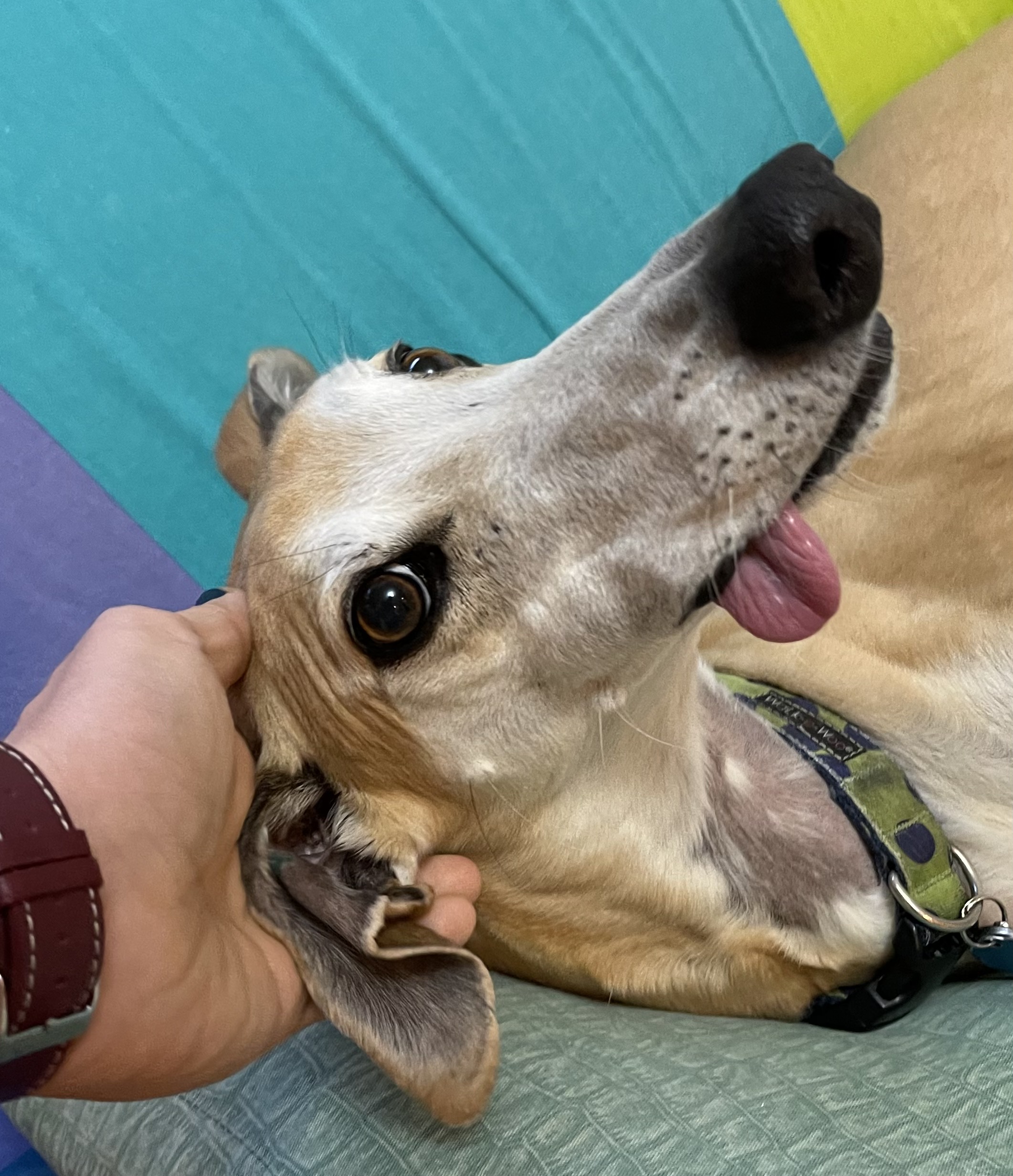
    And many of you are asking after Obie and Wally. The boys are doing just fine. They’re happy, loving the sunny summer weather, and enjoying each others’ company a great deal. Oberon turned 8 this year, and he’s every inch a distinguished older gentleman. He’s leaner and not as muscular as he used to be, but he’s still prone to silly bursts of energy and leaping when he’s excited.

    What a distinguished older gentleman looks like.

    And Wallace has calmed down a little bit, after hitting his 4th birthday last month. He’s unusually vocal for a greyhound and he used to bark at any stranger who got too close. But he’s less prickly and more trusting now. I think in addition to age and familiarity, he’s realized that he’s in his forever home and that he doesn’t need to continually be on guard for danger. He’s on a very sweet emotional journey. I love that he greets me with a little dance, hopping from one paw to the other, when I arrive at home after a long walk.

    Two good boys on the prowl.

    I hope you had a terrific summer.

  • What i’ve been reading and writing: July 2022

    What i’ve been reading and writing: July 2022

    This week’s heat wave has forced the dogs and I to retreat to the one room in my house with air conditioning for 21 hours a day. Because my life right now is pretty much crammed inside these four walls, everything is feeling kinda insular and maybe a little claustrophobic. I’m also finding it pretty hard to focus, so this introduction is just going to hit a couple random points before we careen, full-speed, into this month’s update.

    I traveled to Alaska earlier this month for a work trip, which was a lot of fun. Alaska is one of the few states I’d never visited, and while I stayed pretty close to the Anchorage area, I saw enough—the mountains, the mud flats, the mind-bogglingly great Anchorage Museum and the magnificent Alaska Native Heritage Center—to know that I want to return sometime. And I stayed masked in high-risk situations and managed to avoid Covid, which felt like a real triumph.

    I also realize I’ve been pretty quiet on the comics front lately, but trust me when I say there is progress. The next project is moving slowly, but I’m incredibly happy with what we’re cooking up and I’m excited for you to see it. Hopefully we’ll make some solid steps forward this summer and have something to show you later this year.

    In the meantime, please read Snelson: Comedy Is Dying, and also check out new work by my comics collaborators: Alan Robinson, who absolutely nailed the art on Planet of the Nerds, is doing a great job on The New Fantastic Four for Marvel Comics. Alan is not only drawing a super-cool Spider-Man, he’s also working with Peter David, who was one of my favorite comics writers back in my teens and twenties. And Fred Harper, who melted my face off with his incredible work on Snelson, has a new comic coming out soon with the estimable Stuart Moore called Highball, which is about alcoholics in spaaaaace. They’re both brilliant artists and excellent collaborators, and anything they do is worth your attention.

    I’ve been reading

    In the Seattle Times this month, I profiled Mercer Island’s own Island Books, a (surprisingly large) neighborhood bookstore that’s been a community lynchpin for nearly 50 years. This store has some of the best booksellers in the Pacific Northwest, and my only regret is that I didn’t have the word count to properly give all of them credit by name.

    I’m also really happy with this month’s crop of Business Insider pieces; I’ve gotten to cover some of the most pressing economics issues as soon as they’ve hit the headlines. Topics include:

    • CEO pay hit record heights this year. You know what else happened? Thanks to inflation, the federal minimum wage of $7.25 per hour hit the lowest value an American minimum wage has held since 1966. Those two data points are absolutely connected.
    • I wrote about why the American appetite for taxing the rich has never been higher in my lifetime.
    • I explained why the Federal Reserve’s insistence on raising interest rates in fact might not solve the inflation crisis but will almost certainly immiserate millions of Americans.
    • And I unpacked the weird situation that unfolded on Twitter earlier this month when Jeff Bezos and Big Oil teamed up to dunk on an innocuous tweet President Biden wrote about gas prices. The billionaires and oil companies probably aren’t on your side, people.

    I’ve been reading

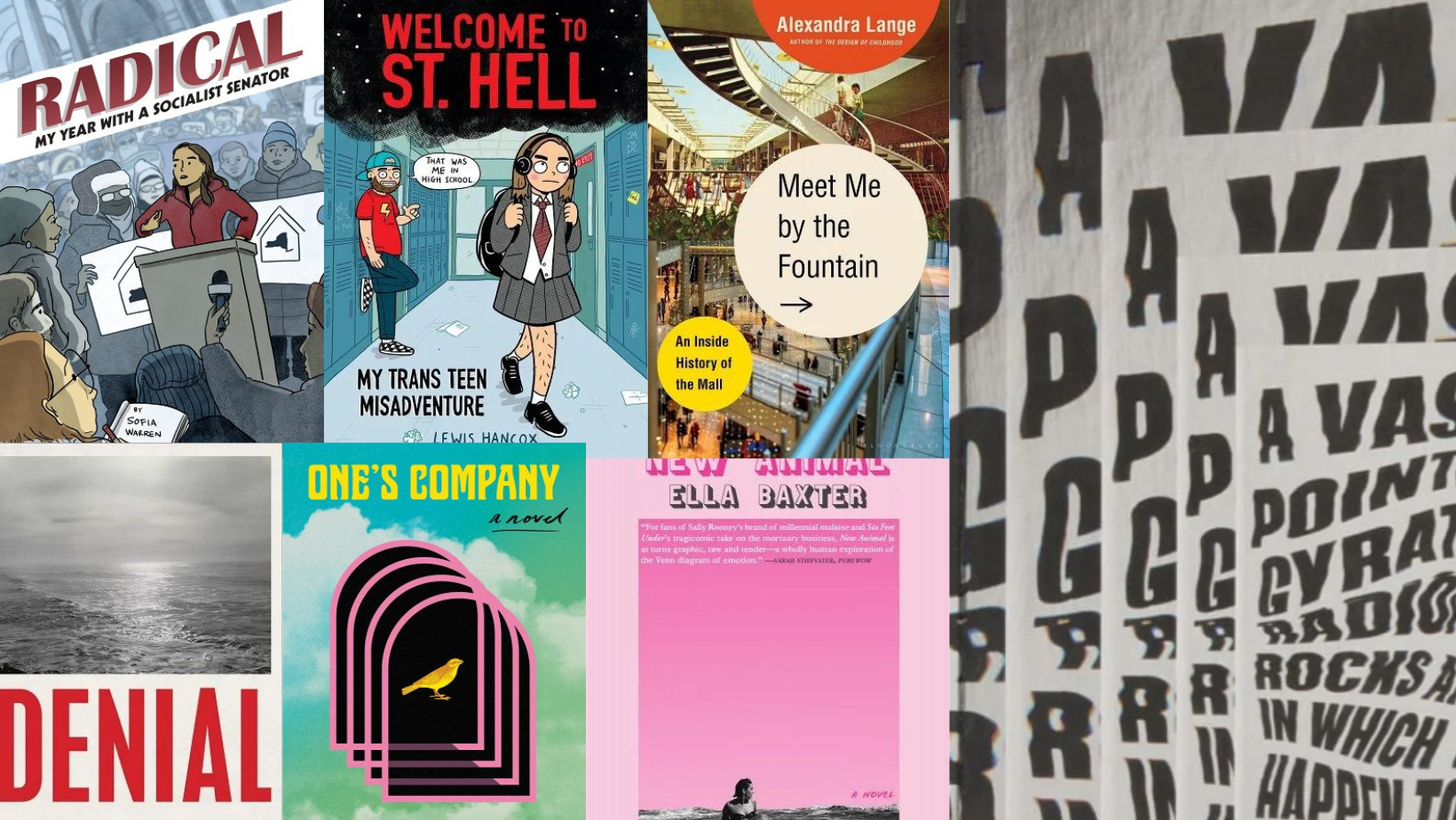
    I picked up Ella Baxter’s debut novel New Animal from the staff recommends section of Paper Boat Booksellers in West Seattle, and I’m so glad I did. It’s the story of a young woman who, in the wake of her mother’s death, wrestles with grief by getting involved in the BDSM scene. It’s a really interesting and funny book about control, loss, emotions, and having to sit with yourself. And it was an interesting companion for another debut novel I read this month, One’s Company by Ashley Hutson. This one is also about a young woman who wrestles with grief and trauma, but the protagonist of One’s Company wins a large lottery jackpot and spends part of her fortune building a huge temple to the sitcom Three’s Company, and then she decides to spend the rest of her life reliving classic episodes of the sitcom. Thematically, One’s Company and New Animal are very similar books but they venture in some very different directions. I do feel like the protagonists of these books would get along if they ever met, though.

    I read three super-interesting nonfiction comics this month. New Yorker cartoonist Sofia Warren’s Radical: My Year with a Socialist Senator seems to have been tailored directly to my interests: it’s a journalistic comic about the nuts and bolts of what it’s like to run a state legislative campaign, and also (uh, spoiler alert) how to actually govern after you win. Featuring revealing interviews with staff and the state senator herself about the complex and frustrating process of politics, this is one of the clearer and easier-to-understand books I’ve ever read about state politics. Lewis Hancox’s YA memoir Welcome to St. Hell: My Trans Teen Misadventure is an accessible comic about growing up trans in an environment that doesn’t make any space for people who fall outside the cisgender experience. Hancox’s cartooning is deceptively simple and it reminds me of some of the best in the autobio field, including Tom Hart and James Kochalka. And Shelly Bond, Imogen Mangle, and Laura Hole’s Filth & Grammar: The Comic Book Editor’s (Secret) Handbook is the Understanding Comics of comic book editing—an explanation of what comics editors actually do. I didn’t know half of what they cover in this book, and I’ve written hundreds of pages of comics.

    I mentioned in the last issue that I adored the film Everything Everywhere All at Once. A friend loaned me an anthology edited by the directors of that film, A Vast, Pointless Gyration of Radioactive Rocks and Gas in Which You Happen to Occur, and it’s a pretty special piece of art unto itself. It’s less of an anthology and more of a literary collage—an exploration of alternate universes in literature with contributions from Etgar Keret, Ted Chiang, and a classic story from Jorge Luis Borges. There’s art and small books stitched inside the larger book and it’s just a really fun experiment. This feels like the kind of book that McSweeney’s used to publish in its heyday, and I wanted to read a million more books just like it as soon as I finished.

    Jon Raymond’s latest novel Denial brings the author’s usual melancholic lonely Pacific Northwestern vibe to dystopian fiction. As is typical for Raymond, the dystopia is more of the slow-moving and depressing variety. I enjoy Raymond’s quiet narratives and his beautiful spare prose a great deal, but this one didn’t move me as much as his more down-to-earth novels The Half-Life and Rain Dragon. But that could just be how I’m meeting this book—I’m so tired of living in a dystopia that the idea of spending more time in a slightly more depressing dystopia is just exhausting.

    And Meet Me By the Fountain: An Inside History of the Mall, Alexandra Lange’s history of the rise and fall of the 20th century’s most popular architectural monstrosities, was just the summer book that I needed. I’ve always been fascinated by malls, and the history and psychology of shopping malls in America was a nice low-stakes subject that I could get lost in for a while. Lange’s a great and intelligent tour guide for this exploration and if, like me, you spent much of your late teens working in a mall (pour one out for Sears and Roebuck,) there’s likely a little pang of nostalgia hiding in these pages just for you.

    That’s all for this month

    For a number of reasons, I’m feeling pretty burnt out on the publishing industry at the moment. I’ve been reading, selling, and writing about brand-new books for the last 20+ years, and I kind of feel as though I can’t stop staring at the strings at a puppet show: Everything feels orchestrated by publicists and manicured by agents and perfectly safe and more than a little bit incestuous. The new arrivals table at my neighborhood bookstore hits me more like a burp of stale air than a refreshing breeze.

    I think I might have to take a step back from the look-at-me of it all and get lost in some old books for a few months. Maybe a Steinbeck and a Highsmith I haven’t read yet, maybe some funky old 1970s sci-fi paperback by some guy I’ve never heard of before.

    If you’ve got a hidden backlist classic that made your toes curl, I’d love to hear about it—anything from high art to genre trash, so long as the author isn’t currently doing a podcast reading tour or endlessly retweeting praise on Twitter. Send me an email (thisispaulconstant at gmail) with your decades-old faves and help me temporarily climb off this hamster wheel of literary inanity, please.

    Take care of yourself,

    Paul

  • What I’ve been reading and writing: June 2022

    What I’ve been reading and writing: June 2022

    I was disappointed, but not surprised, to read that Seattle author Neal Stephenson, who invented the idea of a metaverse in his 1992 novel Snow Crash, has partnered with a blockchain company to create a real-life metaverse. The disappointment comes from the fact that I’m a big fan of Stephenson—I nominated him for a Genius Award in Literature nearly ten years ago, after all. But my lack of surprise comes from the fact that he’s always been a bit of a libertarian, and I wrote in this very newsletter just a few months ago that he’s been way too appreciative of billionaires in his last few books.

    You could say that the warning signs have always been there. I’m not one of the many fans who got burned by Stephenson’s involvement in a Kickstarter to create a sword-fighting video game system that basically returned nothing to its backers. But Kickstarter has always been a disappointment factory, and I just assumed that Stephenson’s enthusiasm for the project had blinded him to what was possible.

    This, though? Stephenson’s most recent novel, Termination Shock, is about the global devastation that climate change will cause, and so his involvement in a technology that is apocalyptically terrible for the environment is doubly disappointing. And of course Snow Crash, which I read and loved in the 1990s like most book nerds my age, felt at the time like a cautionary tale about exactly the kind of technology that he’s actually creating.

    I don’t think I can in good conscience continue to read Stephenson’s books. I just can’t support an author who profits from the monstrous ideas that he once tried to warn us about. I’m also shaken by the fact that Stephenson willingly went into business with Peter Vessenes, a serial crypto investor who has left a swath of dissatisfied customers and partners in his wake.

    I might reinvestigate Snow Crash in order to determine if I completely misinterpreted the book when I read it decades ago, but I can’t really see myself giving Stephenson any more of my money or attention aside from that. I’m done.

    I’ve been writing

    Any month in which you get a chance to interview Dr. Ibram X. Kendi is a good one, right? Talking to Dr. Kendi was an honor. I’m always a little blown away when I meet someone who speaks in complete, perfect sentences and paragraphs. Part of that skill, of course, is because Dr. Kendi is a brilliant man. But I also had the sense when I interviewed him that he was very careful about what he said because he knows that if he were to accidentally drop a single word out of place in an interview like this one, his enemies—by which I mean white supremacists—would immediately use the quote as a weapon against him. He’s aware of the tremendous responsibility that he carries, and I deeply respect his strength.

    I also wrote about Vashon Bookshop for my Neighborhood Reads bookstore profile column. What a lovely bookstore—it’s partly a vacation-friendly island bookstore for tourists to pick up beach reads, but it’s also a vital community hub for Vashon’s year-round residents. I’ve watched the shop evolve over the course of my many visits to Vashon through the years, and it’s just a pleasure to learn about the store’s history.

    For Insider, I wrote about a new study showing that nations around the world which worked to shrink income inequality also reduced political divisiveness. The head of the UN-sanctioned group that performed the study makes a policy recommendation that she believes would help resolve both political and economic disparity in America. And the piece I wrote about why childcare is an absolute necessity for working moms reads a little different on publication, because it was written before, but came out after, the Supreme Court’s shameful decision to overturn Roe.

    I also wrote about an interesting theory from an author: The idea that the invention of public policy grad schools in the late 1960s and early 1970s actively made public policy worse, because the standardization required in “rating” policies meant students and teachers measured prospective policies through economic terms. The most cost-effective policies are now deemed the “best.” But by those same measurements, the best policies in America—Medicare, Social Security, etc.—would never have been adopted.

    I’ve been reading

    I realized when I read Bainbridge Island author Jon Mooallem’s excellent new book of essays, Serious Face, that I miss regularly reading good magazine writing—by which I mean non-fiction essays that run for thousands of words and don’t feel rushed to get to a point. Mooallem is one of the best non-fiction writers in the state of Washington, and this book—full of eccentrics, scam artists, historical weirdos, and literal Neanderthals—is a showcase of his many talents. There’s even a celebrity profile of sorts, in the form of a long and self-referential interview with the screenwriter Charlie Kaufman that gets hijacked by the early days of the pandemic. This book would be a great vacation companion—the kind of book you can pick up, lose an afternoon in, and then throw in your bag as a guest on your next adventure.

    I found a pristine copy of Tananarive Due’s The Good House in a Little Free Library on one of my walks, and by the time I fell asleep that night I was a hundred pages in. It’s a story about an intergenerational curse in a small town in Washington state, and though it takes a while to get started, Due knows how to pay off a slow burn. The next time you’re getting ready to pick up a bottom-tier Stephen King novel just because you’re bored and in the mood for a horror fix, do yourself a favor and pick this one up instead.

    Tripp Mickle’s book about Apple’s tumultuous years following the passing of founder Steve Jobs, After Steve, is full of juicy corporate gossip. Unfortunately, Mickle frames the narrative as a battle for the company’s “soul” between number-crunching new CEO Tim Cook and art-loving design guru Jony Ive. Based on the detailed quality and unbalanced quantity of anecdotes about Ive, though, it’s obvious which “side” of the “struggle” most of Mickle’s sources are on. And the very premise that Apple has a “soul” to lose represents a dangerous kind of corporate anthropomorphization that I believe a journalist shouldn’t indulge. If, like me, you’re interested in an insider account of how giant corporations get things done, there’s plenty of gossip here to enjoy. But you also have to be careful to continually keep the source in mind, and interrogate the narrative for secret agendas.

    Hernan Diaz’s novel Trust is a complex novel about a tycoon and his massive business empire in the early days of the 20th century. It’s sharply written, and it smartly avoids the trap of trying to be an overstuffed DFW-style “everything novel,” which it easily could have been. Unfortunately the narrative is broken into several discrete chunks, and those structural choices sapped the narrative of some necessary velocity.

    Biloxi, a novel by Mary Miller, is a simple story about an unpleasant old man who has made an incredible mess of his life. Then he gets a dog and things start looking up, until he realizes that the dog belongs to someone else. Biloxi is really an exercise in voice—a damaged, prickly man who is aware of, and desperately wants to fix, about half of his toxic traits. I really enjoyed it, but I could see the unlikable narrator turning a lot of people off.

    Amy Bloom’s memoir In Love, about her husband’s early-onset Alzheimer’s diagnosis and their joint efforts to seek out legal assisted suicide for him, completes my recent reading trilogy of nonfiction books about marriages and relationship disasters. (I wasn’t crazy about Foreverland, but I enjoyed Heartbreak quite a bit.) It’s probably not surprising that Bloom’s book is my favorite of the three, but be warned—it’s a totally heartbreaking exploration of what it means to be the partner who has to not only say goodbye to the one they love, but also help shepherd them through to death. It’s shot through with wry humor and optimism, but I wouldn’t recommend it to anyone in a tender emotional state.

    Seems like there’s a little bit of a clone trend happening in popular culture. From the gorgeously contemplative Mahershala Ali film Swan Song to the action flick Dual, creative people are investigating the idea that clones are something disposable. Edward Ashton’s novel Mickey7 is a sci-fi thriller along those lines—the story of a clone on a deep-space colony whose only job is to die on dangerous missions, be cloned, and keep doing the dangerous work until he dies again. Of course, something goes wrong and Mickey7 and Mickey8 come face-to-face, even though strict and vaguely religious colony rules forbid “multiples.” The narration suffers a little too much from the wiseass-in-space vibe that has plagued sci-fi since The Martian‘s massive success, but it’s an interesting read, and if you’re at all interested in the high concept you’ll want to read this book now: it’s apparently set to be adapted as Bong Joon Ho’s followup film to Parasite, starring Robert Pattinson.

    That’s all for this month

    Just above, I wrote about a new storytelling trend I’ve noticed in sci-fi books and movies: clones becoming sentient, breaking free from their disposable fate, and transforming into their own autonomous beings. I’ve been wondering why this particular story is floating around in the collective unconscious right now.

    Of course, America loves a story about a worker drone who self-actualizes themselves into free will. It appeals to our national idea, the concept that if we just work hard enough, we will somehow make enough money that we won’t ever need to worry about money again. But this clone craze feels a little more pointed than just the usual bootstraps narrative, and I have a theory about why.

    From Spider-Man (live-action) to Spider-Man (animated) to Doctor Strange to Loki to the Flash to Everything, Everywhere, All at Once, a lot of our blockbuster brain space right now is keyed into the idea of the multiverse. And setting aside Everything, Everywhere, All at Once for a moment—which truly feels to me like a generational achievement in filmmaking and a deeper exploration than all the others—the idea behind these multiverse stories is that no matter what you do or where you go, you’ll always wind up in some version of the life you live now, albeit with endless cosmetic variations.

    I’ve always disliked the Destined Chosen One narrative because it ultimately doesn’t have any drama to it, and I think the multiverse narrative is just a slight twist on the Chosen One narrative without a climactic (franchise-ending) battle.

    It’s a little surprising to me that Spider-Man has become the premier multiversal superhero, because to me it takes some of the specialness away from the character. I like Peter Parker because he’s just some kid who found himself thrust into a role that demands every ounce of his attention. And no matter how likable Andrew Garfield and Tobey Maguire are, I think Tom Holland’s Peter Parker feels a little less special when he’s on screen with the others. When you get a bunch of Spider-Men together, being Spider-Man shifts from a complicated moral choice to yet another version of the destiny narrative—a role the universe forces him to play. (And note that I don’t include Miles Morales in this Too Many Spider-Men argument. Miles’s whole thing is that he’s someone who has chosen to respond to Peter Parker’s choice in his own way—he’s a unique take on the Spider-Man story, and not a blurred photocopy.)

    All of which is a long way of saying that I wonder if all this clone pontificating is a pushback to the disposable multiversal variants we’re seeing in superhero films and TV shows right now. We can be more than just a background character in a multiverse-spanning epic, these stories argue. We can be whatever we want. We have free will, and we can make better choices. There are a lot of problems with that narrative, too—libertarians love it for a reason—but I would choose to be the protagonist of a Rogue Clone story over a Multiverse story any day of the week.

    Anyway, this is a long one. Sorry. In conclusion, please enjoy a photo of Obie and Wally, who have been absolutely loving their occasional warm and sunny walks.

  • What i’ve been writing and reading: may 2022

    What i’ve been writing and reading: may 2022

    I’m in the pits right now, friends. The news is all heartbreaking, the weather in Seattle is pretty dire, and nobody knows for sure if Covid is or is not going to throw the mother of all comeback tours in the fall.

    I’m also tearing my hair out over the fact that a judge in Virginia ruled that two books for young readers are obscene. I can’t believe that last story isn’t getting more attention, by the way: If the ruling stands, it would be the first time in 50 years that a book would be banned in the United States on the grounds of obscenity. It could be illegal to own a book in certain parts of America. Chew on that for a while, and then try to tell me that cancel culture on college campuses is the real problem right now.

    So in order to chase the late-spring blues away, let’s talk about a few things that I’ve been grateful for lately:

    • We’re still waiting for the really good summer foods to come in—Rainier cherries, where are you?—but I was very excited to find this strawberry curry recipe at Atlas Obscura. I’ve been cooking a lot of Indian food for the past year, thanks to Meera Sodha’s excellent cookbooks, and this summery treat of a recipe felt quite in line with what I’ve learned from Sodha.
    • I managed a 72,000-step (36-mile) walk around most of Lake Washington on the last day of April that left me feeling pretty good, although my new Nike hiking sneakers left my feet covered in huge blisters, which is why I wasn’t able to complete the walk all the way around the lake (That’s what I get for straying from my beloved Brooks hiking sneakers.)
    • I’m not traditionally a huge Harry Styles fan, but his new album, Harry’s House, is phenomenal. The opening song, “Music for a Sushi Restaurant,” is a bop and while the album flags a little toward the end, it’s definitely worth listening all the way through.
    • I also love Seattle musician Hollis’s new album Subliminal, and that will be sharing space with Styles (and, presumably, Lizzo’s new album that comes out in July) on heavy rotation all summer long.
    • Last month, stand-up comedian Gary Gulman reached out to me on Twitter to say he enjoyed the comic I made with Fred Harper, Snelson: Comedy Is Dying. He also invited me to his show at the Moore in Seattle on May 28th. I already knew I enjoyed Gulman’s work—his HBO special, The Great Depresh, is well worth your time, and he’s got a small but hilarious role in Amy Schumer’s very good Hulu sitcom Life After Beth—but I wasn’t prepared for how much I’d love his live show. At nearly two hours, he ventured everywhere from cancel culture to toasters to stage magic, and he simultaneously provided a running commentary on how the set was going all the while. It was a deeply funny, gorgeously written show. If you’re a reader—and if you’re getting this email, you are almost certainly a reader—I can’t encourage you enough to check out Gulman on his Born on Third Base tour if he’s anywhere near you this summer or fall.

    I’ve been writing

    I loved talking to Tacoma author Peter Bacho about his memoir Uncle Rico’s Encore for The Seattle Times. Bacho grew up in Seattle and his book is all about his experiences with the local Filipino community—their labor victories, their efforts to change the city for the better, their complicated ties with the country they left behind. He was a funny, fantastic interviewee.

    And also for The Seattle Times, I wrote about Blue Kettle Books, a cross between an indie bookstore and a food truck. The owner and operator of Blue Kettle, Monica LeMoine, is driving Seattle’s newest—and smallest—bookstore to festivals, breweries, and farmer’s markets all over the north end. I was really interested to learn about her process for stocking the shop: There’s room for about 800 titles, so she has to be very choosy. And I love her mission to take the books directly to people who otherwise might not visit bookstores.

    For Business Insider, I wrote about a new proposed tax on Big Oil’s profit markups, three very progressive policies in President Biden’s proposed 2023 budget, and the private equity firms that murdered Toys R Us in the name of a quick profit.

    I’ve been reading

    Emily St. John Mandel’s latest novel, Sea of Tranquility, features a character who, like Emily St. John Mandel and her runaway bestseller Station Eleven, recently wrote a blockbuster novel about a pandemic. Usually those self-referential characters are a huge turnoff for me, but St. John Mandel’s self-insert was possibly my favorite part of this book. It’s not as good as Station Eleven, but it similarly brings her empathy and sensitivity to science fiction tropes like pandemics and moon bases.

    I really enjoyed Florence Williams’s nonfiction book Heartbreak: A Personal and Scientific Journey, which begins with a brief memoir of Williams’s marriage falling apart unexpectedly through no fault of her own and then transforms into her exploration of the science and history of human heartbreak. There are ninety ways this book could have gone bad, but Williams dodges them all.

    I was enthralled by two short works of fantasy this month: Sarah Tolmie’s All the Horses of Iceland is a fable about the origins of Iceland’s short-legged horses , and Spear is Nicola Griffith’s gorgeous feminist reexamination of the Arthurian legend. These are both short books that don’t lean into traditional fantasy tropes, and I was haunted by the both of them in very different ways. Ask me to pick a favorite and I’d give Griffith the edge—but I have to note that I am not impartial because I am maybe the only person on earth to have ever been thrown from the back of an Icelandic horse, so I hold a little bit of a grudge toward the little bastards.

    I was also swept up by two similar books about bizarre animals: The Soul of an Octopus is a heartbreaking and fascinating exploration of the consciousness of octopuses, and The Sound of a Wild Snail Chewing is about a woman who, during a long illness, is charmed by a wild snail that a friend places on her bedside table. Neither of those animals are recognizably human in any way, but the authors do a fantastic job of explaining what makes them worthy of our attention—and our emotions.

    Written by Ram V and illustrated by Filipe Andrade, The Many Death of Laila Starr is a comic about what happens to the personification of death when a scientific genius makes death obsolete. Basically, death gets laid off, and she decides to get her revenge on the inventor of immortality. It’s a charming story about a subject that’s prone to cliches, but the creative team dodge every obstacle in their path. Maybe the nicest thing I could say about this book is that I think it stands up alongside Neil Gaiman’s Sandman series with its personification of grand concepts and its mythologization of the everyday.

    The most interesting parts of Claire Stanford’s new novel Happy for You were the segments in which the main character, an academic born of a Japanese mother and a Jewish father, struggles with the boxes that website intake forms try to categorize her into—does she check “Asian-American” or “Other,” for instance? Our hero is airlifted out of grad school limbo and into a large tech company’s project to map and measure human happiness, and Stanford does good work exploring that fuzzy area between computational precision and human messiness. The book doesn’t find a satisfying conclusion but I loved the way it explored its themes so much that I didn’t really care.

    And John Scalzi’s latest sci-fi novel, The Kaiju Preservation Society, is a summer blockbuster of a book. It’s about a loser who gets hired by a company to travel across dimensions and keep an eye on the giant city-destroying monsters on the other side, and Scalzi is having great fun drilling down into what a creature like Godzilla would really be like—giant parasites and all. If you’re looking for a big, fun science fiction thrill ride to take on vacation this summer, I think this might be the one for you.

    That’s all for this month

    A couple weeks ago, I walked to the Fauntleroy Ferry Terminal, took the ferry to Vashon Island, and then walked to downtown Vashon. I can’t recommend Vashon as a walking destination because there are no sidewalks on most of the island, so the only obstacle between your body and traffic hurtling at 45 miles per hour in the opposite direction is a little white strip of paint.

    But as I was nearing Vashon, I saw a sign by the side of the road near the entrance of the Episcopal Church of the Holy Spirit:

    A few years ago, I’d done a little research into labyrinths in the Seattle area (apparently, there are 24 of them, according to the World-wide Labyrinth Locator) but I’d never actually visited one before. So I stopped and walked the path. While the Vashon Labyrinth follows the formula of a labyrinth—it’s just a circuitous path around a circle with a central area for meditation—it’s a fairly low-key affair. The path itself is just a rut dug into a lawn next to the church:

    Now that I’ve officially walked one labyrinth, I understand the appeal. Part of the reason why I enjoy frequent miles-long walks is that it serves as a form of meditation for me—once I pass mile 20, my brain stops cycling through the usual array of annoying repetitive thoughts and I start to feel a little less like a restless brain in a jar and more like a body existing in the world.

    The labyrinth, then, serves as a kind of focused meditation exercise that distills the meditation of walking: You trust the path, you round the corners, and you can see the whole path around you, so you just patiently put one foot in front of the other. At the center, you pause and look at where you’ve been, and then you reverse your steps. I bet if you were to do some breathing exercises while you walked the path, it would be even more calming.

    Maybe this fall, I’ll start including Seattle-area labyrinths into my walks. I can’t see labyrinths taking the place of my regular walking practice, but they’re an interesting exercise for someone who walks an average of ten miles a day: Going nowhere in particular, slowly, for no reason, and taking the longest possible route to get there. I could probably use some more of that in my life, and I bet you could too.

  • What i’ve been writing and reading: April 2022

    In the week since Elon Musk announced he was buying Twitter, he has already encouraged racist and misogynist bullying of Twitter employees, he’s publicly embraced alt-right sleazoids including the guy who inspired the “Pizza Gate” misinformation campaign, and he’s continually railed against the “woke” left (which apparently includes Netflix for some reason.)

    Now I’m not the brightest bulb on the Christmas tree, but I know that when a right-wing scumbag with a racist army buys a social network there’s no point in trying to change that system from the inside. Just within the last week, fascist Musk bootlickers have been emboldened, picking fights with trans people and people of color on Twitter and swarming their replies with abuse. It all reminds me of the days after Trump won the election in 2016, when the Nazis realized they didn’t have to hide anymore.

    So if Musk’s $44 billion offer goes through and he takes control of Twitter in six months as planned, I’m leaving Twitter, and I’m already throttling down my daily Twitter use to prepare for that moment. (Though it may not happen; if Tesla shares start to really tank, there’s a good chance Musk might have to back off. I hope the deal falls through, but I’m not holding my breath)

    I’ve been experimenting with my old Tumblr account and I’m enjoying myself over there. It’s a creative community that’s visual-forward but allows for long-form blogging. There are two big problems with Tumblr, though: First, there’s no news on the site to speak of, so I’ll need a new way to stay on top of breaking news, and second, there aren’t enough people on there to make my feed feel as lively as my Twitter feed does. I can’t do much about the first problem, but you can do something about the second: If you’re on Tumblr or you want to experiment with the network, be sure to say hi over there.

    If Musk does buy Twitter, that means I’m also going to have to do something with my newsletter. I currently use Revue, which is Twitter’s newsletter service. It is, quite honestly, very bad: The formatting is terrible and the back end is janky. I only chose Revue because it was integrated so tightly with Twitter. There’s no value to it otherwise. But the good news is that I can just move those email addresses over to another service and readers shouldn’t notice a thing when or if that happens.

    This opening note feels horribly self-indulgent and navel-gazey, but I think it’s important to explain where I’m coming from, in part because I was a huge proponent of Twitter right from the beginning. And yes, I realize that every social network is run by terrible rich people, but I draw a very clear line at people who happily attract mobs of Nazis to do their bidding online. I spent four years on Twitter being obsessed with one deranged rich guy with too much power and a base of foaming-at-the-mouth bigots. I won’t be fooled again.

    I’ve been Writing

    At the Seattle Times, I interviewed Neil Gaiman in advance of his reading at Benaroya Hall this Sunday night. It was a great conversation, and he was, as always, impossibly charming. (As a bonus, I’m including some outtakes from that conversation at the end of this email.)

    Also at the Times, I wrote about Open Books, Seattle’s lone poetry-only bookstore, and its recent move to a new storefront in Pioneer Square. Aside from the pure joy of a new bookstore opening in Seattle’s original Bookstore District, the thing that I love about the new Open Books space is the fact that it has two rooms—the Parlor and the Print Shop—that are intended to be community hubs for Seattle’s poetry community. It’s now a space where literary magazines can be formed, edited, and printed; writing groups can meet to discuss work that will appear in upcoming chapbooks; and authors can debut new books to adoring crowds—all at the same time.

    On my Tumblr, I wrote a little bit about why I, a huge Nicolas Cage fan, was disappointed by the new film The Unbearable Weight of Massive Talent. I do a little meditating about what I think the film gets wrong about Cage’s allure.

    And it was a big month over at Insider, where I wrote about a new wage tracker that shows exactly how little 66 of the world’s biggest, most iconic companies pay their workforce, why banning stock buybacks would raise wages for workers, why America’s shameful and racist mass incarceration problem is doing serious economic harm to the country, and why the minimum wage would be well over $20 per hour if worker pay had kept up with productivity.

    i’ve been reading

    So I finally read Jonathan Franzen’s latest novel, Crossroads, and I found it to be a compelling, if way too angsty, soap opera about a family that’s falling apart at the center of a church community in the 1970s. I can’t deny that it’s well-written, but every single character in this book was an awful person, and every single one of them made at least one choice in the narrative that just completely turned me off. In other words, it’s Franzen doing Franzen.

    Seattle cartoonist and comedian Brett Hamill’s latest comic book memoir, Sk8 Dad Summer, is a sweet, low-stakes collection of anecdotes about Hamill rekindling his interest in skateboarding, and a meditation about how the rebelliousness of his youth as a skater interacts with his relatively gentle adult life as the dad of a toddler. The comics in this book reminded me a little of the diary comics of James Kochalka and John Porcellino—a huge compliment, coming from someone who was obsessed with autobio comics in the 1990s—and the stories build on each other to form a lovable portrait of a man trying to do the best he can at honoring responsibilities he’s taken on, while still being true to himself.

    Gideon Defoe’s An Atlas of Extinct Countries is an encyclopedia of nations that fell apart, collapsed, or otherwise completely disappeared from the face of the planet. It’s an interesting premise for a non-fiction book, and Defoe (who wrote a few humorous novels about pirates a while back) is both a good researcher and a chatty tour guide. But if you do buy the book, I recommend not reading it straight through from beginning to end, as I did. The various extinctions all get a little same-y when you read them one after the other. This is a better book to flip through than swallow whole.

    And while we’re talking about humorous books that you probably shouldn’t rip through cover-to-cover, Ryan North’s How to Take Over the World: Practical Schemes and Scientific Solutions for the Aspiring Supervillain is a very funny book that applies real-world science to the plots and schemes of super-villains. Under the guise of describing how to build a secret lair and plot world domination, North explains the basics of earth sciences, computer programming, and climate change in easy-to-understand language. It’s hard to find the perfect mixture between entertaining and educational, but North pulls it off.

    Photo No-Nos: Meditations on What Not to Photograph is an anthology from Aperture that collects essays from world-famous photographers who explain the subjects that they refuse to include in their photographs. Of course, it’s light-hearted: if you took every single prohibited subject in the book seriously, you wouldn’t ever take another photograph in your life. But the subject is an interesting constraint, and you can learn a lot about art by studying what mistakes the great practitioners have made over the course of their careers. Great photography is as unknowable to me as magic—I know it when I see it but I have no idea what goes into it or why it works so well—and this book helped me think like a photographer for a while. In that respect it was a fascinating exercise.

    I’m a huge fan of Michel Faber—Under the Skin and especially The Book of Strange New Things are all-time great novels—and so I was thrilled to see that he published a novel for young readers. D (a Tale of Two Worlds) is an homage to Charles Dickens and a fantasy novel about what would happen if one day the letter “D” just suddenly disappeared from the world. It’s not my favorite Faber book by any stretch (and this is a very specific recommendation: If you want to read a good novel about letters mysteriously disappearing from everyday use, I’d recommend Mark Dunn’s Ella Minnow Pea before this one) but if you’re a fan of Faber’s analytic voice, whimsical creativity, and slightly aloof observational eye, you’ll find plenty to enjoy.

    I do love to read books about marriage, but I never really feel as though I recognize the marriage described in the book. That’s how it was for my experience with Heather Havrilesky’s Foreverland: On the Divine Tedium of Marriage. I didn’t at all agree with Havrilesky’s insistence that every married person hates their spouse on a regular basis, for instance. That concept is just alien to me. And at several points, the story feels like the author is pumping up the drama of some moments just for the sake of making the memoir more memorable—and a climactic epiphany that involves the Netflix show The Crown and the astrological signs of various British royalty left me absolutely cold. There are four or five good essays stashed inside Foreverland, but I can’t recommend it as a book with any particularly unique insights into marriage.

    I listened to Bob Odenkirk’s memoir Comedy Comedy Comedy Drama because Odenkirk reads it himself, and if you’re going to spend time with a celebrity memoir you might as well hear it in the celebrity’s own words. It’s a fun book, and I especially appreciated that Odenkirk didn’t try to hide the fact that he could be downright surly if he feels like someone is trying to mess with his art or screw him in business. He’s got a few axes to grind, and I’m here for it. But I was frankly shocked that Odenkirk didn’t include the near-fatal heart attack he suffered on the set of Better Call Saul last year in the book. Look, I get that publishing works on a very long schedule and I understand that the book was absolutely finished before the incident. But my God—it’s the 21st century: Surely you can rush to insert a chapter acknowledging how close the memoir was to being a posthumous release? Knowing what we know now, the book kind of fades out, and the heart attack is a giant looming shadow over the last couple chapters that’s never addressed.

    Wow—in retrospect, I read a lot of books by white dudes this month. I’ve got to broaden my scope for next month.

    That’s all for this month

    I figured I’d close with a couple of questions and answers that were cut for space in my Seattle Times interview with Neil Gaiman. (My questions are in bold, his responses are in normal type.)

    PC: Many years ago, I realized that the first Neil Gaiman book I read was not the Sandman or Black Orchid, but in fact was Don’t Panic, the companion book to Douglas Adam’s Hitchhiker’s Guide to the Galaxy. If time was no object, would there be any kind of art that you’d write a companion book for today? Any novels or comics that you’re moved by in the same way that Adam’s fiction spoke to you in the eighties?

    NG: That’s a really good question. I don’t think so. But having said that, I did love getting to do my book, The View From The Cheap Seats, which contains lots and lots and lots of essays, introductions, and encomia that actually allow me to talk about books that I love, about writers that I love, about works of fiction that I love, poems I love. And that to me was hugely important.

    You do seem to be a world-class reader. I wonder if maybe in another reality you wouldn’t be a literary critic? You’d probably also be a lot poorer.

    Well, I was a book reviewer when I started, and so that was where I began. But I’m professor in the arts at Bard College, and I love being a professor, it’s great. One reason why it’s great is because I get to work with young kids and show them what’s amazing to read, and why it’s fun to write, and all of that kind of stuff.

    I mentioned on Twitter that I was interviewing you and a Twitter follower named Carrie wanted to know if you have a favorite graveyard.

    I have a few favorite graveyards. I love Highgate Cemetery West. It’s amazing. I am very fond of Glasgow’s Necropolis. I love every graveyard I’ve ever been to in New Orleans. I don’t think I’ve ever done an official graveyard tour in New Orleans, but I’ve absolutely had friends in New Orleans take me around graveyards and talk. Actually, I did! I did one official graveyard tour. I remember because they filled me in on lots of interesting facts about how bodies were disposed of in New Orleans that I did not know.

    I love graveyards and I love wandering through them. I always find them peculiarly happy places. And I think even when I was a little kid, I’d be scared of graveyards, but I also found them very, very peaceful. There’s something very human about a graveyard—just the idea that people have lived their lives and finished them. That’s wonderful!

  • What I’ve been writing and reading: March 2022

    Roughly three-quarters of the population in Seattle seems to have entirely let their guard down when it comes to Covid. I’m in the quarter of the population that’s holding their breath and waiting to see if infection numbers spike, like they did the last two times we started to relax and gather in public.

    Even if things stay relatively calm, I’m still not in any kind of a hurry to attend conventions or big in-person readings or plays. That said, I do hope that I’ll be able to get into movie theaters for the occasional matinee on a somewhat regular basis sometime soon, because this year looks like it could be an exceptional one for movies: Between two of my favorite actors, Nic Cage and Pedro Pascal, sharing the screen in The Unbearable Weight of Massive Talent, the sci-fi weirdness of Everything Everywhere All at Once, the return of Jordan Peele in NOPE, the unabashed Brad Pitt-ery of Bullet Train, and the movie-screen chewiness of Baz Luhrmann’s Elvis, 2022 could be the most exciting year for non-franchise American filmmaking in at least a decade.

    Speaking of unique cinematic experiences, I watched one of the better non-franchise films of 2021 a couple weeks ago: A Romanian comedy called Bad Luck Banging: Or, Loony Porn. After a frankly pornographic (but not idealized) opening scene depicting a sex tape made by a middle-aged husband and wife, the film is broken cleanly into three parts: First, the woman in the sex tape, Emi, walks around Covid-era Bucharest as she realizes the tape has been leaked onto the internet and the underage students she teaches have seen it. The second part of the movie is a very funny non-narrative video glossary explaining the social mores and history of Romania. And the third part is basically a play in which Emi comes face-to-face with the disgusted parents of her students in an all-hands meeting. The parents then vote on whether she should be allowed to keep her teaching job.

    I really dug the movie for its wild blend of inventiveness, realism, and patience. Watching all the extras in the first and last third of the film tug on their masks to cover their noses as they try to obey Covid protocols felt strangely touching. And though Emi’s climactic encounter with outraged parents is stylized and openly political, it feels almost civilized compared to some of the videos we’ve seen filmed at American PTA meetings in the last couple of years. (Then it goes totally off the rails.) If you can tolerate graphic sex, this is the best weirdo movie of 2021 that almost no American has seen, and if you’re curious but don’t want to stress over the ethics of exploitation and sex on film,  a ridiculously censored version is available on Hulu.

    And since we’re talking about watching stuff, I have to chime in on the three dramas about internet startups that are streaming right now: Super Pumped, starring Joseph Gordon-Levitt as the founder of Uber, is way too enthralled with the macho dickishness of Travis Kalanick and startup culture to critique it in a meaningful way. It feels like an ad for toxic masculinity—like if Brett Ratner had written and directed The Wolf of Wall Street or Fight Club. WeCrashed, starring Anne Hathaway and Jared Leto about the making and undoing of WeWork, basically encapsulates the entire narrative in the first episode so there’s no reason to keep watching, and Hathaway’s confident acting doesn’t begin to make up for the amateurish forced “comedy” of Leto’s performance.

    The only one of these three shows worth watching, in my estimation, is The Dropout, the Amanda Seyfried-starring series about Elizabeth Holmes and Theranos. The key to it is Seyfriend’s remarkable performance as an awkward brilliant geek who wants more than anything in the world to be Steve Jobs. She’s heartbreaking and horrifying to watch—often both in the same scene. And it’s genuinely funny: There’s a throwaway line in the most recent episode when Holmes is showing a camera crew around the Theranos building and she says, with all sincerity, “This is our state-of-the-art lobby,” and I’ve never heard a more hilariously Silicon Valley thing in my entire life. You’d have to be either a sociopath or a comedian to come to the conclusion that liminal spaces are ripe for disruption—and The Dropout is canny enough to portray the sociopath in all her moral shame, while still giving us some room (and grace) to laugh over the ridiculousness of the situation. Of the three new startup shows on streaming services right now, it’s far and away the best.

    I’ve been writing

    At the Seattle Times, I wrote about Ballard’s Secret Garden Books, which is celebrating its 45th anniversary this year. Secret Garden began as a children’s-only bookstore—it hosted a reading with Madeleine L’Engle!—but now it’s a fine general-interest bookstore with an exceptionally strong children’s section. This is one of the pillars of Seattle’s bookselling community, and it was fun to do a deep dive into the shop’s long and storied history.

    For Insider, I wrote about how abortion bans undermine the economic power of women, forcing them to be reliant on the men in their lives and stripping them of autonomy. Women need to be able to control their own bodies before they can control their own destinies, so abortion bans are really battles over power—specifically, the power of women to participate in society.

    I also wrote about a great new book that takes on Davos, the annual gathering of the world’s richest people. It’s a star-studded event in which the wealthy elite all sit around and talk about ways that they can fix the world with their fabulous wealth. Weirdly, the topic of paying more in taxes never seems to come up. And speaking of rich people with too much money, does anyone really believe that CEOs work 350 times as hard as their lowest-paid employees?

    Finally, I wrote about the real cause of the rising inflation we’re all paying at grocery stores and gas stations: Corporate greed. I honestly can’t figure out why the Federal Reserve thinks that raising interest rates will do anything to lower prices when CEOs are openly bragging about jacking up prices in their quarterly earnings calls.

    I’ve been reading

    I very much enjoy the work of siblings Maria and Peter Hoey, who for years independently published their comics stories under the title Coin-Op Comics. Their latest book, a collection of linked short stories titled Animal Stories, was just published by Top Shelf last month, and it’s a significant step in the continuing evolution of their work. The fables in this book all have to do with humans encountering a mysterious animal (or multiple mysterious animals) and through that interaction coming face-to-face with the unknowableness of everything. The Hoeys’ comics combine the formal genius of Chris Ware with the literary aspirations of Dan Clowes, and this book is a magnificent meditation on religion, wonder, and the mystery behind every pair of nonhuman eyes.

    Last month, Christina Gilbreath of The Wise Owl Books and Music recommended A Psalm for the Wild Built to me in my Seattle Times column. She said the book “is just a big warm hug. I’ve actually recommended it to a couple of nurse friends of mine, and they come back and say ‘I didn’t know I needed this book.‘” It’s the first book in a series about a tea-making monk who meets a robot, and then they explore an alien world together, all the while discussing desire and other lofty concepts. Gilbreath is absolutely right—I needed to read this book, and I can’t wait to read more. (The second book in the series comes out this summer and I’m actually going to preorder it, which is a rarity for me.) What a wonderful, gentle little novella about friendship and conversation.

    The Writer’s Crusade, Tom Roston’s book-length exploration of the writing and publication of Kurt Vonnegut’s Slaughterhouse-Five, is an adoring fan letter to one of the greatest pieces of anti-war art produced in the 20th century. For fans of Vonnegut—even longtime readers like myself who haven’t reinvestigated his work in well over a decade—this serves as a good reminder of why Vonnegut mattered so much, and exactly how influential his greatest book was.

    Slate film critic Dana Stevens published Camera Man, a biography of Buster Keaton and basically through him the entire American film industry, just last month. I really dug it. It’s a thoughtful exploration of how many facets of American life are just the same today as they were a century ago—but Stevens also explores the important differences, too, and exactly how they changed. I like that she takes the time throughout the book to explore the creation and evolution of film criticism—it’s the kind of subject that probably doesn’t warrant its own mainstream book, but Stevens cares about it and so she skillfully wraps it up into the narrative she’s researching.

    Benjamin Percy’s The Ninth Metal is the first book in a series that’s kind of like Stephen King meets HP Lovecraft in the middle of a superhero comic book. It’s about an eerie metal with supernatural properties that falls to earth in Minnesota, creating a modern-day gold rush and giving super powers to a few people, seemingly at random. I had a lot of fun with it—it’s the kind of book I would have devoured as a teen and then immediately sought out every other book in the series immediately.

    The Ice Palace is a slender novel by Norwegian author Tarjei Vesaas that was translated into English by Elizabeth Rokkan . It was heartily recommended by Phinney Books’ owner Tom Nissley in my column a while back as one of his favorite books of the last few years, and you just can’t let a recommendation like that slip by. While the book didn’t quite make that kind of a dent in me, it did swallow me up and refused to let me go until I finished. It’s the story of a Norwegian girl who goes missing on a cold winter night, and what happens after she disappears. It plucked the same emotional strings as The Sweet Hereafter, and I was transfixed by the stillness in its prose—it’s a book that feels like winter, through and through.

    I really dug Friday: The First Day of Christmas, the first trade paperback collection of an ongoing series written by Ed Brubaker and drawn by Marcos Martin. It’s a supernatural mystery series about a one-time sidekick to a kid detective who comes home from college to find that the kid detective hasn’t grown up at all, but the world around them both has gotten a lot darker. I think it’s about time to realize that I’m officially an Ed Brubaker stan—his Kill or Be Killed and Reckless series of books are some of the best comics I’ve read during the pandemic, not to mention the noirish standalones Pulp and Bad Weekend—and Martin is simply one of the best comics artists alive. This first Friday collection is relatively slight, but I can’t imagine this particular team of creators letting me down in upcoming volumes.

    That’s all for this month

    I’ve been listening to Downlowd, a podcast history of Harry Knowles’s infamous nerd-movie-review site Ain’t It Cool News, and I’ve become a fan of the podcast. The problem is that it’s a serialized show, so you have to listen from the very beginning, and the beginning is pretty rough. Downlowd‘s creator, Joe Simon, is very upfront about the fact that he’s never made a podcast before, and his awkwardness really comes through in the first couple of episodes—particularly the first episode where in a fit of writerly ambition, he tries to compare Harry Knowles to Charles Foster Kane in an analogy that falls apart under the slightest investigation. Anyone who writes as a career has overshot our ambition on multiple occasions, but writers at least tend to edit out those mistakes before we hit “publish.” Simon doesn’t have that luxury—he’s building the airplane in real time as it takes off.

    But Simon and executive producer Kristina Bell are very open about their mistakes and missteps, often explaining them at length in special bonus episodes that are released between installments of the show. And I think each episode gets better as the show goes along—more insightful, better produced, less credulous. So if you’re interested in watching someone learn in broad daylight how to be a better reporter, this is an interesting, and fairly transparent, case study.

    And of course, as someone who visited AICN regularly and would regard its atrocious comment section and poorly written reviews like a rubbernecker at a car crash, I’m interested in the subject matter. Toxic internet fan culture in particular is something that I’m deeply interested in—I touched on the subject in my first full-length comic book, Planet of the Nerds—and Harry Knowles’s site is kind of the ur-text for toxic geek fandom. You don’t get the poisonous incel army that rages against any female Marvel superhero or nonwhite Star Wars character without AICN paving the way.

    But I don’t want Knowles to take up the spotlight any longer than he already has, so let me recommend a podcast that thoughtfully engages with culture from a perspective that isn’t that of an entitled white male. I’ve really grown to enjoy Criticism Is Dead, a weekly pop culture conversation podcast hosted by Jenny Zhang and Pelin Keskin-Liu. They usually discuss two big topics a week—a TV show, a movie, occasionally a book—along with a brief overview of the week’s hot topics, and they’re pretty much everything that AICN never was: smart, curious, and entertaining. I’d say I disagree with their critiques about 20 percent of the time, but I never regret hearing their opinions. AICN is undeniably a relic of the past, and I hope that Criticism Is Dead’s thoughtful and humane conversation represents the future of reviews.

  • What I’ve been reading and writing: February 2022

    As I’ve written multiple times (sorry) the collected edition of the comic I created with artist Fred Harper, Snelson: Comedy Is Dying, will be published on March 15th. I don’t have any celebratory Ides of March bookstore readings or events on the calendar to mark the publication for a couple of reasons:

    1. Virtual readings really bum me out. I’m not the most eloquent speaker in the world in the best situations, but I’m really bad on Zoom, where the slight lag throws me for a loop.
    2. With state mask restrictions ending and the nation seemingly under a mass delusion that pretending coronavirus is a thing of the past will somehow make coronavirus go away, I don’t feel comfortable doing an in-person reading.

    I hope that in coming months, I’ll be able to do something to celebrate the book’s release. I’m proud of it–I’m especially giddy over Fred’s work—and I’d like to get people together again. But I think another spike in cases is likely as regulations fade away and the weather—at least in this part of the country—won’t allow us to properly ventilate our indoor spaces with fresh air. I refuse to be the reason a bunch of people get sick, so please feel free to celebrate my book’s release in your own way, safely and responsibly.

    I’ve been writing

    I wrote about Seattle’s (current) newest bookstore, The Wise Owl Books & Music, for the Seattle Times. It’s a small space in the Tangletown neighborhood, and it was born from a mother’s secret wish. When Christina Gilbreath’s mother passed away a few years ago, she left behind about 40 boxes of used books that she was keeping to fulfill her long-held dream of opening a bookstore. Gilbreath hadn’t known about her mother’s dream, but it echoed her own dream of one day opening a record store, and so she decided to make both dreams come true with Wise Owl. I can’t wait to see what this bookstore becomes as the neighborhood begins to shape its stock and Gilbreath’s plans for expansion take root.

    Unions are more popular in America right now than they’ve been since the 1950s. But union membership is basically at an all-time low. President Biden, our most labor-friendly president since FDR, just made a big first step toward allowing federal workers to unionize, but I wrote in Insider that he can still do more to encourage the labor movement. Also: Did you know that employer-provided health care is a scam? It’s true, and it’s not just a scam for Americans—it’s a scam for employers, too.

    I also wrote about why corporate price increases have less to do with inflation and more to do with price-gouging. That piece was retweeted by Elizabeth Warren, which was pretty damn exciting for me, since she’s one of the few national politicians I actively admire:


    Friends, I actually made a little yipping noise when I saw this tweet.
    Friends, I actually made a little yipping noise when I saw this tweet.

    I’ve been reading

    Last summer, I read and enjoyed a new Stephen King novel for the first time in ages. That novel in question was Billy Summers. This month, I read the novel Stephen King published before that, a thin paperback original titled Later, and I enjoyed it even more than Billy Summers. This is a remarkable late-career turn from a writer who had become (with semi-recent titles like Under the Dome and Cell) a parody of himself. Later is a short and dirty crime thriller about a kid who can see ghosts, and it’s got everything you like about King—the creepy images that stick with you; the world-weary, working class characters; the plots that seem somehow feel realistic in their ridiculousness. If you can grit your teeth and tolerate King’s relentless and inexcusable tendency toward fat-phobia, which pops up in the last fifth of this book, I endorse Later.

    If you’re a fan of the excellent afterlife-themed comedy The Good Place, I highly recommend the audio version of Good Place creator Michael Schur’s new philosophical exploration How to Be Perfect. Virtually the entire cast ofThe Good Place make guest appearances on the recording, giving the book the feel of a pleasant afterword to the series. It’s a kind of crash course into what it means to be an ethical person, with pit stops at just about every major philosopher you’ll encounter in a Philosophy 101 course, and it’s a fun and funny way to while away time on a road trip. Schur’s book isn’t, well, perfect—for some reason, he conflates the Overton Window with the slippery slope argument, and he also bafflingly at one point says that nobody would question whether Jeff Bezos and other billionaires deserve their fortunes—but Schur is an earnest and curious narrator, and the book is full of little ethical thought experiments you can toss around with friends.

    Libba Bray’s YA novel Beauty Queens is a satire about the contestants in a Miss Teen USA-type pageant crash-landing on a desert island and then fighting for survival. It’s a little too long, but the book is riddled with over-the-top product placements for cosmetics in the form of footnotes to the survival narrative, and I laughed out loud at the satire a few times. I’m so glad that books like this are available to teenagers now from major publishers like Scholastic. When I was a kid, you basically jumped from Ramona Quimby to Breakfast of Champions, and now YA novels like Beauty Queens provide more of a bridge between those two extremes.

    Helene Tursten’s An Elderly Lady Must Not Be Crossed is not as wickedly entertaining as the first book in the series, An Elderly Lady Is Up to No Good,but I was so charmed by the first book that I’m just grateful to spend more time with the serial-killing elderly lady at the center of the story. It’s The Talented Mr. Ripley by way of The Golden Girls—what’s not to love?

    Seattle artist Steven B. Reddy’s self-published art and essay collection, Walks with Willa: A Love Story, is about Reddy adopting a dog in the early days of the pandemic and then falling in love with her as they go on long walks through a city shut down by Covid. Reddy’s illustrations of his dog Willa running around various Seattle trails and parks are positively delightful, and I love his full-color drawings of houses, too—Reddy’s perspectives are always a little bit cattywampus, and that makes his drawings fascinating to investigate. Seattleites, fans of long city walks, and dog lovers will find a lot to recognize and appreciate here. (Though as the owner of two greyhounds—one of whom is completely blind—I do take issue with Reddy’s eagerness to let Willa off-leash and to encourage other dog owners to do the same. Not every dog should be off-leash in public places, and speaking from experience off-leash dogs can pose a real danger to leashed dogs.)

    Helen Jukes’ memoir about her first year of beekeeping, A Honeybee Heart Has Five Openings, is an informative book about a subject I want to know more about. But I really came down with a bad case of this-could-have-been-an-article-itis while I was reading this thing—Jukes kept digressing into asides about her friends and her personal life and I just wanted to hear more about the damn bees. Perhaps this is unfair to Jukes, and I acknowledge that I definitely could have read a more scientifically focused book instead. But I like to think I’m always open to being seduced by a good memoir; this book didn’t fit that description for me.

    Craig Mazin, a host of the excellent Scriptnotes podcast, recommended Dennis Palumbo’s book Writing from the Inside Out: Transforming Your Psychological Blocks to Release the Writer Within as an actually useful how-to-write book. I’m kind of a sucker for that particular subgenre, so I picked it up. Palumbo is a former screenwriter who became a psychotherapist who specializes in treating screenwriters, and Inside is a collection of some of his observations. I was kind of bummed to discover that the book did absolutely nothing for me—I thought it was a somewhat trite collection of self-esteem-building exercises for writers. And as someone who doesn’t ever suffer from writer’s block, who doesn’t really feel envy for other writers’ accomplishments, and who doesn’t have problems hitting deadlines, the lessons didn’t really do anything for me. If you are a writer who experiences any of those common afflictions, though, this book might be just the ticket.

    That’s all for this month

    I’m writing this section on President’s Day—I tend to write these emails piecemeal, over the course of the month—and it occurs to me that President’s Day is an awful idea for a holiday. We’ve had plenty of mediocre-to-actively terrible presidents, and in the wake of the January 6th insurrection, a day that honors and celebrates presidents hits a little like a sour joke. A quick glance at my bookshelves will tell you that I love presidential history and trivia, but it’s clear now more than ever that the institution of the presidency simply does not deserve this kind of celebration.

    I have a few ideas for national holidays that would be good replacements:

    * American History Day: Every year, the president could issue a little proclamation calling on the nation to focus on a particular facet of American history—the Great Depression, say, or the War of 1812, or whatever—and maybe the media could use the president’s cue as a way to investigate and contextualize that historical moment in a big national history class.

    * Public Sector Workers’ Day: The hell with Millard Fillmore! I want a day where we go to a parade to honor our postal workers and teachers, and where every federal and state employee gets a little bonus check.

    * Volunteer Day: I know most people who get the day off would just take the damn day off no matter what you call it, but it’s still not a bad idea to celebrate civic sacrifice. People who give their time and skills to nonprofits are way more admirable than wealthy people who just dump cash in a glitzy show of philanthropy, so let’s honor them with an official day of service.

    These are all silly rough sketches, but I think any one of them would serve the nation better than a President’s Day. And I think the presidents we should honor most would agree with me that President’s Day is an inappropriate federal holiday. 

    Okay. That’s it. I hope you’re doing well,

    Paul

  • What I’ve been reading and writing: January 2022

    What I’ve been reading and writing: January 2022

    Back when I blogged multiple times a day for a living, I loved a good story about some crank trying to ban a book in her kid’s school library. The parent in question would always have some dumb quote that I could ridicule, I could talk about how great the book they were trying to ban is, and the author would likely have some well-written comment about the importance of freedom of speech that could cap the post off. Boom: Aggregation complete.

    It’s kind of an open secret that authors used to dream that someone would try to ban their book somewhere, because those attempts at censorship would always inspire a nice big bump in sales. Occasionally, depending on how much media attention a parent would get for their crusade, a backlist title would even wind up on the bestseller list after a few years of relative obscurity. Book-banning was kind of cute back then, a little literary cottage industry built on the backs of a few vocal idiots.

    It’s not cute anymore.

    This week, a Tennessee school board voted to ban the teaching of Art Spiegelman’s Maus. This follows an all-out push to ban the works of Black authors including Toni Morrison from curricula and school libraries around the country. Officials are working hard to ban LGBTQ-themed materials from school libraries and classrooms around the country—including in my home state of Washington.

    This current book-banning craze is entirely different from the kinds of bans I used to write about on a monthly basis. How, you may ask? For one thing, the calls are coming from inside the house. These aren’t some random oversensitive parents or lone wolf staffers calling for the books to be banned: They’re the school boards themselves. The Tennessee board in question voted unanimously, 10 to 0, to ban Maus. And if the school boards themselves aren’t behind the banning, then the parents are in highly organized groups who know how to play the media into believing that they represent a majority of parents in the area. This is a planned, rehearsed action, it’s spreading around the country, and it’s working.

    One wealthy evangelical Christian talking about how Kurt Vonnegut is a Satanist is a clown, a punchline to a bad joke. Entire school boards banning the teaching of slavery and the Holocaust in public schools is a white supremacist fascist movement. When you work to erase a nation’s history, you are engaging in fascist behavior. And here’s the thing about being a fascist—it doesn’t matter if your intentions are good, or if you have Black/Jewish/LGBTQ friends, or if you’re just concerned about your child feeling uncomfortable. If you behave like a Nazi, if you apologize for a Nazi, if you’re friends with a Nazi, you’re a Nazi. Full stop.

    I can’t lie and pretend that I’m feeling very hopeful about the future of this country. In the very best-case scenario, I believe we’re looking at a lot of bloodshed and struggle before this fever breaks. I don’t even want to type out the worst-case scenario here because I think it would still sound insane to the general public. But this is where my head is at right now.

    I’ve been writing

    I’m pretty happy with how my Seattle Times profile of Phinney Books came out, and it seems to have gotten a fair amount of attention. Phinney Books and its sister store Madison Books are, in my opinion, the best bookstores for browsing in Seattle right now, by which I mean I’m very likely to walk out of the store with a huge stack of small-press books that I didn’t even know existed before I walked in. A big part of that has to do with Phinney By Post, their amazing subscription program that delivers one little-known but beautifully written book to your mailbox every month.

    I also interviewed Booker Prizewinning author Bernardine Evaristo about her new memoir Manifesto for the Seattle Times, in time for her talk at Seattle Arts and Lectures. She’s a bold and original thinker, and I very much appreciated the way she allowed her book to reject the classic memoir narrative structure—it’s a writing manual, a gossipy essay about sex and identity, and a manifesto for changing the world, all under one cover.

    We all know the Federal Reserve has the power to make money—that meme from a while back about money-printer going brrrrrrr is pretty famous by now—but at Insider, I wrote about the way that the Fed distributes the money that it makes. Turns out, they just give it to Wall Street, which sucks! I offer a couple of ideas for better uses for all that money, including giving it to ordinary Americans.

    And I wrote about the shameful fact that the federal minimum wage is still stuck at $7.25 per hour, and why that matters even though much of the country has moved far beyond that embarrassingly low amount. But the thing is that $7.25 is not even technically America’s minimum wage: The lowest wage an employer can pay in America right now is $2.15 an hour, which is the tipped minimum wage. I wrote about tipping’s unbelievably racist roots and why we should abolish the tipped minimum wage.

    I’ve been reading

    My coworker Annie recommended a French thriller by Hervé Le Tellier just out in paperback called The Anomaly. She said she started reading it and couldn’t put the book down until she finished it, and damn if the same thing didn’t happen to me. I bought The Anomaly at Third Place Books at 9 am on a Saturday, walked home, and I finished the thing by 4 pm. If you’re in the mood for a great page-turner, I would recommend not even reading the back jacket copy of The Anomaly—just know that it’s a supernatural or sci-fi thriller about a big cast of international characters, and prepare to be surprised with how the story unfolds. It’s not perfect, but it’s pretty damn fun.

    Benjamin Lorr makes no secret that his book The Secret Life of Groceries owes a deep debt to Eric Schlosser’s great fast-food muckraking expose Fast Food Nation–Lorr adoringly name-checks Schlosser several times in the book. And while Groceries doesn’t quite do for grocery stores what Nation did for fast food restaurants, it is still a fascinating journey into the “dark miracle” of the modern American grocery store. There’s some disgusting food trivia in there, but that’s not even the most shocking part of the book—that would be the part where Lorr unveils the actual slavery that still takes place in the international fishing industry. Lorr is a gifted writer, but he does overwrite at times—a few passages felt a little too voice-y, like aspiring gonzo journalism written by an overeager J-school student.

    Empire of Pain is exactly as horrifying and maddening as my friend Davida promised it would be, but boy does Patrick Radden Keefe make his expose of the Sackler family’s many crimes against humanity a compulsively readable experience. The story tracks multiple generations of the pharmaceutical empire, and Keefe’s narration alternates between gossipy, heartbreaking, enraging, and informative. Even if you think you know the full story behind the opioid epidemic—say, you watched the excellent Dopesick miniseries on Hulu—you’ll still want to read this book to understand the full enraging story of how wealthy people literally get away with mass murder in America. I don’t know how anyone could read this book and come away with the idea that our economic system doesn’t require top-to-bottom reform.

    Tamara Shopsin’s Laserwriter II is apparently a big nostalgia trip of a novel for people who were into computers back in the 1990s. I was a late adopter—I didn’t own a laptop of my own until like 2002 and I wasn’t really online at all until 2001—but I still enjoyed the book, which is about aimless young people working at a computer repair shop in New York City. Even though I don’t know what the characters are talking about a good fifth of the time, the weird specificity around 1990s technology provides a compelling backdrop, and the book never feels like it wastes your attention.

    I’ve read a lot of Terry Pratchett, but I haven’t read all of Terry Pratchett. That means I occasionally have the lucky opportunity to read a Terry Pratchett Discworld book that is entirely new to me. This month, I read Making Money, a Pratchett novel set in his satirical fantasy realm that’s all about money and the economy. It’s not my favorite of his books, but he’s such an entertaining writer on the molecular level that just from a pure craft standpoint you can’t help but occasionally sit back in awe at a passage.

    Termination Shock, Neal Stephenson’s latest novel, is about climate collapse and it begins with a queen crashing a plane and meeting a man who kills wild boars for a living—which is to say it starts very strong. However, the book kind of lags for a big portion of the middle. I have to say that if you only have the time or the energy to read one climate-collapse-themed sci-fi novel, it should be Kim Stanley Robinson’s Ministry for the Future. Also, I can’t be the only person to recognize that Stephenson tends to write books featuring billionaires as leading characters these days. And while he doesn’t idolize the billionaires, he also doesn’t really come to terms with the fact that it’s impossible for someone to amass tens or hundreds of billions of dollars of wealth without deeply exploiting a whole lot of people. Stephenson is one of our best contemporary writers, but I really believe that unless he comes to terms with the economics of exploitation in his work, he’s in danger of becoming a kind of sci-fi court jester for the oligarchy.

    that’s all for this month

    Phew! This was an intense one. Maybe let’s close with a little bit of dog news, shall we?

    January was a big month for our two greyhounds. At the beginning of the month, we marked one full year with Wallace, the blind rescue we picked up from Greyhound Pets Inc., and four full years with Oberon, the big princely fella we adopted from Royal Hounds. When we first adopted Wally, I wrote in this newsletter that he and Obie had the demeanor of “friendly coworkers.” Now, they are absolutely inseparable. Wally relies on Obie as his seeing-eye dog, and Obie’s ego really thrives on having a younger dog to follow him around.

    As Obie did during his first year with us, Wally has softened a lot—he’s learned that he can come up to us and ask for cuddles and comfort whenever he needs it, and that seems to have created an emotional stability in him that he didn’t have when we adopted him, basically, straight off the racing track. Their days are full of walks, snacks, naps, meals, and pets, with the occasional trip to the weekly greyhound run at the dog park in Steilacoom to keep them socialized and engaged with the world.

    If you’re in a position to adopt a dog, I really couldn’t recommend the experience enough. They’re expensive, and they take up a lot of your time, and they generally require the kind of stability that many people aren’t able to provide. But dog ownership has been one of the great and consistent joys of my life—learning how to adapt to these non-human mammals and communicate with them has opened my mind in a lot of very important ways. I don’t know how I would have gotten through the pandemic without them.

    Wally, it turns out, is not a big fan of snow.
    Did I just refer to Obie as “princely?” Hmmm. (Also, we got him a new collar shortly after this picture was taken because I hadn’t realized how grotty the old collar has become until I saw it in the picture.)

    I hope your month has gone well, and that you’re not in as dark a mental space as I am. There are lots of wonderful things in the world, and I hope your life is full of them.

  • What I’ve been reading and writing: December 2021

    The fifth and final issue of Snelson: Comedy Is Dying, the dark satire about cancel culture and comedy that I created with genius artist Fred Harper, came out last week. If you want Snelson on your bookshelf, you’re in luck—the fancy-pants collected edition, which will include five bonus short Snelson comics and some neat behind-the-scenes looks at Fred’s artistic process, will be published this March. You can pre-order it now from your local comic shop, from your local indie bookstore, or from Bookshop or Powell’s.

    I’m honored to report that David Sedaris wrote a blurb for the collected edition that is beyond generous. Here it is:

    “The best satire in America is between these covers. So dark, so rich, and so beautifully, eerily rendered.”

    Wow. And if that’s not enough sickening self-promotion for one email, I’m also absolutely thrilled to inform you that I was recently shortlisted for Best Comic Writer of 2021 by comics criticism site Broken Frontier. If you’re so inclined, the awards are a people’s choice kind of deal, and you can vote for them online through January 1st. Really, though, the honor is just in being nominated by Broken Frontier staff—you can find some of the best comics of the year on that list of nominees, and I’m proud to be included.

    I’ve Been Writing

    For Business Insider, I wrote about how large financial institutions prey upon their poorest customers to the tune of billions of dollars a year with overdraft fees. I also wrote about how the economic security that used to belong to the American middle class is now an indulgence that’s only enjoyed by the top 90th percentile of American wealth, and I explained why so-called “colorblind” economic theories which don’t take race into consideration are ultimately harmful for people of color.

    For the Seattle Times, I wrote about Uppercase Bookshop, a beautiful mostly used bookstore in Snohomish that a mother-daughter team runs out of a log cabin. And I also contributed two blurbs to the Times‘s roundup of favorite books of the year.

    I’ve been reading

    I really liked Dream Girl, Laura Lippman’s novel about an old novelist in decline. It’s a story told by a man—a cross between Phillip Roth and Jonathan Franzen—who isn’t willing to accept his flaws, even as his mistakes come back to haunt him. The first half of the book is a gorgeously constructed character study of a basically terrible (or terribly basic) man, and in the second half of the book a murder plot introduces itself and the book turns into a gleefully dirty little thriller.

    The premise of Everything and Less, Mark McGurl’s book-length essay about how Amazon has changed the content and structure of novels, is a brilliant one. Through novels including Fifty Shades of Grey and the comic erotica of Chuck Tingle, he makes a compelling case. Unfortunately, the book is rather aggressively academic, and McGurl crawls up his own argument to the point that it starts to feel like an obscure conspiracy theory. It’s a great topic for a long magazine article, but it’s annoying when stretched out into a whole book.

    This year, a new musical about the making of Jaws called Bruce will debut at the Seattle Rep. (The name of the play is taken from the name of the mechanical shark used in the making of the movie, which was itself named after Steven Spielberg’s lawyer.) I just read the book that the musical is based on, a quickie making-of narrative by Jaws screenwriter Carl Gottlieb called Jaws Log. It’s a fun document of the frustrations and triumphs of making the world’s first summer blockbuster on a limited budget, though it’s hardly a warts-and-all scorcher. If you like show business memoirs, this is a funny and well-told, though relatively scandal-free, example of the form.

    A few weeks after Stephen Sondheim died, my long-awaited library hold on the audio version of James Lapine’s Putting It Together: How Stephen Sondheim and I Created Sunday in the Park with George happened to come come through. Lapine was relatively unknown in the theater world when Sondheim partnered with him to make a musical about Georges Seurat’s famous painting. In the book, Lapine interviews Sondheim, original cast members including Mandy Patinkin, and others who had a hand in the production about their experiences during the musical’s rocky transition from workshop to Broadway. Like Jaws Log, it’s very reverential of the artwork in question’s success, but it’s similarly well-told—and it’s even more curious about the alchemy that created the production’s success. Jaws Log is the more fun book of the two, but Putting It Together is probably more useful for people looking for insight into the creative process.

    I’ve loved all of Jess Walter’s novels, so it’s not surprising that I loved his latest novel, The Cold Millions. But I was completely blown away by this book, which is about the fight over labor unions in Spokane in the early 20th century. It’s far and away Walter’s best book, and it has to be one of the best books I’ve read this year. It’s been out for a while now–just came out in paperback a couple months ago—but I’m glad I saved the book for a holiday season when I could really sit and take my time with it.

    Charles Baxter’s The Sun Collective is a novel about an anti-capitalist cult that tears apart a midwestern family. While it’s not the best thing Baxter’s ever written, I really enjoyed the book because it felt so very of-the-moment, dealing as it does with homelessness, class issues, liberal self-reflection, and the growing gap between the haves and have-nots in American cities.

    And if you’re looking for a good old-fashioned mystery series, the Reckless series of graphic novels by writer Ed Brubaker and artist Sean Phillips will scratch your itch. The series follows a half-assed private detective named Ethan Reckless as he navigates the seedy underbelly of 1980s Los Angeles. I binge-read the first three books in the series—Reckless, Friend of the Devil, and Destroy All Monsters, in that order—over the holiday break, and now I have to wait four or five months for the next book. This is the most exciting series in comics right now, for my money—both in terms of storytelling skill and the publication format. I think more comics are going to start to be published this way, in the form of bulkier hardcover releases once or twice a year rather than slender monthly stapled comics, and I’m glad Phillips and Brubaker are showing comics creators what they can do with the format.

    That’s all for this month

    Because it’s the end of the year and the end of the year is always about lists, I thought I’d share ten of the books, movies, and TV shows released in 2021 that moved me most. These aren’t ranked lists—I don’t believe in “best” or “favorite” works of art—but they are pieces of art that I enjoyed and which provoked feelings and thoughts that stayed with me throughout the year.

    Books

    (Note: If you’d like to learn more about any of these, I’ve written about all these books in previous issues of this newsletter.)

    • No One Is Talking About This by Patricia Lockwood
    • The Leak by Kate Reed Petty and Andrea Bell
    • Secret Seattle by Susanna Ryan
    • Project Hall Mary by Andy Weir
    • The Contrarian by Max Chafkin’
    • Touching This Leviathan by Peter Wayne Moe
    • Cheer Up! Love and Pompoms by Crystal Frasier, Val Wise, and Oscar O. Jupiter
    • We Run the Tides by Vendela Vida
    • The Seeds by Ann Nocenti and David Aja
    • We Hereby Refuse by various artists

    TV Shows

    • Reservation Dogs
    • The Great
    • Dopesick
    • Foundation
    • Ted Lasso
    • What We Do in the Shadows
    • Only Murders in the Building
    • Dickinson
    • Hacks
    • Pen15

    Movies

    • Don’t Look Up
    • The Power of the Dog
    • The French Dispatch
    • The Green Knight
    • C’mon C’mon
    • Passing
    • Finch
    • Dune
    • Shiva Baby
    • Bo Burnham: Inside

    Finally, with this email I’ve officially been doing this newsletter for one year. I want to thank you for reading and subscribing, and I especially want to thank everyone who takes the time to write back. I’ve really enjoyed creating a record of my writing, reading, and thoughts in this way—it’s a hell of a lot more intimate than a blog, and I’ve enjoyed experimenting with my writing voice to reflect that. I’m looking forward to year two, and I hope you are too.

    Wishing a very happy and healthy new year to you and yours!

  • What I’ve been reading and writing: November 2021

    What I’ve been reading and writing: November 2021

    Earlier this month, for the first time in almost two years, I double-masked up and went to one of the two big chain movie theaters in downtown Seattle. And I want to be positive about rejoining life after lockdowns, but it was an objectively terrible experience.Before the pandemic, I went to the movies a lot—roughly once a week or so. Since the last pre-pandemic movie I attended in March of 2020 (a screening of the excellent Portrait of a Lady on Fire) I had forgotten how much of the experience of going to a corporate movie theater just outright sucks.

    First, you get your backpack checked by an apathetic teenager, in case you’ve forgotten that mass shootings regularly happen in America. Then you sit through an infomercial preroll, six obnoxious advertisements for cell phone carriers, a Google ad, and Matt Damon shilling cryptocurrency with a monologue about how history hates losers.And then the blockbuster I attended just wasn’t worth my full attention for more than two hours—it was a dumb, predictable, boring experience that was practically designed to be half-watched by someone sitting on their couch, scrolling around on their phone.Now that I’ve fallen out of the habit of going to the movies, I can see that the act of going to a corporate movie theater is depressing.

    Happily, the big chains and blockbuster movies aren’t my only option. I’ll go out of my way to attend more thoughtful movies at independent movie houses from here on out—places like The Ark Lodge, The Beacon, Majestic Bay, and the Admiral Theater, which place the moviegoer over quarterly shareholder statements.

    But I wonder how many of these experiences I’m going to have in the months and years to come—a return to normal, only to realize how unpleasant normal really was. Think of all the mind-numbing waiting in line I didn’t do over the last couple of years—the security-theater screenings I didn’t have to go through, the queasy corporate sponsorship announcements I didn’t have to tolerate, the awkwardness of liminal spaces that I didn’t experience. How many returns to normalcy am I going to experience in the future, only to be let down by the banality of it all?I realize this may sound ungrateful. I have my health, and I’m very lucky to work for an employer who isn’t making my coworkers and I rush back into a workplace, so I’m the last person who should complain about any of this.

    But I also suspect that I’m not alone in feeling an emotional drag as The Great Letdown gets underway, and I wonder if anything positive can come from this crushing disappointment. Maybe going out in public doesn’t have to be a disappointing, invasive, uncomfortable experience? Can we build a better way to be a human in crowded public spaces?

    (Note: I wrote this introduction before Omicron Variant panic started spreading across social media over the long weekend. I’d like to remind you that the best thing you can do right now is keep wearing masks indoors, get your vaccinations and boosters, and do not panic. The smartest people in the field are gathering information and until they update us, the truth is that we know very little—but at least we know what we don’t know, which is a way better place to be than the uncertainty we felt in those first days of March of 2020.)

    Find me online

    In an episode of Pitchfork Economics earlier this month, my coworker Goldy and I interviewed superstar journalist Sam Quinones about his new book on the synthetic opioid crisis, The Least of Us. Quinones was among the first to sound the alarm on America’s opioid crisis (and to spotlight the Sackler family’s responsibility for the crisis) and his new book talks about why fentanyl will likely be even worse for America than opioids. It’s a striking piece of journalism from someone who clearly loves doing the work. (I also recommend the Hulu dramatized miniseries about Oxycontin, Dopesick, which is predictable but informative, and packed wall-to-wall with great acting, particularly from Michael Keaton as a small-town doctor and  Michael Stuhlbarg, who correctly plays Richard Sackler as a hissing vampiric supervillain.)

    I also wanted to call your attention to a piece on the website Comics XF in which two comics critics—Will Nevin and Cassie Tongue—engage in a dialogue about three issue of the comic I created with Fred Harper, Snelson: Comedy Is Dying. Tongue and Nevin don’t love everything about the book, but they thoughtfully engage with it and really drill down into what Fred and I are trying to say with it, which is really all that any writer can ask for. In fact, I’d go so far as to call this a dream come true—the kind of intelligent criticism that most writers never get at any point in their careers. I’m so grateful to Nevin and Tongue, and to Comics XF for their attention.

    I’ve been writing

    For Business Insider, I wrote about how friction-free mail-in voting transformed me from a pretty good voter into someone who votes in absolutely every single election. I also wrote a piece about how the tax code advantages white families and disadvantages Black families that turned my inbox into an orgy of racist whitesplaining for a weekend. 

    My most recent BI piece is an examination of the work of a Seattle expert in homelessness, Josephine Ensign, and her clear-eyed analysis of what American cities need to do to really end homelessness once and for all. 

    And for the Seattle Times, I profiled Chris Jarmick, the co-founder and owner of Kirkland independent bookstore BookTree, which is a great used and new bookshop that can brag about its amazing kids’ section and the great personalized advice for readers that Jarmick offers.

    I’ve been reading

    It’s probably fitting that my enjoyment of Lisa Halliday’s novel Asymmetrywas asymmetrical. The novel is broken into three sections, and the first, longest, story—a novella, really, about a young woman who enters into a relationship with a very old, celebrated novelist—is by far the most interesting segment. The second and third sections continue the story began in the first, but from different perspectives that don’t feel nearly as compelling as the story of the relationship. I’m glad I read the book, but I wonder if I might have enjoyed a standalone novella of the first story even more.

    Bewilderment, the latest novel from Richard Powers, is a sly and emotional work of science fiction that just pushes out a little bit on the edge of what is scientifically possible right now. About a father and son who are trying to learn how to be a family after a significant emotional loss, it’s an engrossing story, but I have mixed feelings about the very end of the book—no spoilers—and I’m curious if I’m the only reader who felt it ended too abruptly.

    I enjoyed two new books by great nonfiction writers this month—Fuzz, by Mary Roach, and On Animals by Susan Orlean. The former is a collection of essays grouped around the idea of what happens when animals break human laws, and the latter is a collection of short essays about animals. I don’t think these books count as major works for either Roach or Orlean—they’re pretty light—but sometimes you just want to read some beautiful, funny writing about animals.

    A Touch of Jen is a debut novel by Beth Morgan about a young couple that have an unnatural fixation on a minor Instagram influencer. They insinuate themselves into the influencer’s circle of friends, and then everything goes screwy. It’s an uneven but well-written exploration of what social media is doing to our fantasies, and our lives.

    The word “harrowing” gets used a lot to describe books, but Donald Antrim’s One Friday in April: A Story of Suicide and Survival is an undeniably harrowing book. It’s a first-person account of Antrim’s suicide attempt in 2006, and his long and rocky road back to sustainable mental health. It’s a slender book—I white-knuckled my way through the whole thing in a night—and it serves as an even-more-raw companion to William Styron’s excellent autobiographical exploration of depression, Darkness Visible. I wouldn’t recommend it to someone who is currently Going Through Some Things, emotionally, but it could serve as a resource for people who are currently living with people who are Going Through Some Things.

    Kristen Radtke’s Seek You is a collection of essays about modern American loneliness told in comic book form. I really like the way Radtke addresses non-fiction comics—for the most part, she draws one image per page to illustrate her point, allowing her to alternately illustrate some hard-to-visualize concepts in her prose and also enhance the emotional argument with illustrations, like a montage of pro-Trump yard signs in a section about what loneliness is doing to the American psyche. I hope dozens more cartoonists are working on books like this, because this style of pictorial essay should become a robust sub-segment of the American comics genre.

    Lauren Groff’s Matrix is a weird and wonderful novel about a nun who tries to make sense of a confusing and dangerous world by taking control of her nunnery and protecting her sisters through elaborate measures. Based on a true story from medieval times, Matrix is a bizarre, moving story of faith, devotion, and mortality.

    That’s all for this month

    As you may know, I go for long walks around the Seattle area, usually on Saturdays. Earlier this month, I found two enormous piles of peeled oranges in an office park in Renton that borders on the Black River Riparian Forest. This was a mystery that captured my interest: no peels were anywhere in sight, the oranges were otherwise unmolested, and the large piles were carefully constructed to the point that they were almost pyramids. 

    I’m glad I wasn’t the only one who thought these oranges were worthy of investigation. Garrett Kelly and Jeremy Puma of the delightful Seattle-based supernatural investigation site Liminal Earth went and checked out the pile of oranges and made a video documenting their weird adventures on that same site. 

    Do I believe in the supernatural? Absolutely not. But I acknowledge the weirdness of finding two big stacks of uneaten, meticulously peeled oranges on a random walk, and I invite any and all possible explanations for the weirdness because I go on long walks exactly for this kind of meandering, fanciful thinking. I’m glad Liminal Earth is there to join me when my wanderings get weird.

    And if you’re an urban walker, I highly recommend the trail that runs through the Riparian Forest, for what it’s worth—it’s gorgeous, it connects to a great trail that runs all the way south through Tukwilla down to Auburn, and it’s quiet. Don’t let potentially demonic piles of citrus fruit distract you from the beauty of nature.

    Finally, let me just confirm for the record that I got a booster shot with absolutely no aftereffects save a sore arm, and the process was quick and efficient and I highly recommend it.

    I hope your holidays are proceeding well and that you’re staying safe, not panicking, and getting boosted. As a gift for reading this far, please enjoy this gif of Obie and Wally, who are feeling a little skeptical about all this rain we’ve been having: