Tag: book-review

  • Go Gentle on Me This Halloween, Please

    Go Gentle on Me This Halloween, Please

    Because it’s October, I’m on my annual hunt for some good horror movies and novels to scratch the seasonal itch. But because the world is such a horror show, I’m very particular about the kind of horror I’m looking for this year. I don’t want anything too gory, or too nihilistic.

    The horror movie It Ends was the perfect prescription for this particular Halloween ailment. It features barely any blood or jump scares at all. The horror is a more existential sort. It’s about a group of young friends in a car on a short trip who wind up on a kind of treadmill of a highway that stretches seemingly on forever into an unending wilderness. For spoilery reasons, they can’t stop driving, and for unexplained reasons they don’t need to worry about gas, food, or sleep.

    I’d be lying if I said It Ends ties its plot up into a neat little bow. But that’s not what I wanted from this movie. Instead, I got exactly what I was hoping for—an unsettling movie about interesting people stuck in a hell that they can’t understand. It’s a lot of fun, and the right kind of horrific.

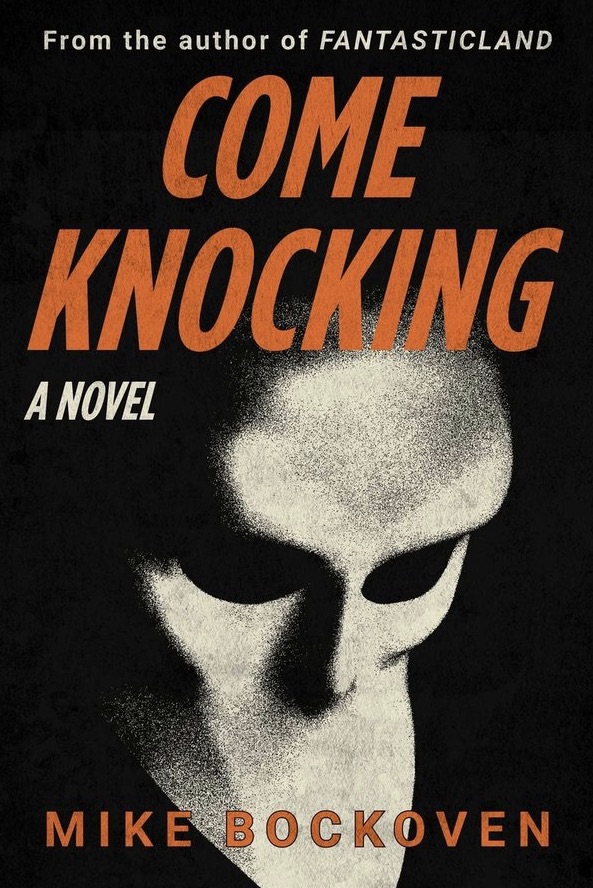
    Mike Bockoven’s novel Come Knocking doesn’t have much in common with It Ends—it’s a more grounded, less existential kind of horror story—but I enjoyed it just the same. It’s told in the style of an oral history, with multiple narrators telling an unknown questioner about their experiences.

    And the premise is kind of genius. It’s about a wildly popular theatrical experience that takes place across hours and multiple floors of a building. People pay hundreds of dollars and wait for months to attend the show, which can be enjoyed in virtually any way possible—you can follow characters as they move through the different levels of the building, and each narrative tells its own story. We know at the beginning of the book that something bad happened at that play—people died—but we don’t know what exactly happened, or how, or why.

    I had a lot of fun imagining what it would be like to attend the play at the center of Come Knocking, and I was intrigued enough by the mystery to keep whipping through the book. Ultimately, I had a lot less fun with the last quarter of the book, and I also didn’t think that the disparate voices that make up the oral history were clearly distinguished from each other.

    But like It Ends, Come Knocking is a story in which the journey is more important than the destination. The description of the play’s elaborate hellish scenarios and deep lore is intriguing, and the meta-culture that develops around the play, with haters and lovers alike piling into subreddits to build up or tear down the experience was interesting and rang true. It felt honest enough to me that the horror was bearable, without being overbearing. And that’s about all the terror I can handle this year.

  • I Have No Ideas but I Must Write

    I Have No Ideas but I Must Write

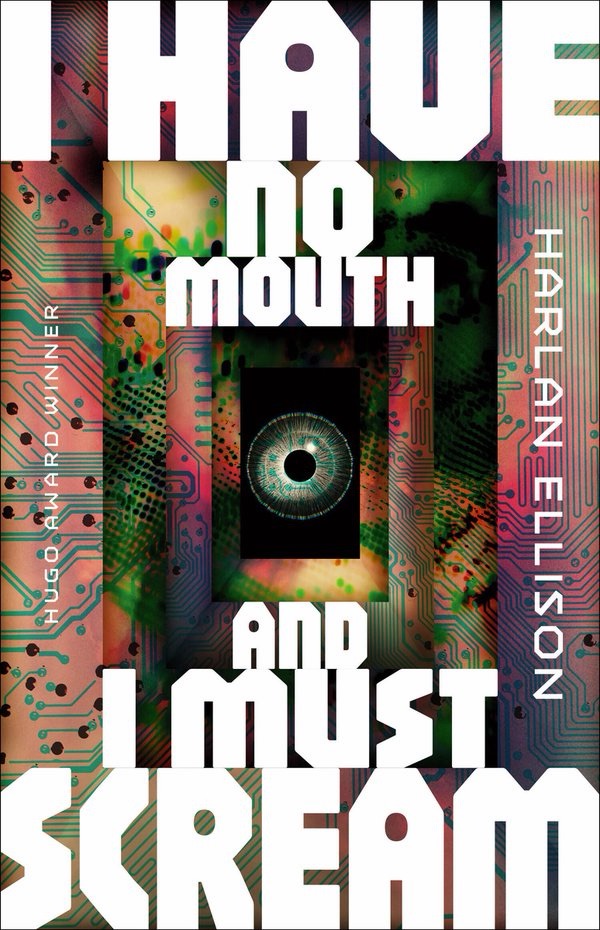
    If you consider yourself to be a sci-fi fan and you haven’t read Harlan Ellison’s short story about an artificial intelligence at the end of human history, “I Have No Mouth and I Must Scream,” you should do everything in your power to amend that error. Not all of Ellison’s work is aging well, but this story is the rare sci-fi classic that feels more relevant here in the far-flung future than it did on its publication.(It’s also a noteworthy work because it has one of the best titles in the entire history of fiction.)

    There’s a fancy new edition of the story in a standalone volume with all the special-edition clichés—supplementary documentation, a look at the history of the story and its impacts over time, that kind of thing.

    Unfortunately, this new edition also includes a piece in which sci-fi author J. Michael Straczynski interviews an AI about “I Have No Mouth and I Must Scream” and reverentially reports back the AI’s hackneyed observations. It’s the kind of flighty idea that might have been forgiven had it been published three years ago when LLMs first made a big splash, but at this late date, when authors and artists are actively protesting everything that AI stands for, it feels weirdly credulous and incurious. It’s a shame that the latest publication of Ellison’s classic story has the stink of Straczynski’s essay stuck to its shoe.

  • When the Gossip Behind the Book Is Juicier Than the Book Itself

    When the Gossip Behind the Book Is Juicier Than the Book Itself

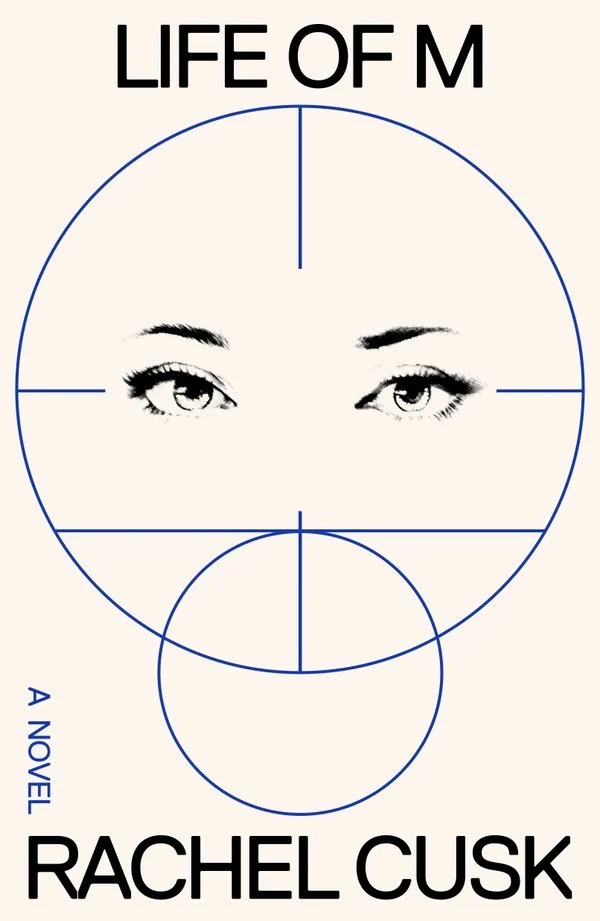
    If you’ve been paying attention to literary news over the last few months, you know that Rachel Cusk’s new novel, The Life of M, is supposedly a roman á clef about Natalie Portman. Cusk was supposedly friends with Portman, and rumor has it that Portman was furious that Cusk mined anecdotes that were shared between friends for a book.

    Unfortunately, the backstory is the only noteworthy thing about the book. The Life of M feels like a novel-length version of a Deuxmoi blind item. The reader is left to wonder about the realities of all the anecdotes in the book—who is the dancer who insulted M’s dancing in the “ballet film,” for instance? It’s hard not to imagine Cusk chuckling and muttering “wouldn’t you like to know?”

    I hated this book. It made me feel complicit in something dirty, and it didn’t offer anything beyond its sleazy backstory. The experience of reading The Life of M makes me retroactively question my enjoyment of Cusk’s other books. Avoid this one at all costs.

  • Her Own Worst Critic

    Her Own Worst Critic

    Taylor Tomlinson is my favorite working stand-up comedian. She’s a genuinely funny person who excels at crowdwork and spontaneous jokes, but the thing that really appeals to me is her writing. Her jokes are often exquisitely shaped and delivered, often with one word landing in just the right place to completely change the meaning of everything that came before.

    So I was excited to read Tomlinson’s new memoir-in-essays, Actually, Nevermind. If you enjoy her comedy, I recommend listening to the audiobook, which she reads herself. But if you’re not already a fan, there’s probably not a lot here that you can’t already find in one of her four Netflix specials.

    In general, I found the book to be kind of depressing because Tomlinson is incredibly hard on herself. She continually talks about how unattractive she is, she mocks her weight, and she throws off a few jokes that undermine her intelligence. They’re little asides—all unfounded, as far as I’m concerned—that suggest her internal critic has possessed uncontested control over Tomlinson’s self-image for probably her entire life. After a while, the negativity bummed me out.

    And a significant portion of the book is given over to Tomlinson’s story about what happened when she launched a late night game show following Stephen Colbert’s Late Show. It feels as though Tomlinson is doing damage control for a situation that didn’t need defending. She hosted two seasons of the show and then wanted to step down because it wasn’t working for her, but people in her orbit seem to have painted the whole experience as a betrayal of God, Colbert, and country that she must atone for.

    If you’re new to Tomlinson, I’d urge you to just watch her comedy specials rather than starting with this book. But if you’re a fan, why wouldn’t you want to spend a few hours with her in your earbuds? I’ll take all I can get.

  • A Portrait of the Artist as a Young Jackass

    A Portrait of the Artist as a Young Jackass

    It’s not an original thought to point out that I was absolutely insufferable in my 20s. Most of us were—especially if we devoted our life to artistic pursuits. I look back on myself in those years with exasperation, annoyance, and more than a little disgust.

    I was also exasperated, annoyed, and more than a little disgusted with the protagonist of Zoe Dubno’s debut novel. Happiness & Love. That’s by design—she’s an aspiring writer in her 20s. And the book is very true to that experience. I

    t’s told in one breathless paragraph detailing a single dinner party, with our narrator returning to New York City after an extended European trip. Partially against her will, she is re-entering her social circle of aspiring artists and socialites. She is absolutely disgusted with all of them, and herself, but she doesn’t see any other way forward.

    With all the adjectives that I deployed in the first three paragraphs, it might surprise you to learn that I really enjoyed Happiness & Love. The main character is as identifiable as she is insufferable, and she at least has the good sense to know it.

    I recommend the audiobook version of the book, which is read by the author. I don’t dare to guess how much of the book is based on her own experiences, but the tone of her voice and the weariness she brings to the narration feels very authentic to the story.

    Maybe you’re reading all this and wondering “why the hell would I want to spend a bunch of time with an insufferable young artist?” That’s a fair question. But the odds are good that if you’re older than 30, you’ve already spent a decade with an insufferable young artist.

    Happiness & Love is a portrait of one such wretched soul who is on the cusp of becoming something new. In getting to know her, for maybe the first time in my life, I felt a little bit of grace for the absolute menace that I was back then. That’s no simple feat.

  • What I’ve Been Reading and Writing: September 2025

    What I’ve Been Reading and Writing: September 2025

    Hi!

    Slightly different format this month, starting with three random points:

    1. I’m thinking about changing the frequency of this email, from monthly to biweekly or weekly. It would still be free, of course, but each individual email would be a lot shorter rather than one big one at the end of the month. I sometimes miss the cadence of blogging and being able to write about something immediately—writing shorter pieces about politics, movies, news, art, Seattle stuff. I’m curious what those of you who receive this email think about that. Too much? Don’t mind? Let me know if you have any opinions.
    2. For you poets out there, I wanted to let you know that the excellent crew at Expedition Press will open submissions to their broadside contest from October 1st to 31st. The winner will receive 20 letterpress broadsides of their poem and $100 cash. I’m sharing this because Expedition Press does gorgeous work printing literary works by hand, and even if you’re not a poet you should be aware of them. 
    3. And you should get excited for this year’s edition of the Short Run Comix Festival, which features comics and art from around the country and the world. This year’s festival happens on Saturday, November 1st, and it will be Short Run’s first outing in a new venue: The Seattle Design Center in Georgetown. You can learn about riso printing, watch some hand-drawn animation, and even hear from the Pulitzer Prize-winning political cartoonist Ann Telnaes, who recently resigned her job at The Washington Post after they axed one of her cartoons that was mildly critical of Post owner Jeff Bezos. This is, for my money, continually the most important (and fun) arts festival in Seattle, and I’m excited to see how it grows and changes in its new home in Georgetown.

    I’ve Been Reading

    Seattle author G. Willow Wilson’s latest comic with artist M.K. Perker, The Stoneshore Register, is a quiet little masterpiece. It’s about a young journalist who gets a job writing at a tiny newspaper in a coastal Washington state town where weird things happen. It’s a perfect mix of Our Town and Twin Peaks, and a hopeful refugee narrative. It’s right up there with my favorites of Wilson’s work.

    Ken Bruen’s The Guards is about a disgraced alcoholic former police officer in Ireland who tries to become a private investigator, even though Irish law doesn’t recognize private investigators as a thing. The mystery in this book takes a back seat to the protagonist’s beautiful observations about addiction and depression—a lyrical and funny and thoroughly Irish novel. I loved it and I’m looking forward to reading more in the series.

    Jordan S. Carroll’s short book-length-essay Speculative Whiteness: Science Fiction and the Alt-Right got my attention when it won the Hugo Award earlier this year. It’s a scholarly work that looks at the close relationship between white supremacy and science fiction, and it just may forever change the way you think of the genre. 

    Celine Saintclare’s Sugar, Baby is a novel about a poor young woman who begins flirting with and dating wealthy older men in exchange for favors. It’s a sharp and sad novel about class, power, and sexuality.

    My favorite thing about Richard Russo is that he writes amazing smartasses. Unfortunately, there aren’t any smartasses to be found in his novel Chances Are. Instead, it’s the story of three young men and their friendship with (and lifelong obsession over) a young woman who disappears soon after they graduate. It’s a very readable novel, but I missed the wiseass spark that Russo brought to his novels Empire Falls and Nobody’s Fool.

    Gifts of the Crow is a super-interesting book from local authors about crow behavior, but in the decade-plus since it’s been published a lot of its most interesting factoids have been chopped and channeled and shared on the internet, so it felt like I had read about 65% of this book already.

    William Sloane wrote two short novels of Lovecraftian cosmic horror. They’ve been collected under one cover by the New York Review of Books and titled The Rim of Morning, with a new introduction by Stephen King. Unfortunately, these are hardly lost classics. Sloane slowly builds the terror in his stories and then fails to pay them off in any meaningful way, resulting in one long build to nothing much at all.

    On vacation this month, I embarked on my annual re-read of Tove Jansson’s The Summer Book, a collection of short scenes about a grandmother and her granddaughter spending a bittersweet summer on an island off the coast of Finland. It’s an incredibly special book for me, and I always find something new in it every year. This year, the sequence that most stood out for me centered around a filthy old semi-haunted bathrobe. The week that I read The Summer Book, a movie adaptation of the book starring Glenn Close opened in a few theaters. I’m still not sure if I’m going to watch it or not—I think my relationship to the book is strong enough that my relationship to the characters won’t be changed by seeing them onscreen, but I’m not entirely sure I want to risk it.

    I’ve Been Writing

    My bookstore profile column this month focuses on Haunted Burrow Books, a horror-centric bookstore on Capitol Hill. It’s in a temporary space that’s planned to be torn down, so the future of the shop is uncertain. But I hope it picks up enough fans in the meantime to ensure its continued survival.
    I wrote about the most interesting new-in-paperback debuts for the month.

    And I also interviewed RF Kuang, who’s one of my favorite young authors, about her very funny new dark academia novel Katabasis. She was so smart and forthcoming in her conversation with me. She admitted that her novel Yellowface was probably too mean—it was written during the pandemic, when she mostly was seeing the world through Twitter scrolling—and that she would probably never write another book like it again.

    In one part of the conversation that didn’t fit in the published piece, Kuang also explained why she hasn’t taken to Bluesky in the same way that she used to post on Twitter. “People just aren’t as funny on Bluesky,” she explained. “When Twitter was funny, the humor was amazing. People could be hilarious on Twitter. There’s just not a public commons where people can be that funny anymore.”

    She also talked about art that’s in conversation with her latest book, including the movie Whiplash and the novel Jonathan Strange & Mr. Norrell.

    Kuang also gently corrected me when I referred to the protagonist of her novel The Poppy War as a hero. “I just don’t really believe in singular heroes, solving widespread social problems,” Kuang said. “I think it takes collective action and a tremendous amount of solidarity” to make lasting change, “and that is antithetical to this very neoliberal idea of the singular hero.”

    This is something I’ve wrestled in with my few attempts at writing fiction—the idea of one person changing the world has always felt hollow and childish to me, and maybe that’s why Kuang’s fiction appeals to me on such a fundamental level. She’s struggling with real ways to change the world in her novels, and as I age that becomes, more and more, my favorite kind of fiction.

    That’s all for this month. Maybe I’ll see you a little sooner than next month. I hope you’re doing well.

    Paul