Author: Paul Constant

  • What i’ve been reading and writing: January 2025

    The new administration has been as shitty and chaotic and brutal as I expected, and Elon Musk actually managed to sink lower than my already-basement-level expectations by outing himself as a Nazi. Religious leaders are posting about “the sin of empathy” and calling on people to “properly hate” other religious leaders who ask Trump to lead with mercy. All of this is bad, but it’s not shocking.

    The one thing that has shocked me the most in the past couple of weeks is how eagerly the media and corporations have bent down to kiss the ring of the incoming president. If you think that’s an overstatement, I urge you read this breathless “analysis” by a CNN reporter about Trump’s “testosterone-fueled return to power,” making “hyper-confident move[s]” and giving “stunning, freewheeling news conferences” and I ask you to explain to me how this is any different than something state media would write in a dictatorship. The fact that Google is changing “Gulf of Mexico” to “Gulf of America” on its Maps product is another sign that the most powerful institutions in the country are simply bowing down to get out of the way of the would-be dictator.

    The media is largely trying to tell us that we’re not seeing what is right in front of us by playing the both-sides game, and big corporations are re-segregating their institutions by repealing diversity, equity, and inclusion programs that were put in place to combat racism, sexism, and other forms of institutional bigotry.

    Things are not great, is what I mean.

    I have to acknowledge that I’m saying this from a place of privilege. People I know have already witnessed ICE raids and been stripped of human rights because they identify as trans, and other people I know have lost their jobs or are likely to lose their jobs because of the “shock and awe” wave of executive orders trying to unspool the last little scraps of progress that have been made by Democratic presidents stretching back to LBJ. 

    I also know that eventually, political and community leaders will step forward and bring a real fight to Trump and Trumpism. I don’t expect to see those leaders come from current Democratic leadership. Chuck Schumer is not going to save us. And I haven’t been able to listen to any of the Crooked Media podcasts since the election, for instance, because it’s pretty clear that Obama Democrats aren’t coming to the rescue, either. 

    There is a cavalry on the way. I believe that. Even though the media bizarrely gave Musk’s Nazi salute a pass, ordinary Americans responded with the appropriate amount of shock and horror. Probably the strongest institutional response to Musk’s action came from ordinary people on Reddit, who immediately banned links to Musk’s toxic social network. Good for them—I wish the media had even half the clarity and courage of convictions that they demonstrated. The BBC, for instance, said Reddit was responding to Musk’s “arm gesture,” which is a shamefully toothless descriptor of something that we all saw with our own eyes.

    Despite everything you’re seeing on TV and in the papers, you’re not losing your mind—this isn’t a normal situation, things are unstable and their actions are unlawful, and Nazis are trying to steal democratic power from the people. I think a majority of people are disgusted and waiting for a person or a movement they can circle around. 

    But the cavalry is going to take time, and this last week-and-a-half has been pretty demoralizing. I predict a painful spring full of depressing headlines, and then we’ll have to see where the media and state and local leaders land in the summer, after the shock of the new fades off. For right now, it’s all so very crushingly goddamned disappointing.

    I’ve Been Writing

    For my Neighborhood Reads column, I wrote about Metsker Maps in the Pike Place Market, which is an incredible map and geography-themed store full of maps and books and map-and-book-related products.

    I’m on the Pitchfork Economics podcast this month, talking with journalist Kurt Hackbarth about the surprising success of Mexico’s progressive left, which has stayed in power at a time of unrest by keeping broad economic successes at the forefront of everything they do. It’s an optimistic conversation during a pessimistic time.

    I wrote about 24 of the most exciting books that are already on the schedule to be released in 2025 at the Seattle Times. 

    And I wrote about some of the most promising paperback releases of January. 

    I’ve Been Reading

    (I’ve read a lot while on holiday in the past month, so I’m only going to touch on the most noteworthy books.)

    Help Wanted by Adelle Waldman is probably the book that most surprised me this month. It’s a novel about the small political machinations that follow a shift in staffing at a fictional big box chain store in rural America. If you’re looking for big thrills or toothsome anticapitalist screeds, you’ll have to look elsewhere. But speaking as someone whose first job was at a Sears, Waldman absolutely nails the sticky interpersonal dynamics of work in a chain store. Modern American literary fiction doesn’t often devote itself to the working poor, and this book deserves credit for doing so with a lot of heart.

    Jason Pargin’s I’m Starting to Worry About This Black Box of Doom is a fun road trip adventure novel about a lazy young man who winds up driving a mysterious woman and her titular Black Box of Doom across country, kicking of a wild chase that threatens to destroy America as we know it. I really enjoyed how this one played out—I felt like I was watching a modern version of Cannonball Run or Smokey and the Bandit, with a lot of social commentary about incels and social media mixed in.

    Backflash, a comic written by Mat Johnson and illustrated by Steve Lieber, is a fantasy story about a man who discovers that he can use nostalgia to mentally travel through time to witness events in the past. I didn’t see this book get a lot of coverage in the comics press, and that’s a real shame—it’s one of the more inventive graphic novels I’ve read recently. It’s funny and it addresses adult issues with a lot of insight and heart.

    The Use of Photography by Annie Ernaux and Marc Marie is an interesting short non-fiction book written by a couple who document their passionate affair in photography. At the same time, Ernaux is undergoing treatment for breast cancer and the two realities—of unfolding love and growing fear—begin to interlace.

    I was intrigued to learn about a popular young novelist who goes by the pseudonym Homeless, so I read their most recent novel, My Heart Belongs in an Empty Big Mac Container Buried Beneath the Ocean Floor. I daresay that the book, about a heartbroken young person who perceives their own depression as an ever-present cartoon whale, is not for me. But I would happily give this book to any young person who is struggling with learning how to be a person in their early 20s. Just as Mark Leyner taught me about the absurdity of modern life when I was a young man, I think Homeless is probably helping a lot of young people learn about sincerity and irony in modern times. 

    What I Want in a Music Service

    I think I’m getting rid of my Spotify account. Last year, Spotify announced that it simply wouldn’t pay musicians whose songs were streamed less than 1000 times in any given year, which strikes me as outright theft. And the company has laid off a bunch of employees and instead stuffed their product full of broken AI. 

    For instance, if you wonder why your Spotify Wrapped absolutely sucked raccoon taint this year, it’s because Spotify leadership fired the human being who designed Wrapped and figured AI would do a good enough job. Instead, people’s Wrapped were inaccurate and half-assed. 

    One thing about me is that I absolutely hate listening to commercial radio because I can’t stand hearing the same music over and over again. My brain lights up whenever I find new and new-to-me music, and my brain feels itchy when I’m exposed to classic rock. Spotify used to do a great job of recommending new music that surprised and delighted me, but now the algorithm is so choked with paid promotions and dumbed down that it’s almost impossible to find anything interesting that I haven’t heard a million times before. 

    And even worse than all that, some people are accusing Spotify of actively producing music with AI in-house in an attempt to stop paying human artists for their work. Everything they’re doing is basically the opposite of what an organization intended to support musicians and people who love music would do. 

    At the moment, I’m on Apple Music and while the recommendation engine isn’t great, it’s also not hitting me with a paid promotional pop-up for a band that I have no interest in every time I open the app, either.

    But there are three features that I would kill for in a good music service that to my knowledge no music service currently offers, and I thought I’d throw them out into the universe in the hopes that someone would create them:

    1. A TRUE RANDOM SHUFFLE BUTTON. Everyone knows that shuffle is broken, right? When I hit “shuffle” on a playlist with three thousand songs, I shouldn’t hear the same two songs every time. This has been a problem going all the way back to the iPod days, when my beloved little Shuffle device continually returned to a handful of songs and seemingly would never play certain other songs. Why is a true “shuffle” feature so goddamned hard to implement?
    2. A “PLAY ONLY NEW-TO-ME MUSIC” BUTTON. Both Apple and Spotify lean way too hard on playing music that I’ve already liked in all their recommendation playlists. This reminds me of the online retail problem where if you buy a waffle iron, every targeted ad you see for months afterward is trying to sell you more waffle irons because it assumes you must like waffle irons. Sometimes I want to hear only new things, and streaming services make that incredibly hard to do.
    3. A “PLAY ONLY MUSIC BY WOMEN” BUTTON. It took me decades to realize that I just generally prefer music sung and performed by women, but most of the playlists presented to me by music streaming services are way overindexed in favor of male artists. I’ll occasionally find good women-only playlists on services, but I’d love to be able to create that experience whenever I want. (And I guess they could make a “PLAY ONLY MUSIC BY MEN” button, too, but clicking that button would frankly be sicko behavior.) 

    Anyway, I’ve done a lot of spiraling, complaining, and dwelling in darkness this email, so let me leave you with something that I absolutely love: I think FKA twigs’s new album Eusexua is the first perfect album of 2025. I’ve been listening to it end-over-end for the past week and I keep discovering new things to love about it.

    If you prefer guitar-based rock, this might not be the album for you. It’s packed with electronic beats and feels very much like a club album, but at its heart Eusexua feels like a deeply personal statement, and I don’t feel comfortable only categorizing it one way. 

    I’ve always been an FKA twigs fan, but this album feels like an artist coming fully into her voice. If you enjoy Bjork or electronic-era Madonna, this could be your thing. And I also recommend listening to it as an album, from beginning to end. There’s a very intentional journey strung through these songs, and that journey has been a rare joy for me in a month that has otherwise been almost entirely joyless. 

    That’s all for this month. Please remember to take care of yourself, and please don’t be afraid to ask for help.
    Paul

  • What I’ve been reading and writing: December 2024

    Hello! 

    Once again, I’m writing this newsletter a little earlier in the month in order to take a couple of weeks off from writing. So if something terrible has happened, or some news has broken that seems like the kind of thing that I might ordinarily comment on, you can rest assured I’m not ignoring it—I’m just writing this from the past. I generally spend the last newsletter of the year writing about some of my favorite art of the year. And in that respect, it’s honestly been kind of a tough year. 

    I saw some movies I enjoyed. Conclave is a lot of fun if you like grown men in full-length gowns gossiping about each other, for instance, and Carrie Coon delivered two great performances in Lake George and His Three Daughters, both of which are interesting films. I liked the way Anna Kendrick’s movie Woman of the Hourdebunked some of the true crime myth-making around serial killers. Dune 2 was a great sequel. Challengers was interesting, and so was The Bikeriders. Tilda Swinton’s performance in Problemistawas an all-timer, and even I was charmed by Glenn Powell in Hit Man. But none of those movies rocked my world—they all had some serious flaws or felt underdeveloped. Maybe this is an aftereffect of the writer’s strike that delayed projects in Hollywood last year, or maybe it’s pandemic-related malaise, or maybe it’s just me and my mental state. 

    For TV, it was much the same. I liked the usual sitcoms including Only Murders in the Building and What We Do in the Shadows, but big and largely enjoyable shows like Interview with the Vampire, Penelope, Kaos, and The Decameron all fell short of blowing my mind. My favorite show of the year was an old one: I devoured both seasons of Detroiters, which I had never seen before, in the haze after the election. It was a great little comfort watch, very funny and a bigger-hearted than Tim Robinson’s current Netflix show, I Think You Should Leave. And Sam Richardson is always a goddamned delight.

    In books, September was a big month for me in that Dash Shaw’s exceptional comic Blurry, and John Ganz’s history When the Clock Broke. Charlie Huston’s magic-as-nostalgia novel Catchpenny was one of the most fun things I read this year, along with The Husbands.  New Nigeria County was probably my favorite audiobook—maybe a cheat because it’s a full-cast novella that wasn’t published in book form and created specifically for audio. 

    And that’s it. To be clear, I’m not making the case that the entire world is entering into an artistic slump—I’m mostly failing to get into a place where I can successfully receive art that moves me. I didn’t do a good job of going to readings, plays, and art shows this year at all, for instance, and I feel like I spent too much time doing comfort reading and viewing, which feels good in the moment but is often kind of empty calories in the long haul. I’ll try to be a better consumer of art next year.

    I’ve Been Writing

    I wrote about 11 new paperback releases in December that you can spend your bookstore gift cards on. 

    And I interviewed four great local bookstore owners about their favorite cozy reads of the year. The booksellers behind both Nook and Cranny Books and Ridgecrest Books also were kind enough to share their favorite books of the year. 

    I’ve Been Reading

    Jasper Jones is an Australian novel about two boys who come across a dead body. It’s kind of an Australian John Irving novel—a big and complicated story that’s a little bit cliche and a little bit unsettling. This was a gift from someone who went to Australia, and it was interesting to read some popular fiction from there that largely hasn’t made a dent on this side of the world. 

    The Work of Art is a big old coffee table book full of interviews with artists about their process. I took this out from the library because I don’t have much need for giant art books around the house, but it’s got some very interesting interviews. I don’t recommend reading it all at once like I did—this is definitely a book that’s best enjoyed dipping into occasionally. 

    I listened to Entitlement by Rumaan Alam a while ago and the audiobook really didn’t work for me. But I just took the physical book out from the library as a Peak’s Pick selection and read it and enjoyed it a great deal. It’s about a poor young Black woman who goes to work for a billionaire who wants to give his money away, and there’s a lot of very incisive observations about class in America.

    Consent is a memoir by novelist and painter Jill Ciment about her relationship with her husband of decades, who she met when she was a 17-year-old student and he was her 47-year-old married art teacher. She previously wrote a memoir about their relationship, but that was before the time of Me Too, and now she’s reinvestigating her feelings now that she has a new vocabulary to explain the beginning of her relationship. She would certainly have been described as being groomed if the two met under the same circumstances today, and her feelings about their marriage have changed with the times. It’s a thoughtful and interesting book. 

    I really liked the Misery-in-reverse premise of The Last Word, Taylor Adams’s new thriller—it’s about a woman who gives a self-published book a one-star review on Amazon and the author tracks her down and begins tormenting her. But my problem with the book arrived about halfway through—spoilers, I guess—when the author is revealed as an impossibly cartoonish incel, complete with fedora, neckbeard, katana, and Mountain Dew addiction. I made the rare decision to abandon this book halfway through because it just became a litany of incredibly easy “fuck this nerd” jokes. It’s possible that later on in the book Adams flips the script on all the fat-shaming and easy mockery of socially awkward men, but I wasn’t invested enough to push my way through. 

    I’ve read a couple of interesting sci-fi books this month. Chrysalisis technically a podcast—it’s a complete story told as part of the Dust podcast series—but I listened to it in one continuous four-hour stretch and it is absolutely a sci-fi novella. It’s about an AI that has survived the human race and taken to the stars, only to seek vengeance on the alien race that made Earth unlivable, and it’s a full-cast ensemble. And Helen Phillips’s Hum is about a world where robot helpmates are everywhere, and it has a lot to say about our modern panopticon, with its ever-present advertisements, viral parent-shaming, and endless subscriptions. This is one of the better books I’ve read this year, I think.

    Thus Endeth This Curséd Year

    Holy cow was 2024 not a fun year. My personal life was fine and there were lots of enjoyable moments, but as I’m writing these words in the middle of December I’ve never been so eager to put a year in the rear view mirror. Part of the problem, too, is that I know that next year’s headlines are going to be an endless slog of frustration, misery, and chaos. 

    I’m not a New Year Resolution kind of person, but I’m going to make an effort to try to figure out how to be smarter about my energy expenditures in the months ahead. I definitely need to be smarter about choosing the right moments to worry, and to act, and to rest. 

    And in the interest of not ending on a down note, I do have some fun comics projects coming up next year, including one I should be able to write about in the January edition of this newsletter—February at the very latest.

    I hope your 2024 was filled with fun and art and that you got to share it with people you love. And I hope that 2025 is full of more art and sharing and people we love.

    Happy holidays,
    Paul

  • What i’ve been reading and writing: November 2024

    Hi!

    Lots of you wrote back in response to the special newsletter I sent out right after the election. I read all of the emails and I tried to get back to everyone but there were a lot of emails in a short time, so I apologize if I missed you. Thank you for being such a thoughtful and engaged group of people.

    I want to be clear about where I am because I know for a fact that a lot of you are really freaked out right now: I don’t feel as though the future is lost, or that American politics is a hopeless endeavor. But I do think that this year’s presidential election pushed back years—maybe decades—of progress, and it’s going to be a lot of work just to tread water for the near future.

    What does treading water look like? For one thing, it means we’re going to have to work extra hard to ensure the safety of anyone who’s not an upper-middle-class straight white Christian. There are about to be a lot of laws and policies enacted that will punish anyone who’s part of a vulnerable subgroup. Some of those laws will make life a little more annoying and difficult for those folks. Other laws will aim to strip away some of their rights and their dignity. All of those laws will be morally wrong. You can’t ethically legislate someone’s personhood, or put their essential humanity up to a vote. That means all of those laws and policies will need to be loudly and publicly fought.

    And for another thing, it’s going to take work just to figure out where you should spend your time and energy. That’s part of the plan—the people who are coming into power want you to get tired. They want you to be confused about what’s actually happening and which actions require a response.

    One more thing that I think will be different this time: The culture isn’t going to be as eager to fight as it was in 2016. CEOs have already bowed down to the incoming administration and the mainstream media seems to be doing its best to normalize evangelical Republican extremism. A lot of organizations are going to go out of their way to stay “apolitical,” which of course is a political choice to allow the status quo to unfold.

    There are a couple of things that I need you to remember. First and foremost: Donald Trump is not some all-powerful, omnipotent chess-master who plays five moves ahead of everyone else. He is a grifter who is good at gumming up the system and then taking advantage of the chaos that ensues. If you fall into the bad habit of thinking of him as some sort of a cartoon supervillain who can anticipate and block his opponents’ every action, you’re giving him way too much credit and making your life more difficult for no good reason.

    And if you’re trying to think about where to put your energy in the weeks and years ahead, you should always choose the action that protects people who have less power than you. That means not spending your time posting on social media about some Russian collusion conspiracy when you could be attending a protest to defend the rights of trans people instead. It means not buying the next Maggie Haberman tell-all documenting the palace intrigue of the next administration, and instead supporting Black, Indigenous, and LGBTQIA+ authors and businesses with that money and attention.

    I can’t lie: This sucks. It’s not the future that I signed up for. This is certainly not how I thought I’d spend my late 40s and early 50s. The better world that I imagined myself moving toward feels further away today than it did twenty, ten, or even two years ago.

    But nobody can predict the future. Who knows? This might be the moment when the conservative alt-right’s reach exceeds its grasp. Nobody is ever prepared for the future, and the past always feels obvious in retrospect. As bad as it feels right now, action is always better than inaction, and communal action is almost always better than action taken alone. Finally, no matter what a prevaricating Prince of Denmark might try to make you believe, it is always better to be than it is to not be. So let’s get down to being.

    I’ve Been Writing

    For my day job I wrote this week’s edition of The Pitch, which is all about why air travel has become so terrible over the last forty years, and why it’s not likely to get any better over the next four years.

    For the Seattle Times, I profiled Arcane Comics, a local comic book store that’s been ahead of its time since it launched two decades ago.

    I also wrote about ten of the most exciting November paperback releases.

    And I asked local authors, literary nonprofit leaders, and other luminaries what books they’re most excited about giving this holiday season.

    I’ve Been Reading

    In the days before the election I read War, Bob Woodward’s book about the last days of the Biden Adminstration and the 2024 Trump campaign. The book felt like an outright warning, a siren alerting us to the fact that a second Trump Administration would be meaner, uglier, and much more unhinged than the first. And here we are.

    After the election, I fell into reading biographies. I really enjoyed Dorothy Parker in Hollywood, which was a well-researched biography of Parker’s late-life entanglement in the movie business. I’ve read a few Parker biographies and I’d say that if you were to only read one, it should be this one. All the others are too obsessed with the New York portion of Parker’s life, when in fact her turbulent relationship with Hollywood is far more interesting.

    And while I’ve always found Johnny Carson to be a fascinating figure—his chilly Nebraskan anger was always coiling under the surface even as he served as the most cordial host on American television for decades—I can’t recommend his new biography, Carson The Magnificent, because it is overwritten and overwrought and generally exhausting to read.

    Speaking of smug narrators: All the Worst Humans is a confessional memoir by a man who served as a PR agent for some of the worst people in the world, including Muammar Gaddafi. The author keeps commenting about what a terrible human he is, but the book feels way too braggadocious to be truly desiring of forgiveness. It’s kind of similar to Catch Me If You Can in terms of smarminess.

    One of my favorite newsletters is local author Steven Arntson’s Steven Richard Newsletter, so I was happy to see that he published a compilation volume. If you’re a fan of heightened absurdist comedy like The Onion or McSweeney’s, you’ll find a lot to like here. It’s a collection of humorous pieces including a song about a junk drawer, a few jokes about nihilists and realists, and robot toddlers.

    Seattle cartoonist Brett Hamil is putting out a serial comic now, and I’m really enjoying it. It’s called Bald Knob, it’s the story of the residents of a small town who keep getting in the way of their own ambitions, and issues #1 and #2 are available now. At a time when comics feel a little too invested in maximalism and absurdity, I’ve been enjoying Hamil’s turn toward comic realism. He writes about stupid people who are almost heartbreakingly un-self-aware. There used to a lot of cartoonists working in this space in the 1990s, but now Hamil is out there charting these waters on his own.

    Cities Made Differently by David Graeber and Nika Dubrovsky is an illustrated encyclopedia of different concepts of cities, both real and fictional. They write about cities being constructed in deserts and underwater cities and cities that are panopticons. It’s a very beautifully designed book that will get you thinking playfully about the purpose and forms of cities.

    Lynne Tillman’s novella Weird Fucks was the first fiction I was able to read after the election. It’s a collection of encounters with men—some weird, some depressing, some sinister—and it’s the kind of book you can really just absorb on an aesthetic level, swinging from beautiful sentence to beautiful sentence like Tarzan in a jungle.

    Screenwriter and cartoonist Bruce Eric Kaplan’s memoir They Went Another Way is a book that every aspiring screenwriter should read, because it perfectly captures the absurdity and frustration of working in the entertainment industry. Kaplan presents the rise and fall and rise and fall and maybe rise but then complete and total fall of a single project—a sitcom about a May/December romance starring Glenn Close and maybe Pete Davidson—in a series of diary entries. It’s a mundane book, relaying all the meetings and canceled meetings and boring texts and small talk that go into making a TV show in the streaming era, but Kaplan’s bracing honesty about all the bullshit that a Hollywood writer has to endure makes the book feel raw and honest. It’s like Waiting for Godot, only Godot is a Hollywood studio rep holding a paycheck for hundreds of thousands of dollars.

    On Being Wicked

    I was very entertained by the Wicked movie. It’s got singing, dancing, excellent performances, talking animals—what more could you ask for?

    However, the entire phenomenon of Wicked—by which I mean the bestselling book that came out in 1995, the Broadway musical that has sold out shows for 21 years, and last week’s number one movie in the country—feels to me like a symptom of a larger problem in American entertainment.

    In short, I think too many writers over the last 30 years or so have taken the basic writing lesson that “every villain is the hero of their own story” to instead mean that “every villain is a hero until they make a single, tragic, bad decision.” And that’s just not the case.

    The drumbeat of films and books starring the great villains of popular culture has been increasing in recent years. Malificent, the Joker, Darth Vader, and even Cruella DeVille—the aspiring puppy-skinner!—have starred in vehicles meant to transform them into sympathetic figures, tormented by complicated pasts and destined for tragic futures.

    You might argue that this storytelling trend—along with shows like the Sopranos, Breaking Bad, and Ozark that put villains in protagonist roles—is a good thing because it reveals the inherent humanity behind even the worst individuals.

    And while I am desperate for true reform in our criminal justice system that humanely addresses the systemic burdens that create criminal behavior, I don’t think that rehabilitating the image of cinematic monsters is a real first step toward that better world. This doesn’t feel like an attempt to be restorative, or to find the humanity in those who have wronged us; it feels much more sinister and inward-looking to me.

    The truth is that sometimes, there are monsters. Nothing could justify the heinous acts that Hitler urged people to commit in his name. Charles Manson deserved to be locked away from society. Donald Trump undoubtedly had a wretched childhood, but that doesn’t explain away his lusty desire to execute the Central Park Five or to separate children from their families and place them into internment camps.

    So why do our entertainment conglomerates feel the need to retroactively psychoanalyze some of our most hissable villains? Part of it is just the unquenchable thirst for content: Every idea has to have the last ounce of interest squeezed out of it, and villains have always occupied an outsized chunk of audience mindshare.

    But I wonder if some of it has to do with self-reflection. The more we learn of the world, the more it becomes clear that the wealthiest people in the world are basically looting the poorest people in the world. With our inability to address climate change, we are looting the future in order to avoid changing the way we live in the present. We seem more aware of our own monstrousness than in any other time in history, but we also seem unable to do anything about it. So why not distract ourselves with films that serve as a meditation on the sympathetic, vulnerable, innocent child inside Darth Vader? If he’s a good guy deep down, aren’t we all?

    I think a lot about this graphic, which shows that in one Star Wars video game, a majority of players in the developed northern hemisphere chose to play as the Empire while players in the southern hemisphere chose to play as the Rebel Alliance:


    What does it mean that our collective unconsciousness seems to be desperate to sympathize with the villains and idolize the evil empires? It almost feels too on-the-nose, but maybe the simplest answer is true: Maybe, after all is said and done, we are the baddies.

    Yeah, that about sums up my mental state. Maybe you’re doing something fun and uplifting and cool right now? If so, tell me about it by responding to this email. I could use some happy news.

    Anyway, take care of yourself.

    Paul

  • Let’s talk about the election

    Hi!

    I know I usually post once a month, and I’m sorry to bother you a second time in one week. But I feel compelled to publish an additional post because…well, frankly, I’m currently in the darkest sustained emotional state that I think I’ve ever been in, and I assume that some of you might be in a similar spot. Tuesday was brutal, and the darkness doesn’t seem like it’s going to lift anytime soon.

    But a piece of information and analysis in my boss Zach Silk’s newsletter today helped me to make a little sense of what happened in this election, and I wanted to share it with you. We Americans often think of ourselves and our politics as happening in a vacuum, but that’s simply not true. We very much live in a global community, and our politics tend to follow global trends. 

    And friends, right now the globe is in the middle of A Big Trend. First, take a look at this graph from the Financial Times. You don’t have to understand all of it for it to make sense; I’ll give you the context you need below:

    Okay, so. What this chart is telling us is that the incumbent parties in every single developed country on earth that had an election this year have lost a significant amount of vote share. This has never, ever happened since World War II, which is when they started keeping these kinds of records. 

    Everywhere on earth, people are anxious because of the pandemic and the high inflation and weird economic conditions that followed the pandemic. And they’re responding by Throwing the Bums Out, regardless of who “the bums” are. They want to punish their leaders because of the massive disruption they’ve experienced in their lives.

    What does this mean? First of all, it means that I don’t think there’s anything the Harris campaign could have done to stop this global tsunami from hitting America. There’s no single policy position she could have taken that would turn this around. Americans didn’t reject her because of her messaging, or because too many celebrities endorsed her.

    In other words, absolutely do not believe those dumb pundits who are saying that Harris lost because of trans rights, or because she’s a woman of color. Anyone who says the electorate is sending a clear message about “woke identity politics” and pronouns is simply projecting their own bigotry onto reality. Anyone who says this is proof that Americans will never elect a woman for president is wrong. That’s all bullshit. It’s just not true. 

    No Democrat could have won this election, unless maybe they were from waaaaaay outside the administration and they actively ran against Biden and pretty much every other establishment Democrat the whole time. It was a virtually impossible job. 

    I realize that might sound fatalistic, but there’s actually some good news hidden in that chart. If you look at where America is—it’s the red dot—you’ll see that it’s at the very top of the vertical line. That means Harris actually outperformed every other incumbent party in the developed world. 

    But there’s no second-place medal in politics. Winning is everything, right?

    That’s not quite true. That chart shows us that the absolute worst-case scenario could have been a bright red electoral map and a downticket disaster for pretty much everyone with a (D) next to their names. That was a realistic scenario that we were facing, if we lost by 10 or 20 points like those other democracies this year. But instead, Democrats kept the House and the Senate pretty close, and Democrats won state offices around the country. 

    These election results are the difference between an unchecked Trump Administration romping their way to dictatorship and a world in which state attorneys general and lawmakers fight those bastards every single step of the way, slowing them down and tossing monkey wrenches into their machinery. 

    Most importantly, Harris’s best-in-the-world performance means that all that work you did during the election helped protect us from that worst-case-scenario loss. I don’t ever want you to think that what you did didn’t matter. You made a huge difference this year, and you will continue to make a difference. You fought back a historic tide and you created an opening that we might be able to use to escape the worst of what’s to come. 

    Please don’t mistake any of this for complacency, or a sign that we should allow the Democratic status quo to stay in place. I’m not sending another goddamned red cent to any of those vultures who send hyperventilating fundraising text messages with siren emojis ever again. That kind of glib elitist politicking is in the past, and it can stay there. 

    We need to rip up the party organization and start over again. We can’t rely on the exhausted Clinton-Obama coalition to eke out another win; that coalition collapsed in this year’s election. Instead, we need politicians who can find new ways of communicating new ideas to the American people.

    The 2026 midterm elections need to be transformational, sending a convincing message that the American people will not stand for any of this phony strongman bullshit. And because of what you did this year, I do believe that there will be a 2026 election. It’s not much hope, but it’s enough for me to wake up in the morning.

    So basically, I’m writing to say thank you for making a difference. There’s a lot of work to do somewhere down the line, but not right now. For right now please take care of yourself and your people, and make the time and the space to feel the feelings. You’ve earned the right to put yourself back together again at your own pace. I’m going to be doing the same.

    Thanks again,

    Paul 

  • What i’ve been reading and writing: October 2024

    What i’ve been reading and writing: October 2024

    Hello!

    I hope to keep it brief this month because, let’s be honest, the politics are eating our collective brain.

    On the Friday before Thanksgiving, I’m volunteering at the Beacon Hill International School’s 2024 Read-a-Thon. It’s one of the school’s biggest annual fundraising events and also an all-day celebration of books and reading.

    I’ll be reading to first and fourth grade classes that day, and I’m hoping that I can help the International School reach their $12,000 goal to fund student enrichment programs. It is obviously not optimal that our public schools rely on PTA fundraisers in order to support basic programs and student literacy, but that’s a bigger problem that requires system-wide solutions. Until then, we do what we can.

    If you’d like to donate to the Read-a-Thon, you can do so at this link.  I thank you and the students of the International School thank you.

    I’ve Been Writing

    For the Pitchfork Economics podcast, Goldy and I talked to Peggy Bailey from the Center on Budget and Policy Priorities about a report she co-authored explaining the potential catastrophic effects of the House Republican Budget and the Trump campaign’s Project 2025. Bailey is a smart and empathetic thinker who read all the national Republican policy proposals so you don’t have to. This conversation is worth your time.

    For the Urbanist, I wrote an op-ed explaining that even though Seattle leads the nation with its high minimum wage, the city needs to do much more to establish affordable housing for working families.

    I took a lot of time with it, so I’m very happy with how my piece about a new book called Seattle Samurai came out. It’s a profile of a mild-mannered dental technician who in his spare time was a cartoonist inspired by Charles Schulz’s Peanuts. Eventually, he created a comic strip for a local newspaper that documented the Japanese-American experience in Seattle. Now, years after his death, his daughter has finally compiled his comic strips into a gorgeous book that also serves as a tribute to her amazing father.

    For my bookstore column, I wrote about Collins Books, an amazing used book warehouse operating out of a home in a north Seattle neighborhood. It’s not a traditional bookstore at all—in fact, I think it’s the most unique book-browsing experience in all of Seattle.

    I also spotlighted a few of the most noteworthy paperback releases of October.

    I’ve Been Reading

    C.E. McGill’s Our Hideous Progeny is a novel that expands the Frankenstein story, creating a great-niece of Victor Frankenstein who gets into the family business. I enjoyed the way this book built on the feminist tradition of Mary Wollstonecraft Shelley, but I did think that it was maybe a hundred pages too long.

    Evan Friss’s The Bookshop is billed as a history of bookselling in America. And I was riveted throughout the beginning of the book, which demonstrates how bookselling is intertwined with the creation of America thanks in large part to a bookseller named Ben Franklin. I was disappointed, though, to find how New York City-centric the rest of the book is. For hundreds of pages, the only bookstore west of the Mississippi that’s deemed worthy of Friss’s attention is Powell’s. The stuff about the economics of bookselling is a little bit facile, too. While there are currently fewer bookstores now than there were in the 1990s, I’d argue that the quality of bookstores has improved immeasurably, and I also think that today’s booksellers are much better at the business side of things than their predecessors.

    Some book reviewers have positioned Creation Lake at the center of a firestorm. Rachel Kushner’s novel about an American spy infiltrating a radical environmental group is shaping up to be a real love-it-or-hate-it affair. For what it’s worth, I enjoyed the book most for its leisurely thematic explorations—the riffs on neanderthals, French culture, and farming techniques. The central plot felt more like a distraction to me, but I enjoyed Kushner’s prose and will happily follow her to whatever novel she decides to read next.

    I must have watched Tim Burton’s 1989 Batman film 20 or 25 times. It was the first movie I ever bought on videocassette, and I wore that sucker out. So the kid in me couldn’t resist the appeal of John Jackson Miller’s new novel Batman: Resurrection, which is a direct sequel to the 1989 film (and a prequel to Burton’s Batman Returns.) It feels like a novelization of a movie that never existed, and all the characters feel very true to the original films. Miller also devotes a ridiculous amount of space to obsessively solving minor continuity problems in Burton’s original film, like how the Joker’s goons got inside the cathedral where Batman has his final showdown with the villain. It’s all silly fun, but if you were ever a fan of the biggest comic book movie of the 1980s you might find yourself swept up in the drama of this love letter to Michael Keaton’s excellent interpretation of the character.

    Remember to Vote

     As a resident of a vote-by-mail state, I voted as soon as I possibly could—the morning after the ballot arrived in my mailbox.

    I delivered my ballot to the dropbox by 9 am, I received a text saying they had picked up my ballot by 2 pm, and then by 3 pm I got another text saying my signature was confirmed and my ballot would be counted. It was my easiest, fastest voting experience yet, and another reminder that voting can and should be as easy as humanly possible.

    If you can vote early, please do. If you live in a state that doesn’t do early voting, please vote on November 5th, and then reach out to your state representatives to demand that they institute a transparent and inclusive vote-by-mail program. Democracy is better when everyone can easily and comfortably participate.

    Hold tight—we’re almost there. I’ll see you next month no matter what happens.

    Paul

  • What i’ve been reading and writing: September 2024

    What i’ve been reading and writing: September 2024

    Hello!

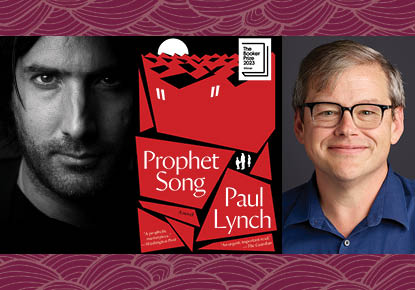
    I have a very special appearance coming up soon that I wanted you to know about. On Wednesday, October 9th at 7 pm, I’ll be interviewing Irish novelist Paul Lynch, author of the 2023 Booker Prizewinning dystopian novel, Prophet Song, at the downtown branch of the Seattle Public Library. It’s free, and it should be a fantastic conversation. 

    Prophet Song takes place in an Ireland that’s lurching to the far right. A mother tries to hold her family together as secret police keep the population in fear and a guerilla war unfolds in slow-motion. It has a lot to say about the global rise of fascism, of course, and also migrant crises and whether everyone is complicit when a whole society turns sour. 

    It might be a lot to ask people to think about dystopia in the year 2024 less than one month before a presidential election, but I have reason to believe that this will be a hopeful conversation. Unlike say, The Road, Prophet Song is too unapologetically human to be a hopeless book. In any case, Lynch is an uncommonly talented, brilliant writer, and it’s always hopeful to hear from someone who can craft heartbreakingly beautiful prose. 

    I hope you’ll join us. Here’s a graphic that someone at SPL made for the event, in which Paul Lynch looks like a rock star and I, uh, do not:

    I’ve Been Writing

    I wrote a little preview of the Bainbridge Book Festival, the first-annual literary festival in Winslow, just steps from the ferry terminal. It takes place this Saturday, October 4th, and it’s absolutely free. (There’s a fundraising event with Nicola Yoon on the 3rd that looks great, too.)

    I interviewed two sisters who are taking over one of the smallest bookstores in town, Madison Books. The bookstore was founded by Seattle bookselling legend James Crossley, who moved away to found a bookstore in St. Louis last year. Crossley’s fingerprints (and heart and soul) were on nearly every book in Madison Books, so I was skeptical that anyone could take such a personality-driven bookstore and turn it into something new. But having talked with Sarah Trainer and Christina Leber, I have no doubt that the store is in good hands as a sister act.

    And I previewed 11 of the most interesting new-in-paperback September releases for the Seattle Times, and also I wrote about the 2023 Washington State Book Awards shortlist and winners. It was super-fun to see that so many of the WSBA shortlisters this year were people who had written for or otherwise participated in the Seattle Review of Books back in the day; I was proud to see folks like Robert Lashley and E.J. Koh get the attention they deserve. I’m sure this isn’t the last time they appear on an awards shortlist, and I’m certain they both have awards in their future.

    I’ve Been Reading

    Because I read and enjoyed Charlie Huston’s novel Catchpenny a few months back, a social media pal sent me a spare copy of Huston’s earlier novel Caught Stealing. I really enjoyed this one, which tosses an on-the-skids baseball fan into a dark criminal underworld where everyone is out to get him. Unlike Catchpenny, which blends crime and urban fantasy, this is a straight-up crime thriller that would appeal to fans of Elmore Leonard—but be aware that it’s way more violent than a typical Leonard book.

    I’ve enjoyed pretty much every novel Stephen King has published lately, but I found his new short story collection, You Like It Darker, to be a bit of a mixed bag. I actually got into King through his short story collection Skeleton Crew, so I was surprised to find that about half these stories bounced off me. But I am so glad that I read this if just for the last story, which is a story about a supernatural being called the Answer Man that a young King started decades ago and then dumped in a drawer, only to be completed by the older King recently. That collaboration by one man across decades is especially fitting for a story about aging and taking a life in full, and it’s absolutely beautiful.

    The premise of Natalie Sue’s novel I Hope This Finds You Well is a good one: The office miscreant accidentally gets access to her entire office’s emails and chats, giving her godlike omniscience over her workplace’s gossip. But that idea doesn’t really get developed—instead it just sets the stage for a fairly obvious romance plot. I enjoyed the voice and character details quite a bit, but I wish Sue had kept the energy of the first hundred pages going a little longer.

    Dash Shaw makes a lot of huge comics, but I think Blurry might just be my favorite of his. It’s a big thick novel of a graphic novel, and its structure is basically people telling anecdotes to each other. Every time the main character of a section starts to listen to another character tell a story about themselves, that new character takes over the focus of the book. The way it all unfolds is clever, and Shaw manages to tie everything together in a satisfying, and not heavy-handed, way. 

    Simon Rich is a very funny writer: He started writing for SNL at a very young age and now he’s a New Yorker regular. I’ll read pretty much everything he writes. But I especially recommend listening to the audiobook version of his latest short story collection, Glory Days, because the book is read by Rich’s longtime friend, John Mulaney. Mulaney clearly hasn’t read many audiobooks, and so he brings a tentativeness to the book that makes it feel even more interesting. I especially liked the story narrated by a middle-aged Mario who is called upon to rescue the Princess one more time, even though his back is failing him. This one is great for road trips.

    M.E. Thomas’s Confessions of a Sociopath is exactly what the title says: A diagnosed sociopath tries to explain how she views the world. I started and failed to finish several memoirs this month—people are getting a little too comfortable revealing their worst selves to the world—but I finished this one. It was interesting, though not revelatory.

    Nicholson Baker was an early favorite of mine, though I’ve been less interested in his late-career nonfiction. Finding a Likeness is a book documenting Baker’s progress in learning how to draw and paint through the pandemic. It’s heavily illustrated, with multiple artworks per page, and I thought it was an interesting, if slight reading experience. I do think the book designer should be harassed out of the industry for the good of humanity. Who decides to publish a book in white text on a dark gray background? And who in their right mind then prints the whole thing on super-glossy paper so any light directly on the page obscures the text? Straight to book-designer jail for you. 

    John Ganz’s new book When the Clock Broke was probably my favorite reading experience of the month. Ganz tries to make the case that you can find all the foundations of our current hyperpartisan political mess in the politics of the early 1990s. The book walks us through the careers of some of the biggest political figures of the time, starting with David Duke and continuing through Pat Buchanan, Ross Perot, and Bill Clinton. There were lots of new perspectives that I hadn’t considered and I also enjoyed the nostalgia of remembering the political scene that was active when I was first becoming aware of American politics.

    Summer, Again

    Obie, our ten-year-old greyhound, likes to nap a lot on vacation. Wally, the six-year-old, enjoys exploring. 

    I’ve mentioned in this newsletter before that every summer when I go on vacation to the Washington coast, I reread Finnish cartoonist Tove Jansson’s novel-in-short-stories The Summer Book. This year was no exception. I think it’s the fifth or sixth time I’ve read it, but it could be the seventh. 

    I’m not the kind of person who rereads books that often. There are too many interesting books that I haven’t read for me to spend a lot of time on reruns. But I do think there’s some value in revisiting books now and again. Just as you can never step in the same river twice, you’re never the same person when you reread a book. Your experience is going to be different every time. 

    And revisiting the same book on multiple occasions creates a weird time-warp sensation. When I reread the Summer Booknow, I feel a certain closeness to myself at other times in my life. Once I read it sitting on a log on a hot, sunny day at the beach. Another time, I spent a cool and dewy morning with it on a porch with a full French press of coffee. This time I sat in an easy chair late at night and read it as I felt weariness settle over me like a comforter. The veil between those moments of reading feels especially thin—like I’m in conversation with the book, and with myself through time.

    The Summer Book is a book about summer, and grief. A young girl named Sophia and her grandmother spend the summer at a house on a small island off the coast of Finland. It’s mentioned, in passing, that Sophia’s mother has died, but they don’t really talk about that. Instead, they just spend time together. They get on each others’ nerves and talk each other into having adventures and make each other laugh a lot. The vignettes are short, but the emotion running underneath each of them can be explored by submarine. 

    Every time I read the book, different stories stand out. Sometimes I connect more emotionally with Sophia. Other times, I identify with the grandmother. Once, the writing about the weather and geography of the island moved me more than the characters. This time, one story hit me hardest: The little girl adopts a cat named Moppy that absolutely hates her. This passage nearly killed me:

    “It’s funny about love,” Sophia said.

    “The more you love someone, the less he likes you back.”

    “That’s very true,” Grandmother observed. “And so what do you do?”

    “You go on loving,” said Sophia threateningly. “You love harder and harder.”

    Her grandmother sighed and said nothing.

    That “threateningly” had me howling this time. I can’t recall ever catching on that passage in the past, though I’ve always loved this particular story. And I can’t wait to see what stands out next year, and who the person reading the book will be.

    Take care,

    Paul

  • What I’ve Been Reading and Writing: August 2o24

    What I’ve Been Reading and Writing: August 2o24

    Lots of states have been updating their flags recently. Some of them are eliminating blatant racist iconography—shout out to Mississippi for going from the most hateful state flag to the prettiest—but lots of others are just moving away from the boring old “seal featuring a white guy or two on a field of a single color” formula. (Minnesota is a good example of the latter.)

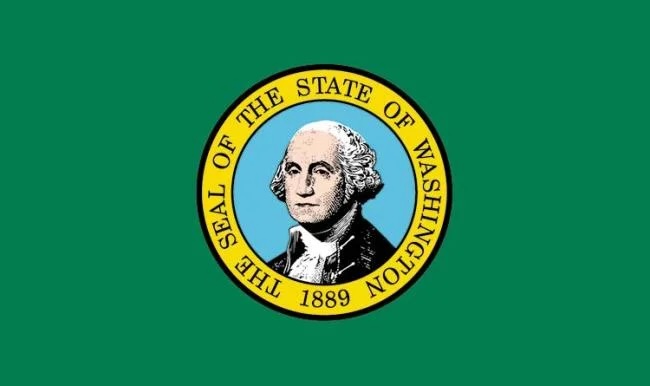
    People online have recently been calling for my home of Washington state to change its flag, and I could not agree more. Just on aesthetic grounds, we deserve a better flag than a boring pointillist portrait of George Washington on an ugly seal in the middle of a bland field of green.

    I hate her.

    But I want to go a step further than the folks on the internet: I think when we change Washington state’s flag, we should also change the state’s name.

    Washington state was named to honor George Washington, a man whose name is already on a very large iconic monument in the seat of our nation’s power, which is also, confusingly, named after him. His face is on our flag, as I mentioned, and it is also on the roughly 11 billion one-dollar bills and hundreds of billions of quarters currently in circulation. All of which is to say that we as a nation are not in danger of forgetting about poor old George Washington anytime soon.

    George Washington never visited the area that would become Washington state, and the people who decided to name the state after George Washington never visited here either. They changed the name from Columbia, for fear that people would confuse it with the District of Columbia. Now, people frequently confuse Washington state with…Washington DC. There is literally no good reason to call this land Washington.

    So what should we call it? Even though I like the sound of the word, we don’t necessarily have to change the state’s name back to Columbia. We could call it Tahoma or another local indigenous name. We could name it Cascade or Cascadia after the bioregion, or Evergreen after our state’s nickname. The important thing is that it’s time for us to move on from Washington. It’s a name that looks back in history, while we deserve a name that celebrates the amazing people and beautiful land that make this state such a wonderful place to live.

    I’ve been writing

    First, I wrote about all the great paperback releases of August.

    And second, I wrote about Kingston’s Saltwater Bookshop—a great independent bookstore that shares space with a delicious bakery. You might think that Kingston seems too far away from Seattle for a day trip, but there’s a delightful fast ferry that zips from downtown to Kingston in about a half an hour.

    I also talked about some of the economics books that attracted my eye this summer on a special summer reading list episode of the Pitchfork Economics podcast.

    I’ve been reading

    Let’s open with an admission: I’ve been kind of awash in the politics this month, scrolling nonstop and watching almost every minute of the DNC, and so I’ve read far fewer books than usual.

    I started re-reading Octavia Butler’s dystopian novel Parable of the Sower on July 20th, 2024—the day that the the narrative begins in the book. Reading the book on the day that the protagonist begins writing the book was a unique thrill, and given that the story is told in diary entries that stretch out beyond 2025 I’m honestly surprised the publisher didn’t offer a service in which chapters of the book are emailed to readers in “real time.” Though I’m very burned out on dystopian fiction, it’s astonishing how much of our present world Butler got correct.

    I’m addicted to reading books about the craft of writing. I’ve read dozens, if not a couple hundred, of these kinds of books. Jami Attenberg’s 1000 Words is a book that urges would-be-writers to sit down and slam out 1000 words per day to get into the habit of writing, but it also includes a number of short essays by writers about the craft of writing, so it kind of serves as a compendium of how-to-write books. For me, it was kind of a generic, repetitive reading experience since I’m well-versed in the form. But if an aspiring writer told me that they wanted to read only one how-to-write book, this might be the one that I suggest because it offers so many different flavors of writing lessons.

    Kent State, Derf Backderf’s non-fiction graphic novel (man, we have to make a better term for these) is a truly impressive comic. It’s an account of the shooting of Vietnam War protestors that weaves many different viewpoints and experiences into a single narrative. The shooting was a catastrophic failure that required many different procedures, rules, and social norms to fail all at once, and that failure changed the country forever. My one complaint about the book is that Backderf reported on what happened to the major players in a single text page at the end of the book, rather than drawing their fates in comic form. I’m sure he was running up against deadlines and constraints of the medium—it’s hard to span several years in a single page of comics—but the comic does such excellent work documenting what happened before and during the shooting that the “after” part feels a little like an afterthought.

    Taha Ebrahhimi’s Street Trees of Seattle has been all the rage in local bookstores this summer, and it’s always nice to see books about being a pedestrian in Seattle top the local bestseller charts. Unfortunately, this one wasn’t as compelling for me as, say, Seattle Walk Report—but that’s a personal failing. I’m just not as interested in trees as I am the human-made landmarks that Susanna Ryan writes about in her walking guides. But this is still a must-have for any Seattle pedestrian’s personal library.

    I enjoyed Todd May’s short philosophical exploration of whether the human race is a net good in the universe, Should We Go Extinct? Like most philosophical books I found it to be a little bit silly—May keeps returning to the idea that the human race can be said to be worthwhile if the “total number of units of happiness” that we produce is higher than the misery we cause, which is just quantifying something that is completely unquantifiable. But I enjoyed it as an extended thought experiment, and I also appreciated the book’s brevity.

    My friend (and newsletter reader) Dave recommended the audio version of Sam Anderson’s civic history of Oklahoma City, Boom Town, and this is exactly the kind of book that I love to read on audio: The story of a place told in endearing anecdotes that capture the eccentricities, big personalities, and outright crimes that make a city so interesting. I visited Oklahoma City once when I was younger, and I found it to be positively delightful—a slow-moving city with a lot of civic pride. Anderson’s take on the city feels similar. There are some writerly flourishes that I think don’t necessarily work—the passage that suggests Timothy McVeigh’s frustrating experience as a sports fan is a direct cause of the Federal Building bombing felt like it was reaching way too hard—but this is a great account of an underrated American city, and I wish more writers would tackle this kind of big-hearted, open-minded civic history.

    More President Talk

    In last month’s issue, I said two things that turned out to be surprisingly controversial with readers. I wanted to address those both here.

    First, several of you wrote in to ask why Entertainment Weekly was my favorite magazine growing up. To do that, I think you have to put the magazine in context. EW was really the first magazine to look at the business of entertainment as a business. It didn’t have the salacious gossip of The Enquirer or the sugary-sweet personal-interest profiles that People magazine offered of celebrities. Instead, it provided an overview of the big movies, TV shows, books, and music that were being released that week, and the critics approached every piece of art on its own terms.

    EW wasn’t a fawning fan publication, but it did take popular culture seriously. It wasn’t perfect, but the magazine’s collective voice resembled how I approach pop culture: With a sense of humor and irreverence, but also an eagerness to get swept up in the good stuff. I read it cover-to-cover for many years, and doing so made me feel conversant in just about every aspect of American pop culture. Of course, now the culture is too broad and too fractured to accomplish that in a single weekly magazine, but from the 1990s through, say, 2012, EW did a pretty good job of hitting the highlights.

    Second, I was surprised by how many of you wrote in to say you were surprised by the fact that I called Joe Biden the best president in my lifetime. This one might take a little more time to unpack.

    Okay, so first I think I have to address the fact that every person who wrote in was surprised that I passed over Barack Obama. And it is true that Obama is the second-best president in my lifetime—and the gap between Obama and Biden is much smaller than the yawning gap between Obama and whoever comes in third (technically, I was around for Carter’s presidency though I don’t remember any of it because I was too busy chewing on the lead paint on the windowsills of my childhood home.) It is true, as reader David wrote, that the Affordable Care Act is a huge achievement that changed the political discussion in America, and I don’t mean to take anything away from Obama.

    But Joe Biden, to my mind, is at least the most transformational president we’ve had since LBJ, or maybe even FDR. (To be clear, since my day job is immersed in political economy I place a lot of emphasis on economic achievements. That’s the yardstick I’m primarily measuring with.)

    I don’t think you can underestimate the transformative power of the Green New Deal passed under the Inflation Reduction Act, the CHIPS and Science Act, and the Infrastructure Act. We haven’t seen all the benefits of these three pieces of legislation yet, but it has drastically sped up our transition to green energy and the fight against climate change, returned manufacturing jobs to parts of the country that were decimated by NAFTA and other free trade agreements, and fixed a lot of regional problems like lead pipes and inequitable digital access.

    I believe income inequality is the single greatest problem facing American right now. And I realize that a lot of the economic benefits of the Biden Administration have been temporarily dulled by the global inflation crisis caused by pandemic-era broken supply chains, but the fact is that Biden has single-handedly reversed a third of the income gap that started under Ronald Reagan. (PDF) He’s the first president in my lifetime to oversee a huge rise in wages at the bottom of the income scale. He’s the first president in my life to doggedly combat monopolies and huge corporate mergers. And he’s the first president in history to walk a picket line.

    There’s a lot more, but I worry that this is getting too dense. I can direct you to some resources if you’re still curious after all that, but I suspect most of you have closed this email by now.

    Anyway, one final note: Please know that none of this means that I think Biden should have kept running for president. In fact, I think stepping down from his campaign for reelection and unequivocally endorsing Harris is another huge point in his favor. Assuming that Donald Trump doesn’t become president and undo everything he’s accomplished in the last four years, I think history will remember Biden as one of the greatest presidents, and I think he established the foundation for tremendous, transformational developments in the future.

    That’s all for this month. I’m working on a special project that I can’t wait to unveil later this fall, and I’ve got a couple of exciting literary events on the books, too. I’m excited to share them with you in the months ahead.

    Hope you’re well,
    Paul

  • What I’ve been Reading and Writing: July 2024

    Hi!

    I like to think I know a little bit about politics. In the weeks after his disastrous debate performance, I had expected President Biden to eventually retire his presidential campaign and pass the torch to Vice President Kamala Harris. I figured that Biden would wait until after the Republican National Convention to make that announcement, thereby allowing the Republicans to waste a week making attacks on a presidential nominee who would not be on ballots in November. Just based on my feel for history and for the personalities in the moment, I figured all that would happen.

    But I was surprised by how surprised I was when Biden actually announced that he was standing down his campaign for a second term. Even though I was certain it was going to happen, the enormity of that letter took me by surprise. After spending his whole life in pursuit of the presidency, giving up a potential second term had to have been one of the hardest things Joe Biden had ever done. It was a sacrifice, and he made it because he thought it was the right thing to do for the country—such a rare, commendable decision from an elected leader. 

    And then I was immediately surprised again by how quickly Kamala Harris lined up her party behind her candidacy for president. As the endorsements rolled in, and then the donations from ordinary Americans started avalanching in right after, Harris was in full control of the moment. There were a million ways that a candidate could have screwed up that rollout—had anything leaked in the days before Biden announced, for instance, it would have created the perception of Harris being too openly ambitious, or somehow dirty-dealing.  But Harris handled it all flawlessly. I saw not a single misstep in that first week.

    Even more surprising for me was Harris’s first speech as a presidential candidate. She had completely risen to meet the moment. Harris has always been a good public speaker, of course, but there’s some ineffable quality that a good presidential candidate has—they’re able to absorb the hopes and dreams and aspirations of a room full of thousands of people and then reflect the very best of those hopes and dreams and aspirations right back at the people. I watched Barack Obama learn how to do that in the first few months of his 2008 presidential campaign. But Harris had it right from her very first speech in Wisconsin. It turned on like a light switch, and she’s been operating at that very high level ever since.

    There are lots of things that can go wrong from here, of course. Harris has traditionally not been very good at interviews—she responds like a lawyer, being too cagey and trying to turn questions back on her interlocutor—so I’m nervous about her first few big interviews on the world stage. She has a number of incredible options for vice president, but any choice carries with it its own risks. We’ve all seen vice presidents stumble and fall when they step into the spotlight, and with less than 100 days to go, this is a campaign that can’t afford any stumbles. 

    But for right now, I just want to say that while none of the news has factually surprised me, I have been surprised by how smoothly it has all gone. I’ve been delighted to watch the party adopt a new voice and a new strategy for dealing with the creeps and weirdos of MAGA world. And most of all, I’m surprised by how good I feel at this point in the handoff from Biden to Harris. I don’t know if I expected to feel positive—even hopeful—at the prospect of a Harris presidency. But I am excited—and more than a little scared, but mostly excited—by this new candidate and the possibilities that she presents.

    Don’t get me wrong: Joe Biden has easily been the best president of my lifetime, and I would have happily voted for him again. But watching Biden willingly hand the party over to a new generation, and then watching that generation take the reins with vigor, humor, and charm, has been downright inspirational. It’s exciting to feel like good things are possible again, and it’s amazing what a difference a month can make in changing the national mood.

    I’ve Been Writing 

    I wrote two issues of The Pitch, which is the weekly middle-out economics newsletter that’s ordinarily written by my boss, Civic Ventures President Zach Silk. Zach took a much-deserved vacation earlier this month, and I stepped in with an essay about how far away from the mainstream the Supreme Court has strayed and an essay about the Biden Administration’s new overtime rules.

    For Civic Ventures, I also narrated a video about why Red Lobster went into bankruptcy. (A lot of media outlets reported that the chain sold too much shrimp for too low a price. It’s a great, funny story, but it’s not true.)

    For the Seattle Times, I wrote about local author Cherie Priest’s new novel, The Drowning House, which takes place on a remote Washington state island whose best-known geographic feature is Mystery Bay. The island sounds too good to be true, but it is very real.

    If you’re in the north Seattle area, you might consider schlepping up to Edmonds to attend the first Writers-in-Conversation event at the Cascadia Art Museum. Event curator Michael McGregor will be interviewing great Spokane novelist Sharma Shields about what it means to be a writer in and from the Northwest. I wrote a preview of the event in the Times.

    I also wrote about a wonderful new bookstore up in Shoreline called Ridgecrest Books. Everything about this store, from the thoughtful design to the excellent selection of books, is extremely well-considered.

    And I picked some of the month’s most exciting new paperback books.

    I’ve Been Reading

    The Ghost of Us is a supernatural-themed young adult queer romance by Seattle author James L. Sutter, who has also helped create some very popular role-playing games including Pathfinder. It’s a surprisingly sweet story, and a gentle enough romance that those of you who are feeling overwhelmed by Everything Going On might find some worthwhile refuge in its pages.

    I guess I was in a sapphic romance mood this month. C.L. Polk’s Even Though I Knew the End is an urban fantasy novella about a Chicago detective who sold her soul to a demon. Just as the payment comes due, though, she’s fallen in love with a woman and she doesn’t want to leave.  

    André Gide’s Marshlands is a novel about a man who is writing a book called Marshlands, except he’s not so much writing the book as he is telling people at parties that he’s writing the book. And as the idea of Marshlands keeps changing, the writer’s life changes to more closely resemble the plot of the book that he is (or isn’t) writing. It’s a fun metatextual experiment of a novel that doesn’t overstay its welcome. Sigrid Nunez’s What Are You Going Through, which I read right after Marshlands, similarly blends fiction with pandemic memoir, confusing the line between novel and tell-all. They made for an interesting back-to-back reading experience.

    Jeff Jarvis’s Magazine is part of the Object Lessons series of books, which promise short, pithy investigations into the stories behind everyday objects. This one is ostensibly an ode to the role that magazines play in our everyday lives, but I enjoyed it most because Jarvis begins the book with a memoir of his time creating Entertainment Weekly, which was by far my all-time favorite magazine. The highs and lows of working on a magazine like EW have to be read to be believed.

    I listened to Gretchen Whitmer’s new memoir, True Gretch, and it is one hundred percent intended to lay the groundwork for her national ambitions. But while most of those sorts of books are pretty dull—think of The Audacity of Hope, Barack Obama’s bland second memoir—True Gretch is fun, brief, and funny. (The audiobook runs less than four hours, which is a genuine blessing.) I recommend the audio version because it includes a few snippets of some of her speeches, which adds a little more life to the mostly safe political prose.

    L. M. Chilton’s novel Swiped is a thriller about an older single woman who reluctantly gets on a dating app. She slowly realizes that all of the men she meets through the app wind up murdered within a day or two after their first date. It’s a light, funny mystery that blends romantic comedy and serial killer fiction into an enjoyable beach read.

    The Summer That Wasn’t

    I don’t know if I have too much else to say this month. I’m working on a couple of comics projects that are taking up a lot of my time, and my day job has been incredibly busy lately. I’ve been enjoying the summer, but unlike those more locked-down pandemic years, I don’t feel quite as physically in tune with the season as I have been in the past. I haven’t been waking up with the sun this year, and I haven’t noticed the comings and goings of various wildflowers on my walks as the summer days pass. I keep looking up from my laptop to find that whole weeks have drained away and now we’re already rounding the corner into August.

    I’m not complaining, though. Some years you’re in sync with everything around you and some years you’re just shoveling your way out from under everything. I’m still getting out and walking in the sunshine, and I’m still taking some time to go to the movies and soak in some air-conditioned blockbuster gaudiness. Hopefully in a month or two I’ll be able to catch a breath and watch the autumn roll in. If that sounds like your kind of thing, I hope the same for you, too.

    See you next month,

    Paul

  • what i’ve been reading and writing: June 2024

    what i’ve been reading and writing: June 2024

    Because it’s been such a rough week in politics, I wanted to open with a quick piece of advice from my boss at Civic Ventures, Zach Silk, that has helped me at moments like this. It’s okay to allow yourself to feel bad after a rough political loss, or an especially disappointing event. You’ve got to give yourself a moment to be human, to feel the feelings, and to absorb the punches. 

    But then you’ve got to get back up and get back to work. 

    So if you’re feeling bad about the Supreme Court or presidential politics, I’d urge you to give yourself a moment of grace, and then commit to doing something positive that is very small and very local—donate to a city political campaign, or volunteer some time at a local nonprofit, or show up for a candidate you support. 

    A lot of big things are happening right now and it’s easy to feel powerless when big things are happening. But you have tremendous power to positively affect your neighborhood, your city, and your state, and that work makes a tremendous difference in the world. Whether it’s feeding the hungry, picking up litter, supporting a good local candidate, making some calls, or knocking on some doors—you have the power to do that.

    For lots of people, local politics matters much more in their day-to-day lives than whatever’s happening in the headlines of the big newspapers. By doing what you can, you will absolutely make a difference in their lives, and you’ll feel better for doing it.

    Events are back on the menu

    It’s been a while since I’ve done an onstage interview. Back when I was full-steam ahead at the Seattle Review of Books I did at least one or two a month, and during peak book release seasons I often would do multiple interviews in a week. Then, as you may or may not have heard, there was a global pandemic. I did a few online-only events but I hated every second of doing Zoom interviews—the rhythm was just screwy and it was really hard for me to incorporate audience questions via the always-moving comment streams.

    Most local bookstores didn’t have any safety precautions in place for events when they reopened after lockdowns, and from 2021 to 2023 I just didn’t feel like book events were worth the high risk of Covid infection. I essentially started to say no to everything until people stopped asking. Finally, I’ve done a handful of events over the last year, but they’ve been pretty sporadic.

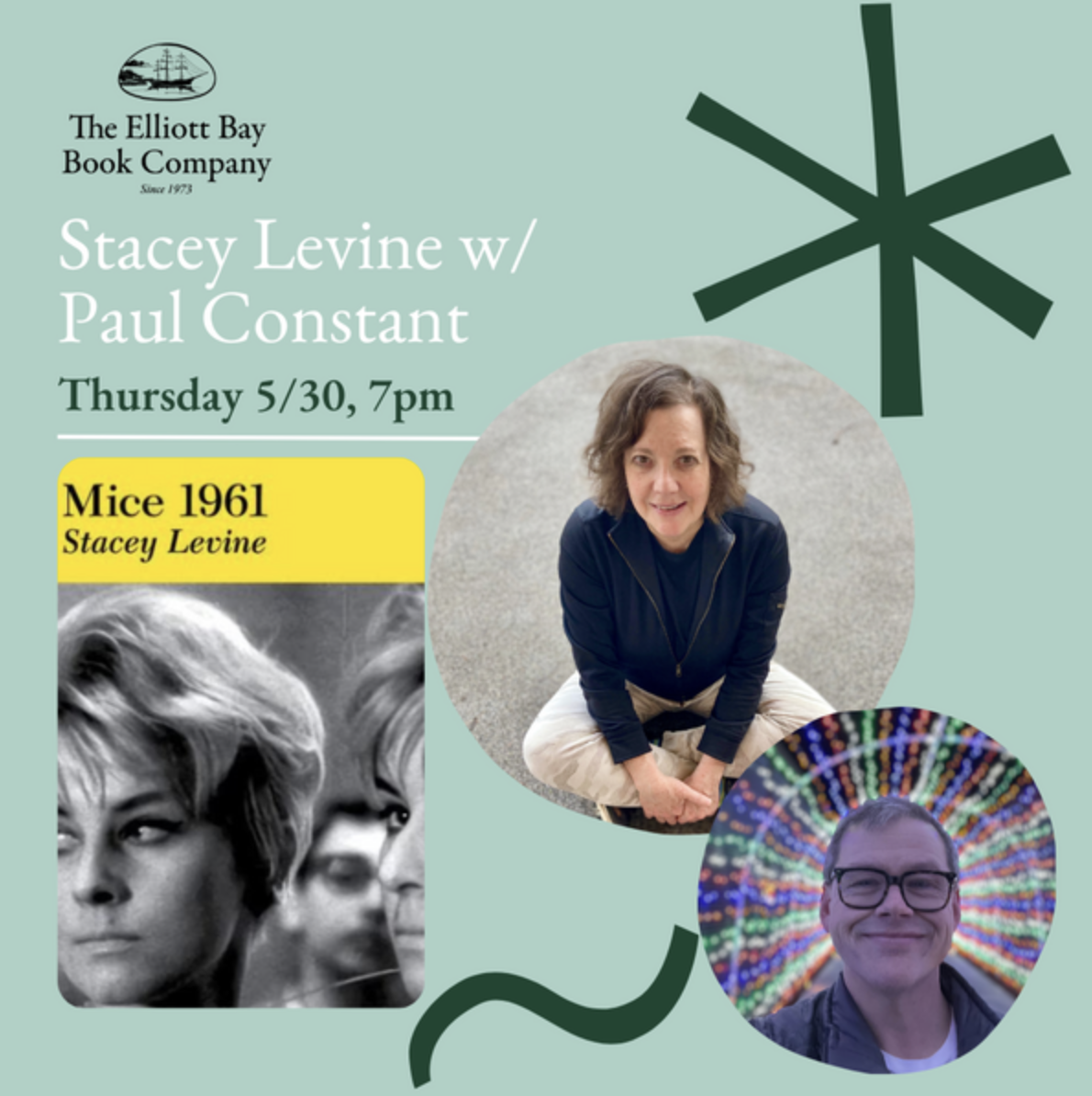
    Last month, I did my first onstage interview in a while, with Seattle author Stacey Levine at Elliott Bay Book Company. And I had almost forgotten how fun onstage interviews can be. It helps that I’ve known Levine for years. She was a recipient of the 2009 Stranger Genius Award for Literature, and I’ve always enjoyed talking with her about her work.

    Levine very clearly believes that her stories are something permanent and real, made of solid materials like concrete and bone. She knows that her stories have a precise meaning, and she believes she can impart that meaning to the reader if she only crafts her sentences perfectly enough. I’ll always remember a moment in our first conversation when she seemed to think I cracked the code of what she was trying to say in a story: “I really want you to understand. I don’t know if I can make you understand. I feel like I may have made you understand a little more,” she said, before deflating a little more. “It’s hard to communicate an inner world,” she concluded.

    Levine’s new novel, Mice 1961, is the story of two sisters in Florida during the Cuban Missile Crisis, as told by their obsessive housekeeper. The protagonist, who is nicknamed Mice, is the subject of intense curiosity and gossip, and the novel is packed with characters who only have a handful of lines but who feel like they are stars of their own novels, with fully fleshed-out personalities and histories. They serve as a Greek chorus of sorts, sharing gossip and underlining the raw emotion of a moment to the reader.

    It took a little bit for me to get back in the swing of onstage interview, but I the event turned out to be a delight. Levine was forthcoming about all the research she did into the historical aspects of the novel—she traveled to Florida and interviewed crystal radio hobbyists, among other things. (Levine also expressed some dismay that a reviewer of Mice 1961believed that radios powered by crystals were elements of fantasy and magic in the otherwise realistic book, not realizing that crystal radios were a real and popular phenomenon for much of the 20thcentury.)

    Lots of people in the audience brought phenomenal questions, too. Someone asked Levine to comment on her suggestion, made earlier in the evening, that omniscient narrators are no longer in fashion. Others who had already read the book asked incisive questions about the characters and settings. I wish every reading audience was so well-prepared.

    It was, on the whole, a pretty successful evening and it was lovely to catch up with Levine, who is every bit as generous with her process and her observations as ever. And I got an email several days after the event from a frequent literary event attendee who said it might have been his favorite book event ever. It was nice to be reminded why I devoted so much of my time to these events, and while I don’t think I’ll ever go back to doing two or three of them a month, I’m still excited at the prospect of literary events being back on the menu after a few years away.

    I’ve Been Writing

    First, I profiled Paper Boat Booksellers in West Seattle, and I also broke the news that the store is looking to expand and possibly open a café, if they can find an appropriate space in the West Seattle neighborhood they call home.

    And then I interviewed the new owners of Greenwood’s beloved Couth Buzzard Books. They’re an enthusiastic young couple with lots of big plans for improving the bookstore while also keeping the very busy calendar of community events largely untouched.

    I jumped on the Pitchfork Economics podcast this week to talk with Chandra Childers, an amazing economic researcher who has explored the Southern economic development model, which is an extractive form of capitalism that builds on the racist legacy of slavery in the south. Childers is such a smart and compelling thinker, and I loved having the chance to talk to her about her research.

    I also wrote about ten new paperback releases for the month of June.

    I’ve Been Reading

    Maybe you’ve seen Clare Brown’s Tik Tok skits, in which she flips both racial and gender dynamics by presenting a world in which Black women, and not white men, are society’s default position. In those skits, her Black characters condescend to their white peers with the same casual racism and sexism that white men deliver in the real world—she complains that their “yellow hair” is so “unnatural,” asks why men get so “testerical” about the fact that women don’t clean up after their messes, and frets that she can never pronounce the name “Meghan,” instead opting for “Margin” or “Margarine.” Brown has written and stars in a new full-cast audiobook called New Nigeria County that blends a lot of those Tik Tok skits together into a novella about a Black woman who calls 911 on the teenaged “outer city” son of a new white neighbor. The boy was wearing cargo pants, you see, which is a clear sign that he’s part of the “Live Laugh Love Gang.” The book is about 3 and a half hours long, which is just long enough to take the joke about as far as it will go, and I really enjoyed it. This brief full-cast, audio-only format seems to be an underexplored one, and I hope more authors give it a shot.

    Speaking of fictional Black communities, Nicola Yoon’s One of Our Kind is a thriller about a wealthy Black family that moves into an exclusive Black utopia with some dark secrets hidden in the luxury day spa at the top of the hill. I enjoyed this propulsive story for its Ira Levin-style satirical-thriller energy, though it was a little bit predictable.

    Every summer, I re-read Finnish author Tove Jansson’s novel-in-stories The Summer Book. Its tone is exactly right for that kind of regular reinvestigation—it’s about a grieving young girl and her somewhat bitter grandmother living on an island for the summer, and it’s sweet and sharp and simple and complex, depending on what kind of emotions you bring to it. I’ve also gradually been dipping into Jansson’s other work—she was a cartoonist whose Moomin strip was a kind of Peanuts of Europe, and she also wrote young children’s chapter books starring her Moomin characters that have become beloved classics. This month, I read a new biography, Tove Jansson: Life, Art, Words, written by Boel Westin and translated into English by Silvester Mazzarella. If you’re not a hardcore fan of Jansson I don’t know that I can recommend the book, but it does offer a lot of insight into her work and life. Jansson wanted to be appreciated as an artist, but she always felt trapped by her fame, and she was always stretching and struggling to find the next logical step in her artistic development. If you’re a Jansson fan, you’ll want to add this one to your library.

    To stay in the Tove Jansson space a little longer, I also read The True Deceiver, which is largely regarded as Jansson’s most adult novel. This book, about two women in a remote town who can’t seem to stop themselves from picking at each other, was well-crafted, and it certainly has some rabid fans, but I personally prefer Jansson’s more whimsical side.

    I spent time with two graphic novels that couldn’t be more different from each other. Kyle Starks’s book Karate Prom is a comic for young readers that combines the teen romantic comedy genre with the kung fu genre for a battle royale that takes place at a senior prom, where love blossoms between kung fu champ Don Jones and the woman who kicked his ass at a recent tournament, Sam Steadman. This was a delightful romp of a book, and while it has a little bit of a pacing problem—the narrative stops dead about halfway through and then takes a while to restart—it’s a great book for the comics-lover (teen or adult) in your life.

    Rick Altergott’s comic Blessed Be: A Flowertown, USA Adventure, on the other hand, feels like the graphic novel equivalent of one of those sexy Ace Doubles paperback novels that you could pick up from a wire rack at your local drug store 60 years ago. It’s got sex and violence and mystery and drugs and a creeping sense of menace squirming just beneath Altergott’s absolutely gorgeous cartoons. I loved Altergott’s comics when I could find them back in the 1990s, and Blessed Be both expands on and concludes the story he hinted at all those years ago.

    Charlie Huston’s urban fantasy Catchpenny has maybe my favorite form of magical rules that I’ve ever encountered in a novel: Items that are heavy with nostalgia or emotional value contain magical energy that can be used by people who know how. A Sinead O’Connor t-shirt figures heavily into the plot here, and while the book doesn’t really ascend to a soaring climax, I enjoyed spending time in this world and I never felt like the magic was used to cheat the readers.

    Don’t Fear the Retail

    Finally, I wanted to talk about the most delightful book I’ve read in a long while. Pioneer Square bookseller Peter Miller, whose Peter Miller Books is a destination for lovers of architecture and design from around the world, has published a small memoir of his bookselling life that also serves as a guide to running a shop. It’s titled Shopkeeping: Stories, Advice, and Observations. If you’ve ever taken pride in working retail, or if you ever wanted to open a store of your own, I can’t recommend this book enough.

    “We walk to look at the shops, we dress up to visit them, we feel our own excitement when we go into them Miller writes early in the book. “Shops are the measure of a town…

    …In your mind, you keep careful track of your best and favorite shops. You judge a city by them. When you are in the city and when you think of the city, it is the shops that best organize your plans. You judge your civilization by them.

    You expect them to be there; you expect them to be good at what they do.

    A good shop is more literal than sentimental.

    In reading this book, I spent hours thinking happily about the best shops I’ve ever been in. The Million Year Picnic, a fantastic comic book store in Cambridge, Massachusetts. That vintage store whose name I forgot in Iowa City where I bought a gorgeous Japanese baseball shirt almost 30 years ago. The Way Way penny-candy shop just outside Biddeford, Maine. Solid State Books, a newish bookstore I encountered on a recent brief trip to Washington DC, became one of those shops on a recent visit and I look forward to stopping by every time I’m in town. . Peter Miller’s bookstore is one of those shops, and so are several other Seattle-area bookstores

    These shops hold a special place in my psyche. I look forward to visiting them, I fondly remember the items I bought from them, and I even sometimes dream about them. But we have a tendency now, to think of retail stores as something cheap or disposable. It feels dumb and silly to admit that one of the consistent highlights of my regular trips back to Maine is the late-night visit to the sprawling LL Bean flagship store in Freeport, which is open 24 hours a day, 365 days a year.

    Late in Shopkeeping, Miller admits “There is no literal need for shops.” But in fact, the book perfectly describes why we need shops so much. The act of visiting a shop is a social act and a statement of preference and a careful examination of possibilities. We try things on, we weigh objects in our hands, we imagine them in our houses and as a part of our daily lives.

    And Miller explains why the best shopkeepers are magicians and performers and psychiatrists all rolled up together. He shares a handful of anecdotes from his four decades of bookselling experience, and before too long you realize that the book itself is kind of a shop—a display of his best thoughts and experiences and observations about keeping shops. Like the best shops, I’m going to revisit this book often, and I’ll probably find something different to take with me every time I drop in.

    “A shopkeeper puts on essentially the very same show each day,” Miller writes. “It is always Oklahoma!—and it is good fortune if you like the music and are cheered each time you see the show. And even greater fortune if people like the show.”


    Bravo, Peter Miller. Encore, encore!

  • What i’ve been reading and writing: May 2024

    What i’ve been reading and writing: May 2024

    Hi there!

    I got an email from Seattle writer Lesley Hazleton earlier this month, which was, on its own, not an especially unusual event. I had become Lesley’s friend after I gave her a Genius Award for literature at The Stranger years ago, and she’d occasionally drop me brief emails letting me know about books or articles that she’d found interesting. 

    But it was pretty apparent from the very opening that this email wasn’t like that. This was a Serious Email. Lesley explained that she had been diagnosed with cancer, and that three months ago she was told she had six months to live. She also explained that, as a lifelong proponent of a person’s right to choose, she had decided to exercise her right to die as established by the state of Washington.

    What’s more, Lesley explained that by the time her friends were reading this email, she had already died on her own terms under medical supervision. It was a very Lesley thing to do: Incredibly dramatic (I never dreamed I’d actually get a “by the time you read this email, I’m already dead” message) but also deeply considered. It was hard to be too sad, because she went out exactly as she desired.

    My relationship with Lesley Hazleton stretches back a quarter-century, even though it was quite one-sided at the start. When I was a bookseller in Boston, I came across an advance reader’s copy of her collection of automobile industry journalism, Driving to Detroit. Even though I do not care about cars, I was riveted to the book because of her writing—direct, thoughtful, clever. And the loving way that Lesley described her adopted home of Seattle was especially enticing to me—so much so that I credit Driving to Detroit for clinching my decision to move to Seattle over New York or several other options. 

    Lesley continued to amaze me. She pivoted from cars to religion, writing biographies of religious figures like Mohammed, Jezebel, and Mary. And I think her greatest book, Agnostic, helped me accept the beauty of admitting that sometimes you can never have the answer you’re looking for—that “I don’t know” is often the most powerful, and correct, answer a human being can give. (If you’d like to read more about her, Lesley’s New York Timesobituary is excellent.)

    There was a celebration of Lesley’s life on the same night that the whole Northern hemisphere was treated to the most vibrant display of auroras that anyone had ever seen. A klezmer band played and people drank grappa until the sun went down. 

    And while everyone was sad to have lost such a brilliant, caring friend, it was hard to feel too sad for Lesley. She lived and died exactly as she wanted. She didn’t want to hear tearful tributes from the people who loved her. 

    But I do feel like it’s important to get it in writing, somewhere, that from my very first encounter with Lesley’s writing to the very last, she was my hero. And Lesley is that rare personal writing hero who became even more impressive when I actually met her in real life. 

    I’VE BEEN WRITING

    I have a story in the new Project: Cryptid collection from AHOY Comics. It’s a comics anthology featuring stories about monsters like Bigfoot, Nessie, and—in my case—the Pacific Northwestern exploding bear known as the Gumberoo. The story was illustrated by the great Peter Krause, who is an artist I’ve loved since I was a kid, and it’s about a pioneer couple who move to the Washington territories only to start a new life. Things don’t go well for one of them. There are so many great comics in this book, by comics creators I really admire including Mark Russell, Richard Pace, and Jamal Igle. 

    For the Seattle Times, I published a preview of the best-looking May paperback releases and an overview of some of the most exciting upcoming summer book releases. 

    For the Times, I also interviewed local author Frank Abe and Smith College professor Floyd Cheung about their new Penguin Classics anthology of The Literature of Japanese American Incarceration, a remarkable book that collects dozens of voices together to create a narrative of one of the most shameful moments in American history. 

    I’VE BEEN READING

    Sierra Greer’s novel Annie Bot is definitely not for everyone. It’s a sci-fi story told from the perspective of a lifelike domestic companion robot sold to a lonely man in the near-future. She’s essentially a high-tech sex slave, and the novel would no doubt be very triggering for people who have been in abusive relationships or survived assault. But this was the book I read this month that I’m still thinking about, almost a month after finishing it—it’s a frustrating but compelling reading experience.

    The title of Dana Mattioli’s non-fiction book The Everything War feels like it’s supposed to be a play off Brad Stone’s hagiographic corporate biography of Amazon, The Everything Store. And in every way, this corporate biography is an improvement on Stone’s glowing account, which gets more embarrassing in retrospect with each passing year. Mattioli offers a deeply reported history of all the unethical and downright illegal ways that Amazon has broken laws, rules, and mores to dominate the retail space. If you’re on the fence about canceling your Prime account, I’d urge you to read this book.

    I was excited to read Vinson Cunningham’s novel Great Expectations, a very thinly fictionalized account of Cunningham’s own experiences as an early volunteer on Barack Obama’s 2008 presidential campaign. Unfortunately, the book didn’t hold up to my own great expectations—the presidential/candidate stuff didn’t offer any new insights, and the personal story didn’t really resonate with me. 

    Blake Crouch’s bestselling novel Dark Matter has just been adapted into a TV series by Apple TV Plus, and I wanted to read the book before I started streaming. This multiversal thriller is the definition of a page-turner—though as someone who grew up reading comics with way weirder multiversal concepts, I didn’t find the premise to be especially mind-blowing. But ultimately it’s a solid, compact, down-the-middle sci-fi thriller, and that’s a pretty good deal.

    Okay, fine: The Lincoln Highway is a pretty fantastic big-hearted old John Irving-style novel, and Amor Towles actually is probably the closest thing we have to an heir to Irving in his prime. The road trip story of two orphans who go in search of their mother only to be sidetracked by a pair of escaped convicts is funny, wise, and fun—although the race dynamics of this book feel shallow and are begging for a deep exploration.

    My Husband is a short novel by Maud Ventura told from the perspective of a woman who is terrified that she loves her husband much more than he loves her. Her entire life revolves around keeping her husband interested in her, even as she feels him slipping away. I really enjoyed this book until I read the epilogue, which I felt kind of undid everything that came before in exchange for a cheap thrill.

    I traveled to Washington DC for a business trip this month and based on a recommendation at Kramer Books I picked up Diary of an Oxygen Thief, an anonymously written novel from the early 2000s from the perspective of a misanthrope who loves emotionally hurting women. It definitely feels like one of those books—Catcher in the Rye, Youth in Revolt, Girl—that attracts a small cult of young people who praise it for its unflinching honesty, but that kind of art is not anything that I feel the need to celebrate or appreciate at the advanced age of 48. 

    I had somehow not read RO Kwon’s super-buzzy novel The Incendiaries until this month. And now that I finally have read it, I must say I don’t really get the hype. It’s a book about a charismatic cult, but none of the characters are especially interesting and the story lacks the propulsive energy that a story like this needs.

    I’m Walkin’ Here!

    Earlier this month, I traveled to New York for the express purpose of taking part in The Great Saunter, an organized walk around the perimeter of Manhattan that takes place on the first Saturday of May. I first heard about the Saunter over a decade ago and it’s always been something I wanted to do.

    Over 3000 people participated in the Saunter this year, and I’m happy to report that my friend Davida and I were among the 1600 people to finish. We started at the southern tip of Manhattan, followed the coast north to Harlem, and then made our way south again for a total of 32 miles. We started around 7 am and came in to the finish line around 6:30 pm. 

    I have nothing but kind words for the organizers of the Saunter. It’s an incredibly well-organized event, and in exchange for the $30 entry fee participants get a free hat, snacks and drinks, and volunteers to make sure walkers stay on path. It’s a bargain, is what I’m saying.

    In my youth I spent a fair amount of time in New York City. But the city is too damn big to really, fully, comprehend. By walking around the whole perimeter I at least have a better understanding of how huge Manhattan is, and how people can spend whole months—even years—of their lives living inside the boundaries of that 32-mile perimeter.

    My big regret from The Saunter is that I didn’t stop and eat at Cake Burger, the restaurant “Where cakes and burgers are our specialty!” It’s a genius business model, and it’s going to haunt me that I didn’t go in when I had the chance.

    If you’ve ever wanted to test your walking endurance, I can’t recommend the Saunter enough. It’s arranged in such a way that the hardest part of the walk—the vertical gain on the northern tip of the island—is almost exactly in the middle of your walk, before exhaustion sets in, and the people who work for the organization really seem to care for both the coastline and the people who choose to walk it. This is one of those bucket-list aspirations that actually was even better in reality than I’d ever imagined it could be. 

    That’s a nice place to leave off this month, I think. I hope your summer is off to a pleasant start.

    Paul