Welp, we’re bombing Iran. This is a unique problem for Donald Trump because his signature move when he gets in over his head is to declare victory and move on to the next big attention-grabby thing as quickly as possible. But you can’t just wave away a war with some sleight of hand.
One nation can choose to start a war. But once it’s started, ending it requires agreement from all parties. Given that we bombed an elementary school and killed dozens of girls in the first few hours of military action, I don’t think Iran is going to forgive or forget anytime soon.
Put another way, Trump’s name and face will probably not remain on the side of all those government buildings in DC twenty years from today, but America will likely still be paying the price a generation from now for what he unleashed this month. Nobody’s wriggling out of this jameasily.
I’ve Been Writing
For the Seattle Times, I profiled Jamie Lutton, the owner of Twice Sold Tales on Capitol Hill. Next year, Lutton will have been a bookseller in Seattle for 40 years. She knows more about bookselling than pretty much anyone in Seattle, and in the piece I recommend hanging out and just watching her work for an afternoon. She’s a world-class book recommender who is also full of all sorts of terrific gossip about authors and publishers and booksellers. (One anecdote that got cut from the piece was her story about a Seattle bookstore that closed decades ago because the owner “wouldn’t hire women, and he wouldn’t hire anyone taller than him—and he was five foot eight!”) This was a fun one to research and to write, and the story includes a little bit of a scoop: Sometime after she crosses the 40-year mark, Lutton is preparing to sell the bookstore to a staffer and retire, though she hopes to still work two or three days a week as a bookseller after she hands the reins of Twice Sold Tales off to Michael Rucker.
And for the Pitchfork Economics podcast, Goldy and I talked with Groundwork Collaborative Executive Director Lindsay Owens about a study Groundwork undertook in conjunction with Consumer Reports. In several cities around the country (including Seattle,) people were enlisted to order the same products from the same grocery stores at the exact same time on Instacart. They learned that Instacart was charging different people different prices for the exact same product. It’s a troubling reminder that prices are changing with technology, and soon stores could use algorithms to leverage our internet histories and jack up prices, charging us exactly as much as we’re willing to pay for every single product.
I’ve Been Reading
Two Women Living Together is a memoir written by Kim Hana and Hwang Sunwoo, and translated from the Korean by Gene Png. It’s literally just about two straight women in their forties who decide to buy an apartment together. They’re not lovers, just platonic friends who have brushed aside societal expectations to marry or live alone as what my parents’ generation referred to as “old maids.” It’s a short book, and to be honest I think it could have probably been even shorter, but it’s an interesting perspective from two people who are quietly living life on their own terms.
She’s always been a great writer, but since 2016 Rebecca Solnit has become one of the most important American essayists. Her latest, The Beginning Comes After the End,is more or less a sequel to Hope in the Dark, a similar collection of essays about finding hope and believing that society will change for the better even when things look pretty grim. I must admit that this one felt like it was lacking some teeth. It felt less challenging than other books by Solnit, more primed for comfort. But holy crap do people need comfort right now, so who am I to deny them?
The first volume of Danish author Solvej Balle’s On the Calculation of Volume series was an immediate sensation when it was first published in English in 2024. Because the author is Danish and because this story has been divided into 7 volumes, it’s basically pedigreed for literary obsession. In the years since the series has only become more of a phenomenon with serious book nerds. It’s a novel about a woman who is living in a more banal version of the Groundhog Day situation: every morning, she wakes to find it is November 18th all over again. I quite enjoyed this book and its fastidious attention to the minor details of daily life, though I’m not entirely sure my enthusiasm will stretch across six more volumes.
I spent most of the last few weeks reading a copy of Their Eyes Were Watching God that I found in a Little Free Library. I’d never read Zora Neale Hurston before and the book deserves every last bit of praise that it has received. I was surprised by how hard I had to work to focus my attention to track Hurston’s lyrical prose and the intense dialect. It made me realize that I haven’t been stretching my reading muscles lately by taking on challenging books. Time to fill in some big gaps in my reading life, I think.
Nothing to Do but March
I’m glad the days are getting longer. Our dogs were getting sick of winter. Poor Wally, who is typically always game for an excursion, would tremble fearfully every time I went to get the leash for another trip into the wet, dark evening. And Obie carried a little extra anxiety, too. Granted, Obie’s a senior citizen now—a chart on a dog groomer’s wall recently informed me that he’s 77 in human years—but his arthritis pain is being managed and he’s generally a pretty happy fellow.
But we’re finally at the point where all three of our daily walks take place when it’s light out, and even though it’s still wet and chilly and there was one freaky snowstorm on Friday, the shift in the weather has made all the difference for Obie and Wally’s morale.
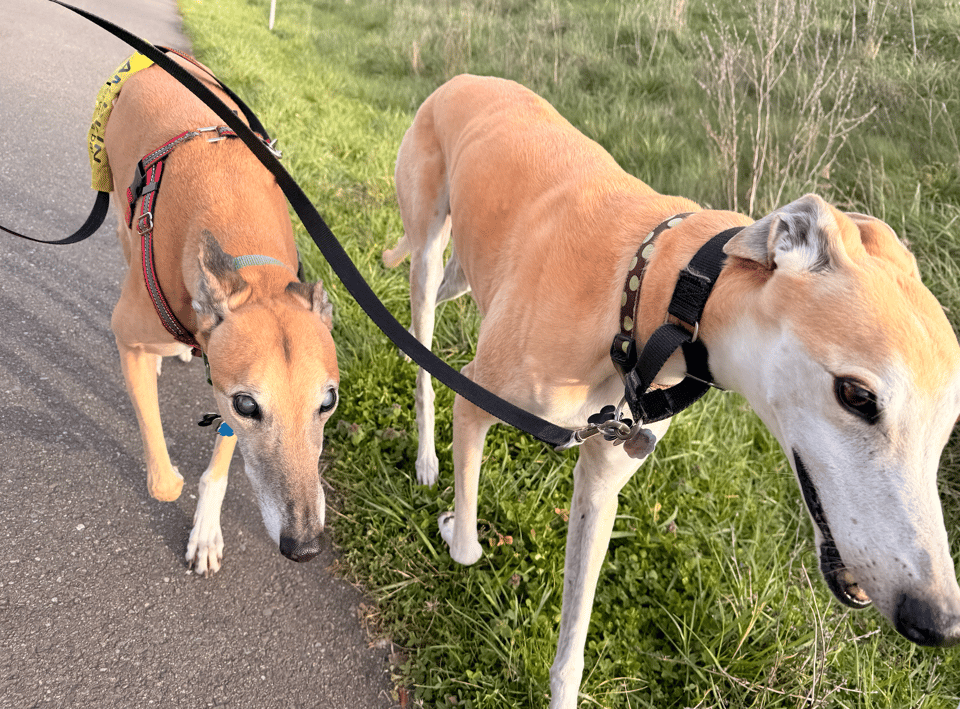
That’s the kind of energy I need to muster for this last big push into spring. March doesn’t make it easy, but there’s got to be something better on the other side.
Take care,
Paul

 Paul Constant