Hi!
Everything I said in the last issue is still true: The emotionally scarred people in the White House are deeply frightened, and they’re acting out of fear. They don’t know what to do, but they understand that what they’re doing isn’t working.
Now that ICE is executing people in the streets, the only sensible political response is to abolish ICE. That is a moderate position that I would expect out of even the most milquetoast politician who wants my vote.
We also should unspool the Department of Homeland Security, which was rushed into existence after 9/11 and has not improved our safety at all. And we have to reform law enforcement from the top down. We have to rethink the entire proposition of crime and punishment in America.
Obviously, we have to demilitarize the police. There is no good reason for law enforcement to use weapons of war against Americans on American soil. When you dress and arm yourself like this to confront American citizens…
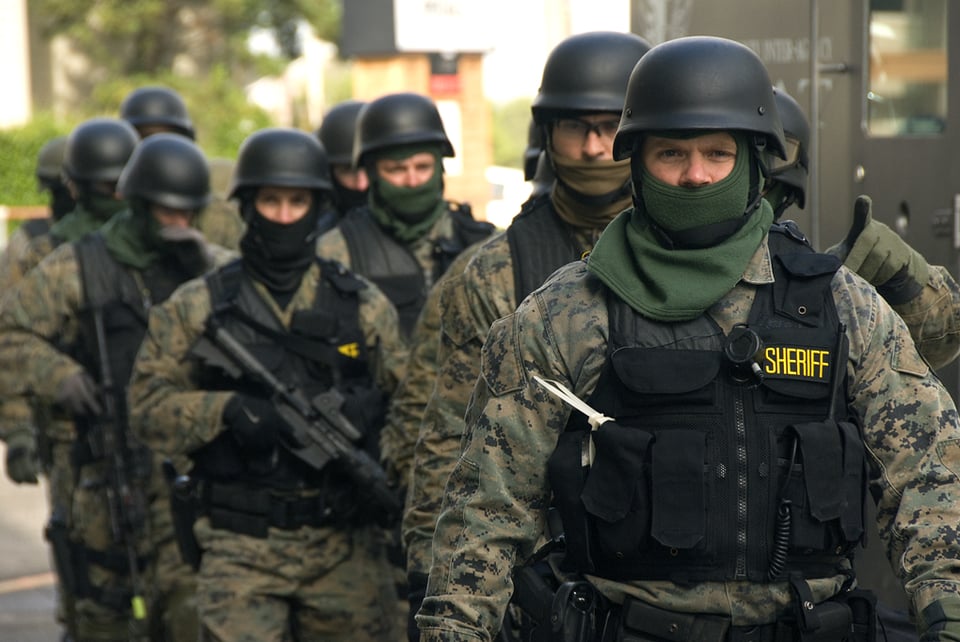
…you’re much more likely to act like you’re in a Call of Duty game. Dressing like a soldier on the front lines transforms your self-image into a big, tough hero in a dangerous world, and it transforms every human you encounter into a potential assailant.
So, yes: We need to ban local police departments from owning tanks and machine guns and tactical gear used in war.
But I think we need to go one step further. We need to pass laws requiring local cops to return to the slightly goofy uniforms of the past: powder-blue shirts with short sleeves, dress pants with yellow stripes down the sides, and shiny dress shoes.
Even further than that, cops need to stop driving around in imposing black SUVs. They have to instead switch to something more like the practical high-visibility hatchbacks of the London Police Department.
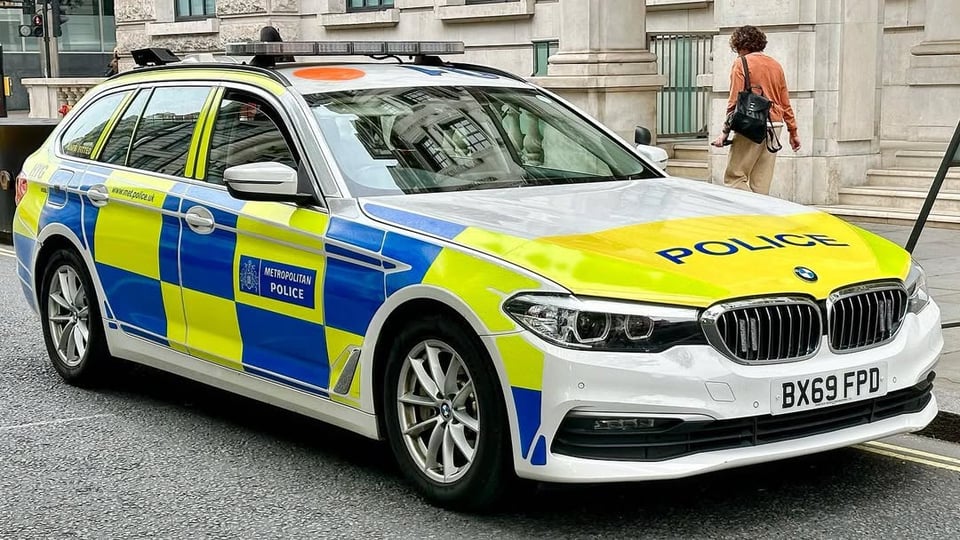
Law enforcement is not warfare. The purpose is to protect and serve the people. Officers should look friendly and approachable, and there’s nothing approachable about a creep in head-to-toe camo or the modern, grim-dark aesthetic.
There is scientific heft behind this suggestion. Aileen Out of the National Association of Uniform Manufacturers and Distributorswrites that according to “Richard R. Johnson, former military police officer and researcher in the field of interaction between police and citizens, it is not wise for an officer to wear a black uniform.”
Out explains that Johnson’s “research indicates that this color can evoke negative emotions, making citizens more likely to behave aggressively, which in turn requires the officer to respond more forcefully.”
Instead, his research “suggests that officers should wear a light blue shirt with dark blue pants. This combination is commonly seen because blue tends to evoke feelings of calm and serenity.”
I can personally vouch for this. The government agent who I most often encounter in my daily life is my mail carrier, a very sweet guy in a pleasant but not at all imposing powder-blue outfit who putters around my neighborhood in a funny-shaped truck. He is beloved. Everybody around me knows him, he shares kind words with everyone, and when he’s gone we all can’t wait to hear how his vacation to visit family in the Philippines went.
No doubt there would be pressure from police unions against a law banning policy from wearing military uniforms. They might argue that some officers would rather resign than return to the days of Officer Friendly.
To this argument, I respond: Good! If you’re worried that powder blue shirts might undermine your masculinity, you don’t deserve a job in law enforcement. And it’s not like this military cosplay is a response to rising crime rates. Dorky uniforms were the standard for police officers in the 1970s, when crime rates were significantly higher across the board virtually everywhere in America.
Police unions around the country complain that police have lost the respect of the people. If that’s their biggest concern, I have an easy solution: If you can seem authoritative while you’re dressed like a train conductor and driving a neon-green EV hatchback, you will automatically win my respect.
I’ve Been Writing
For the Seattle Times, I wrote about Seattle’s new literary bar, The Ink Drinker. Located in the heart of Ballard, it’s a bar by book lovers for book lovers—a place where people are invited to pull up with a good book and enjoy a cocktail or mocktail or two on their own, or gather with a book club, or show up for a lecture. Way back when I worked at The Stranger, I wrote an article titled “Seattle Desperately Needs A Literary Bar.” The Ink Drinker is the first real attempt to make something like that actually happen.
I’ve Been Reading
Lauren Rothery’s Television is a clever novel about an actor who announces that he will give away his salary and percentage of profits for a movie to one lucky movie-goer. He sets up a lottery system in which people send in their ticket stubs, and the movie is a huge success, but it complicates things for everyone. It’s a terse meditation on the embarrassing connection between art and commerce.
I don’t often read short story collections, but I was drawn to Curtis Sittenfeld’s Show Don’t Tell after hearing an interview with the author. It’s a collection of stories about middle-aged women in moral quandaries: a story from the perspective of a Karen caught on video behaving in a racist manner, a woman on the road to divorce who adopts a conservative self-help fraud’s recipe for a Godly marriage. They’re witty, brief experiments in empathy, which is exactly what I like in a collection.
Nathan Gelgud’s graphic novel Reel Politik begins as a comic strip about young idealists who run a dying independent movie house. But the gag—strip format eventually expands as the movie workers seize the means of production and decide to operate their theater with a more collectivist understanding of art. It’s a silly, slight book that echoed some of the themes of Television in a very different way.
Murderland is partly a sweeping true crime narrative, partly a memoir, and partly a damning account of the excesses of the 20th century. The book explains that the spate of serial killers who lurked around the Pacific Northwest were all at least in part created by the astounding pollution in the Puget Sound region, and the arsenic and lead pollution in the Tacoma area most of all. Caroline Fraser, who grew up in the Northwest at the same time that local monsters like Ted Bundy, the Green River Killer, and Charles Manson were prowling, collages together the stories of serial killers and environmental crimes into a sweeping story that is bigger than the sum of its parts.
Radical Cartography is mapmaker William Rankin’s manifesto about how maps can alter our understanding of the world. The information that mapmakers choose to impart in maps, and how they illustrate that information, can make maps more or less equitable. It’s a little technical, but fascinating all the way through.
That’s All for This Month
That introduction was a little long, so I’m going to call it here. Things are stressful out in the world. Please remember to unplug occasionally, and take care of yourself and your neighbors.
See you in a couple weeks.
Paul

 Paul Constant