Tag: writing

  • A Fifty Year Sentence

    By the time my next newsletter arrives in your inbox, I will be 50 years old. I know some people who hate aging and getting old, and that’s always felt so hopeless to me. You might as well try to win a fistfight with the ocean.

    In fact, I’ve always felt good about aging. When I was a kid, I desperately wanted to be a grownup. When I was in my 20s, I wanted to be a stable adult. I loved being in my 30s and I loved my 40s even more. Obviously, at some point aging becomes a game of diminishing returns, but for now I’m enjoying myself. 

    I don’t like to make a thing about my birthday, but 50 feels like something that should be observed. Kurt Vonnegut wrote Breakfast of Champions as he was turning 50 as a way to ball up all the childish thoughts in his brain, throw them away, and start fresh. Based on his later work, that plan didn’t succeed—he was just as obsessed with sex and death and absurdity at age 51, 52, and so on. 

    But I think Vonnegut’s idea was a worthwhile one. All those memories you carry around with you for decades start to get heavy. I don’t have the time or the talent to write a Breakfast of Champions. I’d like to build a little balcony in my mind so that I can ball up all the elementary school embarrassments and ancient advertising jingles and throw them off it, into thin air. The past gets heavy after a while and I’ve got a craving for weightlessness.

    I’ve Been Writing

    For the Seattle TimesI wrote about Paper Pushers, a new zine pop-up store in the heart of downtown Seattle. It’s run by three young artists, and they have a lot of big plans for the space during the six months or so that it’s open. 

    I also wrote about 13 of the best paperback releases in the month of May. 

    I’ve Been Reading


    I enjoyed Seattle writer Olivia Waite’s second Dorothy Gentleman sci-fi mystery novella, Nobody’s Baby, more than I enjoyed the first installment in the series. While Murder By Memory had to establish the generational starship and its cast of characters, Nobody’s Baby could just dive right into the story. It’s a cracking good yarn about a baby who’s born on a starship where the entire population is on birth control to prevent overcrowding. And while there is a mystery at the heart of the story, it’s also interesting to explore the impacts of a child born in a purposefully child-free society. 

    Emily Jane’s Mr. Yay is an enjoyable novel about a hip-hop group that names themselves after a children’s entertainer who doesn’t seem to exist. It starts as an amusing novel about burnouts and transforms into a gentle sci-fi epic. 

    Automatic Noodle is Annalee Newitz’s entry into the cozy sci-fi category, a short novel about robots who open a noodle shop in a post-second-Civil-War future California. I liked the book but found myself wondering if it would have hit me even more if it were just a realistic novella about a group of friends opening a noodle shop. The sci-fi trappings were interesting, but I think I might have felt more emotionally connected to more finely wrought realistic characters. 

    Transcription is just such a hyper-realistic novel, and it really worked on me. Ben Lerner’s novella is about a journalist whose phone breaks hours before an important interview. It’s a meditation on technology and how it shapes us, and it’s a delightful quick audiobook experience—the book only runs four hours and it feels like a one-man monologue read by a charismatic actor. 

    Did you know Oprah is still picking book club titles? Bruce Holsinger’s novel Culpability has that O right on the front cover, and it’s the kind of contemporary novel that’s always appealed to the Oprah brand—a social novel that explores the impacts of a trend ripped from the headlines. In this case, the book is about artificial intelligence from AI friends to self-driving cars, and while the book opens with a bang, asking some of the most important questions of our time, it ultimately runs out of gas about halfway through and then just sputters to a stop. 

    How Can I Miss You If You Won’t Go Away?

    If I were forced to offer political advice to Donald Trump to help overcome his historically low approval ratings, my advice would be simple: shut the fuck up and disappear for a while. In a hyper-partisan environment like this one, any president’s polling numbers are likely to bounce back to something like 40 or 44 percent if they can just get the spotlight off them for long enough.

    But our president is a deeply broken person who compulsively dives for the spotlight. He literally can’t help himself. And so his approval ratings keep plummeting—as low as 30 percent on his economic performance, which is basically his floor. A full third of the American people wouldn’t hold a negative opinion of Donald Trump if he personally foreclosed on their homes.

    I don’t know where we go from here. The economy is likely only going to get worse. Ordinarily that would result in a massive swing in the midterm election, but the Supreme Court’s shameful decision to allow racist gerrymandering means that the midterms are probably not going to result in as significant a swing as they should. 

    It’s been over ten years since the media began its sick fascination with Donald Trump and I am so tired. I’m sick of hearing about him, I’m sick of living with the unending parade of shit that he’s foisting on us, and I’m sick of watching virtually every powerful institution bend to his will without putting up a fight. 

    The bad news is that we’re all stuck in a weird psychosexual relationship with a narcissist, and there’s no end in sight. The good news is that thanks to Trump’s abysmal polling,I know I’m not alone. There’s a little bit of comfort in that—knowing that across the country, hundreds of millions of Americans shake their heads and make a little tsk noise out of the corner of their mouths and mutter “that fuckin’ guy.” 

    More Americans now fear for the future of the economy than at any time in the history of polling. President Trump has responded by publicly fretting over the type of marble used on ballroom floors and the proper blue shade of a reflecting pool. He’s even more that fuckin’ guy than ever. 

    I have never in my life seen any public figure’s name come closer to transubstantiating into a curse word. I believe that with a little bit of effort and a whole lot of his trademark cluelessness, Donald Trump can permanently befoul his legacy and elevate himself into a generational laughing stock and object of scorn. If anyone can do it, Donald can.

    Thanks for reading! See you in a couple of weeks.

  • Walking in a Big Circle

    In which I walk around Lake Washington and urge you to buy a bookstore or three.

    Hi! 

    Last Saturday, I did my annual walk around Lake Washington. It was a little early in the year, and I almost undertook it impulsively. I wasn’t sure if I’d be able to complete the full loop without a few weeks of psyching myself up for it first.

    It turned out to be one of my easiest trips around Lake Washington ever, assisted in large part by the fact that long-standing construction projects in Juanita at the top of the lake and Mercer Slough at the eastern edge of the lake have both finally ended. Without having to take long detours, I wound up walking a relatively short 49 miles—102,297 steps. 

    The sun over the Montlake Cut, with placid waters and no people in the shot.
    Dawn over the Montlake Cut.

    I left the house at 4:19 a.m. and returned at 8:59 p.m. I mostly ate protein bars bought from grocery stores along the way and drank Gatorade—though I’m happy to report that fresh watermelon juice is just as reinvigorating and electrolyte-laden as any sugary sports beverage. I made no major stops, aside from bathroom breaks. My heart rate for the day is kind of astonishing to see—not too high, not erratic at all. Just steady, all day.

    A screenshot of Apple Health's heartbeat metrics for the day of April 25th, showing my heartbeat basically ranged from just below 100 to roughly 120 beats per minute for the whole day.
    I am unfortunately very addicted to my Apple Watch’s metrics. 

    One unfortunate variation this time around: The trail running shoes I have sworn by for the better part of a decade, Brooks Cascadia waterproof runners, are a little bit different this year. Brooks has unfortunately fallen for the trendy Hoka shtick of overinflating the cushioning of their shoes, and the Cascadias were too goddamned cushy. I wound up developing a bad blister in the center of my left foot that I’m still feeling five days later. It’s the most painful and long-lasting injury I’ve ever had from one of these walks. 

    Brooks has been very good to me so I’m not eager to give up on them yet. But if next year’s Cascadia models are as over-cushioned as this year’s, I might have to find a new trail-running brand. When will this marshmallow-footed athletic shoe trend finally die?

    Part of the reason that I took my yearly walk around Lake Washington so early in the year is that I’m thinking about adding a second circumnavigation of the lake at the end of summer or the beginning of fall, before it starts to get dark early. I’m not sure if this is a good idea or not, to be honest. 

    This one long walk has become so important to my mental health—a pillar of my emotional life and something that I dearly look forward to every year as winter draws to a close—that I wonder if adding a second walk might be good for me. Or maybe it’ll be the equivalent of killing the goose that lays the golden eggs by making it less special somehow.

    Because coming home after walking steadily in a giant circle around an enormous body of water is still, after all these years, an emotionally powerful experience. I still feel a little high, filled with a glow that stays with me for days afterward. I might not be able to jog, or throw a ball, or hold a yoga pose. But I can walk a really, really long goddamn time.

    I’ve Been Writing

    On the Pitchfork Economics podcast, Goldy and I talked with Jamie Keene, a former Biden administration economist, about her new report that makes a very compelling case for a very important point: Whenever the next progressive wave takes the White House and Congress, it’s important that they not waste time trying to repair the social safety net that the Trump White House has left in tatters. Instead, they should build new programs that invest deeply in people who need food, unemployment, and income assistance without all the means testing and terrible constraints that have been written into the system over the last 40 years or so. It was a great conversation. 

    I’ve Been Reading

    I had been saving Taffy Brodesser-Akner’s second novel, Long Island Compromise, for a vacation, and I’m so glad I did. What an absolute pleasure this big, sprawling novel about generational trauma and its impacts on one rich family full of frustrating twerps turned out to be. It’s deeply funny and while it is about trauma, it also satirizes modern novelists’ overuse of trauma as a narrative crutch. It’s not reinventing the wheel, but this one is a phenomenal reading experience. I recommend taking it out for a spin the when you’re taking some time off and have extra attention to commit to reading.

    Michael Pollan developed a very clear pattern to his career in the early 2000s: first he writes one important and culture-changing book (The Omnivore’s Dilemma) and then the publishes a few books on the same subject that just aren’t as compelling because they feel made up of outtakes from the big important book (In Defense of FoodCookedFood Rules). But while How to Change Your Mind, his treatise on psychedelics, was clearly supposed to be the big important book of this new cycle of his work, I actually enjoyed his most recent bits-and-bobs book, A World Appears: A Journey Into Consciousness, even more. It’s a swift-moving and wide-ranging guide to human consciousness that unfortunately takes a long and unnecessary detour into AI, but it still changed my understanding of how my own brain works. (I wish Pollan had asked all the interview subjects who claim that we have a moral responsibility to treat AI humanely if it develops consciousness why they don’t seem to give a shit about human suffering at home and abroad, even though we know that starving children in Sudan, Gaza, and Haiti are just as conscious as you or me.)

    Unplugged is one of those books you accidentally read on vacation because it’s suddenly available after you’ve read everything else. It’s a memoir from Tom Freston, one of the founders of MTV who got his start importing goods from the Hippie Trail in Afghanistan and India, and it’s a pretty generic American business story with a couple of great anecdotes spread around to keep you interested. The opening chapter, when Freston is fired from his job as CEO of Viacom and is greeted on his way out the door by dozens of applauding employees, is pretty cringy, but things improve from there. 

    Walking Into the Night by Olaf Olafsson is a novel that fictionalizes the story of William Randolph Hearst’s real-life butler, Christian Benediktsson. It’s a slender novel that asks how someone could possibly take on a role that forces them to supplant their very personhood in service to a wealthy eccentric, and I enjoyed it. But Benediktsson’s pre-butler history wasn’t as interesting as his time serving Hearst, and I wanted the book to offer more hot gossip about Hearst’s inner sanctum. It was all a bit too chilly and austere for my tastes.

    Sayaka Murata’s Vanishing World is a novel set in a dystopian Japan in which the breeding of children is outsourced entirely to in vitro fertilization. Through the application of omnipresent government propaganda, the marriage between a man and a woman is considered to be a strictly family arrangement, to the point where sexual activity between husband and wife is considered a taboo. Instead, people are encouraged to develop romantic relationships with fictional characters in their manga and anime. This was a short, zippy novel that asked some truly bizarre questions and pushed some ideas of sex and gender roles in child-rearing to the absolute limit.

    Don’t Cry Because It’s Over—Smile Because You Should Buy a Bookstore

    Lots of people have come to me in a state of panic about the announcement that Ada’s Technical Books on Capitol Hill will be closing. Does this portend doom for Seattle’s independent bookstores, they want to know? Are books finally finished once and for all?

    Honestly, this news doesn’t freak me out at all. For one thing, the owner of Ada’s, Danielle Hulton, is one of the most straightforward people I know in the local book scene, and I take her at her word that she was ready to move on from bookselling for personal reasons. So far as I’m concerned, this says nothing about the industry at large.

    And also: Ada’s 16 years of independent bookselling is not a failure. Businesses come and go. Not every bookstore can be a precious legacy business handed down from generation to generation. It’s perfectly okay for a business to shutter after a good run. This is one of my pet peeves about sites like Vanishing Seattle—they treat every business closure as a tragedy or a death, when in fact cities are meant to change. It sucks when one of your favorite places goes away, but I guarantee you there are other favorite places out there waiting for you. Seattle has dozens upon dozens of independent bookstores, and while none of them are as specifically devoted to science and technical books as Ada’s, I promise you can find another bookstore out there that speaks to you and your needs.

    Which kind of leads to my big point: Hulton is now ready to sell off the three Fuel Coffee locations that she bought and transformed into small bookstores six years ago. If you’ve ever wanted to run a small neighborhood bookstore/cafe, I urge you to consider this your big chance. These are beautiful spaces in Montlake, Capitol Hill, and Wallingford that are just dying for an opinionated and passionate bookseller to come in and take them over.

    I personally feel as though the three Fuel locations were underutilized in terms of programming to activate the communities. I think they’d be ideal spaces for book clubs, small readings and musical performances, and other creative community events. 

    I know there are at least three people out there who have always dreamed of owning a bookstore in Seattle. To those people, I urge you to check out the Fuel Coffee locations and dream big. There’s bookselling magic waiting to happen in those spaces. All it would take to make it happen is someone like you.

    Dream big! 
    Paul

    P.S. Confidential to those of you who are just here for the dogs: Obie and Wally just had their annual vet visits and are doing very well. Obie’s on a pain management program for his arthritis but he is doing spectacularly well for a 12-year-old greyhound. Wally is a sporty little fireplug whose teeth need a deep-cleaning that he is sure to not enjoy, but he is otherwise the picture of health. 

    Obie, a handsome elderly greyhound with red hair, is demonstrating how he can touch the top of his nose with his tongue. Good boy, Obie.
  • What i’ve been reading and writing: October 2024

    What i’ve been reading and writing: October 2024

    Hello!

    I hope to keep it brief this month because, let’s be honest, the politics are eating our collective brain.

    On the Friday before Thanksgiving, I’m volunteering at the Beacon Hill International School’s 2024 Read-a-Thon. It’s one of the school’s biggest annual fundraising events and also an all-day celebration of books and reading.

    I’ll be reading to first and fourth grade classes that day, and I’m hoping that I can help the International School reach their $12,000 goal to fund student enrichment programs. It is obviously not optimal that our public schools rely on PTA fundraisers in order to support basic programs and student literacy, but that’s a bigger problem that requires system-wide solutions. Until then, we do what we can.

    If you’d like to donate to the Read-a-Thon, you can do so at this link.  I thank you and the students of the International School thank you.

    I’ve Been Writing

    For the Pitchfork Economics podcast, Goldy and I talked to Peggy Bailey from the Center on Budget and Policy Priorities about a report she co-authored explaining the potential catastrophic effects of the House Republican Budget and the Trump campaign’s Project 2025. Bailey is a smart and empathetic thinker who read all the national Republican policy proposals so you don’t have to. This conversation is worth your time.

    For the Urbanist, I wrote an op-ed explaining that even though Seattle leads the nation with its high minimum wage, the city needs to do much more to establish affordable housing for working families.

    I took a lot of time with it, so I’m very happy with how my piece about a new book called Seattle Samurai came out. It’s a profile of a mild-mannered dental technician who in his spare time was a cartoonist inspired by Charles Schulz’s Peanuts. Eventually, he created a comic strip for a local newspaper that documented the Japanese-American experience in Seattle. Now, years after his death, his daughter has finally compiled his comic strips into a gorgeous book that also serves as a tribute to her amazing father.

    For my bookstore column, I wrote about Collins Books, an amazing used book warehouse operating out of a home in a north Seattle neighborhood. It’s not a traditional bookstore at all—in fact, I think it’s the most unique book-browsing experience in all of Seattle.

    I also spotlighted a few of the most noteworthy paperback releases of October.

    I’ve Been Reading

    C.E. McGill’s Our Hideous Progeny is a novel that expands the Frankenstein story, creating a great-niece of Victor Frankenstein who gets into the family business. I enjoyed the way this book built on the feminist tradition of Mary Wollstonecraft Shelley, but I did think that it was maybe a hundred pages too long.

    Evan Friss’s The Bookshop is billed as a history of bookselling in America. And I was riveted throughout the beginning of the book, which demonstrates how bookselling is intertwined with the creation of America thanks in large part to a bookseller named Ben Franklin. I was disappointed, though, to find how New York City-centric the rest of the book is. For hundreds of pages, the only bookstore west of the Mississippi that’s deemed worthy of Friss’s attention is Powell’s. The stuff about the economics of bookselling is a little bit facile, too. While there are currently fewer bookstores now than there were in the 1990s, I’d argue that the quality of bookstores has improved immeasurably, and I also think that today’s booksellers are much better at the business side of things than their predecessors.

    Some book reviewers have positioned Creation Lake at the center of a firestorm. Rachel Kushner’s novel about an American spy infiltrating a radical environmental group is shaping up to be a real love-it-or-hate-it affair. For what it’s worth, I enjoyed the book most for its leisurely thematic explorations—the riffs on neanderthals, French culture, and farming techniques. The central plot felt more like a distraction to me, but I enjoyed Kushner’s prose and will happily follow her to whatever novel she decides to read next.

    I must have watched Tim Burton’s 1989 Batman film 20 or 25 times. It was the first movie I ever bought on videocassette, and I wore that sucker out. So the kid in me couldn’t resist the appeal of John Jackson Miller’s new novel Batman: Resurrection, which is a direct sequel to the 1989 film (and a prequel to Burton’s Batman Returns.) It feels like a novelization of a movie that never existed, and all the characters feel very true to the original films. Miller also devotes a ridiculous amount of space to obsessively solving minor continuity problems in Burton’s original film, like how the Joker’s goons got inside the cathedral where Batman has his final showdown with the villain. It’s all silly fun, but if you were ever a fan of the biggest comic book movie of the 1980s you might find yourself swept up in the drama of this love letter to Michael Keaton’s excellent interpretation of the character.

    Remember to Vote

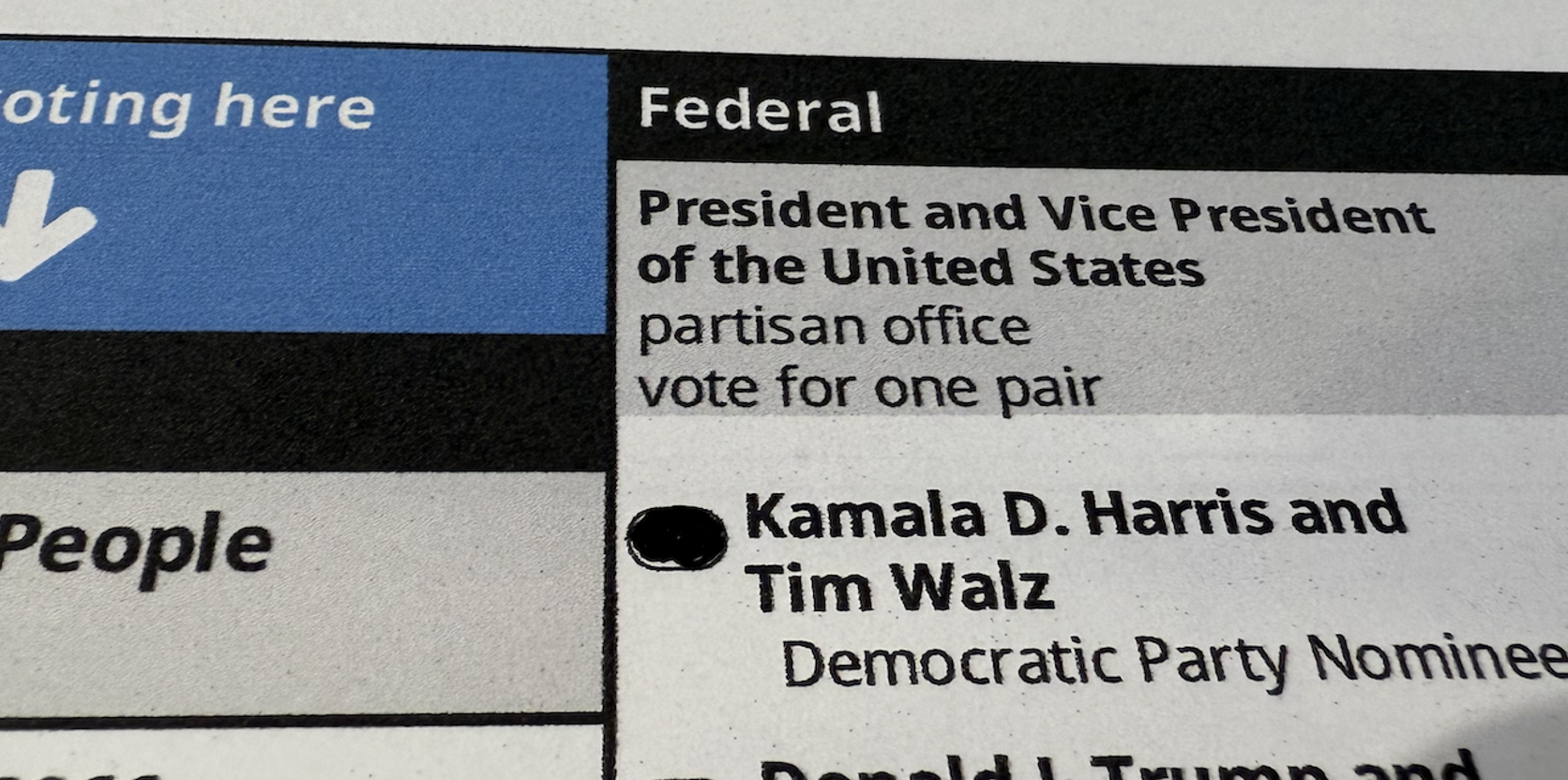
     As a resident of a vote-by-mail state, I voted as soon as I possibly could—the morning after the ballot arrived in my mailbox.

    I delivered my ballot to the dropbox by 9 am, I received a text saying they had picked up my ballot by 2 pm, and then by 3 pm I got another text saying my signature was confirmed and my ballot would be counted. It was my easiest, fastest voting experience yet, and another reminder that voting can and should be as easy as humanly possible.

    If you can vote early, please do. If you live in a state that doesn’t do early voting, please vote on November 5th, and then reach out to your state representatives to demand that they institute a transparent and inclusive vote-by-mail program. Democracy is better when everyone can easily and comfortably participate.

    Hold tight—we’re almost there. I’ll see you next month no matter what happens.

    Paul

  • Three Important Tips for Writing Comics, as Written by Someone Who Has No Right to Give Advice on Writing Comics

    Three Important Tips for Writing Comics, as Written by Someone Who Has No Right to Give Advice on Writing Comics

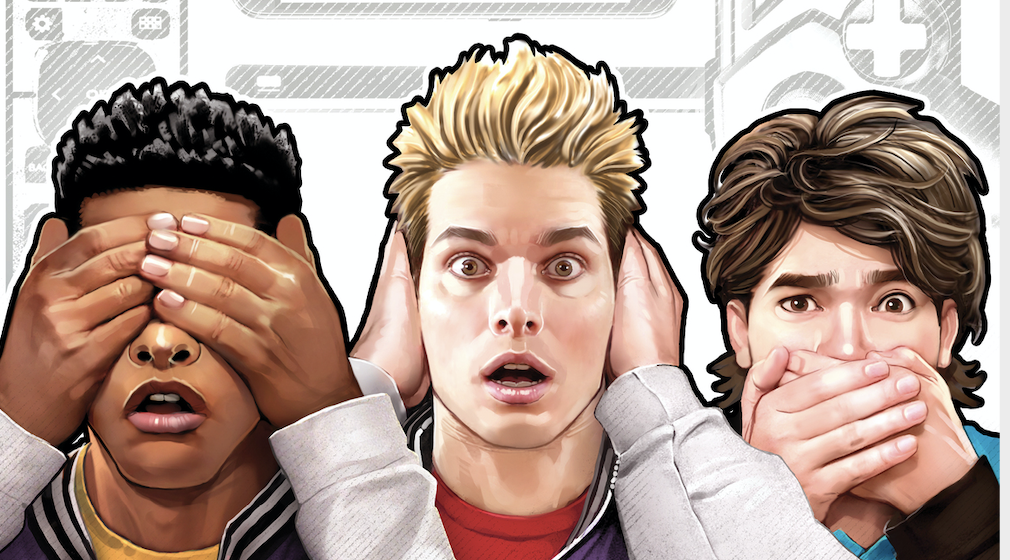
    About a year ago, AHOY Comics published the first issue of my first-ever comic book miniseries, PLANET OF THE NERDS. AHOY Editor-in-Chief “Torrid” Tom Peyer’s decades of experience saved me from a boatload of first-timer mistakes, but I also learned a few lessons over the course of writing NERDS that I’d like to share with you.

    You may ask, “who the hell is this guy, who has written exactly ONE five-issue miniseries, to tell ME how to write comics?”

    I respond by kissing you gently on the forehead and whispering: “Shhhhhh. Just this once, in the middle of a literal plague, let me fulfill my lifelong dream of hijacking a comic publisher’s newsletter, okay?” Okay. Here goes.

    1. Give each character a secret, and never reveal it. In order to really get into each character’s head, I made up something about that character that only I would ever know: a shameful experience, an allergy, maybe a surprising opinion about a piece of pop culture. Sharing a secret with a fictional character is a great way to help you care about that character, no matter how villainous they are.

    2. Write for the rush. For comics writers, there’s no drug greater than the high of opening an email containing a freshly drawn page. I’d have to sit down when I got a new email from my partner on NERDS, Alan Robinson, because his artwork would literally make me swoon. So I started writing pages with that moment in mind: give Alan the raw material he needs to draw a dynamic page that makes me faint from joy when I see it for the first time. That goal helped create a more artist-friendly, visual book.

    3. Make a playlist and stick to it—no matter how much your ears bleed. When writing NERDS, I compiled a playlist of songs that were in heavy rotation in 1988, when the story begins: “Don’t Worry Be Happy,” “Hazy Shade of Winter,” “Bad Medicine.” I listened to it every time I wrote. Eventually, I got sick of the songs. Then, my body started to reject them like a bad heart transplant. Finally, John “Cougar” Mellencamp stalked me, Freddy Kreuger-like, in my dreams. But I stuck with the playlist, and it was essential to keeping me in the world of the book.

    Every writer has to find the process that works best for them, but these three tips improved my process. Did they produce a good comic? You can find out by buying PLANET OF THE NERDS from a comic shop or independent bookstore near you! And be sure to join me next time, when I’ll share three tips on how to awkwardly market your comic in the last paragraph of a writing craft listicle. (Number two will blow your mind!)

    (This piece was originally published in the AHOY Comics newsletter.)