Tag: economics

  • John Maynard Keynes fought authoritarianism with economics

    John Maynard Keynes fought authoritarianism with economics

    We’ve all seen the mind-boggling charts demonstrating how income inequality has expanded to unprecedented levels in America since the late 1970s. We know that this ever-growing divide between the wealthiest one percent of all Americans and the rest of us was the result of a systemic trickle-down economic framework of tax cuts and deregulation promoted by conservative groups. (If you need a refresher, I wrote about the origins of that conspiracy earlier this summer.) So we know what happened to ruin the American economy, and we know who committed the heist, and why they did it.

    But the funny thing is, not many progressives really understand much about the economic system that was in place for most of the 20th century. We know that up until the late 1970s, an ever-growing number of Americans were included in the economy — though of course racism and sexism held too many of our neighbors back from fully participating.

    We know that tax rates for the wealthiest Americans were high in post-war America, and that investments in our infrastructure were at unprecedented levels for most of the last century. But the mechanics of that American prosperity — the philosophy behind why the economy worked as well as it did — have been largely forgotten.

    In the latest episode of Pitchfork Economics, David Goldstein credits economist John Maynard Keynes as “without a doubt, the most influential economist of the first three quarters of the 20th century. It was his ideas that guided the policies of the New Deal and essentially defined American liberalism,” Goldstein said. 

    In the episode, Goldstein interviews Zach Carter, the author of a new bestselling book titled “The Price of Peace: Money, Democracy, and the Life of John Maynard Keynes.” Carter wrote the book to help demystify and add nuance to Keynes’s life and work.

    While most Econ 101 classes simply, and truthfully, identify Keynes as “the economist who argued that governments should spend money during recessions to help pull the economy out of the doldrums and get employment moving again,” Carter said, much of the nuance and understanding of Keynes’s story has been forgotten as the neoliberal trickle-down crowd has taken hold. 

    Keynesianism, Carter argues, was “more a way of looking at the world than a specific set of policies or policy tools.” Keynes “was a social thinker, a philosopher, and a statesman whose intellectual project was concerned with the great problems of his day. And those problems in particular were World War II and the rise of authoritarianism all over the world of the 1920s and 1930s.”

    At a time when authoritarianism and nationalism is on the rise again, Carter’s framing of Keynes as someone who sought to use economics to “prevent war and heal societies that have been torn apart or put under strain” seems more timely than ever…

    (Keep reading at Business Insider.)

  • Voting by mail is the safest, easiest way to vote. Why are Republicans lying about it?

    Voting by mail is the safest, easiest way to vote. Why are Republicans lying about it?

    Last weekend, we passed a milestone moment in the 2020 election cycle: We are now less than 100 days away from Tuesday, November 3 — Election Day. In normal years, this would be the time when the general public really starts tuning in to the messages both parties are running with, familiarizing themselves with the candidates, and deciding who gets their vote.

    But just as it has with every other aspect of our lives, the coronavirus pandemic has thrown everything we know about politics into disarray. It’s possible that voters, already familiar with Biden from his years as Obama’s vice president and well aware of President Trump’s COVID-19 response, have already made up their minds. Or it’s equally possible that the electorate will be rocked by a series of surprises that will change the foundations of the race between now and November.

    Two things we do know for sure as we head into the home stretch of this never-ending presidential campaign season: first, people need to vote on Election Day; and second, coronavirus won’t disappear between now and then. Just as an economy is stronger when more people participate in it, a democracy is stronger when more people’s voices are heard. So how can we ensure that the people are heard, at a time when simply going into a busy public space is dangerous?

    (Keep reading at Business Insider.)

  • The “subversive” idea that breaks economics: What if people are largely decent?

    The “subversive” idea that breaks economics: What if people are largely decent?

    Even if you don’t know Dutch historian Rutger Bregman’s name, you’ve likely heard him speak. In January of last year, you probably saw a viral video on social media of Bregman speaking truth to power in front of some of the wealthiest and most powerful people in the world at the World Economic Forum in Davos, Switzerland. Bregman’s speech, in which he told an audience full of CEOs, royalty, and heirs that if they really wanted to do good in the world, they should “stop talking about philanthropy and start talking about taxes,” made him an instant celebrity.

    Bregman did the requisite TV and podcast tour to explain why rich people should pay a lot more in taxes, and then he went silent for a while. Now, he’s back making headlines with a surprising new book. On the latest episode of Pitchfork Economics, Nick Hanauer and David Goldstein asked Bregman to sum up the book in a few words. His response? 

    “Deep down, most people are pretty decent,” Bregman announced.

    You might not expect a notorious bomb-throwing firebrand to follow up his big sensational activist moment with a manifesto about human kindness and cooperation. 

    Bregman admits that the premise of his new book, Humankind: A Hopeful History sounds like “it’s not really a threat to anyone,” but he explains that “it’s a really subversive idea if you really think it through, because throughout history a more cynical view of human nature has been used by those in power to legitimize power differences and hierarchy.”

    (Keep reading at Business Insider.)

  • The Free Market Doesn’t Care if You Live or Die

    The Free Market Doesn’t Care if You Live or Die

    I’m old enough to remember that, when Democrats were passing the Affordable Care Act through Congress, Republicans argued that they were tampering with the greatest healthcare system in the world. The argument I saw most often in comment threads and on cable news, if I recall correctly, went that a free market healthcare system made room for untold innovations in the medical space, taking care of more people with better, more efficient healthcare than in any other nation on Earth. 

    It’s pretty much impossible today to claim with a straight face that the United States has the best healthcare on the planet. If you Google “greatest healthcare in the world,” the first result is an article about the most developed public healthcare systems in the world which helpfully explains, “The US ranks 15th.” 

    The free market hasn’t kept pricing down, either. The New York Times recently caught one Texas firm charging over $2000 per coronavirus test. After the Times investigation, the firm lowered their charges to “just” $300. And some hospitals have charged patients $400,000 — or even over one million dollars — for lifesaving coronavirus treatments. The coronavirus pandemic has also put the lie to the idea that the American employer-based health insurance model is a good idea. As soon as businesses had to lock down to flatten the curve, nearly 27 million Americans lost their insurance, at the time when many of them needed it most. 

    (Keep reading at Business Insider.)

  • We can’t keep slashing state budgets.

    We can’t keep slashing state budgets.

    When unemployment numbers exceeded expectations last Friday, the Trump administration wasted no time in rolling out the metaphorical mission accomplished banner. President Trump himself declared the addition of two million jobs to be “the greatest comeback in American history.” While it is undeniably good news that two million Americans went back to work in April, anyone who reads beyond the headlines knows that those gains reflected the early reopening of some states that are now facing a second wave of coronavirus infections, and the administration’s celebration ignored the tens of millions of Americans who have lost their jobs since the coronavirus pandemic began.

    And the tone-deaf premature celebration ignores another huge jobs crisis that’s unfolding in slow motion around the country: the loss of state and local government jobs to budget cuts. Over half a million state and local government employees lost their jobs in May, according to the Bureau of Labor Statistics, and one million more were laid off in April. 

    Still more job losses are sure to follow. State and local governments are trapped in a negative feedback loop. The coronavirus shutdown effectively killed revenue from sales taxes and other income for government services, which blew a hole in state and city budgets. Lawmakers in city halls and state houses around the country are responding to those lowered income levels by laying off or furloughing employees. Of course, those laid-off employees then have to cut back on spending, which causes the economy to contract even further, thereby decreasing revenue for state and local governments. 

    If cutbacks at the state and local level continue, we’ll be stuck in a destructive cycle that could extend the recession for months, even years. How do I know that? Because it’s exactly what happened in the Great Recession of 2008…

    (Continue reading at Business Insider.)

  • On Rush Limbaugh, white privilege, and coronavirus

    On Rush Limbaugh, white privilege, and coronavirus

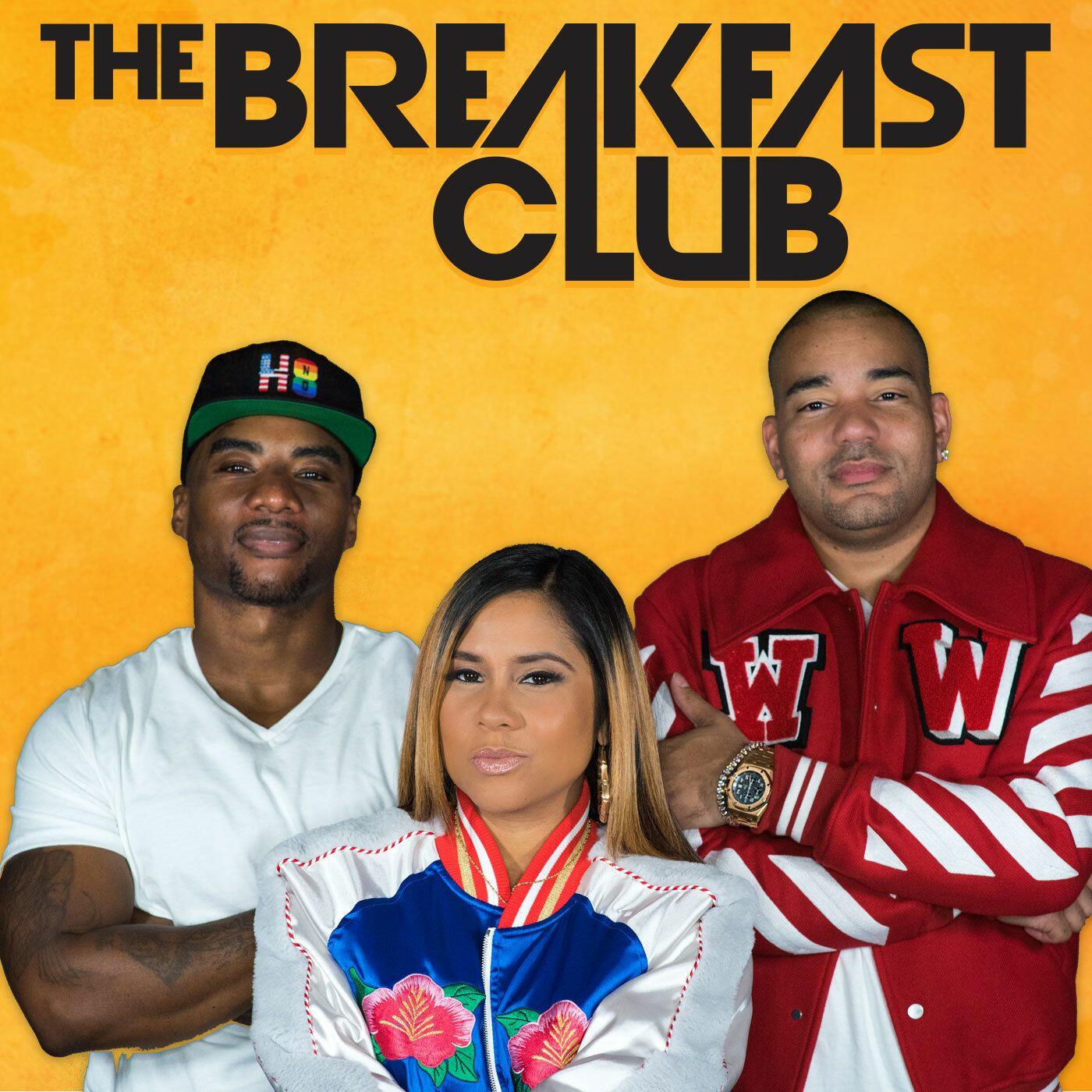
    Early this week, conservative talk radio host Rush Limbaugh visited popular progressive radio show The Breakfast Club to discuss the death of George Floyd at the hands of police officers in Minneapolis. 

    “I don’t buy into the notion of white privilege,” Limbaugh said. After a second of stunned silence, Breakfast Club co-host Charlamagne tha God told Limbaugh he was “being delusional.”

    In response, Limbaugh doubled down, calling white privilege “a liberal, political construct … designed to intimidate and get people to shut up and admit they’re guilty of doing things they haven’t done.” Limbaugh then offered instances in his own life when he felt unjustly targeted with bad behavior — being fired, having his car keyed — as evidence that he was a victim and not a perpetrator of discrimination.

    Many conservatives buy into the same fantasy that Limbaugh pushed in his Breakfast Club conversation: they don’t understand and refuse to consider that societies are made up of dozens of invisible systems that protect and support some citizens at the expense of others. When your ideology centers itself around personal responsibility, issues like racism, sexism, and economic inequality simply disappear. It’s a blissfully simple life philosophy: bad things that happen to you are your own fault, while good things that happen to me are achieved through hard work and clean living.

    Of course, it’s simply not true. It’s incredibly easy to prove the existence of white privilege: look no further than the impact of coronavirus on Americans and you’ll see a clear delineation between white and Black Americans — one that favors the former at the expense of the latter…

    (Continue reading at Business Insider.)

  • A Nobel Prize-winning economist says coronavirus shows ‘that markets don’t work’

    A Nobel Prize-winning economist says coronavirus shows ‘that markets don’t work’

    There’s no feeling quite like the stomach-clenching dread that hits when you hear a Nobel laureate in economics label the coronavirus recession as “a textbook example of showing that markets don’t work.” 

    The concept of markets — defined simply as the system that allows buyers and sellers to interact — is a cornerstone of mainstream American economic thought. Free markets are supposedly the most efficient way to determine everything from your salary to the cost of a loaf of bread to the most efficient way to deliver supplies in the midst of a pandemic. “Let the market decide” has become a rallying cry for Republicans and neoliberal Democrats as a refutation of government’s role in everything from healthcare to package delivery.

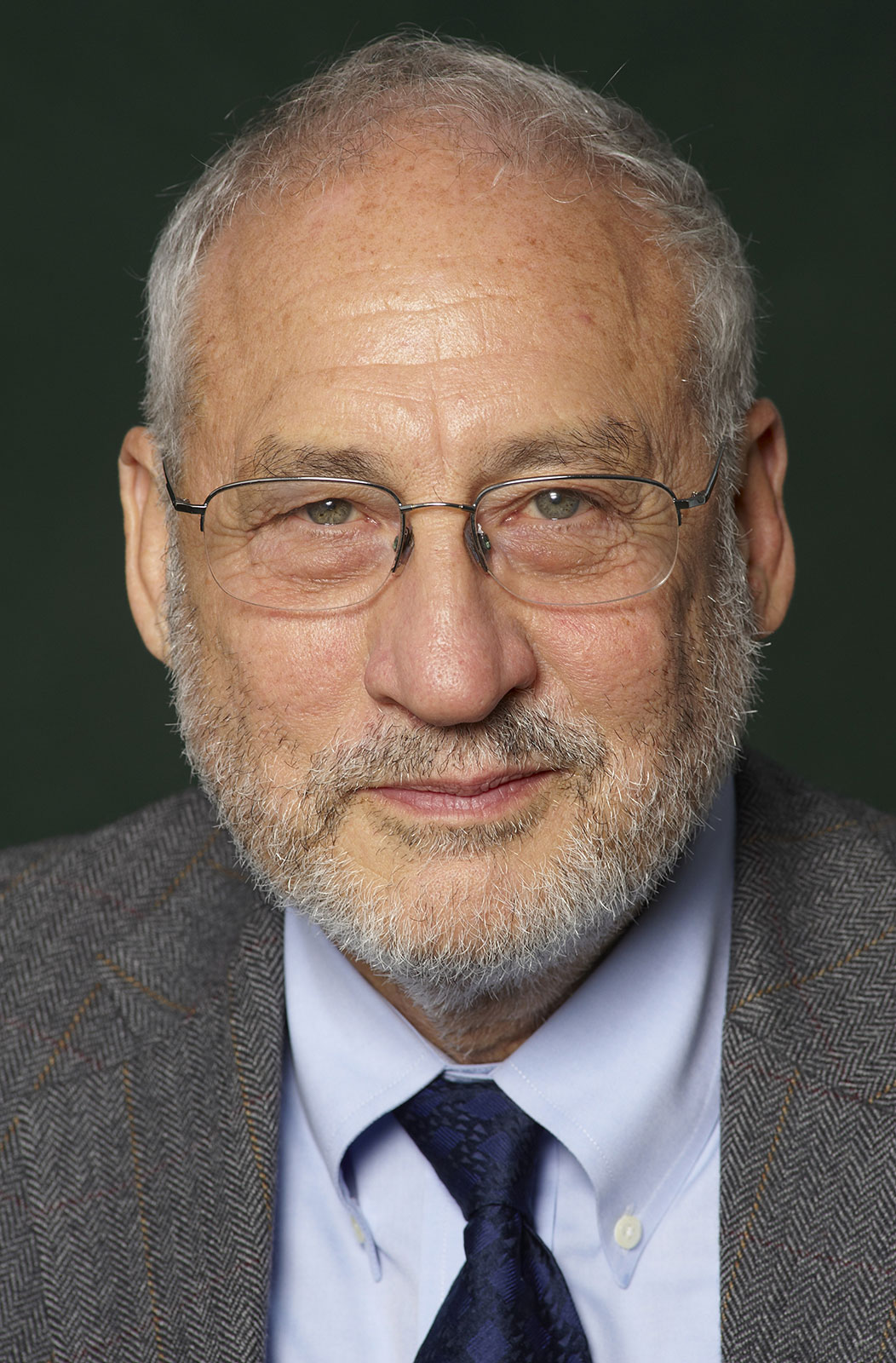
    In the latest episode of Pitchfork Economics, Joseph Stiglitz — the aforementioned Nobel laureate who also serves as chief economist at the Roosevelt Institute — questions the role of markets in essential services like public health and recovery from a recession. He identifies our unshakable belief in markets as one of the biggest stumbling blocks in America’s lackluster response to coronavirus…

    (Read the whole article at Business Insider.)

  • The coronavirus pandemic shows that the trickle-down theory of economic growth is a fabrication

    Treasury Secretary Steven Mnuchin on Sunday told Fox News’ Chris Wallace that the American economy would “bounce back” from the coronavirus shutdown by this summer. “As businesses begin to open,” Mnuchin promised, the “demand side of the economy” will “rebound.”

    Mnuchin was reiterating President Donald Trump’s line on the economy — the idea that when social distancing ends, the economy will miraculously renew itself to pre-virus levels. “We’re going to rebuild” the economy, Trump promised reporters last week, “and we’re going to rebuild it better, and it’s going to go faster than people think.”

    Trump and Mnuchin aren’t the only ones predicting a strong recovery. Ross Walker, the chief UK economist at NatWest Markets, envisioned a V-shaped recovery. Carsten Brzeski, the chief economist at ING Research, believes the recovery will be more U-shaped, with a slight trough at the bottom before the economy bounces back to normal. At the end of March, Goldman Sachs economists predicted what CNBC’s Jeff Cox characterized as “the fastest recovery in history.” (Goldman has since tempered its rosiest expectations for the rest of the year, but its economists are still predicting an “unprecedented” recovery.)

    But the longer this crisis goes on, the less likely a V- or U-shaped recovery becomes…

    (Read more at Business Insider.)

  • Reopening the economy isn’t going to work if no one shows up

    How many people want to walk into something like this right now?

    Seattle is one of America’s nerdiest cities — home to cartoonists, the publishers of Dungeons & Dragons, and a whole slew of video game developers. It’s also a city that profits greatly from the business of nerd culture, particularly through a full, year-round slate of large conventions in the downtown retail core ranging from Emerald City Comicon in March to the anime-focused Sakura-con in April to the September gaming convention Pax West.

    These aren’t just hobbies or weekend pursuits — they’re big business. Pax West, in particular, is the biggest annual convention in Washington state, driving $35 million through the local economy over one weekend in 2015.

    Seattle was also America’s first coronavirus hotspot, and slowly we’ve seen these annual pillars of the local nerd culture collapse, one after the other. After a number of exhibitors, cartoonists, and attendees canceled their appearances, Emerald City Comicon pulled the plug on the convention right before it was supposed to begin. Then, as officials rolled out social distancing orders, the other conventions started to fall: Sakura-Con canceled, as did the popular sci-fi convention Norwescon.

    Last week, though, Pax organizers refused to join the parade of shuttered conventions. They tweeted that, “as of right now we still plan on welcoming everyone home to PAX West on Labor Day weekend (September 4th – 7th) in 2020!” 

    The response from Pax’s typically rabid fanbase was decidedly chilly….

    (Continue reading on Business Insider.)